Jacob
Who was Jacob in the Bible?
The third patriarch of the covenant, whom God renamed Israel after he wrestled with God, and the father of the twelve tribes.
Israel, originally named Jacob, is a foundational figure in the biblical narrative, serving as the third and final patriarch of the covenant established between God and his grandfather Abraham. His life is characterized by a transition from a 'supplanter' (the meaning of Jacob) to 'one who prevails with God.' This transformation was formalized in a spiritual encounter where his name was changed, signifying a new identity and purpose for himself and his descendants.
As the son of Isaac and Rebekah, Israel occupied a central role in the transmission of the divine promise. Despite early familial conflicts, he became the progenitor of the twelve sons who would eventually form the tribes of the nation bearing his name. His later years were marked by a move to Egypt during a time of famine, setting the stage for the subsequent history of his descendants as recorded in the books of Exodus through Deuteronomy.
Background and Family
Israel was born as Jacob, the younger of twin brothers to Isaac and Rebekah. His early life was defined by a competitive relationship with his elder brother, Esau. This rivalry began in the womb and culminated in Jacob obtaining both the birthright and the paternal blessing that typically belonged to the firstborn. Fleeing the wrath of his brother, he traveled to the land of his relatives in Haran, where he worked for his uncle Laban.
During his time in Haran, he married two sisters, Leah and Rachel, and had two concubines, Zilpah and Bilhah. Through these four women, he fathered twelve sons: Reuben, Simeon, Levi, Judah, Dan, Naphtali, Gad, Asher, Issachar, Zebulun, Joseph, and Benjamin. He also had a daughter named Dinah. These children represent the biological foundation of the twelve tribes. Israel’s family life was often marked by internal friction, particularly regarding his favoritism toward Rachel and her firstborn, Joseph, which led to significant trauma when Joseph was sold into slavery by his brothers.
Major Life Events
The most pivotal moment in his life occurred at the river Jabbok, as recorded in Genesis 32. While preparing to meet his brother Esau after years of separation, Jacob spent a night wrestling with a mysterious man until daybreak. When the man saw he could not overpower Jacob, he touched the socket of Jacob’s hip, wrenching it. Jacob refused to let go until he received a blessing. The man declared, “Your name will no longer be Jacob, but Israel, because you have struggled with God and with men, and you have prevailed” (Genesis 32:28). This renaming was later confirmed by God at Bethel (Genesis 35:10).
In his old age, Israel faced a severe famine in the land of Canaan. After discovering that his long-lost son Joseph was a high-ranking official in Egypt, he moved his entire household—numbering seventy people—to the region of Goshen. Before his death in Egypt, he performed a significant act of succession by blessing his grandsons, Ephraim and Manasseh, placing the younger above the older, and providing prophetic blessings for each of his twelve sons.
Relationship to Other Biblical Figures
Israel’s life is inextricably linked to the lineage of the covenant. He was the child of promise to Isaac and the grandson of Abraham. His relationship with his sons, the 'sons of Israel,' defines much of the Pentateuch's genealogical focus. In particular, his relationship with Joseph served as the bridge that moved the patriarchal family from Canaan to Egypt.
In later biblical texts, including the writings of Moses and the history of the monarchy under David, the name 'Israel' transitioned from a personal name to a national identity. Moses is frequently depicted speaking to 'all Israel,' addressing the descendants of the patriarch as a unified spiritual and political body. Even in the New Testament, figures like David are identified as being appointed by God to shepherd 'My people Israel' (2 Samuel 7:8), highlighting the enduring connection between the man and the nation.
Spiritual Significance
The name change from Jacob to Israel represents one of the most significant theological shifts in the Old Testament. It signifies the movement from human striving and deception to a relationship defined by divine encounter and perseverance. The physical limp Israel carried after his wrestling match served as a permanent reminder of his dependence on God.
Furthermore, Israel serves as the corporate representative of the people of God. The blessings he pronounced over his sons in Genesis 49 are treated by later biblical writers as foundational prophecies for the history of the tribes. The term 'Israelite' became synonymous with the covenant people, and the 'God of Israel' became the standard designation for the LORD (the LORD) throughout the remainder of the biblical canon, emphasizing that God is not merely a universal creator but a God who enters into a specific relationship with a specific family line.
Israel occupies a unique position as the namesake of God's chosen people. His life serves as a bridge between the wandering patriarchs and the settled nation. Theologically, his renaming illustrates the concept of redemption and transformation; he who was once a 'supplanter' became the one through whom the twelve tribes were birthed. His deathbed blessings in Genesis 49 provide a prophetic framework for the future of the tribes, including the messianic promise linked to the tribe of Judah.
In the New Testament, the figure of Israel is referenced to establish the historical continuity of the Christian faith with the ancient covenant. The 'God of Abraham, Isaac, and Jacob' is the God of the living, and the name Israel remains the primary identifier for the people to whom the oracles of God were entrusted. The transition of the name from an individual to a nation underscores the biblical theme of a single man’s faithfulness impacting the destiny of millions.
Frequently Asked Questions
Why was Jacob's name changed to Israel?
His name was changed by God after he wrestled with a man (divine messenger) at the Jabbok river. The new name, meaning 'he struggles with God,' signified that he had prevailed in his spiritual and physical trials.
Who were the wives of Israel?
Israel had two wives, Leah and Rachel, and two concubines, Zilpah and Bilhah. These four women were the mothers of his twelve sons and his daughter Dinah.
How many sons did Israel have?
He had twelve sons: Reuben, Simeon, Levi, Judah, Dan, Naphtali, Gad, Asher, Issachar, Zebulun, Joseph, and Benjamin. They became the heads of the twelve tribes of the nation of Israel.
Where did Israel die?
Israel died in the land of Egypt in the region of Goshen, where he had moved to escape famine. However, at his request, his son Joseph had him embalmed and buried in the cave of Machpelah in Canaan.
What is the meaning of the name 'Israel'?
The name is traditionally interpreted as 'one who prevails with God' or 'God strives,' reflecting his encounter in Genesis 32.
Family & Relationships
 BilhahWifeGenesis 30:4Stated
 LeahWifeGenesis 30:9Stated
 RachelWifeGenesis 46:19Stated
 ZilpahWifeGenesis 30:10Stated
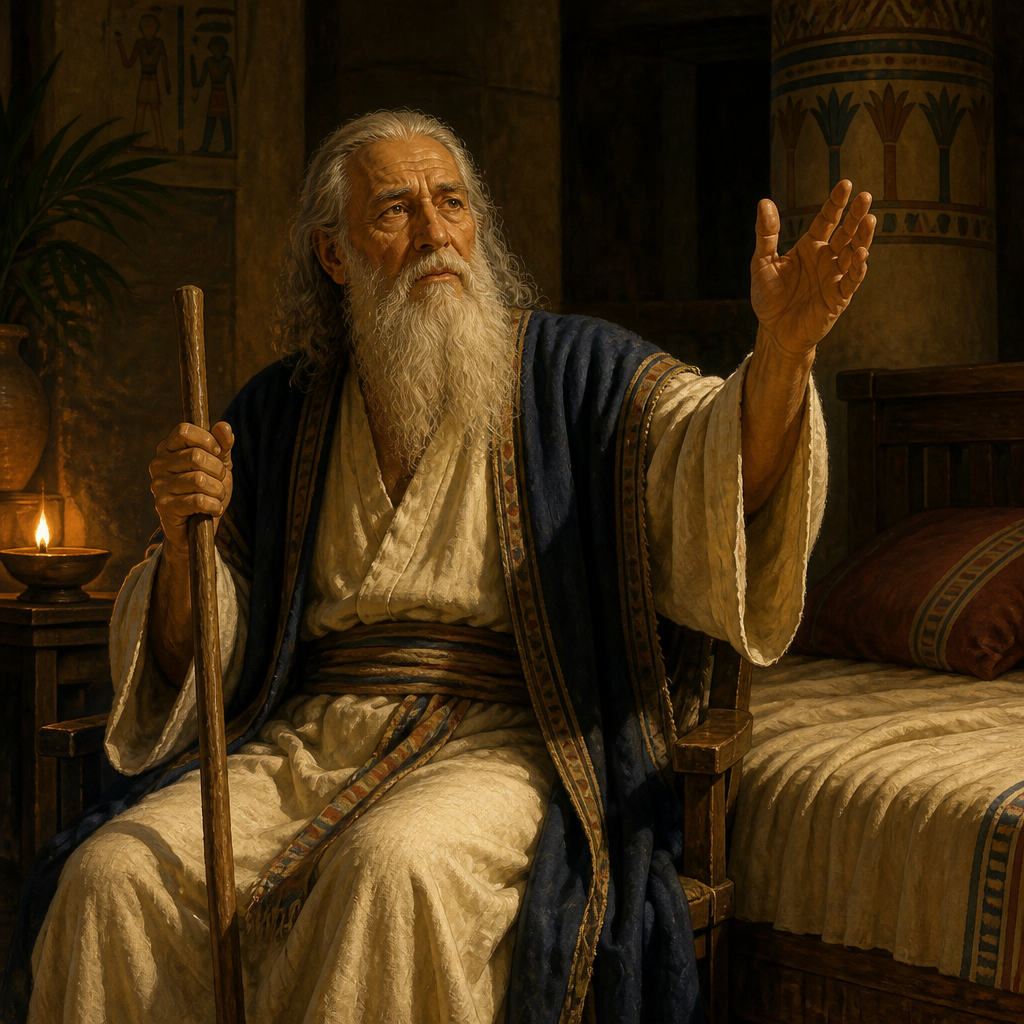 JacobThis page
 EsauBrotherGenesis 27:30Stated
Children
 AsherSonGenesis 35:23–26Stated
 Benjamin, Son of JacobSonGenesis 35:23–26Stated
 DanSonGenesis 35:23–26Stated
 DinahDaughterGenesis 34:3Stated
 Gad, Son of JacobSonGenesis 35:23–26Stated
 Issachar, Ninth Son of JacobSonGenesis 35:23–26Stated
 Joseph, Son of JacobSonGenesis 35:23–26Stated
 Judah, Son of JacobSonGenesis 35:23–26Stated
 Levi, Son of JacobSonGenesis 35:23–26Stated
 NaphtaliSonGenesis 35:23–26Stated
 ReubenSonGenesis 35:23–26Stated
 Simeon, Son of JacobSonGenesis 35:23–26Stated
 ZebulunSonGenesis 35:23–26Stated
Connected Figures
Family

Father · Genesis 27:22
The miracle son of Abraham and Sarah, Isaac was the second Hebrew patriarch and the child of promise through whom the covenant of God was established.
PatriarchsFirst: Genesis 17:19125 versesPatriarch, Shepherd, Farmer

Mother · Genesis 27:11
The wife of Isaac and mother of Esau and Jacob, Rebekah was a central matriarch of Israel known for her hospitality, her role in the patriarchal succession, and her divine oracle regarding her sons.
Wife · Genesis 30:4
Handmaid to Rachel and concubine of Jacob who became the biological mother of Dan and Naphtali, contributing to the formation of the twelve tribes of Israel.
PatriarchsFirst: Genesis 29:2912 versesMaidservant and Concubine
Wife · Genesis 30:9
The elder daughter of Laban and the first wife of Jacob, Leah was the biological mother of six of the twelve tribes of Israel and the matriarch of the priestly and royal lines.
Wife · Genesis 46:19
The beloved wife of the patriarch Jacob and the biological mother of Joseph and Benjamin, recognized as a foundational matriarch of the nation of Israel.
PatriarchsFirst: Genesis 29:648 versesShepherdess
Wife · Genesis 30:10
Zilpah was a maidservant given to Leah by Laban, who later became a wife to the patriarch Jacob and the mother of two of the twelve tribes of Israel, Gad and Asher.
PatriarchsFirst: Genesis 29:249 versesMaidservant and wife
Son · Genesis 35:23–26
Asher was the eighth son of Jacob, the second born to Zilpah, and the ancestral patriarch of the Tribe of Asher, known for the fertile lands and prosperity promised in his father's blessing.
PatriarchsFirst: Genesis 30:1315 versesPatriarchAsher
Son · Genesis 35:23–26
The youngest son of Jacob and Rachel, Benjamin was the beloved patriarch of one of the twelve tribes of Israel and a central figure in the narrative of Joseph's rise in Egypt.
PatriarchsFirst: Genesis 35:1823 versesPatriarchBenjamin
Son · Genesis 35:23–26
The fifth son of the patriarch Jacob and the first son born to his concubine Bilhah, serving as the eponymous ancestor of the Tribe of Dan.
PatriarchsFirst: Genesis 30:613 versesPatriarchDan
Daughter · Genesis 34:3
The only daughter of Jacob and Leah mentioned in the patriarchal narratives, known for the incident at Shechem that led to a violent conflict between her brothers and the Hivites.
Son · Genesis 35:23–26
The seventh son of Jacob and the firstborn of Zilpah, Gad was a patriarch of Israel whose descendants became a warrior tribe known for their courage and inheritance east of the Jordan River.
PatriarchsFirst: Genesis 30:1111 versesPatriarchGad
Son · Genesis 35:23–26
The ninth son of Jacob and the fifth born to Leah, Issachar was a patriarch whose descendants formed one of the prominent twelve tribes of Israel.
PatriarchsFirst: Genesis 30:1813 versesPatriarchIssachar
Categories
Mentions by Book
- Genesis178
- Exodus7
- Numbers1
- Deuteronomy7
- 2 Samuel1
- 1 Kings1
- 2 Kings1
- 1 Chronicles1
- Psalms12
- Isaiah2
- Jeremiah1
- Obadiah3
- Micah1
- Matthew3
- Mark1
- Luke2
- John1
- Acts4
- Hebrews1
Scripture References
All 228 indexed verses, in canonical order, from the Berean Standard Bible.
- Genesis 25:26
After this, his brother came out grasping Esau’s heel; so he was named Jacob. And Isaac was sixty years old when the twins were born.
- Genesis 25:27
When the boys grew up, Esau became a skillful hunter, a man of the field, while Jacob was a quiet man who stayed at home.
- Genesis 25:28
Because Isaac had a taste for wild game, he loved Esau; but Rebekah loved Jacob.
- Genesis 25:29
One day, while Jacob was cooking some stew, Esau came in from the field and was famished.
- Genesis 25:30
He said to Jacob, “Let me eat some of that red stew, for I am famished.” (That is why he was also called Edom.)
- Genesis 25:31
“First sell me your birthright,” Jacob replied.
- Genesis 25:33Partial
“Swear to me first,” Jacob said. So Esau swore to Jacob and sold him the birthright.
- Genesis 25:34
Then Jacob gave some bread and lentil stew to Esau, who ate and drank and then got up and went away. Thus Esau despised his birthright.
- Genesis 27:6
Rebekah said to her son Jacob, “Behold, I overheard your father saying to your brother Esau,
- Genesis 27:11
Jacob answered his mother Rebekah, “Look, my brother Esau is a hairy man, but I am smooth-skinned.
- Genesis 27:15
And Rebekah took the finest clothes in the house that belonged to her older son Esau, and she put them on her younger son Jacob.
- Genesis 27:17
Then she handed her son Jacob the tasty food and bread she had made.
- Genesis 27:19
Jacob said to his father, “I am Esau, your firstborn. I have done as you told me. Please sit up and eat some of my game, so that you may bless me.”
- Genesis 27:21
Then Isaac said to Jacob, “Please come closer so I can touch you, my son. Are you really my son Esau, or not?”
- Genesis 27:22Partial
So Jacob came close to his father Isaac, who touched him and said, “The voice is the voice of Jacob, but the hands are the hands of Esau.”
- Genesis 27:30Partial
As soon as Isaac had finished blessing him and Jacob had left his father’s presence, his brother Esau returned from the hunt.
- Genesis 27:36
So Esau declared, “Is he not rightly named Jacob? For he has cheated me twice. He took my birthright, and now he has taken my blessing.” Then he asked, “Haven’t you saved a blessing for me?”
- Genesis 27:41Partial
Esau held a grudge against Jacob because of the blessing his father had given him. And Esau said in his heart, “The days of mourning for my father are at hand; then I will kill my brother Jacob.”
- Genesis 27:42
When the words of her older son Esau were relayed to Rebekah, she sent for her younger son Jacob and told him, “Look, your brother Esau is consoling himself by plotting to kill you.
- Genesis 27:46
Then Rebekah said to Isaac, “I am weary of my life because of these Hittite women. If Jacob takes a Hittite wife from among them, what good is my life?”
- Genesis 28:1
So Isaac called for Jacob and blessed him. “Do not take a wife from the Canaanite women,” he commanded.
- Genesis 28:5Partial
So Isaac sent Jacob to Paddan-aram, to Laban son of Bethuel the Aramean, the brother of Rebekah, who was the mother of Jacob and Esau.
- Genesis 28:6
Now Esau learned that Isaac had blessed Jacob and sent him to Paddan-aram to take a wife there, commanding him, “Do not marry a Canaanite woman,”
- Genesis 28:7
and that Jacob had obeyed his father and mother and gone to Paddan-aram.
- Genesis 28:10
Meanwhile Jacob left Beersheba and set out for Haran.
- Genesis 28:16
When Jacob woke up, he said, “Surely the LORD is in this place, and I was unaware of it.”
- Genesis 28:18
Early the next morning, Jacob took the stone that he had placed under his head, and he set it up as a pillar. He poured oil on top of it,
- Genesis 28:20
Then Jacob made a vow, saying, “If God will be with me and watch over me on this journey, and if He will provide me with food to eat and clothes to wear,
- Genesis 29:1
Jacob resumed his journey and came to the land of the people of the east.
- Genesis 29:4
“My brothers,” Jacob asked the shepherds, “where are you from?” “We are from Haran,” they answered.
- Genesis 29:10Partial
As soon as Jacob saw Rachel, the daughter of his mother’s brother Laban, with Laban’s sheep, he went up and rolled the stone away from the mouth of the well and watered his uncle’s sheep.
- Genesis 29:11
Then Jacob kissed Rachel and wept aloud.
- Genesis 29:12
He told Rachel that he was Rebekah’s son, a relative of her father, and she ran and told her father.
- Genesis 29:13
When Laban heard the news about his sister’s son Jacob, he ran out to meet him. He embraced him and kissed him and brought him to his home, where Jacob told him all that had happened.
- Genesis 29:15
Laban said to him, “Just because you are my relative, should you work for nothing? Tell me what your wages should be.”
- Genesis 29:18
Since Jacob loved Rachel, he answered, “I will serve you seven years for your younger daughter Rachel.”
- Genesis 29:20
So Jacob served seven years for Rachel, yet it seemed but a few days because of his love for her.
- Genesis 29:21
Finally Jacob said to Laban, “Grant me my wife, for my time is complete, and I want to sleep with her.”
- Genesis 29:28
And Jacob did just that. He finished the week’s celebration, and Laban gave him his daughter Rachel as his wife.
- Genesis 30:1Partial
When Rachel saw that she was not bearing any children for Jacob, she envied her sister. “Give me children, or I will die!” she said to Jacob.
- Genesis 30:2
Jacob became angry with Rachel and said, “Am I in the place of God, who has withheld children from you?”
- Genesis 30:4
So Rachel gave Jacob her servant Bilhah as a wife, and he slept with her,
- Genesis 30:5
and Bilhah conceived and bore him a son.
- Genesis 30:7
And Rachel’s servant Bilhah conceived again and bore Jacob a second son.
- Genesis 30:9
When Leah saw that she had stopped having children, she gave her servant Zilpah to Jacob as a wife.
- Genesis 30:10
And Leah’s servant Zilpah bore Jacob a son.
- Genesis 30:12
When Leah’s servant Zilpah bore Jacob a second son,
- Genesis 30:16
When Jacob came in from the field that evening, Leah went out to meet him and said, “You must come with me, for I have hired you with my son’s mandrakes.” So he slept with her that night.
- Genesis 30:17
And God listened to Leah, and she conceived and bore a fifth son to Jacob.
- Genesis 30:19
Again Leah conceived and bore a sixth son to Jacob.
- Genesis 30:25
Now after Rachel had given birth to Joseph, Jacob said to Laban, “Send me on my way so I can return to my homeland.
- Genesis 30:31
“What can I give you?” Laban asked. “You do not need to give me anything,” Jacob replied. “If you do this one thing for me, I will keep on shepherding and keeping your flocks.
- Genesis 30:36Partial
Then he put a three-day journey between himself and Jacob, while Jacob was shepherding the rest of Laban’s flocks.
- Genesis 30:37
Jacob, however, took fresh branches of poplar, almond, and plane trees, and peeled the bark, exposing the white inner wood of the branches.
- Genesis 30:40
Jacob set apart the young, but made the rest face the streaked dark-colored sheep in Laban’s flocks. Then he set his own stock apart and did not put them with Laban’s animals.
- Genesis 30:41
Whenever the stronger females of the flock were in heat, Jacob would place the branches in the troughs, in full view of the animals, so that they would breed in front of the branches.
- Genesis 30:42
But if the animals were weak, he did not set out the branches. So the weaker animals went to Laban and the stronger ones to Jacob.
- Genesis 31:1
Now Jacob heard that Laban’s sons were saying, “Jacob has taken away all that belonged to our father and built all this wealth at our father’s expense.”
- Genesis 31:2
And Jacob saw from the countenance of Laban that his attitude toward him had changed.
- Genesis 31:3
Then the LORD said to Jacob, “Go back to the land of your fathers and to your kindred, and I will be with you.”
- Genesis 31:4
So Jacob sent word and called Rachel and Leah to the field where his flocks were,
- Genesis 31:11
In that dream the angel of God said to me, ‘Jacob!’ And I replied, ‘Here I am.’
- Genesis 31:17
Then Jacob got up and put his children and his wives on camels,
- Genesis 31:20
Moreover, Jacob deceived Laban the Aramean by not telling him that he was running away.
- Genesis 31:22
On the third day Laban was informed that Jacob had fled.
- Genesis 31:24
But that night God came to Laban the Aramean in a dream and warned him, “Be careful not to say anything to Jacob, either good or bad.”
- Genesis 31:25Partial
Now Jacob had pitched his tent in the hill country of Gilead when Laban overtook him, and Laban and his relatives camped there as well.
- Genesis 31:26
Then Laban said to Jacob, “What have you done? You have deceived me and carried off my daughters like captives of war!
- Genesis 31:29
I have power to do you great harm, but last night the God of your father said to me, ‘Be careful not to say anything to Jacob, either good or bad.’
- Genesis 31:31
“I was afraid,” Jacob answered, “for I thought you would take your daughters from me by force.
- Genesis 31:32
If you find your gods with anyone here, he shall not live! In the presence of our relatives, see for yourself if anything is yours, and take it back.” For Jacob did not know that Rachel had stolen the idols.
- Genesis 31:33
So Laban went into Jacob’s tent, then Leah’s tent, and then the tents of the two maidservants, but he found nothing. Then he left Leah’s tent and entered Rachel’s tent.
- Genesis 31:36Partial
Then Jacob became incensed and challenged Laban. “What is my crime?” he said. “For what sin of mine have you so hotly pursued me?
- Genesis 31:43
But Laban answered Jacob, “These daughters are my daughters, these sons are my sons, and these flocks are my flocks! Everything you see is mine! Yet what can I do today about these daughters of mine or the children they have borne?
- Genesis 31:45
So Jacob picked out a stone and set it up as a pillar,
- Genesis 31:46
and he said to his relatives, “Gather some stones.” So they took stones and made a mound, and there by the mound they ate.
- Genesis 31:47
Laban called it Jegar-sahadutha, and Jacob called it Galeed.
- Genesis 31:51
Laban also said to Jacob, “Here is the mound, and here is the pillar I have set up between you and me.
- Genesis 31:53
May the God of Abraham and the God of Nahor, the God of their father, judge between us.” So Jacob swore by the Fear of his father Isaac.
- Genesis 31:54
Then Jacob offered a sacrifice on the mountain and invited his relatives to eat a meal. And after they had eaten, they spent the night on the mountain.
- Genesis 32:1
Jacob also went on his way, and the angels of God met him.
- Genesis 32:2
When Jacob saw them, he said, “This is the camp of God.” So he named that place Mahanaim.
- Genesis 32:3
Jacob sent messengers ahead of him to his brother Esau in the land of Seir, the country of Edom.
- Genesis 32:4
He instructed them, “You are to say to my master Esau, ‘Your servant Jacob says: I have been staying with Laban and have remained there until now.
- Genesis 32:6
When the messengers returned to Jacob, they said, “We went to your brother Esau, and now he is coming to meet you—he and four hundred men with him.”
- Genesis 32:7
In great fear and distress, Jacob divided his people into two camps, as well as the flocks and herds and camels.
- Genesis 32:9
Then Jacob declared, “O God of my father Abraham, God of my father Isaac, the LORD who told me, ‘Go back to your country and to your kindred, and I will make you prosper,’
- Genesis 32:18
then you are to say, ‘They belong to your servant Jacob. They are a gift, sent to my lord Esau. And behold, Jacob is behind us.’”
- Genesis 32:20
You are also to say, ‘Look, your servant Jacob is right behind us.’” For he thought, “I will appease Esau with the gift that is going before me. After that I can face him, and perhaps he will accept me.”
- Genesis 32:24
So Jacob was left all alone, and there a man wrestled with him until daybreak.
- Genesis 32:25
When the man saw that he could not overpower Jacob, he struck the socket of Jacob’s hip and dislocated it as they wrestled.
- Genesis 32:27
“What is your name?” the man asked. “Jacob,” he replied.
- Genesis 32:28
Then the man said, “Your name will no longer be Jacob, but Israel, because you have struggled with God and with men, and you have prevailed.”
- Genesis 32:29
And Jacob requested, “Please tell me your name.” But he replied, “Why do you ask my name?” Then he blessed Jacob there.
- Genesis 32:30
So Jacob named the place Peniel, saying, “Indeed, I have seen God face to face, and yet my life was spared.”
- Genesis 33:1
Now Jacob looked up and saw Esau coming toward him with four hundred men. So he divided the children among Leah, Rachel, and the two maidservants.
- Genesis 33:10
But Jacob insisted, “No, please! If I have found favor in your sight, then receive this gift from my hand. For indeed, I have seen your face, and it is like seeing the face of God, since you have received me favorably.
- Genesis 33:17
but Jacob went on to Succoth, where he built a house for himself and shelters for his livestock; that is why the place was called Succoth.
- Genesis 33:18
After Jacob had come from Paddan-aram, he arrived safely at the city of Shechem in the land of Canaan, and he camped just outside the city.
- Genesis 34:1
Now Dinah, the daughter Leah had borne to Jacob, went out to visit the daughters of the land.
- Genesis 34:3
And his soul was drawn to Dinah, the daughter of Jacob. He loved the young girl and spoke to her tenderly.
- Genesis 34:5Partial
Jacob heard that Shechem had defiled his daughter Dinah, but since his sons were with his livestock in the field, he remained silent about it until they returned.
- Genesis 34:6
Meanwhile, Shechem’s father Hamor came to speak with Jacob.
- Genesis 34:7
When Jacob’s sons heard what had happened, they returned from the field. They were filled with grief and fury, because Shechem had committed an outrage in Israel by lying with Jacob’s daughter—a thing that should not be done.
- Genesis 34:13
But because Shechem had defiled their sister Dinah, Jacob’s sons answered him and his father Hamor deceitfully.
- Genesis 34:19
The young man, who was the most respected of all his father’s household, did not hesitate to fulfill this request, because he was delighted with Jacob’s daughter.
- Genesis 34:25
Three days later, while they were still in pain, two of Jacob’s sons (Dinah’s brothers Simeon and Levi) took their swords, went into the unsuspecting city, and slaughtered every male.
- Genesis 34:27
Jacob’s other sons came upon the slaughter and looted the city, because their sister had been defiled.
- Genesis 34:30
Then Jacob said to Simeon and Levi, “You have brought trouble upon me by making me a stench to the Canaanites and Perizzites, the people of this land. We are few in number; if they unite against me and attack me, I and my household will be destroyed.”
- Genesis 35:1
Then God said to Jacob, “Arise, go up to Bethel, and settle there. Build an altar there to the God who appeared to you when you fled from your brother Esau.”
- Genesis 35:2
So Jacob told his household and all who were with him, “Get rid of the foreign gods that are among you. Purify yourselves and change your garments.
- Genesis 35:4Partial
So they gave Jacob all their foreign gods and all their earrings, and Jacob buried them under the oak near Shechem.
- Genesis 35:5
As they set out, a terror from God fell over the surrounding cities, so that they did not pursue Jacob’s sons.
- Genesis 35:6
So Jacob and everyone with him arrived in Luz (that is, Bethel) in the land of Canaan.
- Genesis 35:9
After Jacob had returned from Paddan-aram, God appeared to him again and blessed him.
- Genesis 35:10Partial
And God said to him, “Though your name is Jacob, you will no longer be called Jacob. Instead, your name will be Israel.” So God named him Israel.
- Genesis 35:14
So Jacob set up a pillar in the place where God had spoken with him—a stone marker—and he poured out a drink offering on it and anointed it with oil.
- Genesis 35:15
Jacob called the place where God had spoken with him Bethel.
- Genesis 35:20
Jacob set up a pillar on her grave; it marks Rachel’s tomb to this day.
- Genesis 35:21
Israel again set out and pitched his tent beyond the Tower of Eder.
- Genesis 35:22Partial
While Israel was living in that region, Reuben went in and slept with his father’s concubine Bilhah, and Israel heard about it. Jacob had twelve sons:
- Genesis 35:23
The sons of Leah were Reuben the firstborn of Jacob, Simeon, Levi, Judah, Issachar, and Zebulun.
- Genesis 35:24Partial
The sons of Rachel were Joseph and Benjamin.
Cited as evidence on a family card; added so References, Key Verses and Mentions by Book share one index.
- Genesis 35:25Partial
The sons of Rachel’s maidservant Bilhah were Dan and Naphtali.
Cited as evidence on a family card; added so References, Key Verses and Mentions by Book share one index.
- Genesis 35:26
And the sons of Leah’s maidservant Zilpah were Gad and Asher. These are the sons of Jacob, who were born to him in Paddan-aram.
- Genesis 35:27
Jacob returned to his father Isaac at Mamre, near Kiriath-arba (that is, Hebron), where Abraham and Isaac had stayed.
- Genesis 35:29
Then he breathed his last and died and was gathered to his people, old and full of years. And his sons Esau and Jacob buried him.
- Genesis 36:6
Later, Esau took his wives and sons and daughters and all the people of his household, along with his livestock, all his other animals, and all the property he had acquired in Canaan, and he moved to a land far away from his brother Jacob.
- Genesis 37:1
Now Jacob lived in the land where his father had resided, the land of Canaan.
- Genesis 37:2
This is the account of Jacob. When Joseph was seventeen years old, he was tending the flock with his brothers, the sons of his father’s wives Bilhah and Zilpah, and he brought their father a bad report about them.
- Genesis 37:3
Now Israel loved Joseph more than his other sons, because Joseph had been born to him in his old age; so he made him a robe of many colors.
- Genesis 37:13
Israel said to him, “Are not your brothers pasturing the flocks at Shechem? Get ready; I am sending you to them.” “I am ready,” Joseph replied.
- Genesis 37:34
Then Jacob tore his clothes, put sackcloth around his waist, and mourned for his son many days.
- Genesis 42:1
When Jacob learned that there was grain in Egypt, he said to his sons, “Why are you staring at one another?”
- Genesis 42:4
But Jacob did not send Joseph’s brother Benjamin with his brothers, for he said, “I am afraid that harm might befall him.”
- Genesis 42:29
When they reached their father Jacob in the land of Canaan, they described to him all that had happened to them:
- Genesis 42:36
Their father Jacob said to them, “You have deprived me of my sons. Joseph is gone and Simeon is no more. Now you want to take Benjamin. Everything is going against me!”
- Genesis 43:6
“Why did you bring this trouble upon me?” Israel asked. “Why did you tell the man you had another brother?”
- Genesis 43:8
And Judah said to his father Israel, “Send the boy with me, and we will go at once, so that we may live and not die—neither we, nor you, nor our children.
- Genesis 43:11
Then their father Israel said to them, “If it must be so, then do this: Put some of the best products of the land in your packs and carry them down as a gift for the man—a little balm and a little honey, spices and myrrh, pistachios and almonds.
- Genesis 45:25
So the brothers went up out of Egypt and came to their father Jacob in the land of Canaan.
- Genesis 45:27
However, when they relayed all that Joseph had told them, and when he saw the wagons that Joseph had sent to carry him back, the spirit of their father Jacob was revived.
- Genesis 45:28
“Enough!” declared Israel. “My son Joseph is still alive! I will go to see him before I die.”
- Genesis 46:1
So Israel set out with all that he had, and when he came to Beersheba, he offered sacrifices to the God of his father Isaac.
- Genesis 46:2
And that night God spoke to Israel in a vision: “Jacob, Jacob!” He said. “Here I am,” replied Jacob.
- Genesis 46:6
They also took the livestock and possessions they had acquired in the land of Canaan, and Jacob and all his offspring went to Egypt.
- Genesis 46:15
These are the sons of Leah born to Jacob in Paddan-aram, in addition to his daughter Dinah. The total number of sons and daughters was thirty-three.
- Genesis 46:18
These are the sons of Jacob born to Zilpah—whom Laban gave to his daughter Leah—sixteen in all.
- Genesis 46:19
The sons of Jacob’s wife Rachel: Joseph and Benjamin.
- Genesis 46:22
These are the sons of Rachel born to Jacob—fourteen in all.
- Genesis 46:25
These are the sons of Jacob born to Bilhah, whom Laban gave to his daughter Rachel—seven in all.
- Genesis 46:26Partial
All those belonging to Jacob who came to Egypt—his direct descendants, besides the wives of Jacob’s sons—numbered sixty-six persons.
- Genesis 46:27
And with the two sons who had been born to Joseph in Egypt, the members of Jacob’s family who went to Egypt were seventy in all.
- Genesis 46:29
Joseph prepared his chariot and went there to meet his father Israel. Joseph presented himself to him, embraced him, and wept profusely.
- Genesis 46:30
Then Israel said to Joseph, “Finally I can die, now that I have seen your face and know that you are still alive!”
- Genesis 47:7Partial
Then Joseph brought in his father Jacob and presented him before Pharaoh, and Jacob blessed Pharaoh.
- Genesis 47:8
“How many years have you lived?” Pharaoh asked.
- Genesis 47:9
“My travels have lasted 130 years,” Jacob replied. “My years have been few and hard, and they have not matched the years of the travels of my fathers.”
- Genesis 47:10
Then Jacob blessed Pharaoh and departed from his presence.
- Genesis 47:28Partial
And Jacob lived in the land of Egypt seventeen years, and the length of his life was 147 years.
- Genesis 47:29
When the time drew near for Israel to die, he called his son Joseph and said to him, “If I have found favor in your eyes, put your hand under my thigh and promise to show me kindness and faithfulness. Do not bury me in Egypt,
- Genesis 47:31
“Swear to me,” Jacob said. So Joseph swore to him, and Israel bowed in worship at the head of his bed.
- Genesis 48:2
When Jacob was told, “Your son Joseph has come to you,” Israel rallied his strength and sat up in bed.
- Genesis 48:3
Jacob said to Joseph, “God Almighty appeared to me at Luz in the land of Canaan, and there He blessed me
- Genesis 48:8
When Israel saw the sons of Joseph, he asked, “Who are these?”
- Genesis 48:10
Now Israel’s eyesight was poor because of old age; he could hardly see. Joseph brought his sons to him, and his father kissed them and embraced them.
- Genesis 48:11
“I never expected to see your face again,” Israel said to Joseph, “but now God has let me see your children as well.”
- Genesis 48:13Partial
And Joseph took both of them—with Ephraim in his right hand toward Israel’s left hand, and Manasseh in his left hand toward Israel’s right hand—and brought them close to him.
- Genesis 48:14
But Israel stretched out his right hand and put it on the head of Ephraim, the younger; and crossing his hands, he put his left on Manasseh’s head, although Manasseh was the firstborn.
- Genesis 48:20
So that day Jacob blessed them and said: “By you shall Israel pronounce this blessing: ‘May God make you like Ephraim and Manasseh.’” So he put Ephraim before Manasseh.
- Genesis 48:21
Then Israel said to Joseph, “Look, I am about to die, but God will be with you and bring you back to the land of your fathers.
- Genesis 49:1
Then Jacob called for his sons and said, “Gather around so that I can tell you what will happen to you in the days to come:
- Genesis 49:2
Come together and listen, O sons of Jacob; listen to your father Israel.
- Genesis 49:7
Cursed be their anger, for it is strong, and their wrath, for it is cruel! I will disperse them in Jacob and scatter them in Israel.
- Genesis 49:24
Yet he steadied his bow, and his strong arms were tempered by the hands of the Mighty One of Jacob, in the name of the Shepherd, the Rock of Israel,
- Genesis 49:33
When Jacob had finished instructing his sons, he pulled his feet into the bed and breathed his last, and he was gathered to his people.
- Genesis 50:2
And Joseph directed the physicians in his service to embalm his father Israel. So they embalmed him,
- Genesis 50:24
Then Joseph said to his brothers, “I am about to die, but God will surely visit you and bring you up from this land to the land He promised on oath to Abraham, Isaac, and Jacob.”
- Exodus 1:5
The descendants of Jacob numbered seventy in all, including Joseph, who was already in Egypt.
- Exodus 2:24
So God heard their groaning, and He remembered His covenant with Abraham, Isaac, and Jacob.
- Exodus 3:6
Then He said, “I am the God of your father, the God of Abraham, the God of Isaac, and the God of Jacob.” At this, Moses hid his face, for he was afraid to look at God.
- Exodus 3:16
Go, assemble the elders of Israel and say to them, ‘The LORD, the God of your fathers—the God of Abraham, Isaac, and Jacob—has appeared to me and said: I have surely attended to you and have seen what has been done to you in Egypt.
- Exodus 4:5
“This is so that they may believe that the LORD, the God of their fathers—the God of Abraham, the God of Isaac, and the God of Jacob—has appeared to you.”
- Exodus 6:8
And I will bring you into the land that I swore to give to Abraham, Isaac, and Jacob. I will give it to you as a possession. I am the LORD!’”
- Exodus 33:1
Then the LORD said to Moses, “Leave this place, you and the people you brought up out of the land of Egypt, and go to the land that I promised to Abraham, Isaac, and Jacob when I said, ‘I will give it to your descendants.’
- Numbers 32:11
‘Because they did not follow Me wholeheartedly, not one of the men twenty years of age or older who came out of Egypt will see the land that I swore to give Abraham, Isaac, and Jacob—
- Deuteronomy 1:8
See, I have placed the land before you. Enter and possess the land that the LORD swore He would give to your fathers Abraham, Isaac, and Jacob, and to their descendants after them.”
- Deuteronomy 6:10
And when the LORD your God brings you into the land He swore to your fathers, to Abraham, Isaac, and Jacob, that He would give you—a land with great and splendid cities that you did not build,
- Deuteronomy 9:5
It is not because of your righteousness or uprightness of heart that you are going in to possess their land, but it is because of their wickedness that the LORD your God is driving out these nations before you, to keep the promise He swore to your fathers, to Abraham, Isaac, and Jacob.
- Deuteronomy 9:27
Remember Your servants Abraham, Isaac, and Jacob. Overlook the stubbornness of this people and the wickedness of their sin.
- Deuteronomy 29:13
and so that He may establish you today as His people, and He may be your God as He promised you and as He swore to your fathers, to Abraham, Isaac, and Jacob.
- Deuteronomy 30:20
and that you may love the LORD your God, obey Him, and hold fast to Him. For He is your life, and He will prolong your life in the land that the LORD swore to give to your fathers, to Abraham, Isaac, and Jacob.”
- Deuteronomy 34:4
And the LORD said to him, “This is the land that I swore to give Abraham, Isaac, and Jacob when I said, ‘I will give it to your descendants.’ I have let you see it with your own eyes, but you will not cross into it.”
- 2 Samuel 23:1
These are the last words of David: “The oracle of David son of Jesse, the oracle of the man raised on high, the one anointed by the God of Jacob, and the sweet psalmist of Israel:
- 1 Kings 18:36Partial
At the time of the evening sacrifice, Elijah the prophet approached the altar and said, “O LORD, God of Abraham, Isaac, and Israel, let it be known this day that You are God in Israel and that I am Your servant and have done all these things at Your command.
- 2 Kings 13:23
But the LORD was gracious to Israel and had compassion on them, and He turned toward them because of His covenant with Abraham, Isaac, and Jacob. And to this day, the LORD has been unwilling to destroy them or cast them from His presence.
- 1 Chronicles 1:34
Abraham was the father of Isaac. The sons of Isaac: Esau and Israel.
- Psalms 20:1
For the choirmaster. A Psalm of David. May the LORD answer you in the day of trouble; may the name of the God of Jacob protect you.
- Psalms 24:6
Such is the generation of those who seek Him, who seek Your face, O God of Jacob. Selah
- Psalms 46:7
The LORD of Hosts is with us; the God of Jacob is our fortress. Selah
- Psalms 46:11
The LORD of Hosts is with us; the God of Jacob is our fortress. Selah
- Psalms 75:9
But I will proclaim Him forever; I will sing praise to the God of Jacob.
- Psalms 76:6
At Your rebuke, O God of Jacob, both horse and rider lie stunned.
- Psalms 81:1
For the choirmaster. According to Gittith. Of Asaph. Sing for joy to God our strength; make a joyful noise to the God of Jacob.
- Psalms 81:4
For this is a statute for Israel, an ordinance of the God of Jacob.
- Psalms 84:8
O LORD God of Hosts, hear my prayer; give ear, O God of Jacob. Selah
- Psalms 94:7
They say, “The LORD does not see; the God of Jacob pays no heed.”
- Psalms 114:7
Tremble, O earth, at the presence of the Lord, at the presence of the God of Jacob,
- Psalms 146:5
Blessed is he whose help is the God of Jacob, whose hope is in the LORD his God,
- Isaiah 2:3
And many peoples will come and say: “Come, let us go up to the mountain of the LORD, to the house of the God of Jacob. He will teach us His ways so that we may walk in His paths.” For the law will go forth from Zion, and the word of the LORD from Jerusalem.
- Isaiah 58:14
then you will delight yourself in the LORD, and I will make you ride on the heights of the land and feed you with the heritage of your father Jacob.” For the mouth of the LORD has spoken.
- Jeremiah 33:26Partial
then I would also reject the descendants of Jacob and of My servant David, so as not to take from his descendants rulers over the descendants of Abraham, Isaac, and Jacob. For I will restore them from captivity and will have compassion on them.”
- Obadiah 1:10
Because of the violence against your brother Jacob, you will be covered with shame and cut off forever.
- Obadiah 1:17
But on Mount Zion there will be deliverance, and it will be holy, and the house of Jacob will reclaim their possession.
- Obadiah 1:18
Then the house of Jacob will be a blazing fire, and the house of Joseph a burning flame; but the house of Esau will be stubble—Jacob will set it ablaze and consume it. Therefore no survivor will remain from the house of Esau.” For the LORD has spoken.
- Micah 4:2
And many nations will come and say: “Come, let us go up to the mountain of the LORD, to the house of the God of Jacob. He will teach us His ways, so that we may walk in His paths.” For the law will go forth from Zion and the word of the LORD from Jerusalem.
- Matthew 1:2Partial
Abraham was the father of Isaac, Isaac the father of Jacob, and Jacob the father of Judah and his brothers.
- Matthew 8:11
I say to you that many will come from the east and the west to share the banquet with Abraham, Isaac, and Jacob in the kingdom of heaven.
- Matthew 22:32
‘I am the God of Abraham, the God of Isaac, and the God of Jacob’? He is not the God of the dead, but of the living.”
- Mark 12:26
But concerning the dead rising, have you not read about the burning bush in the Book of Moses, how God told him, ‘I am the God of Abraham, the God of Isaac, and the God of Jacob’?
- Luke 3:34
the son of Jacob, the son of Isaac, the son of Abraham, the son of Terah, the son of Nahor,
- Luke 20:37
Even Moses demonstrates that the dead are raised, in the passage about the burning bush. For he calls the Lord ‘the God of Abraham, the God of Isaac, and the God of Jacob.’
- John 4:12
Are You greater than our father Jacob, who gave us this well and drank from it himself, as did his sons and his livestock?”
- Acts 3:13
The God of Abraham, Isaac, and Jacob, the God of our fathers, has glorified His servant Jesus. You handed Him over and rejected Him before Pilate, even though he had decided to release Him.
- Acts 7:14
Then Joseph sent for his father Jacob and all his relatives, seventy-five in all.
- Acts 7:32
‘I am the God of your fathers, the God of Abraham, Isaac, and Jacob.’ Moses trembled with fear and did not dare to look.
- Acts 7:46
who found favor in the sight of God and asked to provide a dwelling place for the God of Jacob.
- Hebrews 11:9
By faith he dwelt in the promised land as a stranger in a foreign country. He lived in tents, as did Isaac and Jacob, who were heirs with him of the same promise.