Ephraim
Who was Ephraim in the Bible?
The second son of Joseph and Asenath, Ephraim was adopted by his grandfather Jacob and received the primary blessing of the firstborn, becoming the progenitor of a dominant tribe in Israel.
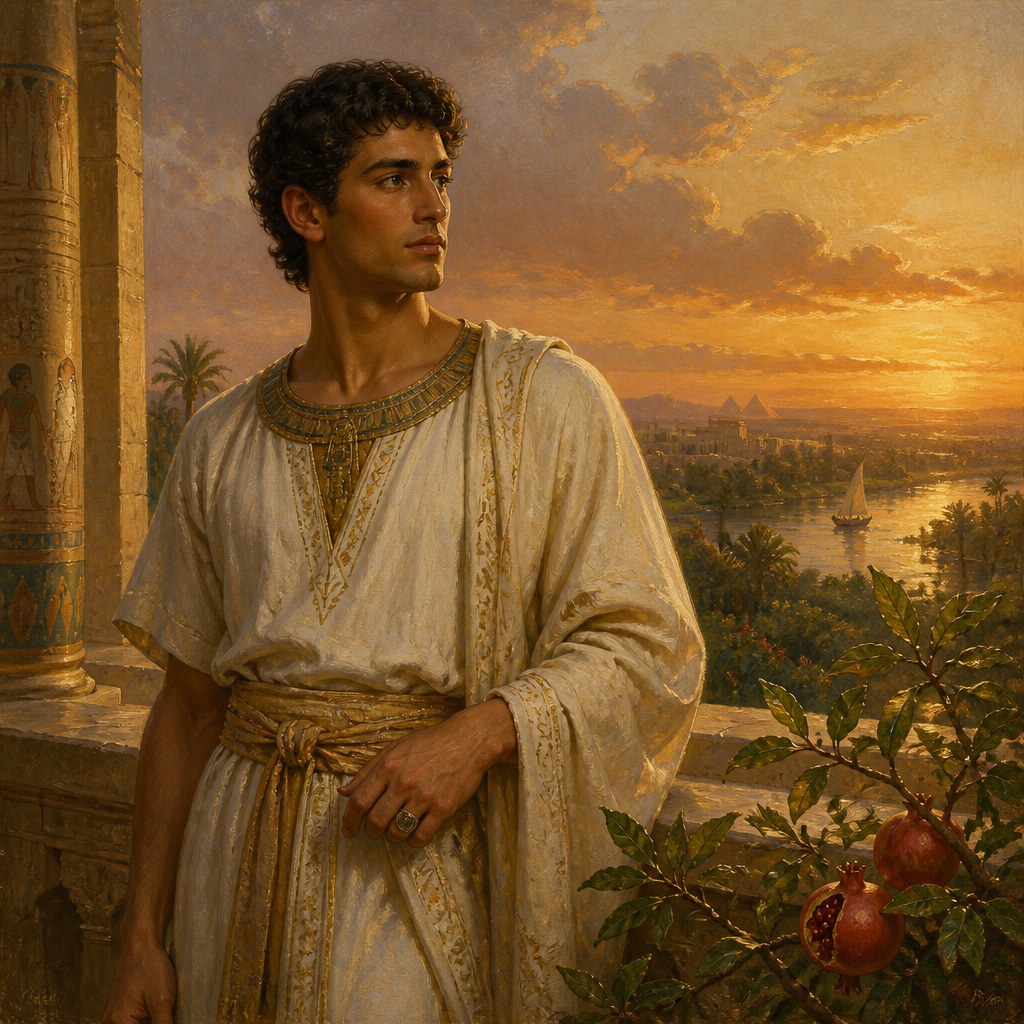
Ephraim was the second son born to Joseph, the high official of Egypt, and his wife Asenath, daughter of Potiphera. Born during the years of plenty before the great famine, Ephraim’s name reflects Joseph’s gratitude for God’s restoration, meaning "fruitful." Despite being the younger brother to Manasseh, Ephraim attained a position of preeminence within the patriarchal family structure when his grandfather Jacob (Israel) elevated him to the status of a full tribal patriarch, equivalent to Jacob's own sons.
His life marks a pivotal moment in the transition from a single family to a nation. As a patriarch, Ephraim’s legacy is defined by the divine reversal of birthright, a recurring theme in the Book of Genesis. By Jacob’s deliberate choice and prophetic blessing, Ephraim was set ahead of his older brother, ensuring that his descendants would become a numerous and powerful force in the subsequent history of the Israelite people.
Background and Family
Ephraim was born in Egypt to Joseph, the son of Jacob, and Asenath, the daughter of an Egyptian priest. His birth occurred during the seven years of abundance that preceded the seven-year famine (Genesis 41:50–52). Joseph chose the name Ephraim because, as he stated, "God has made me fruitful in the land of my affliction" (Genesis 41:52). This name underscored a shift in Joseph’s narrative from one of suffering and slavery to one of prosperity and expansion. Ephraim had one older brother, Manasseh, and their upbringing likely combined the high-status life of the Egyptian court with the ancestral traditions passed down by Joseph.
Major Life Events
The Adoption by Jacob
The most significant event in the life of Ephraim was his formal adoption by his grandfather, Jacob. When Jacob was near death, Joseph brought his two sons to receive a blessing. Jacob declared, "And now your two sons born to you in Egypt before I came to you here shall be reckoned as mine; Ephraim and Manasseh shall be mine, just as Reuben and Simeon are mine" (Genesis 48:5). This act effectively gave Joseph a double portion of the inheritance by elevating his two sons to the status of full tribal heads alongside their uncles.
The Reversal of the Blessing
During the blessing ceremony, a dramatic scene unfolded. Joseph positioned his firstborn, Manasseh, at Jacob’s right hand and Ephraim at Jacob’s left. However, Jacob, despite his failing eyesight, intentionally crossed his hands, placing his right hand on Ephraim’s head. When Joseph attempted to correct his father, Jacob refused, saying, "I know, my son, I know... nevertheless, his younger brother shall be greater than he, and his offspring shall become a multitude of nations" (Genesis 48:19). This prophetic act established Ephraim as the primary recipient of the covenantal blessing typically reserved for the firstborn.
Descendants and Later Years
Ephraim lived to see the third generation of his descendants through his son Shuthelah (Genesis 50:23). The biblical record in 1 Chronicles 7:20–27 provides a more detailed, albeit somber, genealogy. It lists several sons, including Shuthelah, Bered, Tahath, Eleadah, and Zabad. The text records a tragic incident where his sons Ezer and Elead were killed by the men of Gath while attempting to seize livestock. In his grief, Ephraim was comforted by his brothers and later fathered another son, Beriah, whose name means "in trouble" or "tragedy," marking the circumstances of his birth.
Relationship to Other Biblical Figures
Ephraim’s primary relationships are defined by his connection to Joseph and Jacob. As the son of Joseph, he represented the continuation of the "House of Joseph." His relationship with his brother Manasseh is characterized by the lack of recorded conflict, despite the potential for sibling rivalry following Jacob’s preference for the younger. Furthermore, Ephraim is a direct ancestor of Joshua (the son of Nun), who would eventually lead Israel into the Promised Land, highlighting the military and leadership prowess associated with Ephraim’s lineage (Numbers 13:8, 1 Chronicles 7:27).
Spiritual Significance
In the broader context of biblical theology, Ephraim serves as a testament to God’s sovereignty over human tradition. The recurring theme of the younger son being chosen over the older (e.g., Isaac over Ishmael, Jacob over Esau) reaches a definitive point in Ephraim. The blessing Jacob bestowed became a standard liturgical formula in Israel: "May God make you like Ephraim and Manasseh" (Genesis 48:20).
While these later references often condemn the tribe for idolatry, they also reveal a deep paternal affection from God. Jeremiah 31:20 records the Lord’s heart: "Is not Ephraim a precious son to Me, a delightful child?" Thus, the patriarch Ephraim represents both the fruitfulness of God's promise and the complex responsibilities of being a chosen people.
Ephraim’s theological importance lies in his role as a recipient of the 'blessing of the younger,' which underscores the biblical motif that divine election is based on God’s grace rather than natural right or birth order. By being elevated to the status of a tribe alongside his uncles, Ephraim ensures that the 'House of Joseph' maintains a dominant presence in Israel’s tribal confederacy and subsequent monarchy.
Furthermore, Ephraim represents the integration of the Egyptian sojourn into the identity of Israel. As a child born in a foreign land to an Egyptian mother, his full inclusion into the covenant family of Jacob demonstrates the expansive nature of the Abrahamic promise.
Frequently Asked Questions
What does the name Ephraim mean?
The name Ephraim comes from the Hebrew word 'parah,' meaning 'to be fruitful.' Joseph named him this to acknowledge that God had made him fruitful in Egypt, the land of his suffering.
Why did Jacob bless Ephraim over Manasseh?
Jacob blessed Ephraim over Manasseh by crossing his hands, acting under divine inspiration. He prophesied that although Manasseh would be great, the younger Ephraim would be even greater and his descendants would become a multitude of nations.
Who was Ephraim's mother?
His mother was Asenath, the daughter of Potiphera, who was a priest of On in Egypt. She was given to Joseph in marriage by Pharaoh.
Did Ephraim have any children?
Yes, according to 1 Chronicles 7, his sons included Shuthelah, Becher, Tahan, Beriah, Ezer, and Elead. Ezer and Elead were tragically killed in a skirmish in Gath.
Which famous biblical leader was a descendant of Ephraim?
Joshua, the son of Nun, who led the Israelites into the Promised Land after the death of Moses, was a direct descendant of Ephraim.
Family & Relationships
Parents
 AsenathMotherGenesis 46:20Stated
 Joseph, Son of JacobFatherGenesis 46:20Stated
 EphraimThis page
 Manasseh, Son of JosephBrotherGenesis 41:51–52Stated
Children
 Becher, Son of EphraimSonNumbers 26:35Stated
 Shuthelah, Son of EphraimSonNumbers 26:35Stated
 Tahan, Son of EphraimSonNumbers 26:35Stated
 Beriah, Son of EphraimSon1 Chronicles 7:22–23Stated
 EleadSon1 Chronicles 7:20–21Stated
 Ezer, Son of EphraimSon1 Chronicles 7:20–21Stated
Extended family
 PotipheraGrandfatherGenesis 41:45
Inferred
Genesis 46:20 names Ephraim and Potiphera in the same verse but does not state a grandfather tie between them; the link rests on the surrounding narrative.Evidence: Genesis 41:45; Genesis 41:50; Genesis 46:20
 EranGrandsonNumbers 26:36
Inferred
Reconstructed through Shuthelah: Numbers 26:35 ties Ephraim to Shuthelah; Numbers 26:36 ties Shuthelah to Eran. No verse states the grandson link between Ephraim and Eran directly.Evidence: Numbers 26:36; Numbers 26:35
 BeredGrandson1 Chronicles 7:20
Inferred
1 Chronicles 7:20 lists Bered and Ephraim among the descendants of ephraim, but does not say how the two of them are related.Evidence: 1 Chronicles 7:20
 SheerahGranddaughter1 Chronicles 7:22
Inferred
No verse names Ephraim and Sheerah together; the granddaughter link is carried from the surrounding genealogy and is not stated in Scripture.Evidence: 1 Chronicles 7:22
Connected Figures
Family
Mother · Genesis 46:20
An Egyptian noblewoman and the wife of the patriarch Joseph, who bore him the two tribal ancestors, Manasseh and Ephraim.
PatriarchsFirst: Genesis 41:453 versesNoblewoman
Father · Genesis 46:20
The favored son of Jacob who, after being sold into slavery by his brothers, rose to become the Grand Vizier of Egypt and preserved the lineage of Israel during a regional famine.
PatriarchsFirst: Genesis 30:24156 versesShepherd, Slave, Household Manager, Prisoner, Grand Vizier of Egypt
Son · Numbers 26:35
Becher was a son of Ephraim and the ancestral head of the Becherite clan within the tribe of Ephraim during the wilderness wanderings.
Egypt and WildernessFirst: Numbers 26:353 versesProgenitorEphraim
Son · Numbers 26:35
Shuthelah was the firstborn son of Ephraim and the ancestral head of the Shuthelahite clan during the Israelite sojourn in Egypt.
Son · Numbers 26:35
Tahan was a son of Ephraim and the ancestral head of the Tahanite clan within the tribe of Ephraim during the Egyptian sojourn.
Son · 1 Chronicles 7:22–23
A son born to the patriarch Ephraim in his old age, named to commemorate a period of family tragedy following the death of his older brothers.
Son · 1 Chronicles 7:20–21
Elead was a son of the patriarch Ephraim who was killed by the inhabitants of Gath during a livestock raid while the Israelites were in Egypt.
Son · 1 Chronicles 7:20–21
Ezer was a son of the patriarch Ephraim who was killed by the men of Gath while attempting to seize livestock in the land of Canaan.
Egypt and WildernessFirst: 1 Chronicles 7:215 versesRaider / HerdsmanEphraim
Brother · Genesis 41:51–52
The firstborn son of Joseph and Asenath, Manasseh became the progenitor of one of the largest and most strategically positioned tribes of Israel.
PatriarchsFirst: Genesis 41:5111 versesPatriarchManasseh
Grandfather · Genesis 41:45
An Egyptian priest of the city of On and the father of Asenath, who became the wife of the patriarch Joseph.
PatriarchsFirst: Genesis 41:453 versesPriest of On
Grandson · Numbers 26:36
Eran was a grandson of Ephraim and the founder of the Eranite clan, recorded during the census of Israel in the wilderness.
Egypt and WildernessFirst: Numbers 26:363 versesPatriarchEphraim
Grandson · 1 Chronicles 7:20
Bered was a descendant of the tribe of Ephraim during the Egyptian sojourn, identified as the son of Shuthelah and a link in the pre-Exodus genealogy.
Categories
Mentions by Book
- Genesis12
- Numbers1
- 1 Chronicles3
Scripture References
All 16 indexed verses, in canonical order, from the Berean Standard Bible.
Genesis · 12
- Genesis 41:45Partial
Pharaoh gave Joseph the name Zaphenath-paneah, and he gave him Asenath daughter of Potiphera, priest of On, to be his wife. And Joseph took charge of all the land of Egypt.
Cited as evidence on a family card; added so References, Key Verses and Mentions by Book share one index.
- Genesis 41:50Partial
Before the years of famine arrived, two sons were born to Joseph by Asenath daughter of Potiphera, priest of On.
Cited as evidence on a family card; added so References, Key Verses and Mentions by Book share one index.
- Genesis 41:51Partial
Joseph named the firstborn Manasseh, saying, “God has made me forget all my hardship and all my father’s household.”
Cited as evidence on a family card; added so References, Key Verses and Mentions by Book share one index.
- Genesis 41:52
And the second son he named Ephraim, saying, “God has made me fruitful in the land of my affliction.”
- Genesis 46:20
Manasseh and Ephraim were born to Joseph in the land of Egypt by Asenath daughter of Potiphera, priest of On.
- Genesis 48:1
Some time later Joseph was told, “Your father is ill.” So he set out with his two sons, Manasseh and Ephraim.
- Genesis 48:5
And now your two sons born to you in Egypt before I came to you here shall be reckoned as mine; Ephraim and Manasseh shall be mine, just as Reuben and Simeon are mine.
- Genesis 48:13
And Joseph took both of them—with Ephraim in his right hand toward Israel’s left hand, and Manasseh in his left hand toward Israel’s right hand—and brought them close to him.
- Genesis 48:14
But Israel stretched out his right hand and put it on the head of Ephraim, the younger; and crossing his hands, he put his left on Manasseh’s head, although Manasseh was the firstborn.
- Genesis 48:17Partial
When Joseph saw that his father had placed his right hand on Ephraim’s head, he was displeased and took his father’s hand to move it from Ephraim’s head to Manasseh’s.
- Genesis 48:20Partial
So that day Jacob blessed them and said: “By you shall Israel pronounce this blessing: ‘May God make you like Ephraim and Manasseh.’” So he put Ephraim before Manasseh.
- Genesis 50:23
He saw Ephraim’s sons to the third generation, and indeed the sons of Machir son of Manasseh were brought up on Joseph’s knees.
Numbers · 1
- Numbers 26:36Partial
And the descendants of Shuthelah were the Eranite clan from Eran.
Cited as evidence on a family card; added so References, Key Verses and Mentions by Book share one index.
1 Chronicles · 3
- 1 Chronicles 7:21Partial
Zabad his son, and Shuthelah his son. Ezer and Elead were killed by the natives of Gath, because they went down to steal their livestock.
Cited as evidence on a family card; added so References, Key Verses and Mentions by Book share one index.
- 1 Chronicles 7:23Partial
And again he slept with his wife, and she conceived and gave birth to a son. So he named him Beriah, because tragedy had come upon his house.
Cited as evidence on a family card; added so References, Key Verses and Mentions by Book share one index.
- 1 Chronicles 7:24Partial
His daughter was Sheerah, who built Lower and Upper Beth-horon, as well as Uzzen-sheerah.
Cited as evidence on a family card; added so References, Key Verses and Mentions by Book share one index.