Asenath
Who was Asenath in the Bible?
An Egyptian noblewoman and the wife of the patriarch Joseph, who bore him the two tribal ancestors, Manasseh and Ephraim.
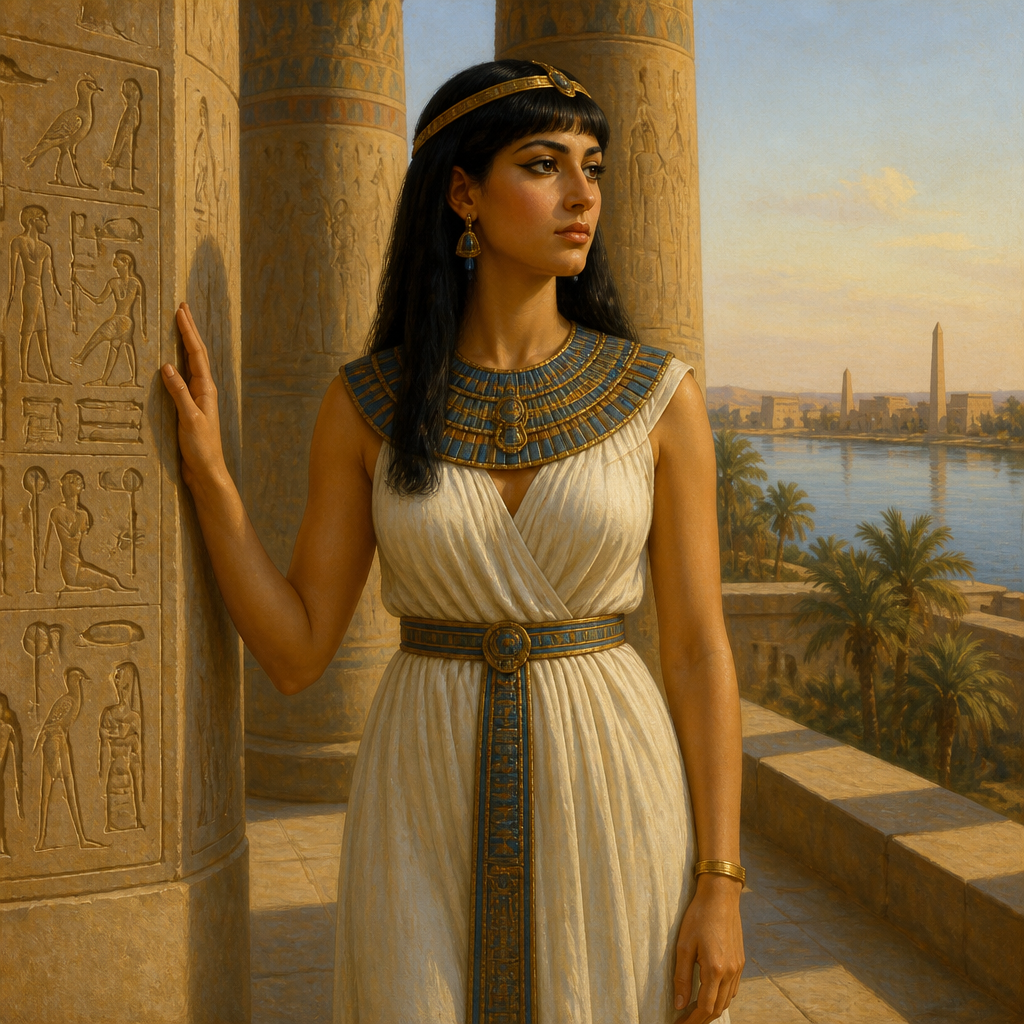
Asenath is a figure of significant genealogical and historical importance within the narrative of the Patriarchal Period. According to the book of Genesis, she was an Egyptian woman of high status, given to Joseph by the Pharaoh as a gesture of honor following Joseph’s rise to power as the vizier of Egypt. She is specifically identified as the daughter of Potiphera, the priest of the city of On (Heliopolis).
While the biblical text provides a limited amount of biographical detail regarding Asenath, her role is pivotal in the formation of the nation of Israel. By her union with Joseph, she became the mother of two major tribes—Manasseh and Ephraim. Her presence in the text highlights the unique period of Egyptian sojourn and the integration of the house of Jacob into the administrative and social framework of Egypt before the era of the Exodus.
Background and Family
Asenath appears in the biblical record during the transition of Joseph from a prisoner to the second-most powerful official in Egypt. Genesis 41:45 records that Pharaoh, as part of Joseph's installation, bestowed upon him the name Zaphenath-paneah and arranged a marriage with Asenath.
Asenath’s father, Potiphera, held a position of significant religious and political influence as the priest of On. The city of On, known in Greek as Heliopolis, was the center of Egyptian sun worship. Her father's name (Potiphera) translates to "he whom Ra gave," signaling the family's deep roots in the Egyptian cultic establishment. While the Bible does not explicitly detail Asenath’s personal beliefs or early life, her social standing would have been that of the Egyptian aristocracy.
Major Life Events
The primary events recorded of Asenath involve her marriage and the birth of her children. Following the elevation of Joseph to the role of governor, he took charge of the land, and the marriage to Asenath was solidified. The text notes that she remained his wife throughout his years of service during the abundance and the subsequent famine.
Genesis 41:50 specifies that before the years of famine arrived, Asenath bore Joseph two sons. The naming of these children—Manasseh and Ephraim—reflects Joseph's theological processing of his journey, yet the text consistently identifies Asenath as their mother. These sons would later be formally adopted by Jacob (Joseph's father), placing Asenath's descendants among the tribal heads of Israel.
Relationship to Other Biblical Figures
Asenath’s primary relationship is with Joseph, serving as his partner during his entire career as a ruler in Egypt. She also serves as the maternal link between the Egyptian nobility and the lineage of the Patriarchs. The final mention of her in Genesis 46:20 appears within the genealogical listing of the descendants of Jacob who were in Egypt, reaffirming her status as the mother of the two tribes.
Outside of Joseph and her two sons, Manasseh and Ephraim, the only other relative mentioned is her father, Potiphera. The Bible does not record her interacting with Jacob or Joseph’s eleven brothers, though her sons are central to the blessings of Jacob in his final days.
Spiritual Significance
The spiritual significance of Asenath lies in her role as the mother of the "half-tribes" of Israel. Her marriage represents a moment of divine providence where a foreigner is brought into the covenantal family of Abraham. Despite her background as the daughter of a pagan priest, her children became heirs to the promises given to Jacob. This intersection of the Hebrew and Egyptian lines underscores the theme of God working through various nations to preserve the family of Israel during the famine. The biblical record is brief, focusing primarily on her role in the lineage rather than her personal piety, yet she remains one of the most prominent women of the Patriarchal Period by virtue of her progeny.
Asenath serves as the vital maternal ancestor of the tribes of Ephraim and Manasseh. Her inclusion in the Genesis genealogies ensures that the dual inheritance of Joseph is clearly documented. Her status as the daughter of the priest of On highlights the high regard in which Joseph was held by the Egyptian crown.
Theological reflection often focuses on how Asenath, a non-Hebrew, was incorporated into the patriarchal family. By bearing Joseph's children in Egypt, she participated in the fulfillment of the promise that Abraham's descendants would be numerous and would eventually form a great nation, even while residing in a foreign land.
Frequently Asked Questions
Who was Asenath's father?
Asenath's father was Potiphera, who served as the priest of the Egyptian city of On (Heliopolis).
Who were Asenath's children?
Asenath bore two sons to Joseph: Manasseh and Ephraim, both of whom became heads of major tribes in Israel.
How did Asenath meet Joseph?
The Bible does not describe their meeting; it states that Pharaoh gave her to Joseph to be his wife after Joseph was promoted to a position of authority in Egypt.
What does the name Asenath mean?
The name is of Egyptian origin, likely meaning 'she who belongs to Neith' (an Egyptian goddess).
Where did Asenath live?
She lived in Egypt, specifically associated with the city of On and the royal administrative centers where Joseph governed.
Family & Relationships
Parents
 PotipheraFatherGenesis 41:45Stated
 Joseph, Son of JacobHusbandGenesis 41:45Stated
 AsenathThis page
Children
 EphraimSonGenesis 46:20Stated
 Manasseh, Son of JosephSonGenesis 46:20Stated
Connected Figures
Family
Father · Genesis 41:45
An Egyptian priest of the city of On and the father of Asenath, who became the wife of the patriarch Joseph.
PatriarchsFirst: Genesis 41:453 versesPriest of On
Husband · Genesis 41:45
The favored son of Jacob who, after being sold into slavery by his brothers, rose to become the Grand Vizier of Egypt and preserved the lineage of Israel during a regional famine.
PatriarchsFirst: Genesis 30:24156 versesShepherd, Slave, Household Manager, Prisoner, Grand Vizier of Egypt
Son · Genesis 46:20
The second son of Joseph and Asenath, Ephraim was adopted by his grandfather Jacob and received the primary blessing of the firstborn, becoming the progenitor of a dominant tribe in Israel.
PatriarchsFirst: Genesis 41:5216 versesPatriarchEphraim
Son · Genesis 46:20
The firstborn son of Joseph and Asenath, Manasseh became the progenitor of one of the largest and most strategically positioned tribes of Israel.
PatriarchsFirst: Genesis 41:5111 versesPatriarchManasseh
Categories
Mentions by Book
- Genesis3
Scripture References
All 3 indexed verses, in canonical order, from the Berean Standard Bible.
Genesis · 3
- Genesis 41:45
Pharaoh gave Joseph the name Zaphenath-paneah, and he gave him Asenath daughter of Potiphera, priest of On, to be his wife. And Joseph took charge of all the land of Egypt.
- Genesis 41:50
Before the years of famine arrived, two sons were born to Joseph by Asenath daughter of Potiphera, priest of On.
- Genesis 46:20
Manasseh and Ephraim were born to Joseph in the land of Egypt by Asenath daughter of Potiphera, priest of On.