Manasseh, Son of Joseph
Who was Manasseh, Son of Joseph, in the Bible?
The firstborn son of Joseph and Asenath, Manasseh became the progenitor of one of the largest and most strategically positioned tribes of Israel.
This is one of 4 people named Manasseh in the Bible. See all 4 →
Manasseh was the firstborn son of Joseph, the vizier of Egypt, and Asenath, the daughter of a priest of On. Born in Egypt during the seven years of plenty, his name—meaning 'making to forget'—symbolized Joseph’s transition from the sorrow of his betrayal by his brothers to the comfort of his new life and family. Though Manasseh was the elder brother, he is frequently mentioned alongside his younger brother, Ephraim, due to a significant shift in their status during the patriarchal era.
Historically, Manasseh is unique for being adopted as a full son by his grandfather Jacob (Israel), thereby elevating him from the status of a grandson to that of a direct tribal patriarch. This adoption ensured that the 'House of Joseph' received a double portion of the inheritance among the tribes of Israel. Manasseh's legacy is defined by his large family and the eventual division of his descendants into two distinct geographical groups in the Promised Land.
Background and Family
Manasseh was born in Egypt to Joseph and Asenath (Genesis 41:50-51) before the years of famine began. His birth was a momentous occasion for Joseph, who had spent years in servitude and imprisonment. The biblical text notes that Joseph named him Manasseh, saying, “God has made me forget all my hardship and all my father’s household” (Genesis 41:51).
Manasseh was the older brother of Ephraim. While he spent his early years in the Egyptian court, his identity remained firmly rooted in the Hebrew tradition of his father. He eventually married an Aramean partner (identified as a concubine in 1 Chronicles 7:14), through whom he fathered Machir and Asriel. His line proved to be prolific; his son Machir became a famed warrior and the father of Gilead, a name that would eventually define a large region of Israelite territory.
Major Life Events
The Adoption by Jacob
One of the most critical events in Manasseh’s life occurred when his grandfather, Jacob, was nearing death in Egypt. Joseph brought his two sons, Manasseh and Ephraim, to be blessed by the dying patriarch. In a surprising turn of events, Jacob claimed the boys as his own: “Ephraim and Manasseh shall be mine, just as Reuben and Simeon are mine” (Genesis 48:5). This act effectively granted Joseph’s line two tribal allotments instead of one.
The Crossing of Hands
During the formal blessing, a significant cultural and spiritual upset took place. Joseph positioned Manasseh at Jacob’s right hand, as was the right of the firstborn. However, Jacob deliberately crossed his arms, placing his right hand on the younger Ephraim and his left hand on Manasseh. When Joseph attempted to correct his father, Jacob refused, stating that while Manasseh would indeed be great and become a people, his younger brother would be even greater (Genesis 48:19). This event established a recurring biblical theme where the divine choice supersedes human tradition regarding birthright.
Life in Egypt and Posterity
Manasseh lived to see his grandchildren born. Genesis 50:23 records that the children of Machir, son of Manasseh, were "brought up on Joseph’s knees," indicating a close family bond and the transmission of the patriarchal covenant from Joseph to Manasseh’s descendants before Joseph's death.
Relationship to Other Biblical Figures
Manasseh’s life is defined by his relationship with Joseph and Ephraim. As the son of the most powerful man in Egypt (second only to Pharaoh), he occupied a position of high social status. However, his relationship with his brother Ephraim is marked by the biblical narrative's consistent pairing of their names. In almost every major census and tribal listing from the Exodus through the settlement, the two are linked as the "House of Joseph."
Later, Manasseh’s son Machir and his great-grandson Zelophehad are highlighted. The daughters of Zelophehad (Mahlah, Noah, Hoglah, Milcah, and Tirzah) are particularly noted for their role in legal history, as they successfully petitioned Moses to allow them to inherit their father's land, ensuring the line of Manasseh remained intact (Numbers 27:1-11).
Spiritual Significance
The spiritual significance of Manasseh lies in the sovereignty of God’s grace and the expansion of the covenant. His birth represented God’s restoration of Joseph. However, the blessing he received from Jacob serves as a reminder that being the firstborn does not guarantee the primary position in God’s redemptive plan.
Despite being "second" to Ephraim in the blessing, Manasseh’s tribal importance remained vast. The tribe was the only one to receive land on both sides of the Jordan River—the "half-tribe" in the east and the other half in the west. This geographical spread symbolized the far-reaching influence of the Josephite line. In the prophetic literature and the New Testament, Manasseh remains a symbol of the gathered people of God, appearing in the sealing of the 144,000 in Revelation 7:6, affirming his permanent place in the biblical record of the tribes.
Manasseh represents the fulfillment of God's promise to make Joseph 'fruitful in the land of my suffering.' His status as a patriarch who was 'adopted up' into the twelve tribes demonstrates the fluidity of the patriarchal structure under divine guidance. Historically, his tribe became a powerhouse in Israel, producing figures such as Gideon and Jephthah, and occupying significant swaths of territory in both Gilead and the Central Highlands.
Theologically, Manasseh serves as a case study in the 'theology of the firstborn.' While he was passed over for the primary blessing, he was not rejected; rather, he was established as a great nation in his own right. This illustrates that God's specific election of one individual (like Ephraim) does not preclude the blessing and purpose of another (like Manasseh).
Frequently Asked Questions
What does the name Manasseh mean?
The name Manasseh (מְנַשֶּׁה) means 'causing to forget.' Joseph gave him this name because God had made him forget his previous troubles and his father’s house.
Why did Jacob bless Ephraim over Manasseh?
Jacob claimed he was following divine guidance. While he acknowledged Manasseh was the firstborn and would be a great people, he prophesied that Ephraim’s descendants would be even more numerous and significant.
Who was Manasseh’s mother?
His mother was Asenath, the daughter of Potiphera, who was a priest of the Egyptian city of On.
Did Manasseh have any children?
Yes, the Bible specifically names his son Machir (born to his Aramean concubine) and mentions Asriel. Through Machir, Manasseh became the ancestor of the Gileadites.
Is Manasseh mentioned in the New Testament?
Yes, the tribe of Manasseh is specifically mentioned in Revelation 7:6 as one of the tribes from which 12,000 people are sealed.
Family & Relationships
Parents
 AsenathMotherGenesis 46:20Stated
 Joseph, Son of JacobFatherGenesis 46:20Stated
 Manasseh's Aramean ConcubineConcubine1 Chronicles 7:14
Inferred
No verse names Manasseh's Aramean Concubine and Manasseh together; the partner link is carried from the surrounding genealogy and is not stated in Scripture.Evidence: 1 Chronicles 7:14
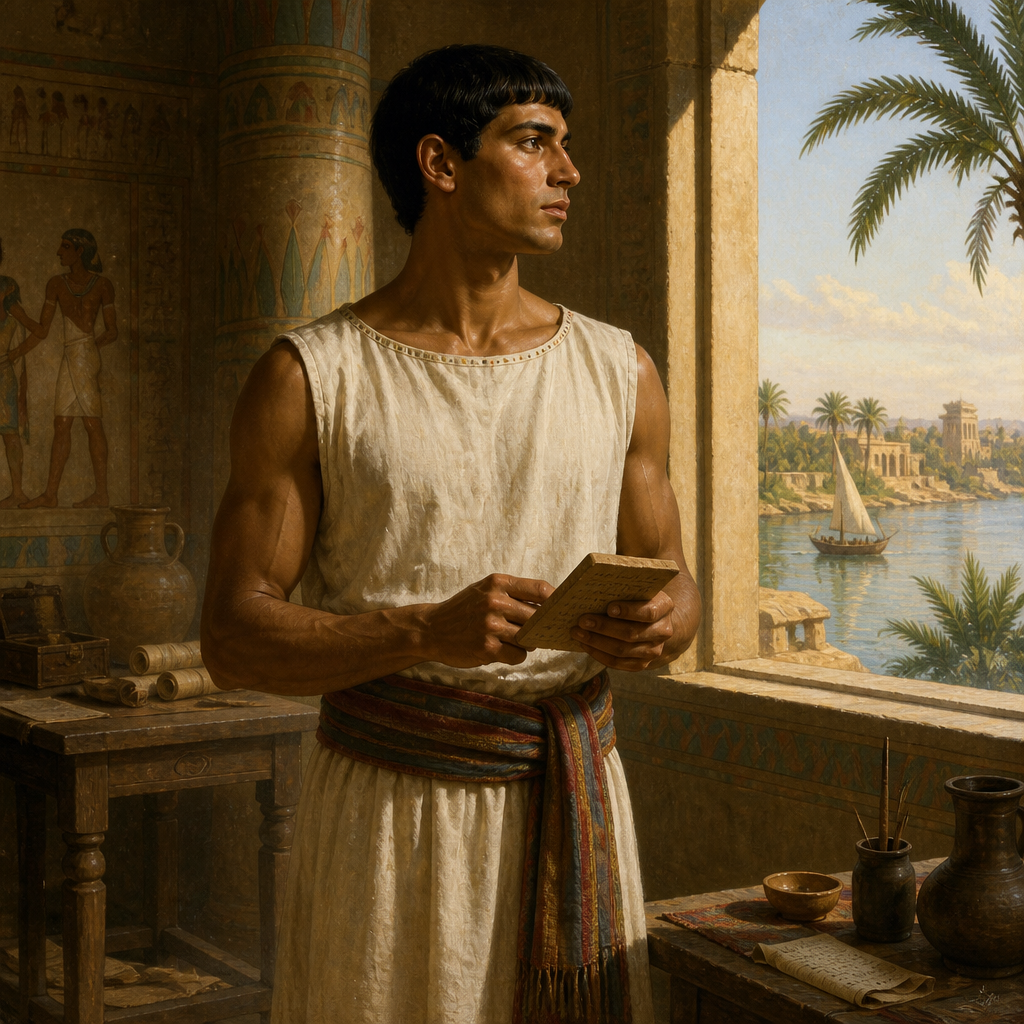 Manasseh, Son of JosephThis page
 EphraimBrotherGenesis 41:51–52Stated
Children
 Machir, Son of ManassehSonGenesis 50:23Stated
 Asriel, Son of ManassehSon1 Chronicles 7:14Stated
Connected Figures
Family
Mother · Genesis 46:20
An Egyptian noblewoman and the wife of the patriarch Joseph, who bore him the two tribal ancestors, Manasseh and Ephraim.
PatriarchsFirst: Genesis 41:453 versesNoblewoman
Father · Genesis 46:20
The favored son of Jacob who, after being sold into slavery by his brothers, rose to become the Grand Vizier of Egypt and preserved the lineage of Israel during a regional famine.
PatriarchsFirst: Genesis 30:24156 versesShepherd, Slave, Household Manager, Prisoner, Grand Vizier of Egypt
Concubine · 1 Chronicles 7:14
An Aramean woman who served as a concubine to Manasseh, son of Joseph, and became the mother of Machir and Asriel.
Egypt and WildernessFirst: 1 Chronicles 7:141 versesConcubine of Manasseh
Son · Genesis 50:23
The firstborn son of Manasseh and grandson of Joseph, Machir was a formidable warrior whose descendants conquered and settled the region of Gilead.
Egypt and WildernessFirst: Genesis 50:2318 versesWarriorManasseh
Son · 1 Chronicles 7:14
Asriel was a son of the patriarch Manasseh, born to his Aramean concubine during the era of the Egyptian sojourn.
Egypt and WildernessFirst: 1 Chronicles 7:141 versesManasseh
Brother · Genesis 41:51–52
The second son of Joseph and Asenath, Ephraim was adopted by his grandfather Jacob and received the primary blessing of the firstborn, becoming the progenitor of a dominant tribe in Israel.
PatriarchsFirst: Genesis 41:5216 versesPatriarchEphraim
Categories
Mentions by Book
- Genesis11
Scripture References
All 11 indexed verses, in canonical order, from the Berean Standard Bible.
Genesis · 11
- Genesis 41:51
Joseph named the firstborn Manasseh, saying, “God has made me forget all my hardship and all my father’s household.”
- Genesis 41:52Partial
And the second son he named Ephraim, saying, “God has made me fruitful in the land of my affliction.”
Cited as evidence on a family card; added so References, Key Verses and Mentions by Book share one index.
- Genesis 46:20
Manasseh and Ephraim were born to Joseph in the land of Egypt by Asenath daughter of Potiphera, priest of On.
- Genesis 48:1
Some time later Joseph was told, “Your father is ill.” So he set out with his two sons, Manasseh and Ephraim.
- Genesis 48:5
And now your two sons born to you in Egypt before I came to you here shall be reckoned as mine; Ephraim and Manasseh shall be mine, just as Reuben and Simeon are mine.
- Genesis 48:13
And Joseph took both of them—with Ephraim in his right hand toward Israel’s left hand, and Manasseh in his left hand toward Israel’s right hand—and brought them close to him.
- Genesis 48:14Partial
But Israel stretched out his right hand and put it on the head of Ephraim, the younger; and crossing his hands, he put his left on Manasseh’s head, although Manasseh was the firstborn.
- Genesis 48:17
When Joseph saw that his father had placed his right hand on Ephraim’s head, he was displeased and took his father’s hand to move it from Ephraim’s head to Manasseh’s.
- Genesis 48:19Partial
But his father refused. “I know, my son, I know!” he said. “He too shall become a people, and he too shall be great; nevertheless, his younger brother shall be greater than he, and his offspring shall become a multitude of nations.”
Cited as a key verse; added so References, Key Verses and Mentions by Book share one index.
- Genesis 48:20Partial
So that day Jacob blessed them and said: “By you shall Israel pronounce this blessing: ‘May God make you like Ephraim and Manasseh.’” So he put Ephraim before Manasseh.
- Genesis 50:23
He saw Ephraim’s sons to the third generation, and indeed the sons of Machir son of Manasseh were brought up on Joseph’s knees.
Others Named Manasseh
Compare all 4 bearers →Manasseh, Descendant of HashumEzra 10:33
A Jewish returnee from the Babylonian exile who was among the descendants of Hashum recorded as having married a foreign woman.
Manasseh, King of Judah2 Kings 20:21
The longest-reigning king of Judah, Manasseh is noted for his extreme idolatry, subsequent Assyrian captivity, and dramatic late-life repentance.
Manasseh, Descendant of Pahath-moabEzra 10:30
A returnee from the Babylonian exile who was identified among the descendants of Pahath-moab for having married a foreign woman.