Reuben
Who was Reuben in the Bible?
Reuben was the firstborn son of Jacob and Leah, the founding patriarch of the Tribe of Reuben, and a complex figure known for both his attempts to save Joseph and his loss of the birthright.
Reuben was the eldest son of the patriarch Jacob and his first wife, Leah. His name, given by his mother at birth, reflects her hope that the Lord had seen her affliction and that her husband would finally love her. As the firstborn of the twelve brothers, Reuben held a position of natural leadership and privilege within the nascent nation of Israel, yet his life was marked by a series of moral failures and noble intentions that ultimately resulted in the loss of his preeminent status.
Background and Family
Reuben was born in Paddan-aram during the wheat harvest. He was the first of six sons born to Leah and the firstborn of Jacob's twelve sons. The biblical narrative records an early incident where a young Reuben found mandrakes in the field and brought them to his mother, which led to a negotiation between Leah and Rachel regarding Jacob’s company (Genesis 30:14).
Reuben was the father of four sons: Hanoch, Pallu, Hezron, and Carmi. These four individuals became the heads of the primary clans of the tribe that bore his name. As part of the larger family unit, Reuben grew up alongside his many brothers, including Simeon, Levi, and Judah, as well as his sister Dinah.
Major Life Events
The Incident with Bilhah
A pivotal and tragic moment in Reuben’s biography occurred while Israel was living in the region of Eder. Reuben went in and slept with Bilhah, his father’s concubine and the mother of his half-brothers Dan and Naphtali. The text simply notes that "Israel heard about it" (Genesis 35:22). This act of sexual immorality was not merely a personal sin but a profound betrayal of his father and a challenge to Jacob’s authority. This event would later serve as the basis for Reuben losing his rights as the firstborn.
The Protection of Joseph
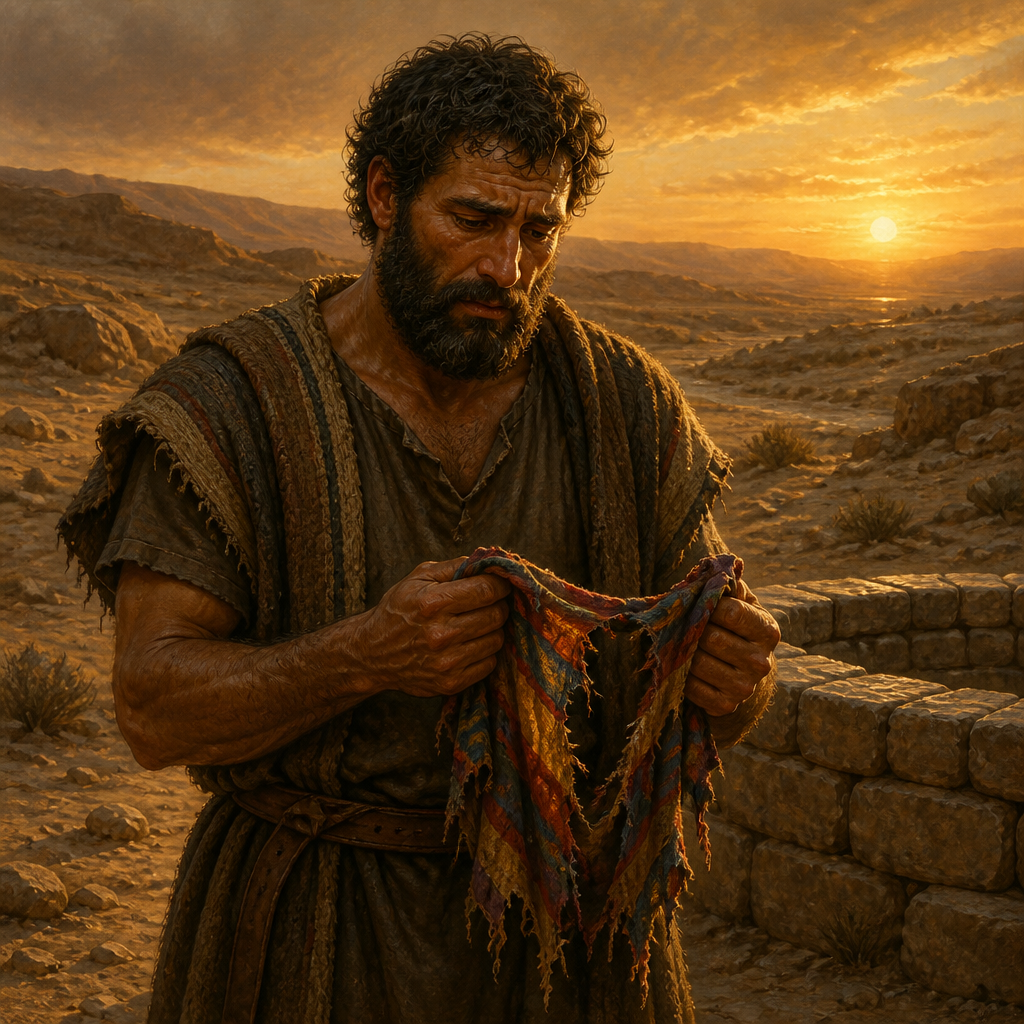
Despite his earlier failure, Reuben displayed a degree of conscience and responsibility during the conspiracy against Joseph. When the other brothers plotted to kill Joseph in the wilderness of Dothan, Reuben intervened. He persuaded them not to shed blood but to throw Joseph into a dry cistern, secretly intending to return and rescue him (Genesis 37:21-22). However, in Reuben's absence, the brothers sold Joseph to Ishmaelite traders. Upon returning to the pit and finding Joseph gone, Reuben tore his clothes in grief, crying out, "The boy is not there! Where can I go now?"
The Famine in Egypt
Years later, during the Great Famine, Reuben accompanied his brothers to Egypt to buy grain. When the Egyptian governor (a disguised Joseph) accused them of being spies, Reuben reminded his brothers that their current distress was a consequence of their sin against Joseph (Genesis 42:22). In an attempt to convince Jacob to allow Benjamin to travel to Egypt, Reuben made a desperate and somewhat rash offer, telling his father, "You may kill my two sons if I fail to bring him back to you" (Genesis 42:37). Jacob, however, refused to entrust Benjamin to him.
Jacob’s Final Blessing
On his deathbed, Jacob gathered his sons to pronounce their futures. Reuben was addressed first as the "beginning of my strength, excelling in honor, excelling in power." However, Jacob then characterized him as "unstable as water," declaring that he would no longer excel because he went up to his father’s bed (Genesis 49:3-4). The Chronicler later confirms that while Reuben was the firstborn, his birthright was transferred to the sons of Joseph because of this defilement (1 Chronicles 5:1).
Relationship to Other Biblical Figures
Reuben’s primary relationship was with his father, Jacob, whose favor he sought but whose trust he shattered. Among his brothers, he acted as a failed protector of Joseph and a voice of remorse among the ten older siblings. Later history shows the tribe of Reuben maintaining a close alliance with the tribe of Gad and the half-tribe of Manasseh. These groups requested to settle on the east side of the Jordan River, provided they assisted their brothers in the conquest of Canaan—a request granted by Moses and confirmed by Joshua.
Spiritual Significance
Reuben serves as a cautionary figure in the biblical narrative. He represents the "unstable" nature of human strength when it is not governed by moral restraint. His life illustrates the long-term consequences of a single act of betrayal, as his descendants never produced a judge, king, or prophet of major note. Nevertheless, Reuben is not entirely cast off; his name is preserved in the gates of the New Jerusalem in Ezekiel’s vision and among the 144,000 sealed in the book of Revelation, signifying God’s enduring covenant with the tribes of Israel.
Theologically, Reuben represents the transition from natural primogeniture to divine selection. While he was the firstborn by right of birth, his instability and moral failure led to the redistribution of his inheritance—the double portion going to Joseph and the leadership role eventually falling to Judah. This highlights a recurring biblical theme where the 'elder shall serve the younger' and where character often supersedes birth order in the economy of God.
Furthermore, the Reubenites' choice to settle east of the Jordan (Transjordan) underscores the tensions between the ideal borders of the Promised Land and the practical desires of the tribes. Despite his flaws, Reuben’s role in attempting to save Joseph provides a redemptive glimmer, showing that even a compromised leader can possess impulses toward justice and mercy.
Frequently Asked Questions
Why did Reuben lose his birthright?
Reuben lost his birthright because he committed adultery with Bilhah, who was his father Jacob’s concubine. Jacob cited this act of defilement in his final blessing, describing Reuben as 'unstable as water.'
What does the name Reuben mean?
The name Reuben (Re'uven) essentially means 'Behold, a son.' Leah named him this because she believed the Lord had seen her misery and that his birth would cause her husband to love her.
Did Reuben try to save Joseph from his brothers?
Yes, Reuben was the only brother who explicitly tried to rescue Joseph. He convinced the others to throw Joseph into a pit instead of killing him, intending to come back and take Joseph home to their father.
Where did the tribe of Reuben settle?
The tribe of Reuben settled on the east side of the Jordan River in the land of Gilead, alongside the tribe of Gad and the half-tribe of Manasseh, after promising to help the other tribes conquer the land of Canaan.
Who were Reuben's children?
Reuben had four sons who became the heads of the Reubenite clans: Hanoch, Pallu, Hezron, and Carmi.
Family & Relationships
 ReubenThis page
 AsherBrotherExodus 1:2–4Stated
 Benjamin, Son of JacobBrotherExodus 1:2–3Stated
 DanBrotherExodus 1:2–4Stated
 DinahSisterGenesis 29:32
Inferred
Reconstructed through Simeon: Genesis 35:23 ties Reuben to Simeon; Genesis 34:25 ties Simeon to Dinah. No verse states the sister link between Reuben and Dinah directly.Evidence: Genesis 29:32; Genesis 30:21
 Gad, Son of JacobBrotherExodus 1:2–4Stated
 Issachar, Ninth Son of JacobBrotherGenesis 35:23Stated
 Joseph, Son of JacobBrother1 Chronicles 2:1–2Stated
 Judah, Son of JacobBrotherGenesis 35:23Stated
 Levi, Son of JacobBrotherGenesis 35:23Stated
 NaphtaliBrotherExodus 1:2–4Stated
 Simeon, Son of JacobBrotherGenesis 35:23Stated
 ZebulunBrotherGenesis 35:23Stated
Children
 Carmi, Son of ReubenSonGenesis 46:9Stated
 Hanoch, Son of ReubenSonGenesis 46:9Stated
 Hezron, Son of ReubenSonGenesis 46:9Stated
 PalluSonGenesis 46:9Stated
 BohanSonJoshua 15:6Stated
Connected Figures
Family

Father · Genesis 35:23–26
The third patriarch of the covenant, whom God renamed Israel after he wrestled with God, and the father of the twelve tribes.
PatriarchsFirst: Genesis 25:26228 versesPatriarch, Shepherd

Mother · Genesis 29:32
The elder daughter of Laban and the first wife of Jacob, Leah was the biological mother of six of the twelve tribes of Israel and the matriarch of the priestly and royal lines.
Son · Genesis 46:9
A grandson of the patriarch Jacob and the youngest son of Reuben who became the founding ancestor of the Carmite clan during the Egyptian Sojourn.
Son · Genesis 46:9
Hanoch was the firstborn son of Reuben and the ancestral founder of the Hanochite clan during the Egyptian sojourn and Wilderness period.
Son · Genesis 46:9
The third son of Reuben and founder of the Hezronite clan, listed among the descendants of Jacob who migrated to Egypt.
Son · Genesis 46:9
The second son of Reuben and the founder of the Palluite clan within the tribe of Reuben during the Egyptian sojourn and Exodus.
Son · Joshua 15:6
Bohan was a son of Reuben whose name is associated with a landmark stone used to delineate the tribal boundaries of Judah and Benjamin.
Egypt and WildernessFirst: Joshua 15:62 versesWarrior or tribal figureReuben
Brother · Exodus 1:2–4
Asher was the eighth son of Jacob, the second born to Zilpah, and the ancestral patriarch of the Tribe of Asher, known for the fertile lands and prosperity promised in his father's blessing.
PatriarchsFirst: Genesis 30:1315 versesPatriarchAsher
Brother · Exodus 1:2–3
The youngest son of Jacob and Rachel, Benjamin was the beloved patriarch of one of the twelve tribes of Israel and a central figure in the narrative of Joseph's rise in Egypt.
PatriarchsFirst: Genesis 35:1823 versesPatriarchBenjamin
Brother · Exodus 1:2–4
The fifth son of the patriarch Jacob and the first son born to his concubine Bilhah, serving as the eponymous ancestor of the Tribe of Dan.
PatriarchsFirst: Genesis 30:613 versesPatriarchDan
Sister · Genesis 29:32
The only daughter of Jacob and Leah mentioned in the patriarchal narratives, known for the incident at Shechem that led to a violent conflict between her brothers and the Hivites.
Brother · Exodus 1:2–4
The seventh son of Jacob and the firstborn of Zilpah, Gad was a patriarch of Israel whose descendants became a warrior tribe known for their courage and inheritance east of the Jordan River.
PatriarchsFirst: Genesis 30:1111 versesPatriarchGad
Categories
Mentions by Book
- Genesis17
- Exodus3
- 1 Chronicles1
Scripture References
All 21 indexed verses, in canonical order, from the Berean Standard Bible.
Genesis · 17
- Genesis 29:32
And Leah conceived and gave birth to a son, and she named him Reuben, for she said, “The LORD has seen my affliction. Surely my husband will love me now.”
- Genesis 30:14
Now during the wheat harvest, Reuben went out and found some mandrakes in the field. When he brought them to his mother, Rachel begged Leah, “Please give me some of your son’s mandrakes.”
- Genesis 34:3Partial
And his soul was drawn to Dinah, the daughter of Jacob. He loved the young girl and spoke to her tenderly.
Cited as evidence on a family card; added so References, Key Verses and Mentions by Book share one index.
- Genesis 35:22
While Israel was living in that region, Reuben went in and slept with his father’s concubine Bilhah, and Israel heard about it. Jacob had twelve sons:
- Genesis 35:23
The sons of Leah were Reuben the firstborn of Jacob, Simeon, Levi, Judah, Issachar, and Zebulun.
- Genesis 35:24Partial
The sons of Rachel were Joseph and Benjamin.
Cited as evidence on a family card; added so References, Key Verses and Mentions by Book share one index.
- Genesis 35:25Partial
The sons of Rachel’s maidservant Bilhah were Dan and Naphtali.
Cited as evidence on a family card; added so References, Key Verses and Mentions by Book share one index.
- Genesis 35:26Partial
And the sons of Leah’s maidservant Zilpah were Gad and Asher. These are the sons of Jacob, who were born to him in Paddan-aram.
Cited as evidence on a family card; added so References, Key Verses and Mentions by Book share one index.
- Genesis 37:21
When Reuben heard this, he tried to rescue Joseph from their hands. “Let us not take his life,” he said.
- Genesis 37:22
“Do not shed his blood. Throw him into this pit in the wilderness, but do not lay a hand on him.” Reuben said this so that he could rescue Joseph from their hands and return him to his father.
- Genesis 37:29
When Reuben returned to the pit and saw that Joseph was not there, he tore his clothes,
- Genesis 42:22
And Reuben responded, “Didn’t I tell you not to sin against the boy? But you would not listen. Now we must account for his blood!”
- Genesis 42:37
Then Reuben said to his father, “You may kill my two sons if I fail to bring him back to you. Put him in my care, and I will return him.”
- Genesis 46:8
Now these are the names of the sons of Israel (Jacob and his descendants) who went to Egypt: Reuben, Jacob’s firstborn.
- Genesis 48:5
And now your two sons born to you in Egypt before I came to you here shall be reckoned as mine; Ephraim and Manasseh shall be mine, just as Reuben and Simeon are mine.
- Genesis 49:3
Reuben, you are my firstborn, my might, and the beginning of my strength, excelling in honor, excelling in power.
- Genesis 49:4Partial
Uncontrolled as the waters, you will no longer excel, because you went up to your father’s bed, onto my couch, and defiled it.
Cited as a key verse; added so References, Key Verses and Mentions by Book share one index.
Exodus · 3
- Exodus 1:2
Reuben, Simeon, Levi, and Judah;
- Exodus 1:3Partial
Issachar, Zebulun, and Benjamin;
Cited as evidence on a family card; added so References, Key Verses and Mentions by Book share one index.
- Exodus 1:4Partial
Dan and Naphtali; Gad and Asher.
Cited as evidence on a family card; added so References, Key Verses and Mentions by Book share one index.
1 Chronicles · 1
- 1 Chronicles 2:2Partial
Dan, Joseph, Benjamin, Naphtali, Gad, and Asher.
Cited as evidence on a family card; added so References, Key Verses and Mentions by Book share one index.