Dinah
Who was Dinah in the Bible?
The only daughter of Jacob and Leah mentioned in the patriarchal narratives, known for the incident at Shechem that led to a violent conflict between her brothers and the Hivites.
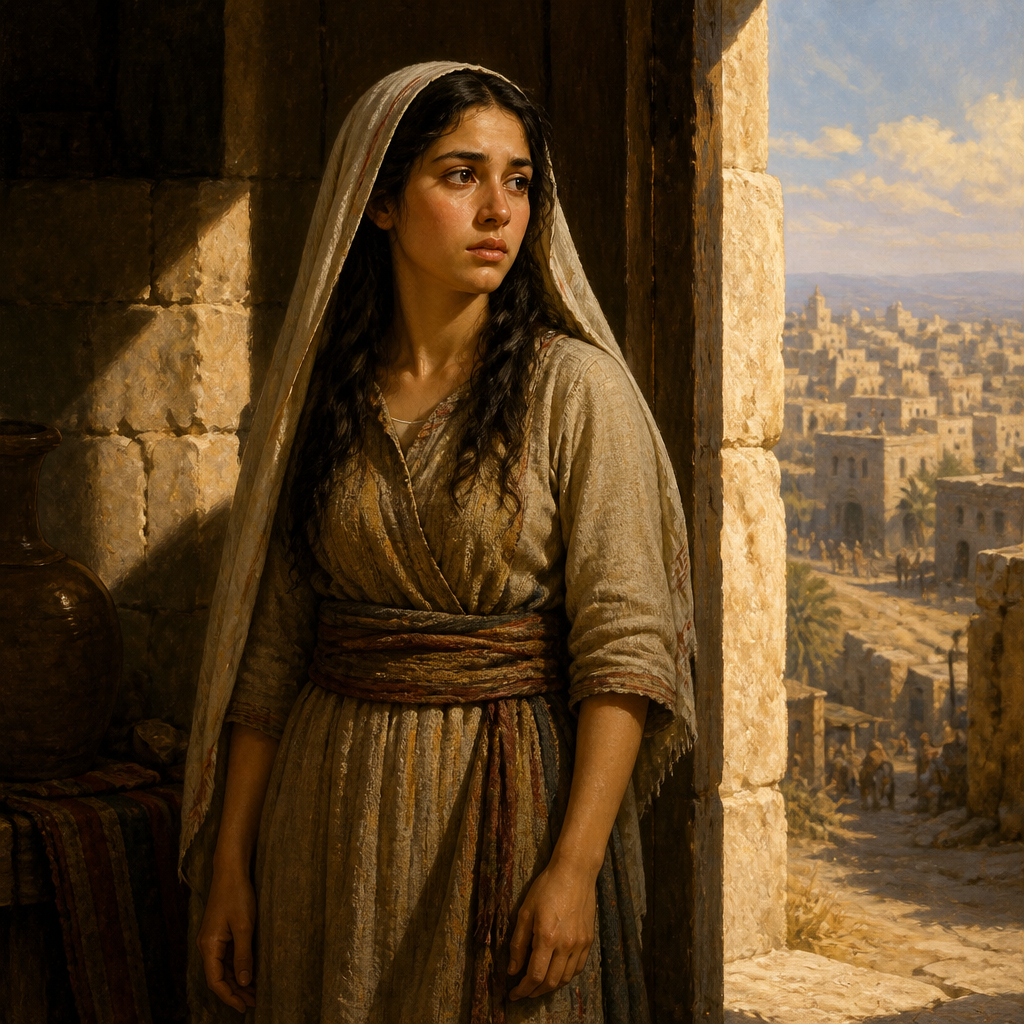
Dinah was the daughter of the patriarch Jacob and his first wife, Leah. As the only daughter specifically named among Jacob's children in the Genesis narratives, she holds a unique position within the early patriarchal family. Her life is primarily defined in the biblical text by a singular, tragic event that occurred when Jacob’s family settled near the city of Shechem during their return to the land of Canaan.
Following the defilement of Dinah by Shechem, the son of Hamor the Hivite, a diplomatic crisis ensued that resulted in the violent intervention of her brothers, Simeon and Levi. Her story serves as a pivotal moment in the Genesis record, illustrating the tensions between the burgeoning Israelite family and the surrounding Canaanite populations during the Patriarchal Period. Beyond the events at Shechem, Dinah is listed among the descendants of Jacob who migrated to Egypt, confirming her continued presence within the covenant family.
Background and Family
Dinah was born in Paddan-aram during the latter years of Jacob’s service to his uncle Laban. According to Genesis 30:21, she was the seventh child born to Leah, following six sons: Reuben, Simeon, Levi, Judah, Issachar, and Zebulun. As the daughter of Leah, she was a full sister to these six tribal progenitors and a half-sister to the sons of Rachel, Bilhah, and Zilpah.
The name Dinah is derived from the Hebrew root dīn, meaning "judgment" or "vindicated." While the text does not elaborate on the specific circumstances of her birth as it does for her brothers, her inclusion in the genealogical records (Genesis 46:15) emphasizes her status as a recognized member of the patriarchal household. She grew up within the nomadic camp of Jacob, moving from Mesopotamia into the land of Canaan as her father sought to reclaim the inheritance of Abraham and Isaac.
Major Life Events
The most significant narrative involving Dinah occurs in Genesis 34. After Jacob purchased a plot of land near the city of Shechem, Dinah "went out to visit the daughters of the land." During this excursion, she was observed by Shechem, the prince of the region. The biblical text records that he took her and defiled her. Despite this act of violence, the narrative notes that Shechem's soul was drawn to her; he loved her and sought to marry her through formal negotiations between his father, Hamor, and Jacob.
When Jacob’s sons learned of the event, they were filled with grief and fury because Shechem had "wrought a disgraceful thing in Israel." While Hamor proposed an intermingling of the two peoples through marriage and trade, the sons of Jacob responded deceitfully. They demanded that all males in Shechem be circumcised as a condition for the alliance. While the men of Shechem were recovering from the procedure, Simeon and Levi—Dinah's full brothers—entered the city and killed every male, including Hamor and Shechem. They rescued Dinah from Shechem’s house and plundered the city. Jacob rebuked his sons for this action, fearing it would make his family "stink" among the inhabitants of the land, though the brothers justified their violence as a defense of their sister's honor.
Relationship to Other Biblical Figures
Dinah’s relationships are defined primarily by her paternal lineage. As a "daughter of Israel," she is inextricably linked to the twelve tribes. The narrative highlights the intense, protective bond between her and her full brothers, Simeon and Levi. Their violent reaction to her treatment suggests a high degree of family solidarity, even when it conflicted with their father's more cautious diplomatic approach.
In the broader context of the patriarchal family, Dinah represents the female presence in a lineage dominated by male heirs. She is mentioned again in Genesis 46:15 in the list of those who went down to Egypt. This passage identifies her specifically as a daughter of Leah born in Paddan-aram, placing her within the count of thirty-three persons belonging to Leah’s branch of the family tree.
Spiritual Significance
Theologically, Dinah’s story serves as a cautionary tale regarding the dangers of assimilation and the complexities of living as a separate people within a foreign land. Her "going out" to visit the Canaanite women is often viewed by commentators as the catalyst for the ensuing crisis, representing the first major cultural friction between the descendants of Abraham and the local populations.
Furthermore, the "judgment" implied by her name is reflected in the harsh consequences dealt to the city of Shechem. While the Bible does not record any words spoken by Dinah herself, her presence facilitates a major development in the character of the early Israelite tribes—specifically the zeal and volatility of Simeon and Levi, which would later be referenced in Jacob’s final blessings and curses in Genesis 49. Her inclusion in the final genealogies ensures that the narrative of Israel includes the daughters as well as the sons in the journey toward the promise of a great nation.
Dinah occupies a unique space in the Genesis narrative as the only named daughter of Jacob, highlighting the importance of female descendants within the patriarchal lineage even in a male-centered genealogical record. Her story in Genesis 34 illustrates the early struggle for identity and holiness among the Israelites, demonstrating the severe social and physical boundaries the family maintained against the Canaanite tribes.
Her mention in the migration to Egypt (Genesis 46) underscores the totality of Jacob's household, confirming that the covenant promise extended through the entire family unit. Though her personal voice is absent from the text, the events surrounding her life significantly shaped the political and spiritual trajectory of the tribes of Simeon and Levi, influencing the internal dynamics of the nascent nation of Israel.
Frequently Asked Questions
Who were Dinah's parents?
Dinah was the daughter of the patriarch Jacob and his first wife, Leah.
Why did Simeon and Levi attack the city of Shechem?
They attacked the city to avenge the defilement of their sister Dinah by Shechem, the son of the local ruler, and to rescue her from his house.
Does Dinah have any recorded children?
The Bible does not mention any children for Dinah, nor does it provide details about her later life or marriage.
Where was Dinah born?
According to Genesis 46:15, she was born in Paddan-aram (Mesopotamia) before Jacob returned to the land of Canaan.
What happened to Dinah after the incident at Shechem?
After being rescued by her brothers, she remained with Jacob’s family and was eventually listed among those who migrated to Egypt during the time of Joseph.
Family & Relationships
 DinahThis page
 AsherBrotherGenesis 34:3
Inferred
Reconstructed through Jacob: Genesis 34:3 ties Dinah to Jacob; Genesis 35:26 ties Jacob to Asher. No verse states the brother link between Dinah and Asher directly.Evidence: Genesis 34:3; Genesis 35:26
 Benjamin, Son of JacobBrotherGenesis 34:3
Inferred
Reconstructed through Simeon and Issachar: Genesis 34:25 ties Dinah to Simeon; Genesis 35:23 ties Simeon to Issachar; Exodus 1:3 ties Issachar to Benjamin. No verse states the brother link between Dinah and Benjamin directly.Evidence: Genesis 34:3; Genesis 42:4
 DanBrotherGenesis 34:3
Inferred
Reconstructed through Asher and Jacob: Exodus 1:4 ties Dan to Asher; Genesis 35:26 ties Asher to Jacob; Genesis 34:3 ties Jacob to Dinah. No verse states the sister link between Dan and Dinah directly.Evidence: Genesis 34:3; Judges 18:29
 Gad, Son of JacobBrotherGenesis 34:3
Inferred
Reconstructed through Jacob: Genesis 34:3 ties Dinah to Jacob; Genesis 35:26 ties Jacob to Gad. No verse states the brother link between Dinah and Gad directly.Evidence: Genesis 34:3; Genesis 35:26
 Issachar, Ninth Son of JacobBrotherGenesis 34:3
Inferred
Reconstructed through Jacob: Genesis 35:23 ties Issachar to Jacob; Genesis 34:3 ties Jacob to Dinah. No verse states the sister link between Issachar and Dinah directly.Evidence: Genesis 34:3; Exodus 1:1
 Joseph, Son of JacobBrotherGenesis 46:29Stated
 Judah, Son of JacobBrotherGenesis 30:21
Inferred
Reconstructed through Simeon: Genesis 34:25 ties Dinah to Simeon; Genesis 35:23 ties Simeon to Judah. No verse states the brother link between Dinah and Judah directly.Evidence: Genesis 30:21; Genesis 35:23
 Levi, Son of JacobBrotherGenesis 34:25Stated
 NaphtaliBrotherGenesis 34:3
Inferred
Reconstructed through Asher and Jacob: Exodus 1:4 ties Naphtali to Asher; Genesis 35:26 ties Asher to Jacob; Genesis 34:3 ties Jacob to Dinah. No verse states the sister link between Naphtali and Dinah directly.Evidence: Genesis 34:3; Genesis 35:25
 ReubenBrotherGenesis 29:32
Inferred
Reconstructed through Simeon: Genesis 35:23 ties Reuben to Simeon; Genesis 34:25 ties Simeon to Dinah. No verse states the sister link between Reuben and Dinah directly.Evidence: Genesis 29:32; Genesis 30:21
 Simeon, Son of JacobBrotherGenesis 34:25Stated
 ZebulunBrotherGenesis 34:3
Inferred
Reconstructed through Simeon: Genesis 34:25 ties Dinah to Simeon; Genesis 35:23 ties Simeon to Zebulun. No verse states the brother link between Dinah and Zebulun directly.Evidence: Genesis 34:3; Exodus 1:1
Connected Figures
Family

Father · Genesis 34:3
The third patriarch of the covenant, whom God renamed Israel after he wrestled with God, and the father of the twelve tribes.
PatriarchsFirst: Genesis 25:26228 versesPatriarch, Shepherd

Mother · Genesis 30:21
The elder daughter of Laban and the first wife of Jacob, Leah was the biological mother of six of the twelve tribes of Israel and the matriarch of the priestly and royal lines.
Brother · Genesis 34:3
Asher was the eighth son of Jacob, the second born to Zilpah, and the ancestral patriarch of the Tribe of Asher, known for the fertile lands and prosperity promised in his father's blessing.
PatriarchsFirst: Genesis 30:1315 versesPatriarchAsher
Brother · Genesis 34:3
The youngest son of Jacob and Rachel, Benjamin was the beloved patriarch of one of the twelve tribes of Israel and a central figure in the narrative of Joseph's rise in Egypt.
PatriarchsFirst: Genesis 35:1823 versesPatriarchBenjamin
Brother · Genesis 34:3
The fifth son of the patriarch Jacob and the first son born to his concubine Bilhah, serving as the eponymous ancestor of the Tribe of Dan.
PatriarchsFirst: Genesis 30:613 versesPatriarchDan
Brother · Genesis 34:3
The seventh son of Jacob and the firstborn of Zilpah, Gad was a patriarch of Israel whose descendants became a warrior tribe known for their courage and inheritance east of the Jordan River.
PatriarchsFirst: Genesis 30:1111 versesPatriarchGad
Brother · Genesis 34:3
The ninth son of Jacob and the fifth born to Leah, Issachar was a patriarch whose descendants formed one of the prominent twelve tribes of Israel.
PatriarchsFirst: Genesis 30:1813 versesPatriarchIssachar
Brother · Genesis 46:29
The favored son of Jacob who, after being sold into slavery by his brothers, rose to become the Grand Vizier of Egypt and preserved the lineage of Israel during a regional famine.
PatriarchsFirst: Genesis 30:24156 versesShepherd, Slave, Household Manager, Prisoner, Grand Vizier of Egypt
Brother · Genesis 30:21
The fourth son of Jacob and Leah, ancestor of the Tribe of Judah and the Davidic line, known for his leadership and pivotal role in the preservation of his family.
PatriarchsFirst: Genesis 29:3538 versesPatriarch and ShepherdJudah
Brother · Genesis 34:25
The third son of Jacob and Leah, a patriarch whose descendants were set apart as the priestly and ministerial class for the nation of Israel.
PatriarchsFirst: Genesis 29:3416 versesPatriarchLevi
Brother · Genesis 34:3
The sixth son of Jacob and second son of Bilhah, whose descendants formed one of the twelve tribes of Israel in the fertile northern Galilee region.
PatriarchsFirst: Genesis 30:811 versesPatriarchNaphtali
Brother · Genesis 29:32
Reuben was the firstborn son of Jacob and Leah, the founding patriarch of the Tribe of Reuben, and a complex figure known for both his attempts to save Joseph and his loss of the birthright.
PatriarchsFirst: Genesis 29:3221 versesPatriarch and shepherdReuben
Categories
Mentions by Book
- Genesis15
- Exodus1
- Judges1
- 1 Chronicles1
Scripture References
All 18 indexed verses, in canonical order, from the Berean Standard Bible.
Genesis · 15
- Genesis 30:9Partial
When Leah saw that she had stopped having children, she gave her servant Zilpah to Jacob as a wife.
Cited as evidence on a family card; added so References, Key Verses and Mentions by Book share one index.
- Genesis 30:18Partial
Then Leah said, “God has rewarded me for giving my maidservant to my husband.” So she named him Issachar.
Cited as evidence on a family card; added so References, Key Verses and Mentions by Book share one index.
- Genesis 30:19Partial
Again Leah conceived and bore a sixth son to Jacob.
Cited as evidence on a family card; added so References, Key Verses and Mentions by Book share one index.
- Genesis 30:20Partial
“God has given me a good gift,” she said. “This time my husband will honor me, because I have borne him six sons.” And she named him Zebulun.
Cited as evidence on a family card; added so References, Key Verses and Mentions by Book share one index.
- Genesis 30:21
After that, Leah gave birth to a daughter and named her Dinah.
- Genesis 34:1
Now Dinah, the daughter Leah had borne to Jacob, went out to visit the daughters of the land.
- Genesis 34:3
And his soul was drawn to Dinah, the daughter of Jacob. He loved the young girl and spoke to her tenderly.
- Genesis 34:5
Jacob heard that Shechem had defiled his daughter Dinah, but since his sons were with his livestock in the field, he remained silent about it until they returned.
- Genesis 34:13
But because Shechem had defiled their sister Dinah, Jacob’s sons answered him and his father Hamor deceitfully.
- Genesis 34:25
Three days later, while they were still in pain, two of Jacob’s sons (Dinah’s brothers Simeon and Levi) took their swords, went into the unsuspecting city, and slaughtered every male.
- Genesis 34:26
They killed Hamor and his son Shechem with their swords, took Dinah out of Shechem’s house, and went away.
- Genesis 43:8Partial
And Judah said to his father Israel, “Send the boy with me, and we will go at once, so that we may live and not die—neither we, nor you, nor our children.
Cited as evidence on a family card; added so References, Key Verses and Mentions by Book share one index.
- Genesis 45:21Partial
So the sons of Israel did as they were told. Joseph gave them wagons as Pharaoh had instructed, and he also gave them provisions for their journey.
Cited as evidence on a family card; added so References, Key Verses and Mentions by Book share one index.
- Genesis 46:15
These are the sons of Leah born to Jacob in Paddan-aram, in addition to his daughter Dinah. The total number of sons and daughters was thirty-three.
- Genesis 46:29Partial
Joseph prepared his chariot and went there to meet his father Israel. Joseph presented himself to him, embraced him, and wept profusely.
Cited as evidence on a family card; added so References, Key Verses and Mentions by Book share one index.
Exodus · 1
- Exodus 1:1Partial
These are the names of the sons of Israel who went to Egypt with Jacob, each with his family:
Cited as evidence on a family card; added so References, Key Verses and Mentions by Book share one index.
Judges · 1
- Judges 18:29Partial
They named it Dan, after their forefather Dan, who was born to Israel—though the city was formerly named Laish.
Cited as evidence on a family card; added so References, Key Verses and Mentions by Book share one index.
1 Chronicles · 1
- 1 Chronicles 2:1Partial
These were the sons of Israel: Reuben, Simeon, Levi, Judah, Issachar, Zebulun,
Cited as evidence on a family card; added so References, Key Verses and Mentions by Book share one index.