Hamor
Who was Hamor in the Bible?
A Hivite prince and father of Shechem who negotiated with the patriarch Jacob and was ultimately killed by Jacob's sons.
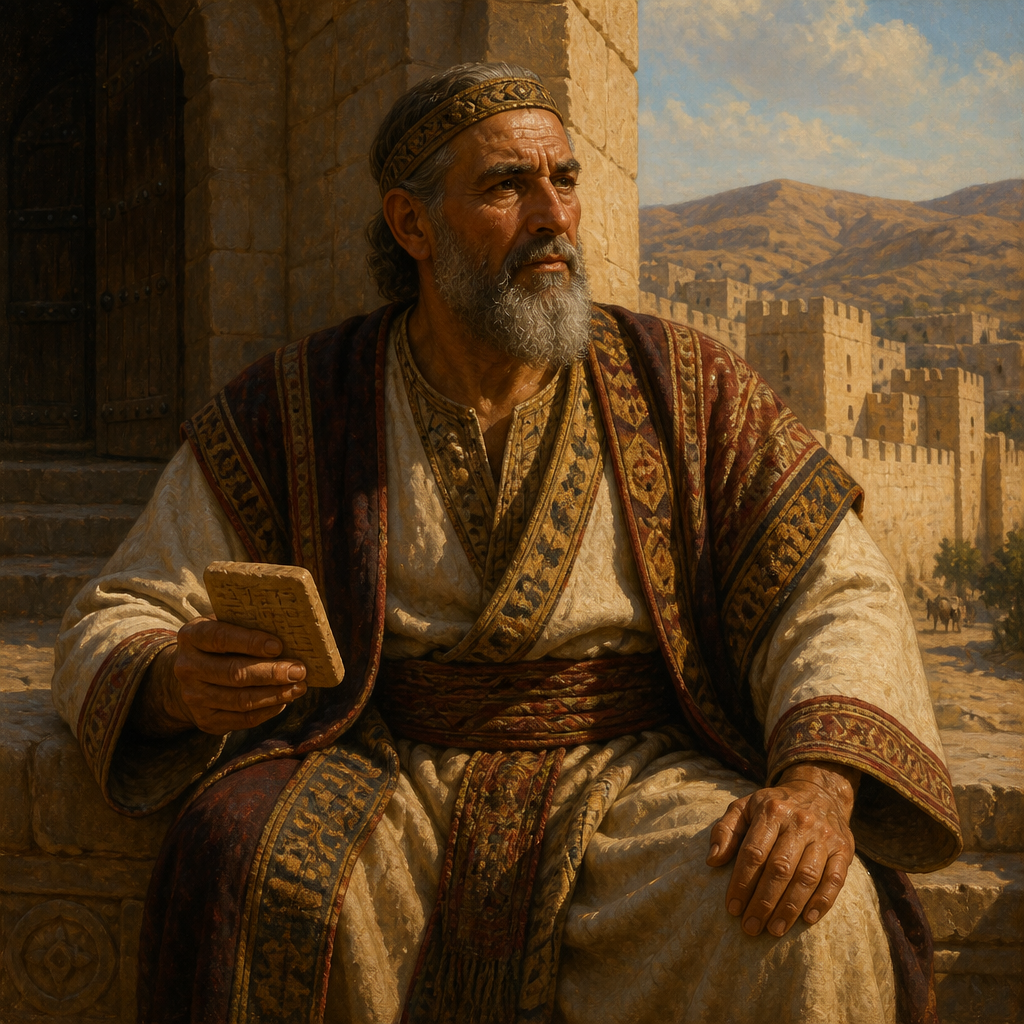
Hamor was a Hivite ruler and the prince of the region of Shechem during the Patriarchal Period. He is primarily known for his interactions with the patriarch Jacob, specifically regarding a land transaction and the subsequent diplomatic crisis involving his son, Shechem, and Jacob's daughter, Dinah. As a local leader, Hamor represented the Canaanite populations that coexisted with the early Hebrew patriarchs during their nomadic period in the land of Canaan.
His role in the biblical narrative is defined by his attempts to integrate his people with Jacob’s family through marriage and commerce. However, these efforts ended in disaster for his household and his city. Hamor's legacy is preserved not only in the tragic accounts of Genesis but also in later biblical references regarding the ownership of land in the region of Shechem and the burial of the patriarch Joseph.
Background and Family
Hamor is identified in the Book of Genesis as a Hivite and the "prince of the region" (Genesis 34:2). The Hivites were one of the distinct ethnic groups inhabiting Canaan prior to the Israelite conquest. Hamor’s primary identification in the text is through his son, Shechem, for whom the city was named. As a ruler, Hamor possessed the authority to negotiate treaties and property sales, indicating a structured societal hierarchy within the Hivite community. His name, which in Hebrew translates to "donkey," may reflect cultural naming conventions of the time rather than a pejorative descriptor.
Major Life Events
The Purchase of Land
Hamor first appears in the biblical record when Jacob returns from Padan-aram. Upon reaching the city of Shechem, Jacob pitched his tent and sought a permanent foothold in the area. Genesis 33:19 records that Jacob purchased a plot of ground from the "sons of Hamor" for one hundred pieces of silver. This transaction established a legal and historical link between the descendants of Jacob and the region of Shechem, a plot of land that would later serve as the burial place for the bones of Joseph (Joshua 24:32).
The Conflict Over Dinah
The most significant event involving Hamor is the crisis following his son Shechem's violation of Dinah, Jacob’s daughter. After Shechem took Dinah by force, he requested that his father, Hamor, secure her as his wife. Hamor acted as a diplomat, approaching Jacob to formally request the marriage alliance. He proposed a deep integration of their two peoples, stating:
"Make marriages with us; give your daughters to us, and take our daughters for yourselves. You shall dwell with us, and the land shall be open to you." (Genesis 34:9-10)
Deception and Death
Jacob’s sons, led by Simeon and Levi, responded to Hamor’s proposal with deceit. They demanded that all males in Hamor’s city be circumcised as a condition for the marriage alliance. Hamor and his son Shechem agreed to this condition and successfully persuaded the men of their city to undergo the procedure, arguing that Jacob’s wealth and livestock would eventually become theirs through this union. However, while the men of the city were recovering and incapacitated, Simeon and Levi entered the city and put every male to the sword. Hamor and his son Shechem were both killed in the slaughter, and their city was plundered.
Relationship to Other Biblical Figures
Hamor’s primary relationship is with his son, Shechem, for whom he showed significant paternal concern by attempting to fulfill his son's desire for Dinah despite the circumstances. His relationship with Jacob was one of a neighboring ruler and landlord. While Hamor sought a peaceful, albeit opportunistic, merger of their clans, he was ultimately a victim of the fierce protective (and vengeful) nature of Jacob’s sons, specifically Simeon and Levi. The New Testament also links Hamor to Abraham in Stephen's speech in Acts 7:16, though this verse presents a complex genealogical and historical summary of the patriarchal land purchases.
Spiritual Significance
Hamor represents the complex and often dangerous interactions between the chosen line of Abraham and the local inhabitants of Canaan. His offer of integration posed a spiritual threat to the distinctiveness of Jacob’s family, as a merger with the Hivites would have diluted the covenantal identity of the Israelites. The story of Hamor serves as a somber illustration of the violence and cultural friction present in the Patriarchal era. Despite his death, the land he sold to Jacob remained a significant site for Israel, eventually becoming the inheritance of the tribe of Joseph, signifying that God’s purposes for the land continued even after the local rulers passed away.
Hamor is significant as a representative of the Canaanite nations who interacted legally and socially with the patriarchs. His sale of land to Jacob established one of the few pieces of property actually owned by the patriarchs in the Promised Land. The tragedy surrounding his death highlights the tensions between the ethics of the local populations and the zeal of Jacob’s sons, serving as a cautionary tale of deception and the consequences of intermingling with the surrounding nations without divine sanction.
Furthermore, Hamor’s mention in the speech of Stephen in Acts 7 underscores his lasting historical importance in the geography of Israel. By providing the land that would eventually house the remains of Joseph, Hamor’s family inadvertently contributed to the fulfillment of the patriarchs' desire to be buried in the land promised to their ancestors.
Frequently Asked Questions
Who was Hamor's son?
Hamor's son was Shechem, the prince who desired to marry Jacob's daughter, Dinah.
What ethnic group did Hamor belong to?
Hamor was a Hivite, one of the nations living in Canaan during the time of Jacob.
How did Hamor die?
Hamor was killed by Jacob's sons, Simeon and Levi, with the sword while he was recovering from circumcision.
What did Jacob buy from the sons of Hamor?
Jacob bought a plot of ground for one hundred pieces of silver, where he pitched his tent and built an altar.
Why did Hamor agree to have his people circumcised?
He agreed to the condition set by Jacob's sons in order to secure a marriage between Shechem and Dinah, and to facilitate a profitable alliance between the two groups.
Family & Relationships
 HamorThis page
Children
 Shechem, Son of HamorSonGenesis 34:2Stated
Connected Figures
Family
Son · Genesis 34:2
A Hivite prince and son of Hamor whose violation of Dinah led to a violent conflict between his city and the sons of Jacob.
PatriarchsFirst: Genesis 33:1911 versesPrince of the region
Categories
Mentions by Book
- Genesis10
- Joshua1
- Judges1
- Acts1
Scripture References
All 13 indexed verses, in canonical order, from the Berean Standard Bible.
Genesis · 10
- Genesis 33:19
And the plot of ground where he pitched his tent, he purchased from the sons of Hamor, Shechem’s father, for a hundred pieces of silver.
- Genesis 34:2
When Shechem son of Hamor the Hivite, the prince of the region, saw her, he took her and lay with her by force.
- Genesis 34:4
So Shechem told his father Hamor, “Get me this girl as a wife.”
- Genesis 34:6
Meanwhile, Shechem’s father Hamor came to speak with Jacob.
- Genesis 34:8
But Hamor said to them, “My son Shechem longs for your daughter. Please give her to him as his wife.
- Genesis 34:13
But because Shechem had defiled their sister Dinah, Jacob’s sons answered him and his father Hamor deceitfully.
- Genesis 34:18Partial
Their offer seemed good to Hamor and his son Shechem.
- Genesis 34:20
So Hamor and his son Shechem went to the gate of their city and addressed the men of their city:
- Genesis 34:24
All the men who went out of the city gate listened to Hamor and his son Shechem, and every male of the city was circumcised.
- Genesis 34:26
They killed Hamor and his son Shechem with their swords, took Dinah out of Shechem’s house, and went away.
Joshua · 1
- Joshua 24:32
And the bones of Joseph, which the Israelites had brought up out of Egypt, were buried at Shechem in the plot of land that Jacob had purchased from the sons of Hamor, Shechem’s father, for a hundred pieces of silver. So it became an inheritance for Joseph’s descendants.
Judges · 1
- Judges 9:28
Then Gaal son of Ebed said, “Who is Abimelech, and who is Shechem, that we should serve him? Is he not the son of Jerubbaal, and is not Zebul his officer? You are to serve the men of Hamor, the father of Shechem. Why should we serve Abimelech?
Acts · 1
- Acts 7:16
Their bones were carried back to Shechem and placed in the tomb that Abraham had bought from the sons of Hamor at Shechem for a price he paid in silver.