Isaac
Who was Isaac in the Bible?
The miracle son of Abraham and Sarah, Isaac was the second Hebrew patriarch and the child of promise through whom the covenant of God was established.
Isaac stands as a central figure in the patriarchal history of Israel, serving as the bridge between the pioneering faith of his father Abraham and the expansive growth of his son Jacob (Israel). His name, which means 'he laughs,' originates from the reaction of his aged parents when God promised his birth. Unlike his father, who traveled extensively, or his son, who lived much of his life in exile, Isaac spent his 180 years primarily within the southern regions of Canaan, specifically near Beersheba and Beer-lahai-roi.
Isaac is unique among the patriarchs for being the only one whose name was decreed by God before his conception and for remaining monogamous throughout his life. His narrative in the Book of Genesis is characterized by themes of submission, quiet endurance, and the miraculous preservation of the divine line. He is famously known for his role as the intended sacrifice on Mount Moriah, an event that defined his early life and served as a profound test of his father's devotion to God.
As the heir to the Abrahamic covenant, Isaac’s life was marked by God’s repetitive confirmation of the promises of land, offspring, and universal blessing. Though his later years were marred by family strife and failing eyesight, his legacy was secured through the blessing of his sons, an act the New Testament highlights as a supreme gesture of faith in God's sovereign control over the future.
Background and Family
Isaac was born in Gerar around 2066 BC to Abraham, then 100 years old, and Sarah, who was 90. His birth was the fulfillment of a long-standing divine promise that had seemed biologically impossible. As recorded in Genesis 21, Sarah’s joy at his birth prompted her to declare, “God has brought me laughter, and everyone who hears about this will laugh with me.” On the eighth day of his life, Isaac was circumcised, marking his formal entry into the covenant God had established with Abraham.
Isaac grew up in a household with several half-siblings. His eldest half-brother, Ishmael, was born to Hagar, Sarah’s Egyptian maidservant. Following Isaac’s weaning, Sarah insisted on the expulsion of Hagar and Ishmael to ensure Isaac remained the sole heir. After Sarah’s death, Abraham married Keturah, who bore him six more sons: Zimran, Jokshan, Medan, Midian, Ishbak, and Shuah. Despite this large family, the biblical record is clear that Abraham bequeathed everything he owned to Isaac, while giving only gifts to the sons of his concubines before sending them eastward.
Major Life Events
The Binding of Isaac
The most defining event of Isaac’s youth was the Akedah, or the Binding. God commanded Abraham to offer Isaac as a burnt offering on a mountain in the land of Moriah. Isaac’s role in this event is one of striking submission. Carrying the wood for his own sacrifice, he questioned his father about the missing lamb, to which Abraham famously replied, “God himself will provide the lamb.” At the moment of sacrifice, an angel intervened, and a ram caught in a thicket was offered in Isaac's stead. This event solidified Isaac as the 'child of promise' who was, in a sense, given back to his father from the dead.
Marriage to Rebekah
Following Sarah’s death, Abraham sent his senior servant to Mesopotamia to find a wife for Isaac among his kindred, rather than the local Canaanites. The servant returned with Rebekah, the daughter of Bethuel. Isaac, who was forty at the time, was found meditating in a field in the Negev when Rebekah arrived. The text notes that Isaac loved her and found comfort after his mother’s death. For twenty years, the couple remained childless until Isaac prayed to the LORD on Rebekah's behalf. In response, she conceived twins, Esau and Jacob.
Life in Gerar and Beersheba
During a period of famine, Isaac moved his household to Gerar. Like his father before him, Isaac claimed his wife was his sister out of fear for his life, a deception discovered by the Philistine king Abimelech. Despite this, Isaac prospered significantly in Gerar, reaping a hundredfold in a single year. His success led to conflict with local herdsmen over water rights. Isaac demonstrated a peaceful character by repeatedly moving and digging new wells—Esek, Sitnah, and finally Rehoboth—rather than engaging in violent conflict. Eventually, he settled in Beersheba, where God appeared to him to reaffirm the covenant.
Relationship to Other Biblical Figures
Isaac’s primary relationships were defined by a contrast in temperaments. He favored his elder son, Esau, due to a shared love for wild game, while Rebekah favored Jacob. This domestic division culminated in a famous scene of deception: as Isaac lay blind and elderly, Jacob, disguised as Esau, tricked his father into bestowing the primary patriarchal blessing upon him. Despite his violent trembling upon realizing the ruse, Isaac recognized the hand of God in the event and later formally sent Jacob to Paddan-aram to find a wife, confirming his status as the covenant heir.
Spiritual Significance
Isaac is frequently grouped with Abraham and Jacob in the triadic formula “the God of Abraham, Isaac, and Jacob,” a title God uses to identify Himself to Moses at the burning bush and throughout the Exodus. This underscores Isaac's role as an essential link in the chain of salvation history. In the New Testament, Isaac is cited as a model of faith. The author of Hebrews notes that Isaac blessed his sons “concerning the future” by faith (Hebrews 11:20), and Paul uses Isaac in Galatians 4 to illustrate the “children of promise” who are born through the Spirit rather than mere human effort. Furthermore, his near-sacrifice is often viewed by scholars as a type or foreshadowing of the sacrifice of Christ, representing the beloved son who carries the wood of his own offering.
Isaac serves as the physical proof of God's ability to fulfill promises against all odds. His life demonstrates that the covenant was not earned through works or conquest, but inherited through divine election. By submitting to the binding on Moriah and accepting the redirected blessing of Jacob, Isaac represents the quiet faithfulness required to sustain a legacy he did not initiate.
Theologically, the 'Fear of Isaac' (a title Jacob uses for God in Genesis 31:42) suggests a deep, reverent awe that characterized Isaac’s walk with the Almighty. His inclusion in the genealogy of Jesus Christ (Matthew 1) and his presence in the 'Great Cloud of Witnesses' (Hebrews 11) confirms his status as a pillar of the Judeo-Christian tradition, symbolizing the endurance of the promise across generations.
Frequently Asked Questions
What does the name Isaac mean?
The name Isaac (Yitzhak) means 'he laughs' or 'laughter,' referring to the laughter of both Abraham and Sarah when told they would have a child in their old age.
How old was Isaac when he died?
According to Genesis 35:28, Isaac lived to be 180 years old, making him the longest-lived of the three patriarchs.
Why did Isaac prefer Esau over Jacob?
Genesis 25:28 states that Isaac loved Esau because he had a taste for wild game, which Esau, a skillful hunter, provided for him.
Where is Isaac buried?
Isaac was buried by his sons Esau and Jacob in the cave of Machpelah near Mamre (Hebron), the same location where Abraham, Sarah, and eventually Rebekah, Leah, and Jacob were buried.
How old was Isaac when his sons were born?
Isaac was 60 years old when Rebekah gave birth to the twins, Esau and Jacob, following twenty years of barrenness.
Family & Relationships
 RebekahWifeGenesis 24:67Stated
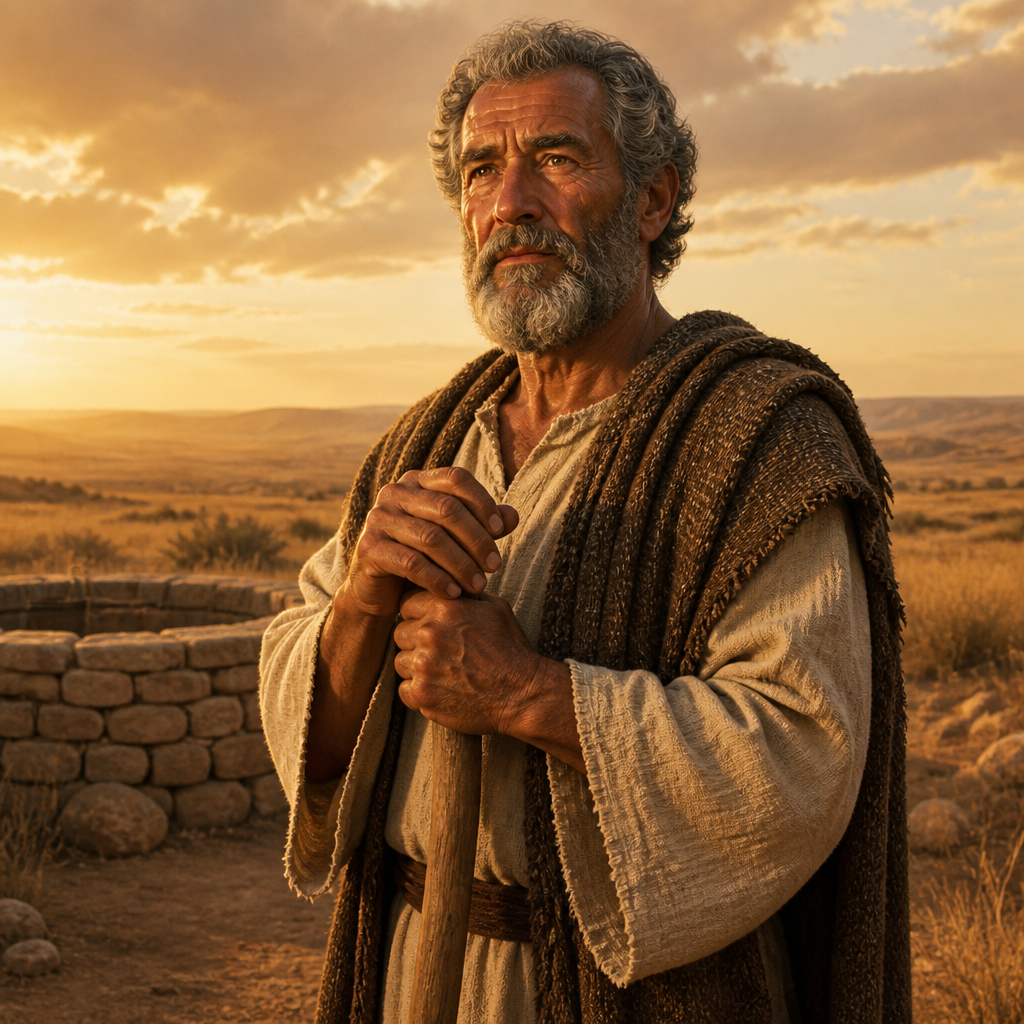 IsaacThis page
 IshbakHalf-BrotherGenesis 21:3
Inferred
Reconstructed through Abraham and Keturah: Genesis 21:3 ties Isaac to Abraham; Genesis 25:1 ties Abraham to Keturah; 1 Chronicles 1:32 ties Keturah to Ishbak. No verse states the half-brother link between Isaac and Ishbak directly.Evidence: Genesis 21:3; Genesis 25:1
 Ishmael, Son of AbrahamBrotherGenesis 25:9Stated
 JokshanHalf-BrotherGenesis 21:3
Inferred
Reconstructed through Dedan and Abraham: Genesis 25:3 ties Jokshan to Dedan; 1 Chronicles 1:32 ties Dedan to Abraham (itself an inferred link); Genesis 21:3 ties Abraham to Isaac. No verse states the half-brother link between Jokshan and Isaac directly.Evidence: Genesis 21:3; Genesis 25:1
 MedanHalf-BrotherGenesis 21:3
Inferred
Reconstructed through Keturah and Abraham: 1 Chronicles 1:32 ties Medan to Keturah; Genesis 25:1 ties Keturah to Abraham; Genesis 21:3 ties Abraham to Isaac. No verse states the half-brother link between Medan and Isaac directly.Evidence: Genesis 21:3; Genesis 25:1
 MidianHalf-BrotherGenesis 21:3
Inferred
Reconstructed through Keturah and Abraham: 1 Chronicles 1:32 ties Midian to Keturah; Genesis 25:1 ties Keturah to Abraham; Genesis 21:3 ties Abraham to Isaac. No verse states the half-brother link between Midian and Isaac directly.Evidence: Genesis 21:3; Genesis 25:1
 ShuahHalf-BrotherGenesis 21:3
Inferred
Reconstructed through Keturah and Abraham: 1 Chronicles 1:32 ties Shuah to Keturah; Genesis 25:1 ties Keturah to Abraham; Genesis 21:3 ties Abraham to Isaac. No verse states the half-brother link between Shuah and Isaac directly.Evidence: Genesis 21:3; Genesis 25:1
 ZimranHalf-BrotherGenesis 21:3
Inferred
Reconstructed through Keturah and Abraham: 1 Chronicles 1:32 ties Zimran to Keturah; Genesis 25:1 ties Keturah to Abraham; Genesis 21:3 ties Abraham to Isaac. No verse states the half-brother link between Zimran and Isaac directly.Evidence: Genesis 21:3; Genesis 25:1
Extended family
 JudithDaughter-in-lawGenesis 17:19
Inferred
Reconstructed through Esau: Genesis 26:34 ties Judith to Esau (itself an inferred link); Genesis 27:5 ties Esau to Isaac. No verse states the father-in-law link between Judith and Isaac directly.Evidence: Genesis 17:19
Connected Figures
Family

Father · Genesis 21:3
The first of the three biblical patriarchs and the father of the nation of Israel, known for his unwavering faith and his covenant relationship with God.
PatriarchsFirst: Genesis 11:26296 versesPatriarch, nomad, wealthy livestock owner
Mother · Genesis 24:67
The wife of Abraham and mother of Isaac, recognized as the primary matriarch of the Hebrew people and a recipient of God's covenantal promise.
Wife · Genesis 24:67
The wife of Isaac and mother of Esau and Jacob, Rebekah was a central matriarch of Israel known for her hospitality, her role in the patriarchal succession, and her divine oracle regarding her sons.

Son · Genesis 27:5
The firstborn son of Isaac and Rebekah, a skillful hunter and the progenitor of the Edomites, known for selling his birthright for a bowl of stew.
PatriarchsFirst: Genesis 25:2573 versesSkillful hunter, man of the field, Chief

Son · Genesis 27:22
The third patriarch of the covenant, whom God renamed Israel after he wrestled with God, and the father of the twelve tribes.
PatriarchsFirst: Genesis 25:26228 versesPatriarch, Shepherd
Half-Brother · Genesis 21:3
Ishbak was a son of Abraham and his second wife Keturah, serving as a patriarchal figure and founder of a North Arabian tribe.
Brother · Genesis 25:9
Ishmael was the firstborn son of Abraham through Hagar, the forefather of the Ishmaelite tribes, and a patriarch whom God promised would father twelve princes.
Half-Brother · Genesis 21:3
A son of Abraham and his second wife Keturah, Jokshan is recognized as a patriarch and the progenitor of the Sheba and Dedan tribes.
PatriarchsFirst: Genesis 25:26 versesPatriarchal head of tribes
Half-Brother · Genesis 21:3
A son of the patriarch Abraham through his second wife Keturah, Medan is recognized as the progenitor of an early Arab tribe during the Patriarchal Period.
Half-Brother · Genesis 21:3
Midian was the fourth son of Abraham by his wife Keturah and the progenitor of the Midianite people.
Half-Brother · Genesis 21:3
The sixth and final son of Abraham by his wife Keturah, Shuah was an early patriarch who contributed to the expansion of Semitic tribes in the East.
Half-Brother · Genesis 21:3
The firstborn son of Abraham and his second wife Keturah, recognized as a patriarch of an Eastern tribe.
PatriarchsFirst: Genesis 25:25 versesPatriarchal tribal founder
Categories
Mentions by Book
- Genesis76
- Exodus9
- Leviticus1
- Numbers1
- Deuteronomy7
- Joshua2
- 1 Kings1
- 2 Kings1
- 1 Chronicles4
- 2 Chronicles1
- Psalms1
- Jeremiah1
- Amos2
- Matthew3
- Mark1
- Luke3
- Acts3
- Romans2
- Galatians1
- Hebrews4
- James1
Scripture References
All 125 indexed verses, in canonical order, from the Berean Standard Bible.
- Genesis 17:19
But God replied, “Your wife Sarah will indeed bear you a son, and you are to name him Isaac. I will establish My covenant with him as an everlasting covenant for his descendants after him.
- Genesis 17:21
But I will establish My covenant with Isaac, whom Sarah will bear to you at this time next year.”
- Genesis 21:3
And Abraham gave the name Isaac to the son Sarah bore to him.
- Genesis 21:4
When his son Isaac was eight days old, Abraham circumcised him, as God had commanded him.
- Genesis 21:5
Abraham was a hundred years old when his son Isaac was born to him.
- Genesis 21:8
So the child grew and was weaned, and Abraham held a great feast on the day Isaac was weaned.
- Genesis 21:10
and she said to Abraham, “Expel the slave woman and her son, for the slave woman’s son will never share in the inheritance with my son Isaac!”
- Genesis 21:12
But God said to Abraham, “Do not be distressed about the boy and your maidservant. Listen to everything that Sarah tells you, for through Isaac your offspring will be reckoned.
- Genesis 22:2
“Take your son,” God said, “your only son Isaac, whom you love, and go to the land of Moriah. Offer him there as a burnt offering on one of the mountains, which I will show you.”
- Genesis 22:3
So Abraham got up early the next morning, saddled his donkey, and took along two of his servants and his son Isaac. He split the wood for a burnt offering and set out for the place God had designated.
- Genesis 22:6
Abraham took the wood for the burnt offering and placed it on his son Isaac. He himself carried the fire and the sacrificial knife, and the two of them walked on together.
- Genesis 22:7
Then Isaac said to his father Abraham, “My father!” “Here I am, my son,” he replied. “The fire and the wood are here,” said Isaac, “but where is the lamb for the burnt offering?”
- Genesis 22:9
When they arrived at the place God had designated, Abraham built the altar there and arranged the wood. He bound his son Isaac and placed him on the altar, atop the wood.
- Genesis 24:4
but will go to my country and my kindred to take a wife for my son Isaac.”
- Genesis 24:14
Now may it happen that the girl to whom I say, ‘Please let down your jar that I may drink,’ and who responds, ‘Drink, and I will water your camels as well’—let her be the one You have appointed for Your servant Isaac. By this I will know that You have shown kindness to my master.”
- Genesis 24:62
Now Isaac had just returned from Beer-lahai-roi, for he was living in the Negev.
- Genesis 24:63
Early in the evening, Isaac went out to the field to meditate, and looking up, he saw the camels approaching.
- Genesis 24:64
And when Rebekah looked up and saw Isaac, she got down from her camel
- Genesis 24:66
Then the servant told Isaac all that he had done.
- Genesis 24:67Partial
And Isaac brought her into the tent of his mother Sarah and took Rebekah as his wife. And Isaac loved her and was comforted after his mother’s death.
- Genesis 25:1Partial
Now Abraham had taken another wife, named Keturah,
Cited as evidence on a family card; added so References, Key Verses and Mentions by Book share one index.
- Genesis 25:5
Abraham left everything he owned to Isaac.
- Genesis 25:6
But while he was still alive, Abraham gave gifts to the sons of his concubines and sent them away from his son Isaac to the land of the east.
- Genesis 25:9
His sons Isaac and Ishmael buried him in the cave of Machpelah near Mamre, in the field of Ephron son of Zohar the Hittite.
- Genesis 25:11Partial
After Abraham’s death, God blessed his son Isaac, who lived near Beer-lahai-roi.
- Genesis 25:19Partial
This is the account of Abraham’s son Isaac. Abraham became the father of Isaac,
- Genesis 25:20
and Isaac was forty years old when he married Rebekah, the daughter of Bethuel the Aramean from Paddan-aram and the sister of Laban the Aramean.
- Genesis 25:21
Later, Isaac prayed to the LORD on behalf of his wife, because she was barren. And the LORD heard his prayer, and his wife Rebekah conceived.
- Genesis 25:26
After this, his brother came out grasping Esau’s heel; so he was named Jacob. And Isaac was sixty years old when the twins were born.
- Genesis 25:28
Because Isaac had a taste for wild game, he loved Esau; but Rebekah loved Jacob.
- Genesis 26:1
Now there was another famine in the land, subsequent to the one that had occurred in Abraham’s time. And Isaac went to Abimelech king of the Philistines at Gerar.
- Genesis 26:6
So Isaac settled in Gerar.
- Genesis 26:8
When Isaac had been there a long time, Abimelech king of the Philistines looked down from the window and was surprised to see Isaac caressing his wife Rebekah.
- Genesis 26:9Partial
Abimelech sent for Isaac and said, “So she is really your wife! How could you say, ‘She is my sister’?” Isaac replied, “Because I thought I might die on account of her.”
- Genesis 26:12
Now Isaac sowed seed in the land, and that very year he reaped a hundredfold. And the LORD blessed him,
- Genesis 26:16
Then Abimelech said to Isaac, “Depart from us, for you are much too powerful for us.”
- Genesis 26:17
So Isaac left that place and encamped in the Valley of Gerar and settled there.
- Genesis 26:18
Isaac reopened the wells that had been dug in the days of his father Abraham, which the Philistines had stopped up after Abraham died. And he gave these wells the same names his father had given them.
- Genesis 26:19
Then Isaac’s servants dug in the valley and found a well of fresh water there.
- Genesis 26:20
But the herdsmen of Gerar quarreled with Isaac’s herdsmen and said, “The water is ours!” So he named the well Esek, because they contended with him.
- Genesis 26:25
So Isaac built an altar there and called on the name of the LORD, and he pitched his tent there. His servants also dug a well there.
- Genesis 26:27
“Why have you come to me?” Isaac asked them. “You hated me and sent me away.”
- Genesis 26:31
And they got up early the next morning and swore an oath to each other. Then Isaac sent them on their way, and they left him in peace.
- Genesis 26:32
On that same day, Isaac’s servants came and told him about the well they had dug. “We have found water!” they told him.
- Genesis 26:34Partial
When Esau was forty years old, he took as his wives Judith daughter of Beeri the Hittite and Basemath daughter of Elon the Hittite.
Cited as evidence on a family card; added so References, Key Verses and Mentions by Book share one index.
- Genesis 26:35
And they brought grief to Isaac and Rebekah.
- Genesis 27:1
When Isaac was old and his eyes were so weak that he could no longer see, he called his older son Esau and said to him, “My son.” “Here I am,” Esau replied.
- Genesis 27:5
Now Rebekah was listening to what Isaac told his son Esau. So when Esau went into the field to hunt game and bring it back,
- Genesis 27:20
But Isaac asked his son, “How did you ever find it so quickly, my son?” “Because the LORD your God brought it to me,” he replied.
- Genesis 27:21
Then Isaac said to Jacob, “Please come closer so I can touch you, my son. Are you really my son Esau, or not?”
- Genesis 27:22
So Jacob came close to his father Isaac, who touched him and said, “The voice is the voice of Jacob, but the hands are the hands of Esau.”
- Genesis 27:26
Then his father Isaac said to him, “Please come near and kiss me, my son.”
- Genesis 27:30Partial
As soon as Isaac had finished blessing him and Jacob had left his father’s presence, his brother Esau returned from the hunt.
- Genesis 27:32
But his father Isaac replied, “Who are you?” “I am Esau, your firstborn son,” he answered.
- Genesis 27:33
Isaac began to tremble violently and said, “Who was it, then, who hunted the game and brought it to me? Before you came in, I ate it all and blessed him—and indeed, he will be blessed!”
- Genesis 27:37
But Isaac answered Esau: “Look, I have made him your master and given him all his relatives as servants; I have sustained him with grain and new wine. What is left that I can do for you, my son?”
- Genesis 27:39
His father Isaac answered him: “Behold, your dwelling place shall be away from the richness of the land, away from the dew of heaven above.
- Genesis 27:46
Then Rebekah said to Isaac, “I am weary of my life because of these Hittite women. If Jacob takes a Hittite wife from among them, what good is my life?”
- Genesis 28:1
So Isaac called for Jacob and blessed him. “Do not take a wife from the Canaanite women,” he commanded.
- Genesis 28:5
So Isaac sent Jacob to Paddan-aram, to Laban son of Bethuel the Aramean, the brother of Rebekah, who was the mother of Jacob and Esau.
- Genesis 28:6
Now Esau learned that Isaac had blessed Jacob and sent him to Paddan-aram to take a wife there, commanding him, “Do not marry a Canaanite woman,”
- Genesis 28:8
And seeing that his father Isaac disapproved of the Canaanite women,
- Genesis 28:13
And there at the top the LORD was standing and saying, “I am the LORD, the God of your father Abraham and the God of Isaac. I will give you and your descendants the land on which you now lie.
- Genesis 31:18
and he drove all his livestock before him, along with all the possessions he had acquired in Paddan-aram, to go to his father Isaac in the land in Canaan.
- Genesis 31:42
If the God of my father, the God of Abraham and the Fear of Isaac, had not been with me, surely by now you would have sent me away empty-handed. But God has seen my affliction and the toil of my hands, and last night He rendered judgment.”
- Genesis 31:53
May the God of Abraham and the God of Nahor, the God of their father, judge between us.” So Jacob swore by the Fear of his father Isaac.
- Genesis 32:9
Then Jacob declared, “O God of my father Abraham, God of my father Isaac, the LORD who told me, ‘Go back to your country and to your kindred, and I will make you prosper,’
- Genesis 35:12
The land that I gave to Abraham and Isaac I will give to you, and I will give this land to your descendants after you.”
- Genesis 35:27Partial
Jacob returned to his father Isaac at Mamre, near Kiriath-arba (that is, Hebron), where Abraham and Isaac had stayed.
- Genesis 35:28
And Isaac lived 180 years.
- Genesis 35:29
Then he breathed his last and died and was gathered to his people, old and full of years. And his sons Esau and Jacob buried him.
- Genesis 46:1
So Israel set out with all that he had, and when he came to Beersheba, he offered sacrifices to the God of his father Isaac.
- Genesis 48:15
Then he blessed Joseph and said: “May the God before whom my fathers Abraham and Isaac walked, the God who has been my shepherd all my life to this day,
- Genesis 48:16
the angel who has redeemed me from all harm—may He bless these boys. And may they be called by my name and the names of my fathers Abraham and Isaac, and may they grow into a multitude upon the earth.”
- Genesis 49:31
There Abraham and his wife Sarah are buried, there Isaac and his wife Rebekah are buried, and there I buried Leah.
- Genesis 50:24
Then Joseph said to his brothers, “I am about to die, but God will surely visit you and bring you up from this land to the land He promised on oath to Abraham, Isaac, and Jacob.”
- Exodus 2:24
So God heard their groaning, and He remembered His covenant with Abraham, Isaac, and Jacob.
- Exodus 3:6
Then He said, “I am the God of your father, the God of Abraham, the God of Isaac, and the God of Jacob.” At this, Moses hid his face, for he was afraid to look at God.
- Exodus 3:15
God also told Moses, “Say to the Israelites, ‘The LORD, the God of your fathers—the God of Abraham, the God of Isaac, and the God of Jacob—has sent me to you.’ This is My name forever, and this is how I am to be remembered in every generation.
- Exodus 3:16
Go, assemble the elders of Israel and say to them, ‘The LORD, the God of your fathers—the God of Abraham, Isaac, and Jacob—has appeared to me and said: I have surely attended to you and have seen what has been done to you in Egypt.
- Exodus 4:5
“This is so that they may believe that the LORD, the God of their fathers—the God of Abraham, the God of Isaac, and the God of Jacob—has appeared to you.”
- Exodus 6:3
I appeared to Abraham, to Isaac, and to Jacob as God Almighty, but by My name the LORD I did not make Myself known to them.
- Exodus 6:8
And I will bring you into the land that I swore to give to Abraham, Isaac, and Jacob. I will give it to you as a possession. I am the LORD!’”
- Exodus 32:13
Remember Your servants Abraham, Isaac, and Israel, to whom You swore by Your very self when You declared, ‘I will make your descendants as numerous as the stars in the sky, and I will give your descendants all this land that I have promised, and it shall be their inheritance forever.’”
- Exodus 33:1
Then the LORD said to Moses, “Leave this place, you and the people you brought up out of the land of Egypt, and go to the land that I promised to Abraham, Isaac, and Jacob when I said, ‘I will give it to your descendants.’
- Leviticus 26:42
then I will remember My covenant with Jacob and My covenant with Isaac and My covenant with Abraham, and I will remember the land.
- Numbers 32:11
‘Because they did not follow Me wholeheartedly, not one of the men twenty years of age or older who came out of Egypt will see the land that I swore to give Abraham, Isaac, and Jacob—
- Deuteronomy 1:8
See, I have placed the land before you. Enter and possess the land that the LORD swore He would give to your fathers Abraham, Isaac, and Jacob, and to their descendants after them.”
- Deuteronomy 6:10
And when the LORD your God brings you into the land He swore to your fathers, to Abraham, Isaac, and Jacob, that He would give you—a land with great and splendid cities that you did not build,
- Deuteronomy 9:5
It is not because of your righteousness or uprightness of heart that you are going in to possess their land, but it is because of their wickedness that the LORD your God is driving out these nations before you, to keep the promise He swore to your fathers, to Abraham, Isaac, and Jacob.
- Deuteronomy 9:27
Remember Your servants Abraham, Isaac, and Jacob. Overlook the stubbornness of this people and the wickedness of their sin.
- Deuteronomy 29:13
and so that He may establish you today as His people, and He may be your God as He promised you and as He swore to your fathers, to Abraham, Isaac, and Jacob.
- Deuteronomy 30:20
and that you may love the LORD your God, obey Him, and hold fast to Him. For He is your life, and He will prolong your life in the land that the LORD swore to give to your fathers, to Abraham, Isaac, and Jacob.”
- Deuteronomy 34:4
And the LORD said to him, “This is the land that I swore to give Abraham, Isaac, and Jacob when I said, ‘I will give it to your descendants.’ I have let you see it with your own eyes, but you will not cross into it.”
- Joshua 24:3
But I took your father Abraham from beyond the Euphrates and led him through all the land of Canaan, and I multiplied his descendants. I gave him Isaac,
- Joshua 24:4
and to Isaac I gave Jacob and Esau. I gave Esau Mount Seir to possess, but Jacob and his sons went down to Egypt.
- 1 Kings 18:36
At the time of the evening sacrifice, Elijah the prophet approached the altar and said, “O LORD, God of Abraham, Isaac, and Israel, let it be known this day that You are God in Israel and that I am Your servant and have done all these things at Your command.
- 2 Kings 13:23
But the LORD was gracious to Israel and had compassion on them, and He turned toward them because of His covenant with Abraham, Isaac, and Jacob. And to this day, the LORD has been unwilling to destroy them or cast them from His presence.
- 1 Chronicles 1:28
The sons of Abraham were Isaac and Ishmael.
- 1 Chronicles 1:34Partial
Abraham was the father of Isaac. The sons of Isaac: Esau and Israel.
- 1 Chronicles 16:16
the covenant He made with Abraham, and the oath He swore to Isaac.
- 1 Chronicles 29:18
O LORD, God of our fathers Abraham, Isaac, and Israel, keep this desire forever in the intentions of the hearts of Your people, and direct their hearts toward You.
- 2 Chronicles 30:6
At the command of the king, the couriers went throughout Israel and Judah with letters from the king and his officials, which read: “Children of Israel, return to the LORD, the God of Abraham, Isaac, and Israel, so that He may return to those of you who remain, who have escaped the grasp of the kings of Assyria.
- Psalms 105:9
the covenant He made with Abraham, and the oath He swore to Isaac.
- Jeremiah 33:26
then I would also reject the descendants of Jacob and of My servant David, so as not to take from his descendants rulers over the descendants of Abraham, Isaac, and Jacob. For I will restore them from captivity and will have compassion on them.”
- Amos 7:9
The high places of Isaac will be deserted, and the sanctuaries of Israel will be laid waste; and I will rise up against the house of Jeroboam with My sword.”
- Amos 7:16
Now, therefore, hear the word of the LORD. You say: ‘Do not prophesy against Israel; do not preach against the house of Isaac.’
- Matthew 1:2Partial
Abraham was the father of Isaac, Isaac the father of Jacob, and Jacob the father of Judah and his brothers.
- Matthew 8:11
I say to you that many will come from the east and the west to share the banquet with Abraham, Isaac, and Jacob in the kingdom of heaven.
- Matthew 22:32
‘I am the God of Abraham, the God of Isaac, and the God of Jacob’? He is not the God of the dead, but of the living.”
- Mark 12:26
But concerning the dead rising, have you not read about the burning bush in the Book of Moses, how God told him, ‘I am the God of Abraham, the God of Isaac, and the God of Jacob’?
- Luke 3:34
the son of Jacob, the son of Isaac, the son of Abraham, the son of Terah, the son of Nahor,
- Luke 13:28
There will be weeping and gnashing of teeth when you see Abraham, Isaac, Jacob, and all the prophets in the kingdom of God, but you yourselves are thrown out.
- Luke 20:37
Even Moses demonstrates that the dead are raised, in the passage about the burning bush. For he calls the Lord ‘the God of Abraham, the God of Isaac, and the God of Jacob.’
- Acts 3:13
The God of Abraham, Isaac, and Jacob, the God of our fathers, has glorified His servant Jesus. You handed Him over and rejected Him before Pilate, even though he had decided to release Him.
- Acts 7:8Partial
Then God gave Abraham the covenant of circumcision, and Abraham became the father of Isaac and circumcised him on the eighth day. And Isaac became the father of Jacob, and Jacob of the twelve patriarchs.
- Acts 7:32
‘I am the God of your fathers, the God of Abraham, Isaac, and Jacob.’ Moses trembled with fear and did not dare to look.
- Romans 9:7
Nor because they are Abraham’s descendants are they all his children. On the contrary, “Through Isaac your offspring will be reckoned.”
- Romans 9:10
Not only that, but Rebecca’s children were conceived by one man, our father Isaac.
- Galatians 4:28
Now you, brothers, like Isaac, are children of promise.
- Hebrews 11:9
By faith he dwelt in the promised land as a stranger in a foreign country. He lived in tents, as did Isaac and Jacob, who were heirs with him of the same promise.
- Hebrews 11:17
By faith Abraham, when he was tested, offered up Isaac on the altar. He who had received the promises was ready to offer his one and only son,
- Hebrews 11:18
even though God had said to him, “Through Isaac your offspring will be reckoned.”
- Hebrews 11:20
By faith Isaac blessed Jacob and Esau concerning the future.
- James 2:21
Was not our father Abraham justified by what he did when he offered his son Isaac on the altar?