Keturah
Who was Keturah in the Bible?
The second wife or concubine of the patriarch Abraham who bore him six sons, becoming the ancestress of various Arabian and Eastern tribes.
Keturah was a woman who married the patriarch Abraham following the death of his first wife, Sarah. While she occupies a relatively brief portion of the biblical narrative, her appearance in the records of Genesis and 1 Chronicles is significant for understanding the expansion of Abraham’s lineage beyond the primary lines of Isaac and Ishmael.
Through her marriage to Abraham, Keturah became the mother of six sons: Zimran, Jokshan, Medan, Midian, Ishbak, and Shuah. These sons, according to the text, were sent by Abraham toward the east to prevent them from interfering with the inheritance of Isaac. Consequently, Keturah is regarded as the matriarchal figure behind several North Arabian and Midianite tribes, illustrating the fulfillment of the divine promise that Abraham would be the 'father of many nations.'
Background and Family
Keturah enters the biblical record in the twilight of Abraham’s life. Following the death of Sarah and the marriage of Isaac to Rebekah, Genesis 25:1 notes that "Abraham had taken another wife, named Keturah." Her origins, lineage, and tribe are not recorded in the Masoretic text, leaving her background largely unknown to history.
The status of Keturah is described using two different terms in the scriptures. In Genesis 25:1, she is referred to as a "wife" (ishah), while in 1 Chronicles 1:32, she is explicitly called Abraham’s "concubine" (pilegesh). This distinction in terminology often points to a legal status where her children were legitimate offspring of the patriarch but did not possess the same primary inheritance rights as Isaac, the son of the promise.
Major Life Events
The primary record of Keturah’s life is found in her role as a mother. She bore six sons to Abraham during their union:
The most notable of these descendants was Midian, whose offspring—the Midianites—would play a recurring and pivotal role in the later history of Israel, particularly during the era of Moses and the Judges. The Bible also records the grandsons of Keturah through Jokshan (Sheba and Dedan) and Midian (Ephah, Epher, Hanoch, Abida, and Eldaah).
While the text does not record her death or burial, it does describe the fate of her children. Before his death, Abraham gave gifts to the sons of his concubines and "sent them away from his son Isaac to the land of the east" (Genesis 25:6). This ensured that while Keturah's sons thrived and founded their own nations, the land of Canaan remained the specific inheritance of Isaac.
Relationship to Other Biblical Figures
Keturah’s primary relationship is as the partner of Abraham. Her presence serves as a bridge between the era of the initial promise and the transition of the patriarchal leadership to Isaac. Her relationship with Isaac himself is not detailed, though the text implies a peaceful separation between her sons and the heir of the covenant. Through her son Midian, she is the ancestral link to figures such as Jethro (Moses' father-in-law), who belonged to the Midianite tribe.
Spiritual Significance
The theological significance of Keturah lies in the literal fulfillment of the Abrahamic Covenant. God promised Abraham in Genesis 17:5 that he would be the father of many nations. While the spiritual and redemptive line continued through Isaac, the physical expansion of Abraham’s seed through Keturah demonstrates the breadth of this blessing.
Keturah represents the "peoples of the East." Her inclusion in the genealogies of 1 Chronicles confirms her recognized place in the sacred history of Israel’s neighbors. For the biblical authors, Keturah’s descendants were not part of the chosen covenant line of the Israelites, yet they were acknowledged as kin—relatives of the Hebrews who shared a common patriarchal ancestor. Her name, which is related to the Hebrew word for "incense" (ketoret), has led some scholars to suggest a symbolic link to the spice trade routes associated with the regions her descendants eventually inhabited.
Keturah is significant as the woman through whom Abraham became the father of various Eastern tribes, most notably the Midianites. Her presence in the Genesis account confirms that Abraham's vitality continued late into his life and that his biological impact on the ancient Near East extended far beyond the borders of Canaan. The genealogical records including her sons serve to categorize the surrounding nations as distant kinsmen to Israel.
Frequently Asked Questions
Was Keturah a wife or a concubine?
The Bible uses both terms. Genesis 25:1 refers to her as a wife, while 1 Chronicles 1:32 refers to her as a concubine. This likely indicates her secondary status relative to Sarah, the mother of the covenant heir.
Who were the sons of Keturah?
Keturah had six sons with Abraham: Zimran, Jokshan, Medan, Midian, Ishbak, and Shuah.
Did Keturah's children receive an inheritance from Abraham?
Abraham gave them gifts while he was still living and sent them toward the east, but the main inheritance and the land of Canaan were reserved for Isaac.
Which famous biblical nation descended from Keturah?
The Midianites, who appear frequently in the stories of Moses and Gideon, descended from Keturah's son Midian.
Family & Relationships
 AbrahamHusbandGenesis 25:1Stated
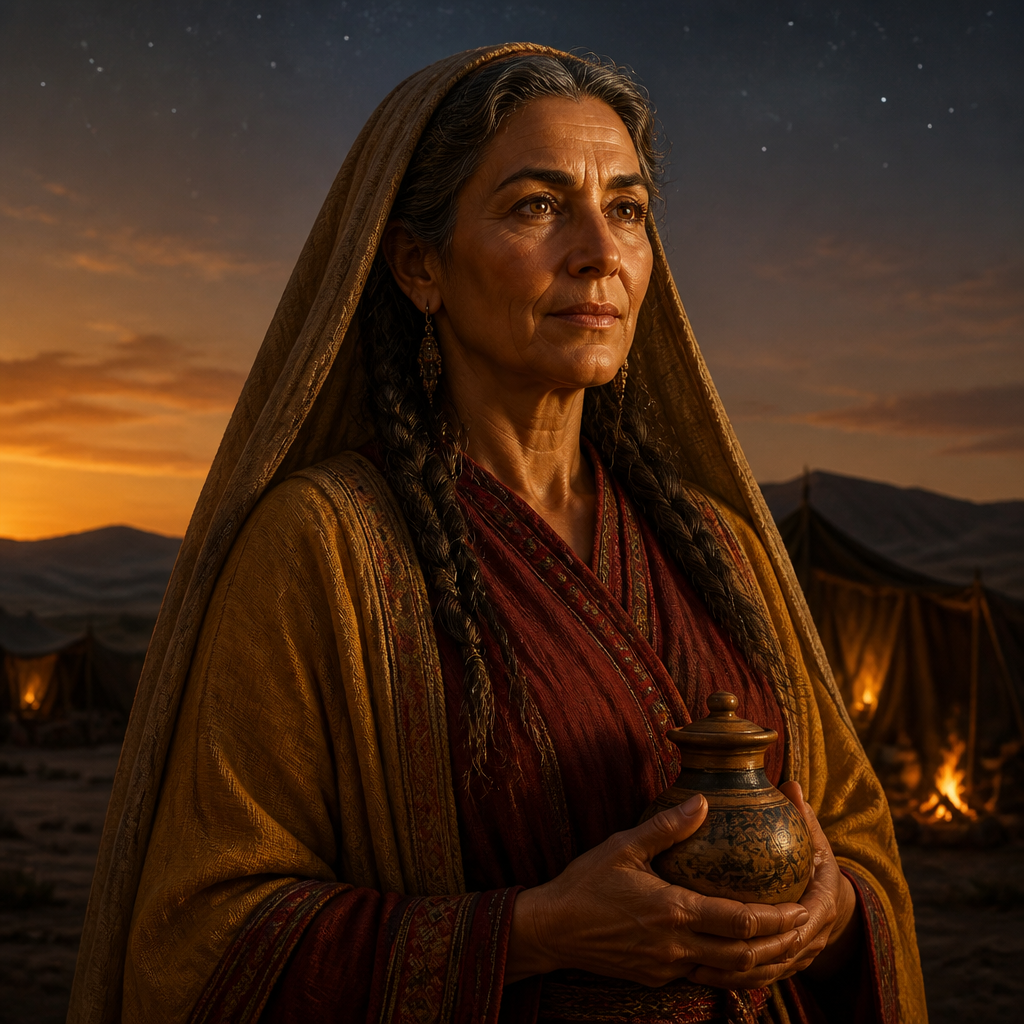 KeturahThis page
Children
Extended family
 AbidaGrandsonGenesis 25:4
Inferred
Genesis 25:4 lists Keturah and Abida among the sons of midian, but does not say how the two of them are related.Evidence: Genesis 25:4; 1 Chronicles 1:32
 Dedan, Son of JokshanGrandson1 Chronicles 1:32
Inferred
1 Chronicles 1:32 lists Dedan and Keturah among the sons of jokshan, but does not say how the two of them are related.Evidence: 1 Chronicles 1:32; Genesis 25:3
 Ephah, Son of MidianGrandsonGenesis 25:4
Inferred
Genesis 25:4 lists Ephah and Keturah among the sons of midian, but does not say how the two of them are related.Evidence: Genesis 25:4
 Epher, Son of MidianGrandson1 Chronicles 1:32
Inferred
Genesis 25:4 lists Epher and Keturah among the sons of midian, but does not say how the two of them are related.Evidence: 1 Chronicles 1:32; Genesis 25:4
 Hanoch, Son of MidianGrandson1 Chronicles 1:32
Inferred
Genesis 25:4 lists Hanoch and Keturah among the sons of midian, but does not say how the two of them are related.Evidence: 1 Chronicles 1:32; Genesis 25:4
 Sheba, Son of JokshanGrandsonGenesis 25:3
Inferred
1 Chronicles 1:32 lists Keturah and Sheba among the sons of jokshan, but does not say how the two of them are related.Evidence: Genesis 25:3; 1 Chronicles 1:32
Connected Figures
Family
Husband · Genesis 25:1
The first of the three biblical patriarchs and the father of the nation of Israel, known for his unwavering faith and his covenant relationship with God.
PatriarchsFirst: Genesis 11:26296 versesPatriarch, nomad, wealthy livestock owner

Son · Genesis 25:4
Eldaah was a son of Midian and a grandson of Abraham through his wife Keturah, serving as a patriarchal ancestor of the Midianite people.
PatriarchsFirst: Genesis 25:43 versesPatriarchal tribal leader

Son · 1 Chronicles 1:32
Ishbak was a son of Abraham and his second wife Keturah, serving as a patriarchal figure and founder of a North Arabian tribe.

Son · 1 Chronicles 1:32
A son of Abraham and his second wife Keturah, Jokshan is recognized as a patriarch and the progenitor of the Sheba and Dedan tribes.
PatriarchsFirst: Genesis 25:26 versesPatriarchal head of tribes

Son · 1 Chronicles 1:32
A son of the patriarch Abraham through his second wife Keturah, Medan is recognized as the progenitor of an early Arab tribe during the Patriarchal Period.

Son · 1 Chronicles 1:32
Midian was the fourth son of Abraham by his wife Keturah and the progenitor of the Midianite people.

Son · 1 Chronicles 1:32
The sixth and final son of Abraham by his wife Keturah, Shuah was an early patriarch who contributed to the expansion of Semitic tribes in the East.

Son · 1 Chronicles 1:32
The firstborn son of Abraham and his second wife Keturah, recognized as a patriarch of an Eastern tribe.
PatriarchsFirst: Genesis 25:25 versesPatriarchal tribal founder
Grandson · Genesis 25:4
Abida was a son of Midian and a grandson of Abraham through his wife Keturah, serving as a patriarchal figure in the lineage of the Midianite people.
Grandson · 1 Chronicles 1:32
Dedan was a son of Jokshan and a grandson of Abraham through his concubine Keturah, serving as a patriarchal progenitor of several North Arabian tribes.
Grandson · Genesis 25:4
Ephah was the firstborn son of Midian and a grandson of Abraham through his wife Keturah, serving as a patriarchal figure in the Sinai region.
Grandson · 1 Chronicles 1:32
Epher was a son of Midian and a grandson of Abraham through his wife Keturah, recognized as a founding patriarch of a Midianite clan.
PatriarchsFirst: Genesis 25:46 versesPatriarchal tribal leader
Categories
Mentions by Book
- Genesis3
- 1 Chronicles2
Scripture References
All 5 indexed verses, in canonical order, from the Berean Standard Bible.
Genesis · 3
- Genesis 25:1
Now Abraham had taken another wife, named Keturah,
- Genesis 25:3Partial
Jokshan was the father of Sheba and Dedan. And the sons of Dedan were the Asshurites, the Letushites, and the Leummites.
Cited as evidence on a family card; added so References, Key Verses and Mentions by Book share one index.
- Genesis 25:4
The sons of Midian were Ephah, Epher, Hanoch, Abida, and Eldaah. All these were descendants of Keturah.
1 Chronicles · 2
- 1 Chronicles 1:32
The sons born to Keturah, Abraham’s concubine: Zimran, Jokshan, Medan, Midian, Ishbak, and Shuah. The sons of Jokshan: Sheba and Dedan.
- 1 Chronicles 1:33
The sons of Midian: Ephah, Epher, Hanoch, Abida, and Eldaah. All of these were Keturah’s sons.