Bethuel
Who was Bethuel in the Bible?
Bethuel was a patriarch from Paddan-aram, the son of Nahor and Milcah, and the father of Rebekah and Laban.
Bethuel appears in the Genesis narrative as a figure of genealogical and familial importance during the era of the Patriarchs. As the son of Nahor—Abraham’s brother—and Milcah, Bethuel represents the continuation of the Semitic lineage in Mesopotamia (Paddan-aram) while his uncle Abraham migrated to Canaan. His primary significance in the biblical text is defined by his role as the father of Rebekah, who would become the wife of Isaac and a matriarch of Israel.
Historically, Bethuel is identified as an Aramean, living in the region of Haran or Paddan-aram. Though he is mentioned less frequently than his son Laban or his daughter Rebekah, his presence in the text establishes the legitimacy of the marriage between Isaac and Rebekah, ensuring that the covenantal line remained within the broader family of Terah rather than intermarrying with the Canaanites. His brief appearance in the negotiations for Rebekah’s hand provides a glimpse into the patriarchal social structures of the time.
Background and Family
Bethuel was born into a large and significant family in the region of Mesopotamia. According to Genesis 22:20-22, news reached Abraham that his brother Nahor and his wife Milcah had produced eight sons. Bethuel was the youngest of these eight brothers, which included Uz, Buz, Kemuel, Chesed, Hazo, Pildash, and Jidlaph. Additionally, he had four half-brothers—Tebah, Gaham, Tahash, and Maacah—born to Nahor’s concubine, Reumah.
This extensive genealogy serves a specific literary and historical purpose in Genesis: it connects the isolated family of Abraham in Canaan back to their ancestral roots in the East. Bethuel is explicitly identified as the father of Rebekah (Genesis 22:23), a detail inserted immediately after his own birth record to foreshadow the upcoming narrative of Isaac’s marriage. Bethuel’s household was located in Paddan-aram, a region associated with the Arameans, a designation explicitly applied to him in Genesis 25:20.
Major Life Events
The most detailed account involving Bethuel occurs in Genesis 24, when Abraham’s servant travels to Mesopotamia to find a wife for Isaac. Upon arriving at a well, the servant encounters Rebekah. When she identifies herself, she states, "I am the daughter of Bethuel, the son that Milcah bore to Nahor" (Genesis 24:24). This identification confirms to the servant that he has successfully found Abraham's kin.
When the servant enters Bethuel’s house to present his proposal, the narrative dynamics are notable. While Laban, Bethuel’s son, appears to take a lead role in the hospitality and negotiations, Bethuel is present during the critical moment of decision. After hearing the servant’s account of how God led him to the well, both Laban and Bethuel respond in unison:
"This is from the LORD; we have no choice in the matter. Here is Rebekah; take her and go, and let her become the wife of your master’s son, as the LORD has directed." (Genesis 24:50-51)
This joint declaration indicates that while Laban may have been an assertive figure in the household, Bethuel remained the patriarchal head whose consent was necessary for the marriage contract. Following this agreement, the servant presented gifts to Rebekah, Laban, and their mother, though Bethuel is not mentioned in the final gift-giving or the departure scene, leading some scholars to suggest he may have been elderly or that Laban was already assuming administrative duties for the family.
Relationship to Other Biblical Figures
Bethuel serves as the vital link between the first and second generations of the Patriarchs. As the nephew of Abraham, he represents the branch of the family that stayed behind in Mesopotamia. His role as the father of Rebekah makes him the father-in-law of Isaac and the grandfather of the twins Jacob and Esau.
Furthermore, the text emphasizes Bethuel’s identity to justify later migrations. When Jacob must flee the wrath of Esau, Isaac commands him to go to the house of "your mother’s father Bethuel" (Genesis 28:2). This reinforces the concept of endogamy—marrying within the extended family—which was a central theme in maintaining the distinct identity of the Hebrew patriarchs against the surrounding cultures.
Spiritual Significance
Bethuel’s spiritual legacy is characterized by a recognition of divine providence. In the single recorded instance of his speech (Genesis 24:50), he acknowledges the hand of Yahweh (the LORD) in the events unfolding. Despite living far from the immediate theater of Abraham’s specific covenantal journey, Bethuel retains a theological understanding that aligns with his uncle’s faith. He does not resist the departure of his daughter, even though it means she will move to a distant land and likely never see him again; he yields to what he perceives as the divine will.
In the broader biblical canon, Bethuel represents the "root" from which the matriarchs of Israel grew. Through his children, the lineage of the Messiah is eventually traced, positioning this quiet Aramean patriarch as a foundational figure in the history of redemption.
Bethuel’s theological importance lies in his role as the facilitator of the covenantal line. By fathering Rebekah and consenting to her marriage to Isaac, he ensures the purity of the lineage that would eventually produce the twelve tribes of Israel. His recognition that the marriage was 'from the LORD' serves as a model of submission to divine sovereignty, even when it required the loss of a daughter to a far-off land.
Furthermore, Bethuel’s house in Paddan-aram served as a safe haven and a source of biological continuity for the Patriarchs. Both Isaac and Jacob looked back to Bethuel's household to find wives, highlighting the importance of family heritage and the preservation of specific ancestral traditions during the early development of the Hebrew people.
Frequently Asked Questions
Who were Bethuel's parents?
Bethuel was the son of Nahor (Abraham's brother) and Milcah.
Where did Bethuel live?
He lived in Paddan-aram, a region in Mesopotamia also associated with the city of Haran.
Why is Bethuel called 'the Aramean'?
Genesis 25:20 and 28:5 refer to him as the Aramean to denote his geographic and cultural origins in the region of Aram-Naharaim.
Did Bethuel have other children besides Rebekah?
Yes, the Bible identifies Laban as the brother of Rebekah and the son of Bethuel.
What was Bethuel's reaction to Isaac's marriage proposal for Rebekah?
He acknowledged that the matter was directed by the LORD and gave his consent for Rebekah to go and become Isaac's wife.
Family & Relationships
Parents
 Milcah, Matriarch of Nahor's LineMotherGenesis 24:15Stated
 Nahor, Brother of AbrahamFatherGenesis 24:47Stated
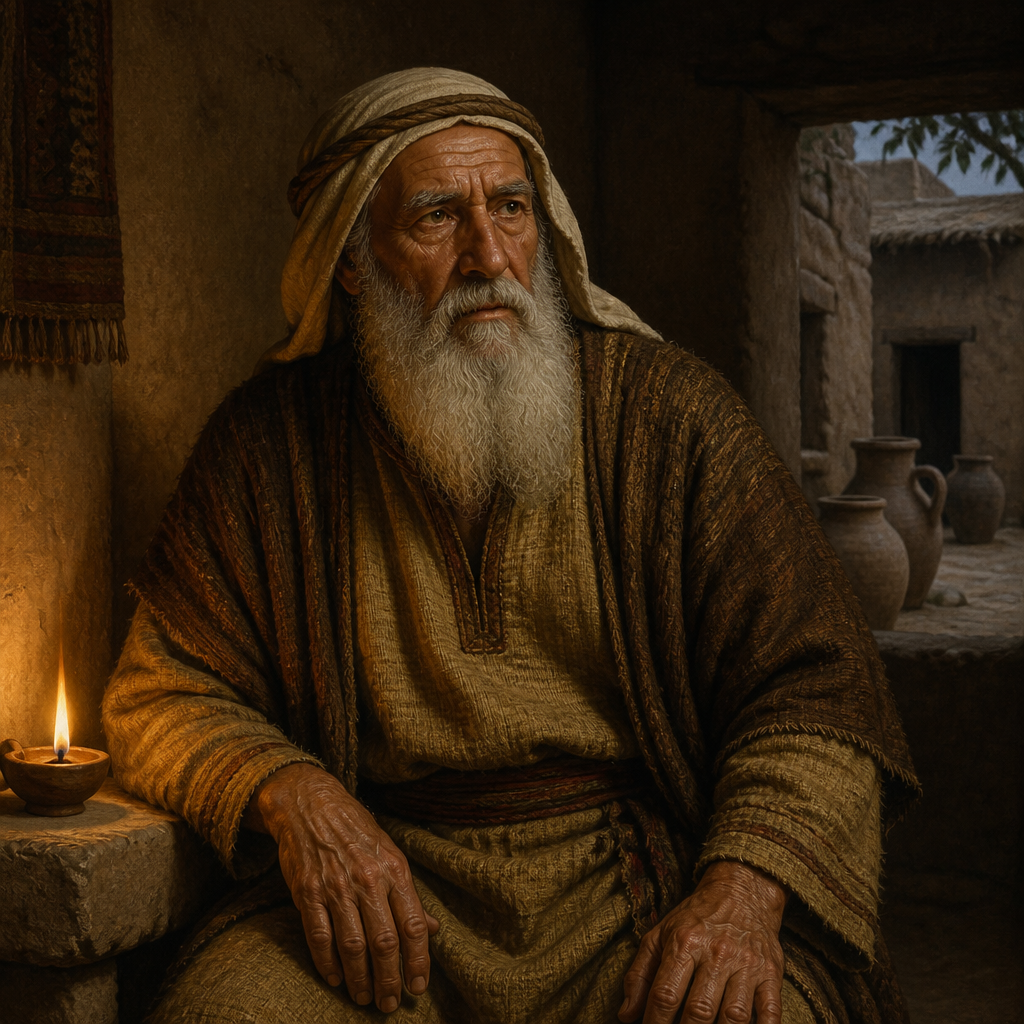 BethuelThis page
 Buz, Son of NahorBrotherGenesis 22:21–22Stated
 ChesedBrotherGenesis 22:22Stated
 GahamBrotherGenesis 22:23–24Stated
 HazoBrotherGenesis 22:22Stated
 JidlaphBrotherGenesis 22:22Stated
 Kemuel, Son of NahorBrotherGenesis 22:21–22Stated
 Maacah, Child of NahorSiblingGenesis 22:22–24Stated
 PildashBrotherGenesis 22:22Stated
 TahashBrotherGenesis 22:22–24Stated
 TebahBrotherGenesis 22:23–24Stated
 Uz, Son of NahorBrotherGenesis 22:22Stated
Extended family
 AbrahamUncleGenesis 24:47
Inferred
Genesis 22:23 names Abraham and Bethuel in the same verse but does not state a nephew tie between them; the link rests on the surrounding narrative.Evidence: Genesis 24:47; Genesis 22:23
Connected Figures
Family
Mother · Genesis 24:15
Milcah was a prominent matriarch in the line of Terah, the wife of Nahor, and the grandmother of Rebekah.
Father · Genesis 24:47
The son of Terah and brother of Abraham, Nahor remained in Mesopotamia and became the progenitor of several tribes through his twelve sons.
PatriarchsFirst: Genesis 11:2620 versesPatriarchal leader and tribal founder

Son · Genesis 28:5
A resourceful and opportunistic Aramean patriarch, brother of Rebekah and father-in-law to Jacob, known for his complex domestic and labor negotiations.
PatriarchsFirst: Genesis 24:2950 versesShepherd, Livestock Owner

Daughter · Genesis 22:23
The wife of Isaac and mother of Esau and Jacob, Rebekah was a central matriarch of Israel known for her hospitality, her role in the patriarchal succession, and her divine oracle regarding her sons.
Brother · Genesis 22:21–22
Buz was the second-born son of Nahor and Milcah and a nephew of the patriarch Abraham during the Patriarchal Period.
Brother · Genesis 22:22
Chesed was a son of Nahor and Milcah, identified as a nephew of the patriarch Abraham in the genealogical records of Genesis.
Brother · Genesis 22:23–24
Gaham was a son of Nahor and Reumah, representing one of the twelve branches of the Nahorite family during the Patriarchal Period.
Brother · Genesis 22:22
Hazo was one of the eight sons of Nahor and Milcah, recognized as a nephew of the patriarch Abraham in the genealogical records of Genesis.
Brother · Genesis 22:22
Jidlaph was a son of Nahor and Milcah, identified as a nephew of the patriarch Abraham in the genealogical records of Genesis.
Brother · Genesis 22:21–22
A nephew of Abraham and the son of Nahor and Milcah, identified in the patriarchal genealogies as the father of Aram.
Sibling · Genesis 22:22–24
Maacah was one of the four children born to Nahor, Abraham’s brother, through his concubine Reumah during the Patriarchal Period.
PatriarchsFirst: Genesis 22:244 versesEarly Patriarchal figure
Brother · Genesis 22:22
Pildash was a son of Nahor and Milcah, identified as a nephew of Abraham within the genealogical records of the Patriarchal Period.
Categories
Mentions by Book
- Genesis12
Scripture References
All 12 indexed verses, in canonical order, from the Berean Standard Bible.
Genesis · 12
- Genesis 22:21Partial
Uz the firstborn, his brother Buz, Kemuel (the father of Aram),
Cited as evidence on a family card; added so References, Key Verses and Mentions by Book share one index.
- Genesis 22:22
Chesed, Hazo, Pildash, Jidlaph, and Bethuel.”
- Genesis 22:23
And Bethuel became the father of Rebekah. Milcah bore these eight sons to Abraham’s brother Nahor.
- Genesis 22:24Partial
Moreover, Nahor’s concubine, whose name was Reumah, bore Tebah, Gaham, Tahash, and Maacah.
Cited as evidence on a family card; added so References, Key Verses and Mentions by Book share one index.
- Genesis 24:15
Before the servant had finished praying, Rebekah came out with her jar on her shoulder. She was the daughter of Bethuel son of Milcah, the wife of Abraham’s brother Nahor.
- Genesis 24:24
She replied, “I am the daughter of Bethuel, the son that Milcah bore to Nahor.”
- Genesis 24:47
Then I asked her, ‘Whose daughter are you?’ She replied, ‘The daughter of Bethuel son of Nahor, whom Milcah bore to him.’ So I put the ring on her nose and the bracelets on her wrists.
- Genesis 24:48Partial
Then I bowed down and worshiped the LORD; and I blessed the LORD, the God of my master Abraham, who led me on the right road to take the granddaughter of my master’s brother for his son.
Cited as evidence on a family card; added so References, Key Verses and Mentions by Book share one index.
- Genesis 24:50
Laban and Bethuel answered, “This is from the LORD; we have no choice in the matter.
- Genesis 25:20
and Isaac was forty years old when he married Rebekah, the daughter of Bethuel the Aramean from Paddan-aram and the sister of Laban the Aramean.
- Genesis 28:2
“Go at once to Paddan-aram, to the house of your mother’s father Bethuel, and take a wife from among the daughters of Laban, your mother’s brother.
- Genesis 28:5
So Isaac sent Jacob to Paddan-aram, to Laban son of Bethuel the Aramean, the brother of Rebekah, who was the mother of Jacob and Esau.