Nahor, Brother of Abraham
Who was Nahor, Brother of Abraham, in the Bible?
The son of Terah and brother of Abraham, Nahor remained in Mesopotamia and became the progenitor of several tribes through his twelve sons.
This is one of 2 people named Nahor in the Bible. See all 2 →
Nahor was a significant figure within the patriarchal narratives of Genesis, representing the branch of Terah’s family that remained in the ancestral lands of Mesopotamia while his brother, Abraham, migrated to Canaan. Born to Terah in Ur of the Chaldeans, Nahor is positioned in the biblical text as a vital link between the chosen line of Abraham and the original Semitic kin groups from which the patriarchs emerged. His marriage to Milcah and his fathering of twelve sons served as a parallel to the later twelve tribes of Israel, establishing him as a patriarch of substantial regional influence.
While Nahor himself does not undergo the same nomadic trials as Abraham, his presence looms large over the narrative through his descendants. His family remained the primary source of wives for the promised line, ensuring that the lineage of Isaac and Jacob maintained a connection to their ancestral heritage. The "City of Nahor" became a destination of profound importance for the servants and children of Abraham, marking the geographical and cultural center of the family's eastern origins.
Background and Family
Nahor was one of the three sons of Terah, born in Ur of the Chaldeans. According to Genesis 11:26, Terah was 70 years old when he became the father of Abram, Nahor, and Haran. The family structure was complex; Nahor’s wife was Milcah, who was the daughter of his brother Haran, making her both his niece and his spouse. This practice of endogamy was common within the patriarchal period to preserve family identity and inheritance. In addition to his primary wife Milcah, Nahor had a concubine named Reumah.
While the biblical text follows Terah, Abram, and Lot as they depart Ur for Haran (Genesis 11:31), Nahor’s movement is less explicitly detailed. However, the subsequent mention of the "City of Nahor" in Aram-naharaim (Genesis 24:10) indicates that Nahor eventually settled in the northern Mesopotamian region, where he established a lasting legacy separate from the Canaanite branch of the family.
Major Life Events
The life of Nahor is recorded primarily through his genealogy and his role as a tribal founder. Through his wife Milcah, Nahor fathered eight sons: Uz, Buz, Kemuel, Chesed, Hazo, Pildash, Jidlaph, and Bethuel. Through his concubine Reumah, he fathered four additional sons: Tebah, Gaham, Tahash, and Maacah. This total of twelve sons mirrors the organizational structure of other significant biblical patriarchs, such as Ishmael and Jacob, suggesting Nahor’s status as the founder of a significant confederation of tribes in the Mesopotamian and Syrian regions.
One of the most critical developments in Nahor's lineage was the birth of his son Bethuel, who eventually became the father of Rebekah. This connection ensured that even though Nahor and Abraham were geographically separated, their bloodlines would reunite in the next generation to fulfill the covenantal promises given to Abraham.
Relationship to Other Biblical Figures
Nahor’s relationship with Abraham remained respectful and cooperative, despite their differing paths. When Abraham sought a wife for his son Isaac, he specifically sent his servant back to the "town of Nahor" to find a bride among his own kindred (Genesis 24:10). This indicates that Abraham still considered Nahor’s household the only appropriate source for maintaining the purity of the covenantal line.
Generations later, the connection remained vital. Jacob, fleeing from Esau, sought refuge with Nahor’s grandson, Laban. The Bible records the local people of Haran identifying Laban specifically as the "grandson of Nahor" (Genesis 29:5), showing that Nahor’s name remained the primary identifier for the family in that region. Even during the final covenant between Jacob and Laban at Mizpah, the two men invoked the "God of Abraham and the God of Nahor" to judge between them, illustrating that the two branches of the family recognized a shared, though perhaps differently understood, spiritual heritage (Genesis 31:53).
Spiritual Significance
Nahor serves as a foil to Abraham. While Abraham is the man of faith who leaves his country, Nahor represents the stability of the ancestral home. Theologically, Nahor’s line serves as the "well" from which the people of Israel are drawn. Without Nahor’s descendants—specifically Rebekah, Leah, and Rachel—the narrative of the chosen people could not have proceeded as it did.
The mention of the "God of Nahor" alongside the "God of Abraham" in Genesis 31:53 suggests that while Nahor’s household may have been influenced by the polytheism of the region (as hinted in Joshua 24:2), they still maintained a distinct recognition of the God of their father, Terah. Nahor thus stands as a figure of the common grace and shared heritage that undergirded the specific calling of Abraham.
Nahor is significant as the patriarchal head of the Mesopotamian branch of Terah’s family, providing the necessary lineage for the wives of Isaac and Jacob. His twelve sons establish him as a major tribal progenitor in the ancient Near East, paralleling the twelve tribes of Israel and the twelve princes of Ishmael.
His role underscores the importance of kinship and endogamy in the Genesis narrative. By preserving the family line in Aram-naharaim, Nahor acted as a providential reservoir of Semitic heritage that God used to build the house of Israel through the matriarchs Rebekah, Leah, and Rachel, all of whom were his direct descendants.
Frequently Asked Questions
Who was Nahor's wife?
Nahor was married to Milcah, who was the daughter of his brother Haran. He also had a concubine named Reumah.
How many sons did Nahor have?
Nahor had a total of twelve sons. Eight were born to his wife Milcah (Uz, Buz, Kemuel, Chesed, Hazo, Pildash, Jidlaph, and Bethuel) and four were born to his concubine Reumah (Tebah, Gaham, Tahash, and Maacah).
Where did Nahor live?
Nahor lived in Mesopotamia, specifically in a location the Bible refers to as 'the city of Nahor' in the region of Aram-naharaim, often associated with the area of Haran.
Was Nahor related to Rebekah?
Yes, Nahor was Rebekah's grandfather. His son Bethuel was her father.
Did Nahor leave Ur with Abraham?
While the Bible explicitly mentions Terah taking Abram and Lot from Ur to Haran, it does not mention Nahor in that specific journey. However, Nahor is later found established in the region of Haran (Aram-naharaim), suggesting he moved there separately or at a later time.
Family & Relationships
Parents
 TerahFatherGenesis 11:27Stated
 Milcah, Matriarch of Nahor's LineWifeGenesis 11:29Stated
 ReumahConcubineGenesis 22:24Stated
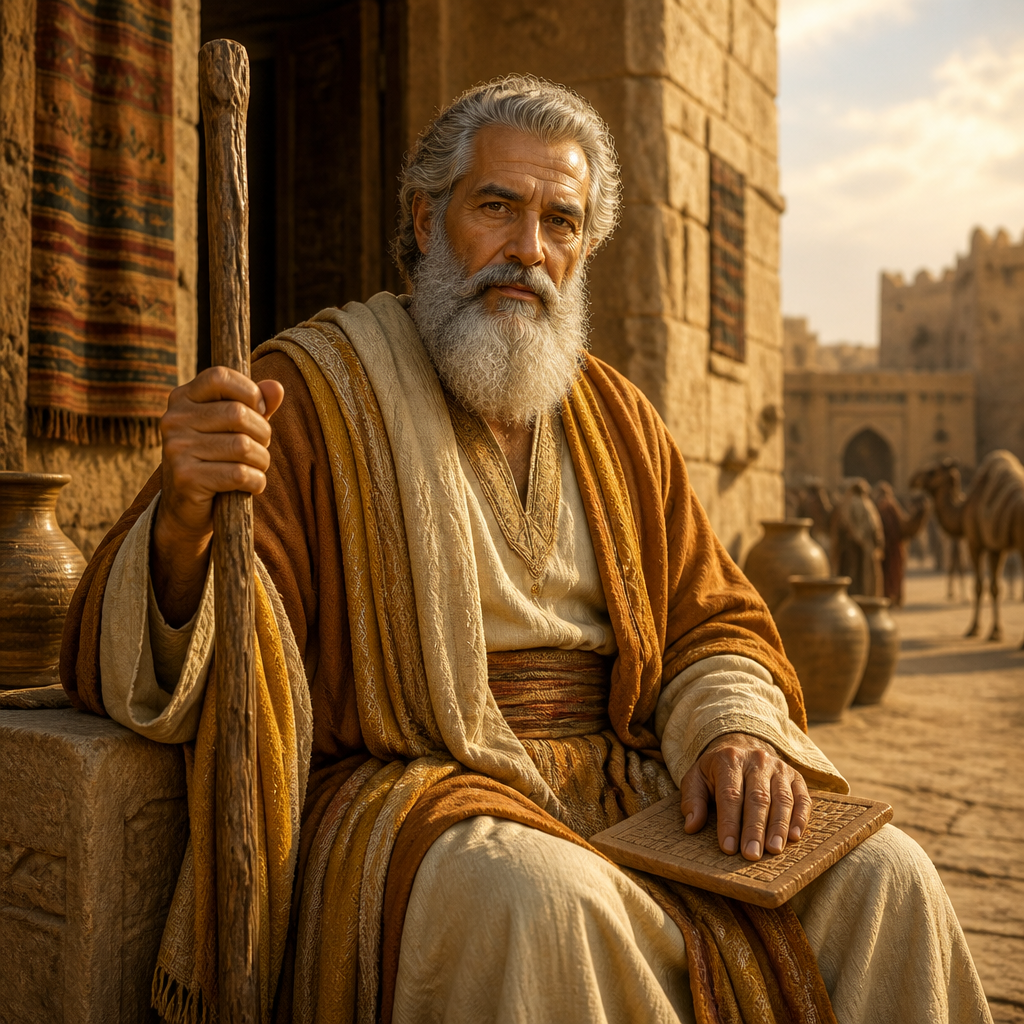 Nahor, Brother of AbrahamThis page
 AbrahamBrotherGenesis 22:23Stated
 Haran, Son of TerahBrotherGenesis 11:27Stated
 SarahSisterGenesis 11:29
Inferred
Genesis 11:29 names Sarai and Nahor in the same verse but does not state a brother tie between them; the link rests on the surrounding narrative.Evidence: Genesis 11:29; Genesis 11:31; Genesis 12:5; Genesis 12:17; Genesis 22:23
Children
 BethuelSonGenesis 24:47Stated
 Buz, Son of NahorSonGenesis 22:20–21Stated
 ChesedSonGenesis 22:22–23Stated
 GahamSonGenesis 22:24Stated
 HazoSonGenesis 22:22–23Stated
 JidlaphSonGenesis 22:20–22Stated
 Kemuel, Son of NahorSonGenesis 22:20–21Stated
 Maacah, Child of NahorChildGenesis 22:24Stated
 PildashSonGenesis 22:22–23Stated
 TahashSonGenesis 22:24Stated
 TebahSonGenesis 22:24Stated
 Uz, Son of NahorSonGenesis 22:21Stated
Extended family
 RebekahGranddaughterGenesis 24:47
Inferred
Genesis 22:23 names Nahor and Rebekah in the same verse but does not state a granddaughter tie between them; the link rests on the surrounding narrative.Evidence: Genesis 24:47; Genesis 22:23; Genesis 25:20
Connected Figures
Family
Father · Genesis 11:27
A foundational patriarch and the father of Abraham who led his family out of Ur of the Chaldeans toward the land of Canaan.
PatriarchsFirst: Genesis 11:2412 versesPatriarchal leader
Wife · Genesis 11:29
Milcah was a prominent matriarch in the line of Terah, the wife of Nahor, and the grandmother of Rebekah.
Concubine · Genesis 22:24
A secondary wife or concubine of Nahor, Abraham’s brother, through whom she became the mother of four distinct Aramean tribal lines.
Son · Genesis 24:47
Bethuel was a patriarch from Paddan-aram, the son of Nahor and Milcah, and the father of Rebekah and Laban.
PatriarchsFirst: Genesis 22:2212 versesPatriarchal head of household
Son · Genesis 22:20–21
Buz was the second-born son of Nahor and Milcah and a nephew of the patriarch Abraham during the Patriarchal Period.
Son · Genesis 22:22–23
Chesed was a son of Nahor and Milcah, identified as a nephew of the patriarch Abraham in the genealogical records of Genesis.
Son · Genesis 22:24
Gaham was a son of Nahor and Reumah, representing one of the twelve branches of the Nahorite family during the Patriarchal Period.
Son · Genesis 22:22–23
Hazo was one of the eight sons of Nahor and Milcah, recognized as a nephew of the patriarch Abraham in the genealogical records of Genesis.
Son · Genesis 22:20–22
Jidlaph was a son of Nahor and Milcah, identified as a nephew of the patriarch Abraham in the genealogical records of Genesis.
Son · Genesis 22:20–21
A nephew of Abraham and the son of Nahor and Milcah, identified in the patriarchal genealogies as the father of Aram.
Child · Genesis 22:24
Maacah was one of the four children born to Nahor, Abraham’s brother, through his concubine Reumah during the Patriarchal Period.
PatriarchsFirst: Genesis 22:244 versesEarly Patriarchal figure
Son · Genesis 22:22–23
Pildash was a son of Nahor and Milcah, identified as a nephew of Abraham within the genealogical records of the Patriarchal Period.
Categories
Mentions by Book
- Genesis19
- Joshua1
Scripture References
All 20 indexed verses, in canonical order, from the Berean Standard Bible.
Genesis · 19
- Genesis 11:26
When Terah was 70 years old, he became the father of Abram, Nahor, and Haran.
- Genesis 11:27
This is the account of Terah. Terah became the father of Abram, Nahor, and Haran. And Haran became the father of Lot.
- Genesis 11:29Partial
And Abram and Nahor took wives for themselves. Abram’s wife was named Sarai, and Nahor’s wife was named Milcah; she was the daughter of Haran, who was the father of both Milcah and Iscah.
- Genesis 11:31Partial
And Terah took his son Abram, his grandson Lot son of Haran, and his daughter-in-law Sarai the wife of Abram, and they set out from Ur of the Chaldeans for the land of Canaan. But when they arrived in Haran, they settled there.
Cited as evidence on a family card; added so References, Key Verses and Mentions by Book share one index.
- Genesis 12:5Partial
And Abram took his wife Sarai, his nephew Lot, and all the possessions and people they had acquired in Haran, and set out for the land of Canaan. When they came to the land of Canaan,
Cited as evidence on a family card; added so References, Key Verses and Mentions by Book share one index.
- Genesis 12:17Partial
The LORD, however, afflicted Pharaoh and his household with severe plagues because of Abram’s wife Sarai.
Cited as evidence on a family card; added so References, Key Verses and Mentions by Book share one index.
- Genesis 22:20
Some time later, Abraham was told, “Milcah has also borne sons to your brother Nahor:
- Genesis 22:21Partial
Uz the firstborn, his brother Buz, Kemuel (the father of Aram),
Cited as a key verse; added so References, Key Verses and Mentions by Book share one index.
- Genesis 22:22Partial
Chesed, Hazo, Pildash, Jidlaph, and Bethuel.”
Cited as a key verse; added so References, Key Verses and Mentions by Book share one index.
- Genesis 22:23
And Bethuel became the father of Rebekah. Milcah bore these eight sons to Abraham’s brother Nahor.
- Genesis 22:24
Moreover, Nahor’s concubine, whose name was Reumah, bore Tebah, Gaham, Tahash, and Maacah.
Cited as a key verse; added so References, Key Verses and Mentions by Book share one index.
- Genesis 24:10
Then the servant took ten of his master’s camels and departed with all manner of good things from his master in hand. And he set out for Nahor’s hometown in Aram-naharaim.
- Genesis 24:15
Before the servant had finished praying, Rebekah came out with her jar on her shoulder. She was the daughter of Bethuel son of Milcah, the wife of Abraham’s brother Nahor.
- Genesis 24:24
She replied, “I am the daughter of Bethuel, the son that Milcah bore to Nahor.”
- Genesis 24:45Partial
And before I had finished praying in my heart, there was Rebekah coming out with her jar on her shoulder, and she went down to the spring and drew water. So I said to her, ‘Please give me a drink.’
Cited as evidence on a family card; added so References, Key Verses and Mentions by Book share one index.
- Genesis 24:46Partial
She quickly lowered her jar from her shoulder and said, ‘Drink, and I will water your camels as well.’ So I drank, and she also watered the camels.
Cited as evidence on a family card; added so References, Key Verses and Mentions by Book share one index.
- Genesis 24:47
Then I asked her, ‘Whose daughter are you?’ She replied, ‘The daughter of Bethuel son of Nahor, whom Milcah bore to him.’ So I put the ring on her nose and the bracelets on her wrists.
- Genesis 29:5
“Do you know Laban the grandson of Nahor?” Jacob asked. “We know him,” they replied.
- Genesis 31:53
May the God of Abraham and the God of Nahor, the God of their father, judge between us.” So Jacob swore by the Fear of his father Isaac.
Joshua · 1
- Joshua 24:2
And Joshua said to all the people, “This is what the LORD, the God of Israel, says: ‘Long ago your fathers, including Terah the father of Abraham and Nahor, lived beyond the Euphrates and worshiped other gods.
Cited as evidence on a family card; added so References, Key Verses and Mentions by Book share one index.
Others Named Nahor
Compare all 2 bearers →Nahor, Grandfather of AbrahamGenesis 11:22
A foundational patriarch in the post-flood genealogy of Shem, Nahor was the son of Serug and the father of Terah.