Haran, Son of Terah
Who was Haran, Son of Terah, in the Bible?
A patriarch of the family of Terah, brother of Abraham, and the father of Lot who died in Ur of the Chaldeans.
This is one of 3 people named Haran in the Bible. See all 3 →
Haran was a significant figure within the patriarchal genealogy of the book of Genesis, serving as a pivotal link in the family of Abraham. As a son of Terah, Haran belonged to the generation that originated in Ur of the Chaldeans, an ancient urban center in Mesopotamia. His life is characterized primarily by his relationships to the foundational figures of Israelite history, most notably his brother Abram (Abraham) and his son Lot.
Though his biblical record is brief, Haran's presence is essential to the narrative structure of the early patriarchal period. He is the first member of this specific lineage recorded to have died, an event that occurred while his father Terah was still living. This premature death set the stage for the subsequent migration of his family and the adoption of his son, Lot, into the household of Abraham.
Background and Family
Haran was born in Ur of the Chaldeans during the Patriarchs, likely in the second millennium BC. According to Genesis 11:26, he was one of three sons born to Terah after Terah reached the age of seventy. His brothers were Abram, who would later be renamed Abraham, and Nahor. Haran occupies a central position in the family tree; he was the father of three children explicitly named in the text: Lot, Milcah, and Iscah (Genesis 11:27, 29).
The family dynamics surrounding Haran were complex and tightly interwoven. His daughter, Milcah, married his brother Nahor, a common practice in the patriarchal era to maintain tribal and family lines. Furthermore, the text notes that Haran was the father of Iscah, though no further details are provided regarding her life. Through his son Lot, Haran became the progenitor of the Moabite and Ammonite nations, though he did not live to see their founding.
Major Life Events
The most definitive event recorded regarding Haran is his death. Genesis 11:28 states, "During his father Terah’s lifetime, Haran died in his native land, in Ur of the Chaldeans." This detail is significant as it establishes the setting of the family's origin and highlights a break in the natural order of generations, where a son predeceases his father.
Following Haran's death, his family underwent a radical transition. Terah took his son Abram, his daughter-in-law Sarai, and Haran's son Lot, and departed Ur with the intention of reaching the land of Canaan. However, the group stopped and settled in a place also named Haran (spelled differently in Hebrew but transliterated similarly in many English versions), where Terah eventually died. The biblical narrative focuses on how Lot, now fatherless, became a ward of his uncle Abram, accompanying him on the journey into the Promised Land.
Relationship to Other Biblical Figures
Haran’s primary importance lies in his children. Through Lot, he is the grandfather of the ancestors of two neighboring nations of Israel. Through Milcah, he is a direct ancestor of Rebekah, Leah, and Rachel, as Milcah’s line continues through Bethuel to Laban and Rebekah. This makes Haran a shared ancestor for nearly all the primary matriarchs of the nation of Israel.
Additionally, Haran is identified as a sibling to Sarai (Sarah). While Genesis 11 does not explicitly detail the mother of Haran, Abraham later clarifies in Genesis 20:12 that Sarah was his half-sister (the daughter of his father but not his mother). This establishes Haran as a full or half-brother to the woman who would become the mother of Isaac.
Spiritual Significance
While Haran does not receive the direct divine callings afforded to his brother Abraham, his role is structurally vital. His death serves as the catalyst for Lot’s inclusion in the Abrahamic journey. In the context of Genesis, Haran represents the generation that remained in or died in the land of their nativity, contrasting with Abraham, who was called to leave his "kindred and father’s house."
His legacy is preserved through the survival of his offspring. The preservation of Lot and Milcah ensures that even though Haran died early in Ur, his lineage remained central to the unfolding history of the covenant family. His life serves as a reminder of the fragility of the early patriarchal lines and the providential care that brought his children into the central narrative of God’s redemptive plan.
Haran serves as a critical genealogical link between the line of Terah and the future nations of Moab and Ammon through his son Lot. His death in Ur of the Chaldeans is the narrative trigger that leads to Lot becoming a companion of Abraham, ensuring Haran's descendants were present for the early stages of the covenant journey.
Furthermore, Haran’s daughter Milcah maintained the family line in Mesopotamia, which eventually provided wives for both Isaac and Jacob. Consequently, Haran is an ancestor to the tribes of Israel through the female line, highlighting his importance in the complex web of patriarchal kinship and the fulfillment of the promise that Abraham would be a father of many nations.
Frequently Asked Questions
How did Haran die?
The Bible does not state the cause of Haran's death, only that he died in his native land of Ur of the Chaldeans while his father Terah was still alive.
Who were Haran's children?
Haran had three children named in Genesis: a son named Lot, and two daughters named Milcah and Iscah.
Was Haran the same as the city named Haran?
No. Haran was a person, the son of Terah. While his family later settled in a place called Haran, the names are distinct in the original Hebrew (Haran the man begins with the letter He, while Haran the place begins with Chet).
What is Haran's relationship to Abraham?
Haran was Abraham's brother. Both were sons of Terah.
Did Haran go to the Promised Land?
No. Haran died in Ur of the Chaldeans before the family began their migration toward Canaan.
Family & Relationships
Parents
 TerahFatherGenesis 11:27Stated
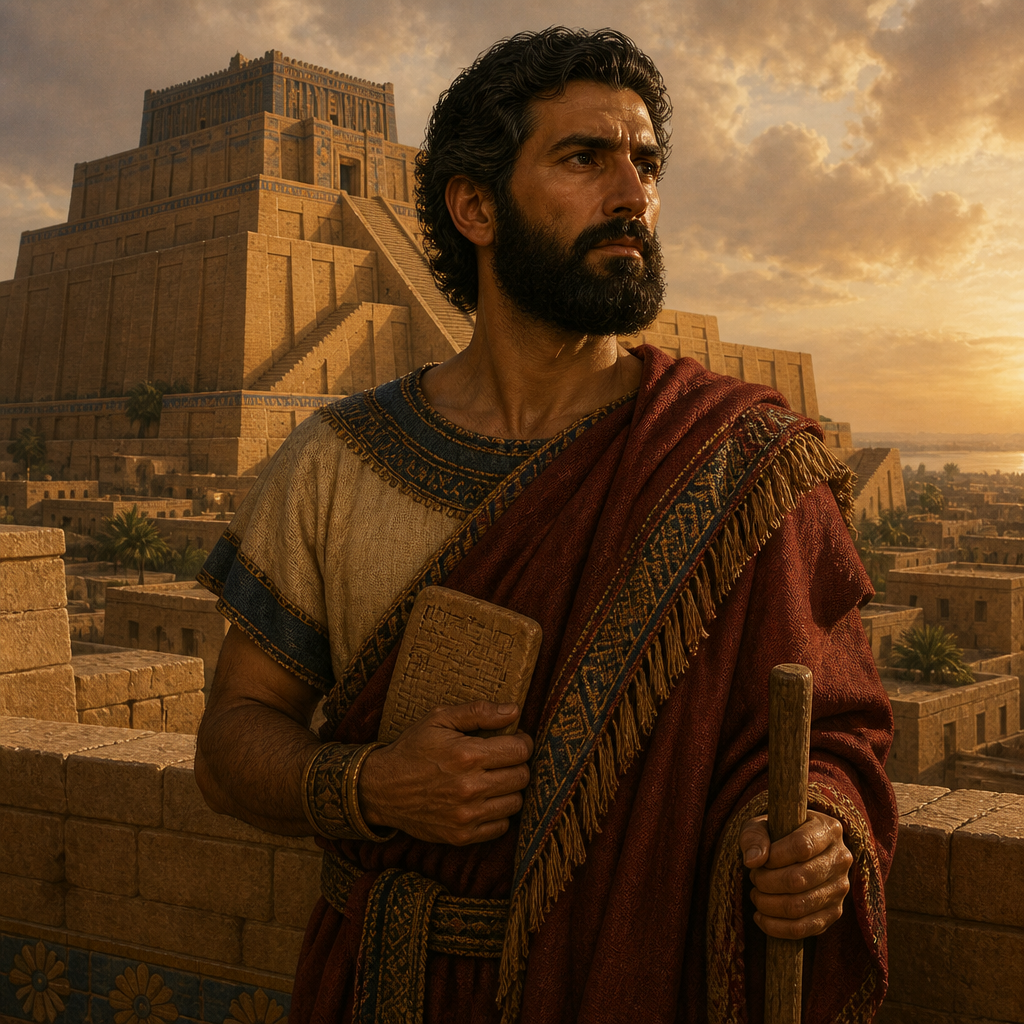 Haran, Son of TerahThis page
 AbrahamBrotherGenesis 11:27Stated
 Nahor, Brother of AbrahamBrotherGenesis 11:27Stated
 SarahSisterGenesis 11:28
Inferred
Reconstructed through Nahor: Genesis 11:29 ties Sarai to Nahor (itself an inferred link); Genesis 11:27 ties Nahor to Haran. No verse states the brother link between Sarah and Haran directly.Evidence: Genesis 11:28
Children
 IscahDaughterGenesis 11:29Stated
 LotSonGenesis 11:27Stated
 Milcah, Matriarch of Nahor's LineDaughterGenesis 11:29Stated
Connected Figures
Family
Father · Genesis 11:27
A foundational patriarch and the father of Abraham who led his family out of Ur of the Chaldeans toward the land of Canaan.
PatriarchsFirst: Genesis 11:2412 versesPatriarchal leader
Daughter · Genesis 11:29
A daughter of Haran and sister to Milcah and Lot, mentioned within the genealogy of the patriarchal family in the book of Genesis.
Son · Genesis 11:27
Lot was the nephew of Abraham who settled in the Jordan Valley, escaped the destruction of Sodom, and became the progenitor of the Moabites and Ammonites.
Daughter · Genesis 11:29
Milcah was a prominent matriarch in the line of Terah, the wife of Nahor, and the grandmother of Rebekah.
Brother · Genesis 11:27
The first of the three biblical patriarchs and the father of the nation of Israel, known for his unwavering faith and his covenant relationship with God.
PatriarchsFirst: Genesis 11:26296 versesPatriarch, nomad, wealthy livestock owner
Brother · Genesis 11:27
The son of Terah and brother of Abraham, Nahor remained in Mesopotamia and became the progenitor of several tribes through his twelve sons.
PatriarchsFirst: Genesis 11:2620 versesPatriarchal leader and tribal founder
Sister · Genesis 11:28
The wife of Abraham and mother of Isaac, recognized as the primary matriarch of the Hebrew people and a recipient of God's covenantal promise.
Categories
Mentions by Book
- Genesis5
Scripture References
All 5 indexed verses, in canonical order, from the Berean Standard Bible.
Genesis · 5
- Genesis 11:26
When Terah was 70 years old, he became the father of Abram, Nahor, and Haran.
- Genesis 11:27Partial
This is the account of Terah. Terah became the father of Abram, Nahor, and Haran. And Haran became the father of Lot.
- Genesis 11:28
During his father Terah’s lifetime, Haran died in his native land, in Ur of the Chaldeans.
- Genesis 11:29
And Abram and Nahor took wives for themselves. Abram’s wife was named Sarai, and Nahor’s wife was named Milcah; she was the daughter of Haran, who was the father of both Milcah and Iscah.
- Genesis 11:31
And Terah took his son Abram, his grandson Lot son of Haran, and his daughter-in-law Sarai the wife of Abram, and they set out from Ur of the Chaldeans for the land of Canaan. But when they arrived in Haran, they settled there.
Others Named Haran
Compare all 3 bearers →Haran, Levite of the United Monarchy1 Chronicles 23:9
A Gershonite Levite during the United Monarchy and the son of Shimei, recognized as a head of a family within the house of Ladan.
Haran, Son of Caleb1 Chronicles 2:46
A member of the tribe of Judah, Haran was the son of Caleb and Ephah, and the father of Gazez during the period of Israel's growth.