Dan
Who was Dan in the Bible?
The fifth son of the patriarch Jacob and the first son born to his concubine Bilhah, serving as the eponymous ancestor of the Tribe of Dan.
Dan was a significant figure in the patriarchal history of Israel, born during a period of intense domestic rivalry between the sisters Leah and Rachel. As Rachel remained barren while Leah bore multiple children, Rachel provided her handmaid, Bilhah, to Jacob as a surrogate. Dan was the first result of this union, marking a pivotal moment in the expansion of Jacob’s household. His name, derived from the Hebrew root meaning 'to judge' or 'to vindicate,' reflects Rachel’s belief that God had finally addressed her legal and social standing within the family.
While the biblical narrative provides few details regarding Dan's personal life compared to his brothers Joseph or Judah, he is consistently listed among the twelve sons of Israel who migrated to Egypt. He is the father of Hushim and the patriarch of a tribe that would later be characterized by its tenacity and role in the judicial and military defense of Israel. His legacy is largely defined by the prophetic blessings bestowed upon him by his father Jacob on his deathbed, which characterize Dan as a source of justice and a cunning protector of the nation.
Background and Family
The birth of Dan is situated within the complex genealogical narratives of Genesis 30. He was the fifth son of Jacob (later named Israel) and the first child born to Bilhah, the handmaid of Jacob’s wife Rachel. This birth occurred in Paddan-aram during the final years of Jacob's service to Laban. The biblical text notes that Rachel, distressed by her inability to conceive, sought to build a family through her servant, a common legal practice in the ancient Near East. Upon the child's birth, Rachel exclaimed, “God has vindicated me; He has heard my plea and given me a son” (Genesis 30:6). Consequently, she named him Dan, a name signifying 'Judge' or 'Vindication.'
Dan grew up as part of a large, multifaceted household. He was the full brother of Naphtali, Bilhah’s second son. His half-siblings included the sons of Leah (Reuben, Simeon, Levi, Judah, Issachar, and Zebulun), the sons of Zilpah (Gad and Asher), and the biological sons of Rachel (Joseph and Benjamin), as well as his sister Dinah. This family structure formed the foundational tribal units of the nation of Israel.
Major Life Events
The recorded life of Dan is relatively sparse in terms of individual action, as the Genesis narrative focuses more heavily on the collective journey of the sons of Jacob. Dan is mentioned in Genesis 35:25 in the formal listing of the twelve sons, confirming his status as a tribal patriarch.
During the famine that struck Canaan, Dan was among the brothers who eventually descended into Egypt to seek provisions from the Egyptian vizier, who—unbeknownst to them at the time—was their brother Joseph. In the genealogical record found in Genesis 46:23, Dan is listed as migrating to Egypt with his son, Hushim. Though he is only credited with one son in this specific record, the Tribe of Dan would eventually grow to be one of the most populous during the Exodus period centuries later.
Relationship to Other Biblical Figures
Dan’s relationship with his father, Jacob, is most vividly illustrated in the final blessing recorded in Genesis 49. As Jacob lay dying in Egypt, he summoned his twelve sons to foretell their futures. Jacob’s words to Dan are uniquely focused on sovereignty and defense: “Dan shall provide justice for his people as one of the tribes of Israel” (Genesis 49:16). This play on words reinforces his name's meaning, suggesting that despite his birth to a handmaid, he and his descendants would hold a status of full equality and judicial authority within the tribal confederacy.
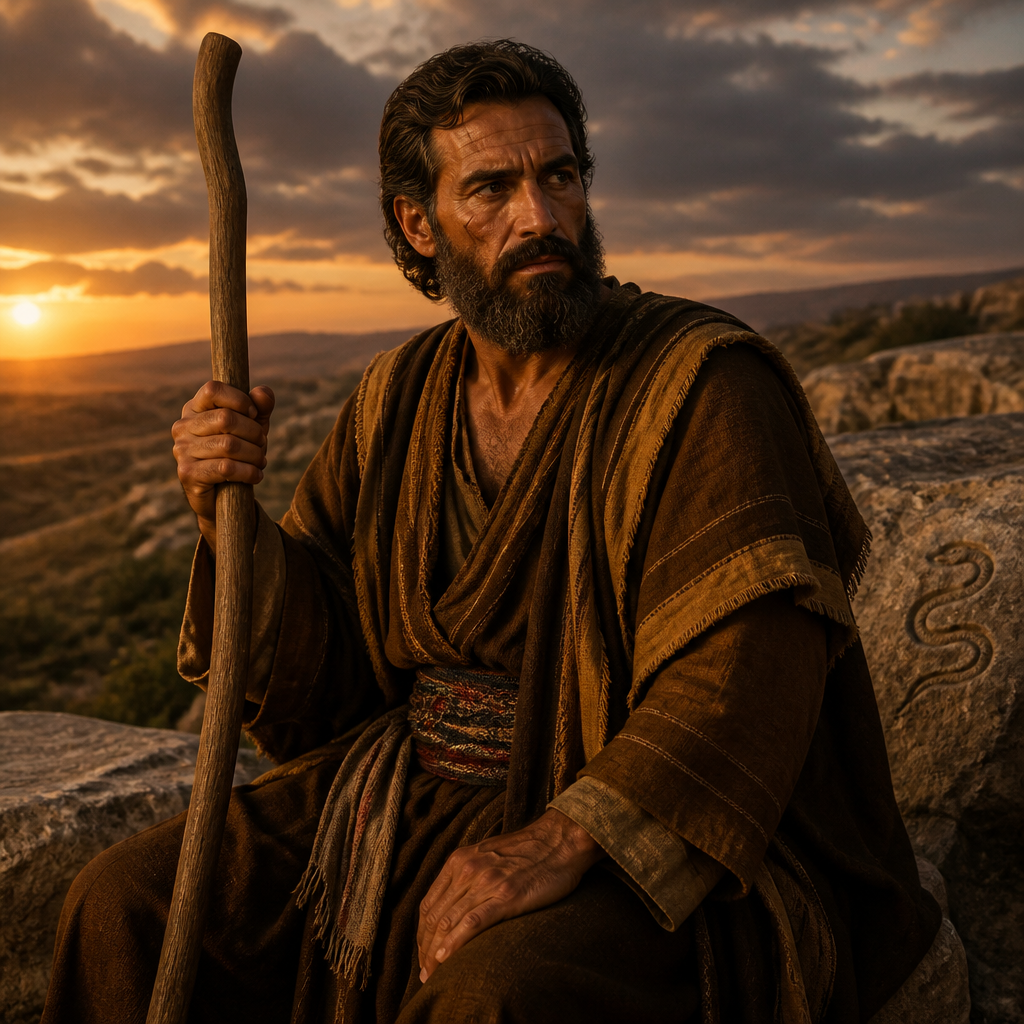
However, the blessing also contains a cryptic and sharp warning: “He will be a snake by the road, a viper in the path that bites the horse’s heels so that its rider tumbles backward” (Genesis 49:17). This imagery suggests a character—or a tribal legacy—marked by guile, ambush, and effective, if unconventional, warfare. This distinguishes Dan from the more overt leonine strength attributed to Judah or the domestic stability of Issachar.
Spiritual Significance
In the broader biblical context, Dan represents the theme of inclusion within the covenant family of God. Despite being the son of a maidservant rather than a primary wife, Dan was fully integrated into the inheritance of Israel. His life serves as a bridge between the personal struggles of the matriarchs and the national identity of the twelve tribes.
His role as a 'judge' (dan) for his people establishes a theological precedent for justice as a core tribal responsibility. The imagery of the serpent in the path has been interpreted by scholars in various ways: some see it as a prophecy of the tribe’s future tactical successes in the northern territories, while others view it as a warning regarding the tribe's later history. Ultimately, Dan remains a foundational figure in the transition from a nomadic family unit to the structured nation of Israel, as reaffirmed in the post-exilic records of 1 Chronicles 2:2.
Dan’s significance lies primarily in his role as an eponymous ancestor. As the first son of Bilhah, his birth resolved a crisis of status for Rachel and expanded the borders of the house of Jacob. The prophetic blessing he received from Jacob (Genesis 49) elevated his status, ensuring that his descendants would not be marginalized but would instead serve as 'judges' and defenders of the people. This established a precedent for the decentralized judicial system that would characterize the Period of the Judges.
Theologically, Dan embodies the complexities of the patriarchal family. His legacy is one of both vindication and strategic cunning. While the individual patriarch Dan is not depicted performing specific miracles or receiving direct revelations from God, his existence is framed as an answer to prayer ('God has heard my plea'), positioning him as a tangible sign of divine providence in the growth of the chosen lineage.
Frequently Asked Questions
What does the name 'Dan' mean?
The name Dan comes from the Hebrew root meaning 'to judge' or 'to vindicate.' It was chosen by Rachel to signify that God had judged her case and given her a son through her handmaid.
Who was Dan's mother?
Dan's mother was Bilhah, who was the handmaid of Rachel. She was given to Jacob as a wife to bear children on Rachel's behalf.
How many children did Dan have?
According to Genesis 46:23, Dan had one son named Hushim.
Why did Jacob compare Dan to a snake or a viper?
In Genesis 49:17, Jacob uses this metaphor to describe Dan’s future tribal character as one that uses strategy, surprise, and stealth to overcome larger or more powerful enemies, like a small snake toppling a horse and rider.
Is Dan mentioned in the New Testament?
While the name Dan appears in lists of the tribes, the specific patriarch Dan is primarily an Old Testament figure, with his historical and genealogical footprint ending in the book of 1 Chronicles.
Family & Relationships
 DanThis page
 AsherBrotherExodus 1:4Stated
 Benjamin, Son of JacobBrotherExodus 1:3–4Stated
 DinahSisterGenesis 34:3
Inferred
Reconstructed through Asher and Jacob: Exodus 1:4 ties Dan to Asher; Genesis 35:26 ties Asher to Jacob; Genesis 34:3 ties Jacob to Dinah. No verse states the sister link between Dan and Dinah directly.Evidence: Genesis 34:3; Judges 18:29
 Gad, Son of JacobBrotherExodus 1:4Stated
 Issachar, Ninth Son of JacobBrotherExodus 1:3–4Stated
 Joseph, Son of JacobBrother1 Chronicles 2:2Stated
 Judah, Son of JacobBrotherExodus 1:2–4Stated
 Levi, Son of JacobBrotherExodus 1:2–4Stated
 NaphtaliBrotherGenesis 35:25Stated
 ReubenBrotherExodus 1:2–4Stated
 Simeon, Son of JacobBrotherExodus 1:2–4Stated
 ZebulunBrotherExodus 1:3–4Stated
Children
 Hushim, Son of DanSonGenesis 46:23Stated
Connected Figures
Family

Mother · Genesis 35:25
Handmaid to Rachel and concubine of Jacob who became the biological mother of Dan and Naphtali, contributing to the formation of the twelve tribes of Israel.
PatriarchsFirst: Genesis 29:2912 versesMaidservant and Concubine

Father · Genesis 35:23–26
The third patriarch of the covenant, whom God renamed Israel after he wrestled with God, and the father of the twelve tribes.
PatriarchsFirst: Genesis 25:26228 versesPatriarch, Shepherd
Son · Genesis 46:23
Hushim was the sole son of the patriarch Dan and the progenitor of the Shuhamite clan during the Egyptian sojourn and Exodus.
Brother · Exodus 1:4
Asher was the eighth son of Jacob, the second born to Zilpah, and the ancestral patriarch of the Tribe of Asher, known for the fertile lands and prosperity promised in his father's blessing.
PatriarchsFirst: Genesis 30:1315 versesPatriarchAsher
Brother · Exodus 1:3–4
The youngest son of Jacob and Rachel, Benjamin was the beloved patriarch of one of the twelve tribes of Israel and a central figure in the narrative of Joseph's rise in Egypt.
PatriarchsFirst: Genesis 35:1823 versesPatriarchBenjamin
Sister · Genesis 34:3
The only daughter of Jacob and Leah mentioned in the patriarchal narratives, known for the incident at Shechem that led to a violent conflict between her brothers and the Hivites.
Brother · Exodus 1:4
The seventh son of Jacob and the firstborn of Zilpah, Gad was a patriarch of Israel whose descendants became a warrior tribe known for their courage and inheritance east of the Jordan River.
PatriarchsFirst: Genesis 30:1111 versesPatriarchGad
Brother · Exodus 1:3–4
The ninth son of Jacob and the fifth born to Leah, Issachar was a patriarch whose descendants formed one of the prominent twelve tribes of Israel.
PatriarchsFirst: Genesis 30:1813 versesPatriarchIssachar
Brother · 1 Chronicles 2:2
The favored son of Jacob who, after being sold into slavery by his brothers, rose to become the Grand Vizier of Egypt and preserved the lineage of Israel during a regional famine.
PatriarchsFirst: Genesis 30:24156 versesShepherd, Slave, Household Manager, Prisoner, Grand Vizier of Egypt
Brother · Exodus 1:2–4
The fourth son of Jacob and Leah, ancestor of the Tribe of Judah and the Davidic line, known for his leadership and pivotal role in the preservation of his family.
PatriarchsFirst: Genesis 29:3538 versesPatriarch and ShepherdJudah
Brother · Exodus 1:2–4
The third son of Jacob and Leah, a patriarch whose descendants were set apart as the priestly and ministerial class for the nation of Israel.
PatriarchsFirst: Genesis 29:3416 versesPatriarchLevi
Brother · Genesis 35:25
The sixth son of Jacob and second son of Bilhah, whose descendants formed one of the twelve tribes of Israel in the fertile northern Galilee region.
PatriarchsFirst: Genesis 30:811 versesPatriarchNaphtali
Categories
Mentions by Book
- Genesis9
- Exodus3
- Judges1
Scripture References
All 13 indexed verses, in canonical order, from the Berean Standard Bible.
Genesis · 9
- Genesis 30:6
Then Rachel said, “God has vindicated me; He has heard my plea and given me a son.” So she named him Dan.
- Genesis 34:3Partial
And his soul was drawn to Dinah, the daughter of Jacob. He loved the young girl and spoke to her tenderly.
Cited as evidence on a family card; added so References, Key Verses and Mentions by Book share one index.
- Genesis 35:23Partial
The sons of Leah were Reuben the firstborn of Jacob, Simeon, Levi, Judah, Issachar, and Zebulun.
Cited as evidence on a family card; added so References, Key Verses and Mentions by Book share one index.
- Genesis 35:24Partial
The sons of Rachel were Joseph and Benjamin.
Cited as evidence on a family card; added so References, Key Verses and Mentions by Book share one index.
- Genesis 35:25
The sons of Rachel’s maidservant Bilhah were Dan and Naphtali.
- Genesis 35:26Partial
And the sons of Leah’s maidservant Zilpah were Gad and Asher. These are the sons of Jacob, who were born to him in Paddan-aram.
Cited as evidence on a family card; added so References, Key Verses and Mentions by Book share one index.
- Genesis 46:23
The son of Dan: Hushim.
- Genesis 49:16
Dan shall provide justice for his people as one of the tribes of Israel.
- Genesis 49:17
He will be a snake by the road, a viper in the path that bites the horse’s heels so that its rider tumbles backward.
Exodus · 3
- Exodus 1:2Partial
Reuben, Simeon, Levi, and Judah;
Cited as evidence on a family card; added so References, Key Verses and Mentions by Book share one index.
- Exodus 1:3Partial
Issachar, Zebulun, and Benjamin;
Cited as evidence on a family card; added so References, Key Verses and Mentions by Book share one index.
- Exodus 1:4
Dan and Naphtali; Gad and Asher.
Cited as evidence on a family card; added so References, Key Verses and Mentions by Book share one index.
Judges · 1
- Judges 18:29
They named it Dan, after their forefather Dan, who was born to Israel—though the city was formerly named Laish.
Cited as evidence on a family card; added so References, Key Verses and Mentions by Book share one index.