Judah, Son of Jacob
Who was Judah, Son of Jacob, in the Bible?
The fourth son of Jacob and Leah, ancestor of the Tribe of Judah and the Davidic line, known for his leadership and pivotal role in the preservation of his family.
This is one of 6 people named Judah in the Bible. See all 6 →
Judah was the fourth son born to the patriarch Jacob and his first wife, Leah. His name, meaning 'praise,' reflects his mother’s gratitude toward God at his birth. As a central figure in the book of Genesis, Judah’s life is marked by significant moral complexity, transitioning from a brother who suggested selling Joseph into slavery to a selfless leader who offered his own life to protect his youngest brother, Benjamin.
Judah's importance extends far beyond his personal biography; he is the eponymous forefather of the Tribe of Judah, which eventually became the dominant political and spiritual force in Israel. From his lineage came the kings of the United and Divided Monarchies, most notably King David. In Christian theology, he is regarded as a direct ancestor of Jesus Christ, who is titled the 'Lion of the Tribe of Judah.'
Background and Family
Judah was born in Paddan-aram during the years of Jacob’s service to his uncle Laban. As the fourth son of Leah, he followed Reuben, Simeon, and Levi. The biblical record of his birth in Genesis 29:35 notes that Leah said, “This time I will praise the Lord,” establishing the etymological root of his name in the Hebrew word for praise (yadah).
Judah’s immediate family life was fraught with tragedy and moral failure. He married the daughter of a Canaanite man named Shua, often referred to as Bath-shua. With her, he fathered three sons: Er, Onan, and Shelah. However, the biblical text records that Er was wicked and was put to death by God. Following the custom of levirate marriage, Judah instructed Onan to provide an heir for his deceased brother through Er’s widow, Tamar. When Onan refused and was also struck down, Judah, fearing for the life of his youngest son Shelah, sent Tamar back to her father’s house under the pretense that she would marry Shelah when he came of age—a promise he did not intend to keep.
Major Life Events
The Sale of Joseph
Judah first emerges as a prominent voice among his brothers during the conspiracy against Joseph. While the older brothers originally intended to kill Joseph, Judah intervened with a pragmatic alternative: “What profit will we gain if we kill our brother and cover up his blood? Come, let us sell him to the Ishmaelites” (Genesis 37:26-27). While this act saved Joseph’s life, it also facilitated his long exile in Egypt.
Tamar and the Birth of Perez and Zerah
After the deaths of his sons and his wife, Judah encountered a woman he believed to be a prostitute on the road to Timnah. In reality, it was his daughter-in-law Tamar in disguise, seeking to secure her rights to an heir. Judah unknowingly fathered children with her, leaving his staff and signet as a pledge. When Tamar was later accused of prostitution, Judah demanded her execution until she produced his tokens. Confronted with his own hypocrisy, Judah famously declared, “She is more righteous than I” (Genesis 38:26). Tamar gave birth to twins, Perez and Zerah; Perez became the ancestor of the Davidic line.
Leadership in Egypt
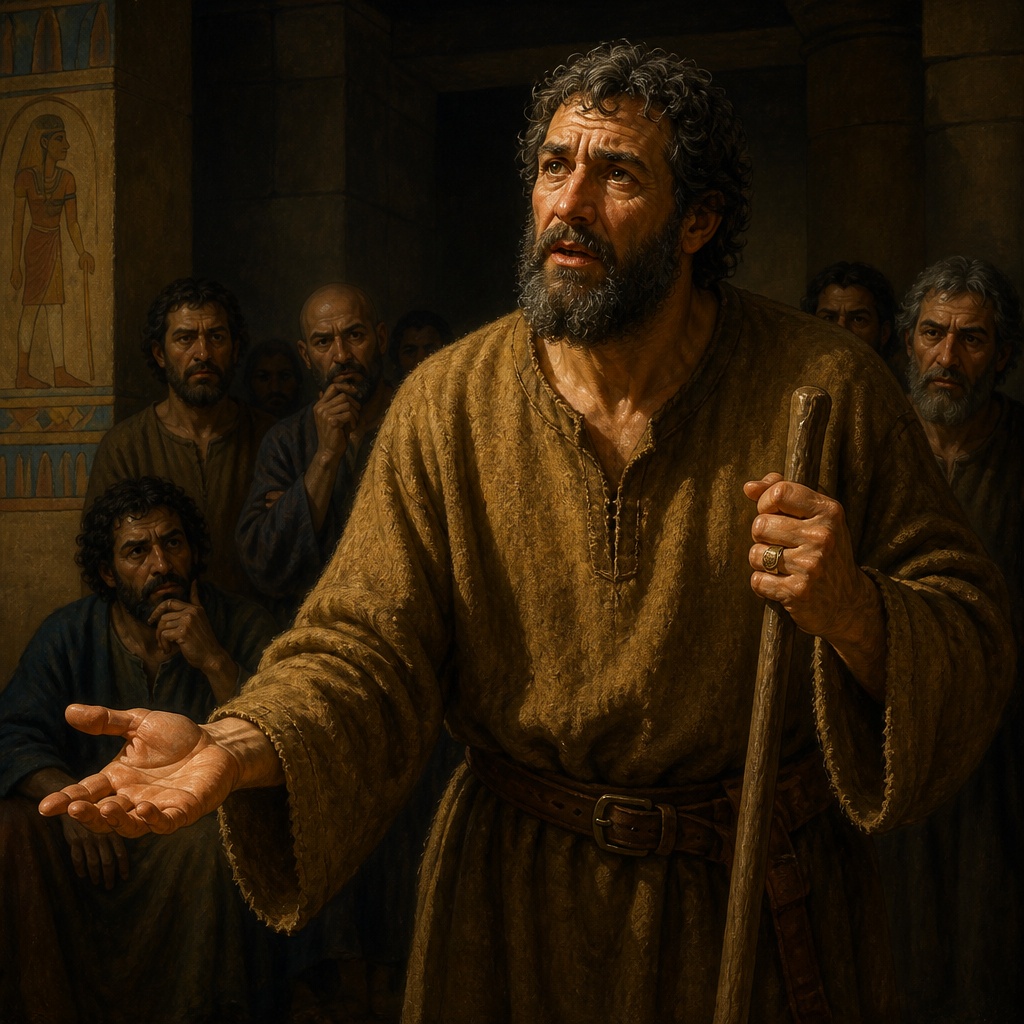
During the famine that struck Canaan, Judah rose to a position of leadership among the brothers. When Jacob refused to let Benjamin go to Egypt, Judah took personal responsibility for the boy’s safety, pledging his own life as a guarantee. This transformation culminated in the presence of the Egyptian vizier (unbeknownst to them, Joseph). When Joseph threatened to enslave Benjamin, Judah delivered a powerful, sacrificial plea, offering to take Benjamin’s place as a slave so that their father would not die of grief. This act of intercession prompted Joseph to reveal his identity and led to the reconciliation of the family.
Relationship to Other Biblical Figures
Judah’s relationship with his father Jacob was one of evolving trust. By the end of Jacob's life, Judah had surpassed his older brothers—Reuben (who lost his status through immorality) and Simeon and Levi (who were bypassed due to their violence at Shechem). As a result, Judah received the primary blessing of leadership. His relationship with Joseph shifted from one of jealousy and betrayal to one of deep loyalty and deference. Furthermore, as the father of Perez, Judah is the patriarchal link between the era of the Patriarchs and the eventual rise of the monarchy, connecting the promises made to Abraham to the specific royal covenant of David.
Spiritual Significance
The spiritual significance of Judah is primarily found in the 'Blessing of Jacob' in Genesis 49. Jacob describes Judah as a 'lion’s whelp' and prophesies that 'the scepter will not depart from Judah... until Shiloh comes' (Genesis 49:10). This is widely interpreted as a messianic prophecy, indicating that the rightful ruler of Israel would always stem from Judah’s line.
Judah’s life also serves as a narrative of redemption. He is a man who moves from the calloused sale of a brother to a state of repentance and self-sacrifice. This internal change mirrors the broader biblical theme of God choosing the unlikely or the flawed to carry forward the covenantal promise. The New Testament reinforces this status, noting in the genealogies of Matthew and Luke that the Messiah was born of the lineage of Judah, fulfilling the patriarchal blessing delivered centuries earlier.
Judah is theologically significant as the progenitor of the tribe that would eventually define the identity of the Jewish people (the term 'Jew' is derived from Judah). He represents the shift of the covenantal blessing from the firstborn to the son who demonstrates the character required for leadership and sacrifice.
Furthermore, Judah serves as a type of Christ in his willingness to suffer as a substitute for his brother Benjamin. The 'Lion of the Tribe of Judah' becomes a central title for Jesus in the Book of Revelation, signifying that the authority and kingly nature promised to Judah reach their ultimate fulfillment in the New Testament figure of Christ.
Frequently Asked Questions
Why did Judah receive the blessing instead of Reuben?
Although Reuben was the firstborn, he lost his birthright due to his misconduct with his father's concubine, Bilhah. Simeon and Levi were also passed over because of their violent actions at Shechem. Judah emerged as the leader through his growth in character and his sacrificial protection of Benjamin.
What does the name 'Judah' mean?
The name Judah (Yehudah) comes from the Hebrew root 'yadah,' which means to praise or give thanks. His mother Leah named him this to express her praise to the Lord.
How is Judah related to King David?
Judah is the great-great-ancestor of David. Specifically, David is a descendant of Perez, one of the twin sons born to Judah and Tamar.
What was the 'scepter' prophecy given to Judah?
In Genesis 49:10, Jacob prophesied that the scepter (symbol of royal authority) would not depart from Judah until 'Shiloh' comes, which is traditionally interpreted as a reference to the coming of the Messiah.
Who were Judah's wives?
Judah married the daughter of Shua, a Canaanite (often called Bath-shua). After her death, he fathered children with Tamar, who was his daughter-in-law.
Family & Relationships
 Bath-shuaWifeGenesis 38:2Stated
 Judah, Son of JacobThis page
 AsherBrotherExodus 1:2–4Stated
 Benjamin, Son of JacobBrotherExodus 1:2–3Stated
 DanBrotherExodus 1:2–4Stated
 DinahSisterGenesis 30:21
Inferred
Reconstructed through Simeon: Genesis 34:25 ties Dinah to Simeon; Genesis 35:23 ties Simeon to Judah. No verse states the brother link between Dinah and Judah directly.Evidence: Genesis 30:21; Genesis 35:23
 Gad, Son of JacobBrotherExodus 1:2–4Stated
 Issachar, Ninth Son of JacobBrotherGenesis 35:23Stated
 Joseph, Son of JacobBrotherGenesis 46:28Stated
 Levi, Son of JacobBrotherGenesis 35:23Stated
 NaphtaliBrotherExodus 1:2–4Stated
 ReubenBrotherGenesis 35:23Stated
 Simeon, Son of JacobBrotherGenesis 35:23Stated
 ZebulunBrotherGenesis 35:23Stated
Children
 Er, Firstborn of JudahSonGenesis 46:12Stated
 OnanSonNumbers 26:19Stated
 PerezSon1 Chronicles 2:4Stated
 Shelah, Son of JudahSon1 Chronicles 4:21Stated
 Zerah, Son of TamarSon1 Chronicles 2:4Stated
Extended family
 Tamar, Daughter-in-law of JudahDaughter-in-lawGenesis 38:11Stated
Connected Figures
Family

Father · Genesis 35:23–26
The third patriarch of the covenant, whom God renamed Israel after he wrestled with God, and the father of the twelve tribes.
PatriarchsFirst: Genesis 25:26228 versesPatriarch, Shepherd

Mother · Genesis 35:23
The elder daughter of Laban and the first wife of Jacob, Leah was the biological mother of six of the twelve tribes of Israel and the matriarch of the priestly and royal lines.
Wife · Genesis 38:2
A Canaanite woman who became the wife of the patriarch Judah and the mother of his first three sons: Er, Onan, and Shelah.
Son · Genesis 46:12
Er was the eldest son of the patriarch Judah and the first husband of Tamar, who was struck down by God for his wickedness in the land of Canaan.
PatriarchsFirst: Genesis 38:37 versesFirstborn heirJudah
Son · Numbers 26:19
The second son of Judah who was struck down by God for refusing to fulfill the levirate obligation to raise offspring for his deceased brother Er.
PatriarchsFirst: Genesis 38:47 versesPatriarchal shepherd and heirJudah
Son · 1 Chronicles 2:4
The son of Judah and Tamar, known for his breach-birth and as the ancestor of the primary clan of Judah and the Davidic line.
Son · 1 Chronicles 4:21
The third son of Judah and a survivor of the early tragedies in Judah's family, Shelah became the progenitor of the Shelanite clan within the tribe of Judah.
Son · 1 Chronicles 2:4
The twin son of Judah and Tamar, Zerah is known for the scarlet thread tied to his hand during a competitive birth and for founding a prominent clan within the Tribe of Judah.
PatriarchsFirst: Genesis 38:3013 versesPatriarchJudah
Brother · Exodus 1:2–4
Asher was the eighth son of Jacob, the second born to Zilpah, and the ancestral patriarch of the Tribe of Asher, known for the fertile lands and prosperity promised in his father's blessing.
PatriarchsFirst: Genesis 30:1315 versesPatriarchAsher
Brother · Exodus 1:2–3
The youngest son of Jacob and Rachel, Benjamin was the beloved patriarch of one of the twelve tribes of Israel and a central figure in the narrative of Joseph's rise in Egypt.
PatriarchsFirst: Genesis 35:1823 versesPatriarchBenjamin
Brother · Exodus 1:2–4
The fifth son of the patriarch Jacob and the first son born to his concubine Bilhah, serving as the eponymous ancestor of the Tribe of Dan.
PatriarchsFirst: Genesis 30:613 versesPatriarchDan
Sister · Genesis 30:21
The only daughter of Jacob and Leah mentioned in the patriarchal narratives, known for the incident at Shechem that led to a violent conflict between her brothers and the Hivites.
Categories
Mentions by Book
- Genesis30
- Exodus3
- 2 Chronicles1
- Matthew2
- Luke1
- Hebrews1
Scripture References
All 38 indexed verses, in canonical order, from the Berean Standard Bible.
- Genesis 29:35
And once more she conceived and gave birth to a son and said, “This time I will praise the LORD.” So she named him Judah. Then Leah stopped having children.
- Genesis 34:3Partial
And his soul was drawn to Dinah, the daughter of Jacob. He loved the young girl and spoke to her tenderly.
Cited as evidence on a family card; added so References, Key Verses and Mentions by Book share one index.
- Genesis 35:23
The sons of Leah were Reuben the firstborn of Jacob, Simeon, Levi, Judah, Issachar, and Zebulun.
- Genesis 35:24Partial
The sons of Rachel were Joseph and Benjamin.
Cited as evidence on a family card; added so References, Key Verses and Mentions by Book share one index.
- Genesis 35:25Partial
The sons of Rachel’s maidservant Bilhah were Dan and Naphtali.
Cited as evidence on a family card; added so References, Key Verses and Mentions by Book share one index.
- Genesis 35:26Partial
And the sons of Leah’s maidservant Zilpah were Gad and Asher. These are the sons of Jacob, who were born to him in Paddan-aram.
Cited as evidence on a family card; added so References, Key Verses and Mentions by Book share one index.
- Genesis 37:26
Then Judah said to his brothers, “What profit will we gain if we kill our brother and cover up his blood?
- Genesis 38:1
About that time, Judah left his brothers and settled near a man named Hirah, an Adullamite.
- Genesis 38:2
There Judah saw the daughter of a Canaanite man named Shua, and he took her as a wife and slept with her.
- Genesis 38:6
Now Judah acquired a wife for Er, his firstborn, and her name was Tamar.
- Genesis 38:7
But Er, Judah’s firstborn, was wicked in the sight of the LORD; so the LORD put him to death.
- Genesis 38:8
Then Judah said to Onan, “Sleep with your brother’s wife. Perform your duty as her brother-in-law and raise up offspring for your brother.”
- Genesis 38:11
Then Judah said to his daughter-in-law Tamar, “Live as a widow in your father’s house until my son Shelah grows up.” For he thought, “He may die too, like his brothers.” So Tamar went to live in her father’s house.
- Genesis 38:12Partial
After a long time Judah’s wife, the daughter of Shua, died. When Judah had finished mourning, he and his friend Hirah the Adullamite went up to his sheepshearers at Timnah.
- Genesis 38:15
When Judah saw her, he thought she was a prostitute because she had covered her face.
- Genesis 38:20
Now when Judah sent his friend Hirah the Adullamite with the young goat to collect the items he had left with the woman, he could not find her.
- Genesis 38:22
So Hirah returned to Judah and said, “I could not find her, and furthermore, the men of that place said, ‘No shrine prostitute has been here.’”
- Genesis 38:23
“Let her keep the items,” Judah replied. “Otherwise we will become a laughingstock. After all, I did send her this young goat, but you could not find her.”
- Genesis 38:24Partial
About three months later, Judah was told, “Your daughter-in-law Tamar has prostituted herself, and now she is pregnant.” “Bring her out!” Judah replied. “Let her be burned to death!”
- Genesis 38:26
Judah recognized the items and said, “She is more righteous than I, since I did not give her to my son Shelah.” And he did not have relations with her again.
- Genesis 43:3
But Judah replied, “The man solemnly warned us, ‘You will not see my face again unless your brother is with you.’
- Genesis 43:8
And Judah said to his father Israel, “Send the boy with me, and we will go at once, so that we may live and not die—neither we, nor you, nor our children.
- Genesis 44:14
When Judah and his brothers arrived at Joseph’s house, he was still there, and they fell to the ground before him.
- Genesis 44:16
“What can we say to my lord?” Judah replied. “How can we plead? How can we justify ourselves? God has exposed the iniquity of your servants. We are now my lord’s slaves—both we and the one who was found with the cup.”
- Genesis 44:18
Then Judah approached Joseph and said, “Sir, please let your servant speak personally to my lord. Do not be angry with your servant, for you are equal to Pharaoh himself.
- Genesis 44:33Partial
Now please let your servant stay here as my lord’s slave in place of the boy. Let him return with his brothers.
Cited as a key verse; added so References, Key Verses and Mentions by Book share one index.
- Genesis 46:28
Now Jacob had sent Judah ahead of him to Joseph to get directions to Goshen. When Jacob’s family arrived in the land of Goshen,
- Genesis 49:8
Judah, your brothers shall praise you. Your hand shall be on the necks of your enemies; your father’s sons shall bow down to you.
- Genesis 49:9
Judah is a young lion—my son, you return from the prey. Like a lion he crouches and lies down; like a lioness, who dares to rouse him?
- Genesis 49:10
The scepter will not depart from Judah, nor the staff from between his feet, until Shiloh comes and the allegiance of the nations is his.
- Exodus 1:2
Reuben, Simeon, Levi, and Judah;
- Exodus 1:3Partial
Issachar, Zebulun, and Benjamin;
Cited as evidence on a family card; added so References, Key Verses and Mentions by Book share one index.
- Exodus 1:4Partial
Dan and Naphtali; Gad and Asher.
Cited as evidence on a family card; added so References, Key Verses and Mentions by Book share one index.
- 2 Chronicles 30:6
At the command of the king, the couriers went throughout Israel and Judah with letters from the king and his officials, which read: “Children of Israel, return to the LORD, the God of Abraham, Isaac, and Israel, so that He may return to those of you who remain, who have escaped the grasp of the kings of Assyria.
- Matthew 1:2
Abraham was the father of Isaac, Isaac the father of Jacob, and Jacob the father of Judah and his brothers.
- Matthew 1:3
Judah was the father of Perez and Zerah by Tamar, Perez the father of Hezron, and Hezron the father of Ram.
- Luke 3:33
the son of Amminadab, the son of Admin, the son of Arni, the son of Hezron, the son of Perez, the son of Judah,
- Hebrews 7:14
For it is clear that our Lord descended from Judah, a tribe as to which Moses said nothing about priests.
Others Named Judah
Compare all 6 bearers →Judah, Levite of the ReturnNehemiah 12:8
A Levite who returned from the Babylonian exile and served as a musical leader during the rebuilding and dedication of Jerusalem's walls.
Judah, Son of JosephLuke 3:30
An ancestor of Jesus Christ listed in the Lucan genealogy, positioned between his father Joseph and his son Simeon.
Judah, Musician at the Wall DedicationNehemiah 12:36
A post-exilic musician and associate of Ezra who participated in the joyful dedication of the rebuilt walls of Jerusalem.
Judah, Son of HassenuahNehemiah 11:9
A Benjaminite leader who served as the second-in-command over a district in Jerusalem during the post-exilic return under Nehemiah.
Judah, Levite of Ezra 10Ezra 10:23
A Levite during the post-exilic return to Jerusalem who was listed among those required to put away foreign wives according to Ezra's reform.