Bath-shua
Who was Bath-shua in the Bible?
A Canaanite woman who became the wife of the patriarch Judah and the mother of his first three sons: Er, Onan, and Shelah.
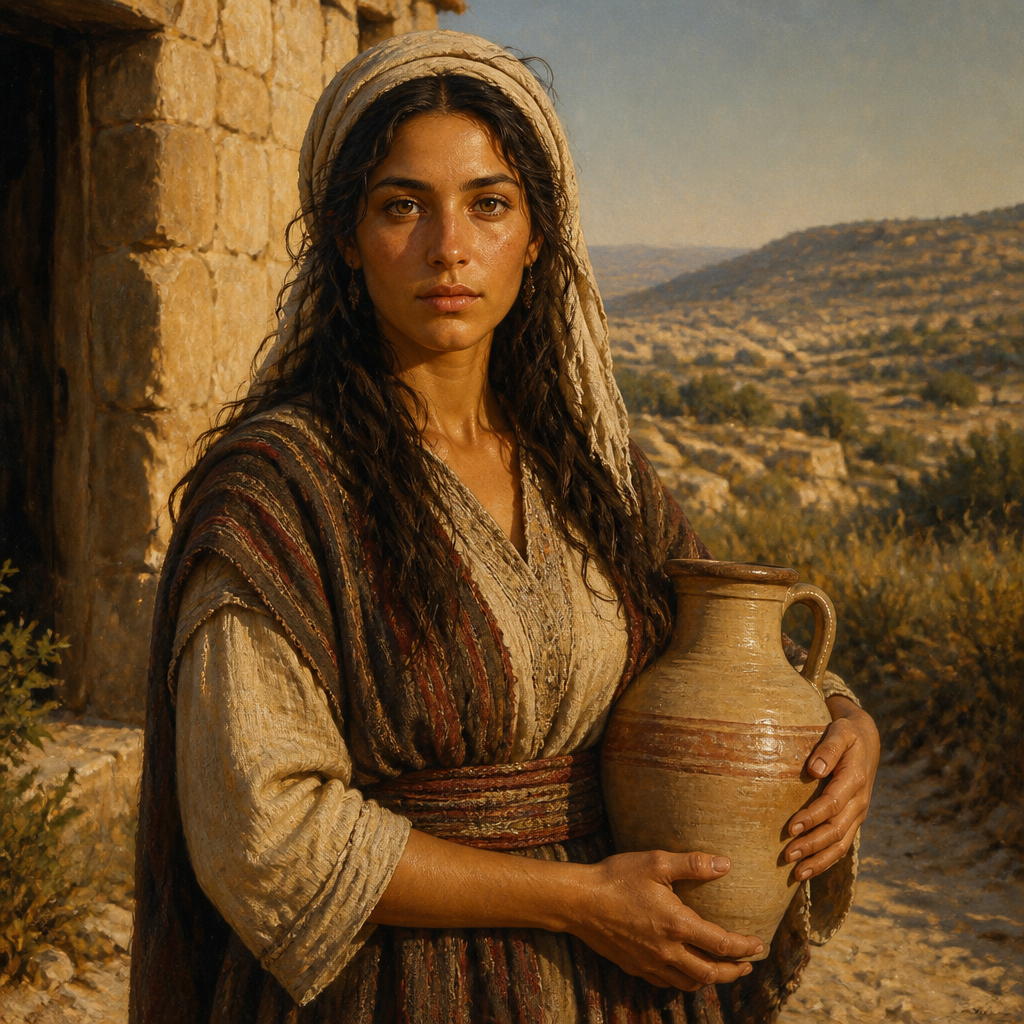
Bath-shua is a figure from the Patriarchal Period, specifically within the narrative of the tribe of Judah. She is identified primarily by her lineage as the daughter of Shua, a Canaanite man living in the region of Adullam. Her marriage to Judah, the fourth son of Jacob, marks a significant moment in the early development of the tribe of Judah, as it represents one of the earliest recorded unions between a Hebrew patriarch and a woman of Canaanite descent.
While her personal biography is not extensively detailed in the biblical text, her presence is foundational to the genealogy of Judah. She is the biological mother of three sons who would become central figures in the moral and genealogical struggles of the early tribe. Her life is situated during the time when Jacob’s family had settled in the land of Canaan but before the migration to Egypt, a period characterized by the slow expansion of the patriarchal family through local alliances.
Background and Family
Bath-shua first appears in the biblical record during a period of transition for Judah. According to Genesis 38, Judah left his brothers and went down to stay with a man of Adullam named Hirah. It was in this region that Judah encountered the daughter of a Canaanite man named Shua. The text of 1 Chronicles 2:3 explicitly identifies her by the name Bath-shua (literally "daughter of Shua").
Her background as a Canaanite is a point of emphasis in both the Genesis and Chronicles accounts. Unlike his father Isaac or grandfather Abraham, who sought wives from their own kin in Mesopotamia, Judah chose a wife from the local population. This union established Bath-shua as a matriarchal figure within the burgeoning tribe of Judah, though she remained distinct due to her ethnic origins.
Major Life Events
The primary events recorded concerning Bath-shua involve the birth of her three sons. After marrying Judah, she conceived and gave birth to a son named Er. Shortly thereafter, she conceived again and bore a second son, Onan. Finally, she gave birth to a third son, Shelah. The text notes that at the time of Shelah's birth, Judah was at Chezib (Genesis 38:5).
Bath-shua’s life was marked by the eventual tragedy involving her eldest sons. The biblical narrative records that her firstborn, Er, was considered wicked in the sight of the LORD and was put to death. Subsequently, her second son, Onan, also died under divine judgment for his refusal to fulfill the levirate obligation to Er’s widow. While the text does not record Bath-shua’s personal reaction to these events, she lived through the foundational era of the tribe's development and the loss of two-thirds of her immediate offspring.
Relationship to Other Biblical Figures
Bath-shua’s primary relationship is with Judah, her husband. As his first recorded wife, she played a vital role in continuing his line, though the Messianic lineage eventually proceeded through Tamar rather than Bath-shua's eldest sons. She is also defined by her relationship to her father, Shua, whose name provides the basis for her own. Her three sons—Er, Onan, and Shelah—represent her direct legacy within the genealogical records of Israel.
Spiritual Significance
In a scholarly context, Bath-shua serves as a reminder of the complex ethnic fabric of the early Israelites. Her inclusion in the genealogies of 1 Chronicles highlights that the tribe of Judah, from which the kings of Israel and eventually the Messiah would descend, had roots that included Canaanite heritage through her.
"The sons of Judah: Er, Onan, and Shelah. These three were born to him by Bath-shua the Canaanite." (1 Chronicles 2:3)
Her presence in the text underscores the reality of the patriarchal era, where the boundaries between the chosen family and the surrounding nations were frequently navigated through marriage and local settlement. Although the narrative focus often shifts toward the subsequent events involving Tamar, Bath-shua remains the biological mother of the first three named sons of Judah.
Bath-shua’s significance lies in her role as the first wife of the patriarch Judah and the mother of his first three sons. Her mention in the formal genealogies of 1 Chronicles 2 ensures her place in the historical record of the tribe of Judah. She represents the early integration of local Canaanite families into the lineage of the patriarchs, a reality that complicates and enriches the history of Israel's tribal development.
Theologically, she is part of the narrative that demonstrates the sovereignty of God over the messy and often tragic history of the family of Jacob. Despite the death of her sons Er and Onan, her youngest son Shelah survived to establish a significant clan within Judah, preserving her biological contribution to the tribe.
Frequently Asked Questions
Who was Bath-shua's husband?
Bath-shua was the wife of Judah, the son of Jacob and Leah.
What was Bath-shua's nationality?
She was a Canaanite, the daughter of a man named Shua.
How many children did Bath-shua have?
She had three sons: Er, Onan, and Shelah.
Where did Bath-shua live?
She lived in the region of Canaan, specifically associated with Adullam and Chezib.
Does Bath-shua appear in the New Testament?
No, Bath-shua is only mentioned in the Old Testament books of Genesis and 1 Chronicles.
Family & Relationships
Parents
 Shua, Father-in-Law of JudahFatherGenesis 38:2
Inferred
No verse names Bath-shua and Shua together; the father link is carried from the surrounding genealogy and is not stated in Scripture.Evidence: Genesis 38:2
 Judah, Son of JacobHusbandGenesis 38:2Stated
 Bath-shuaThis page
Children
 Er, Firstborn of JudahSon1 Chronicles 2:3Stated
 OnanSon1 Chronicles 2:3Stated
 Shelah, Son of JudahSon1 Chronicles 2:3Stated
Connected Figures
Family
Father · Genesis 38:2
A Canaanite man whose daughter became the first wife of the patriarch Judah, the progenitor of the Tribe of Judah.
Husband · Genesis 38:2
The fourth son of Jacob and Leah, ancestor of the Tribe of Judah and the Davidic line, known for his leadership and pivotal role in the preservation of his family.
PatriarchsFirst: Genesis 29:3538 versesPatriarch and ShepherdJudah
Son · 1 Chronicles 2:3
Er was the eldest son of the patriarch Judah and the first husband of Tamar, who was struck down by God for his wickedness in the land of Canaan.
PatriarchsFirst: Genesis 38:37 versesFirstborn heirJudah
Son · 1 Chronicles 2:3
The second son of Judah who was struck down by God for refusing to fulfill the levirate obligation to raise offspring for his deceased brother Er.
PatriarchsFirst: Genesis 38:47 versesPatriarchal shepherd and heirJudah
Son · 1 Chronicles 2:3
The third son of Judah and a survivor of the early tragedies in Judah's family, Shelah became the progenitor of the Shelanite clan within the tribe of Judah.
Categories
Mentions by Book
- Genesis2
- Numbers1
- 1 Chronicles2
Scripture References
All 5 indexed verses, in canonical order, from the Berean Standard Bible.
Genesis · 2
- Genesis 38:2Partial
There Judah saw the daughter of a Canaanite man named Shua, and he took her as a wife and slept with her.
Cited as a key verse; added so References, Key Verses and Mentions by Book share one index.
- Genesis 46:12Partial
The sons of Judah: Er, Onan, Shelah, Perez, and Zerah; but Er and Onan died in the land of Canaan. The sons of Perez: Hezron and Hamul.
Cited as evidence on a family card; added so References, Key Verses and Mentions by Book share one index.
Numbers · 1
- Numbers 26:19Partial
The sons of Judah were Er and Onan, but they died in the land of Canaan.
Cited as evidence on a family card; added so References, Key Verses and Mentions by Book share one index.
1 Chronicles · 2
- 1 Chronicles 2:3
The sons of Judah: Er, Onan, and Shelah. These three were born to him by Bath-shua the Canaanite. Er, Judah’s firstborn, was wicked in the sight of the LORD. So the LORD put him to death.
- 1 Chronicles 4:21Partial
The sons of Shelah son of Judah: Er the father of Lecah, Laadah the father of Mareshah and the clans of the linen workers at Beth-ashbea,
Cited as evidence on a family card; added so References, Key Verses and Mentions by Book share one index.