Hezron, Son of Reuben
Who was Hezron, Son of Reuben, in the Bible?
The third son of Reuben and founder of the Hezronite clan, listed among the descendants of Jacob who migrated to Egypt.
This is one of 2 people named Hezron in the Bible. See all 2 →
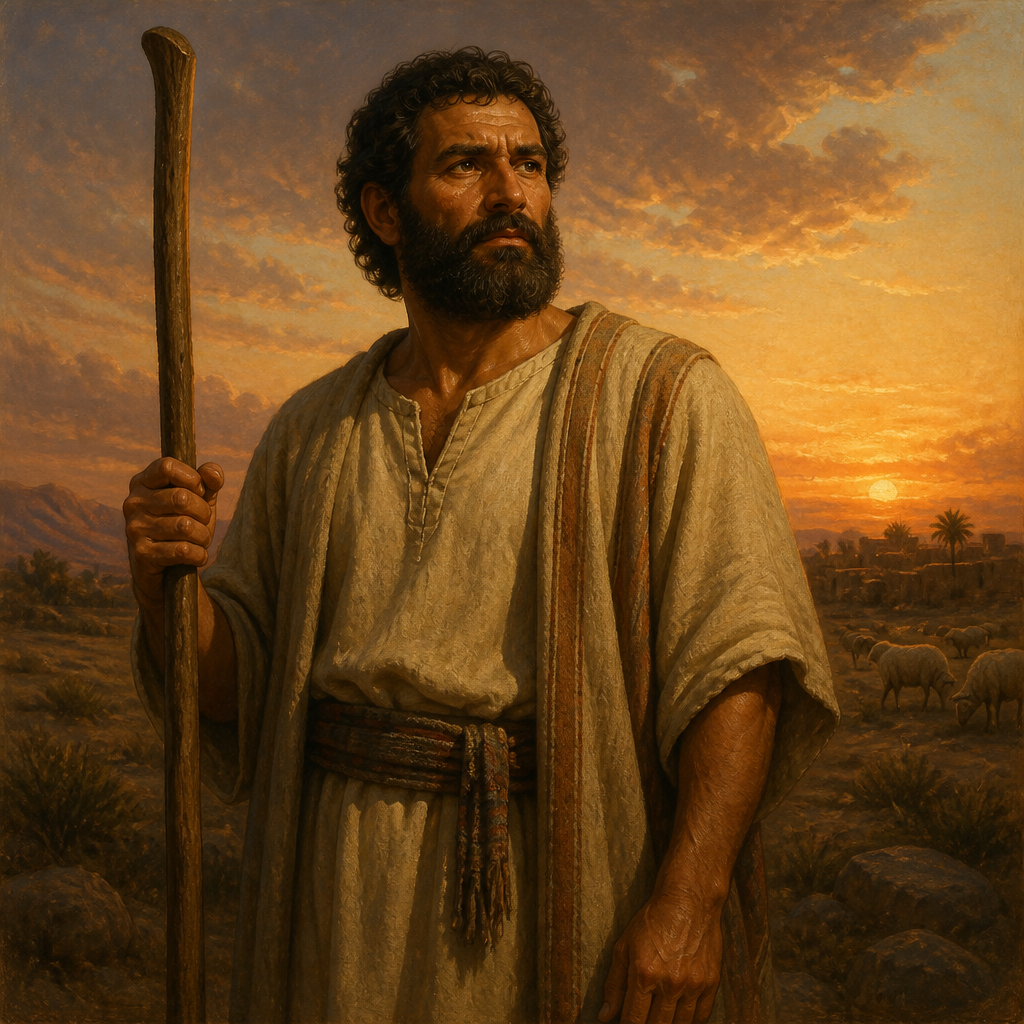
Hezron, the son of Reuben, was a significant tribal patriarch in the early history of the nation of Israel. As the third son of Reuben—Jacob’s firstborn—Hezron occupies a place within the primary genealogy of the twelve tribes. He is consistently listed alongside his brothers Hanoch, Pallu, and Carmi as the foundational heads of the Reubenite clans.
His life spans the pivotal transition of the Israelites from a semi-nomadic family in Canaan to a growing nation within the borders of Egypt. Though the biblical record regarding his personal life is concise, his inclusion in the formal censuses and genealogical records underscores his status as a legal and biological pillar of the tribe of Reuben throughout the Egyptian sojourn and the eventual journey through the wilderness.
Background and Family
Hezron was born into the immediate family of the patriarch Jacob during the mid-to-late Patriarchal Period. He was the son of Reuben, the firstborn of Jacob and Leah. According to the genealogical record in Genesis 46, Hezron was among the seventy members of Jacob’s household who left the land of Canaan to settle in Goshen during the great famine that occurred while Joseph was governor of Egypt.
Hezron had three brothers: Hanoch (the eldest), Pallu, and Carmi. Together, these four sons formed the ancestral basis for the sub-tribal divisions of Reuben. The biblical text provides no record of Hezron’s mother, though as a son of Reuben, he was a grandson of the matriarch Leah.
Major Life Events
While the Bible does not record specific narrative dialogues or individual exploits for Hezron, his life is defined by two major structural events in the history of Israel. First, he was part of the migration to Egypt (Genesis 46:9). This journey represented a fulfillment of God's promise to Jacob that his family would become a great nation in a foreign land.
Second, Hezron’s name appears in the subsequent census and genealogical records established during the Exodus and the Wilderness wanderings. In Exodus 6:14, he is identified as a 'head of a father’s house.' This title indicates that by the time of the Exodus under Moses, Hezron’s lineage had flourished into a distinct administrative and social unit within the tribe.
By the time of the census in the Plains of Moab (Numbers 26:6), the descendants of Hezron are formally recognized as 'the Hezronite clan.' This designation confirms that although Hezron himself would have died in Egypt, his legacy survived through a robust population of descendants who were prepared to inherit the Promised Land.
Relationship to Other Biblical Figures
As a son of Reuben, Hezron was a nephew to the other eleven sons of Jacob, including Joseph, Judah, and Levi. His brothers—Hanoch, Pallu, and Carmi—shared with him the responsibility of leading the Reubenite interests during the early years in Egypt.
His relationship to his father, Reuben, is particularly noteworthy in the context of the tribal hierarchy. Because Reuben lost his birthright as the firstborn due to his conduct (Genesis 35:22; 1 Chronicles 5:1), Hezron and his brothers did not inherit the double portion or the leadership of the entire nation, which passed to the sons of Joseph and the line of Judah respectively. Nevertheless, the lineage of Hezron remained a recognized and legitimate branch of the 'firstborn of Israel.'
Spiritual Significance
The spiritual significance of Hezron lies in the preservation of the covenant promise. The inclusion of his name in four distinct biblical books (Genesis, Exodus, Numbers, and 1 Chronicles) serves as a testament to God's faithfulness in multiplying the seed of Abraham as promised.
In the ancient Near Eastern context, being listed as a 'head of a father's house' was an honor that signaled divine blessing and the continuity of the family name. Hezron represents the silent but essential generation that bridged the gap between the era of the patriarchs and the era of the nation. His life illustrates the transition from individual family members to the 'clans of Reuben,' demonstrating how the promises made to Jacob were realized through the biological and numerical growth of his descendants in the land of Egypt.
Hezron serves as a vital genealogical link in the history of the Tribe of Reuben. His significance is found in the formalization of the 'Hezronite clan,' which ensured the Reubenites had a clear internal structure during their centuries in Egypt and their eventual military organization in the wilderness. He represents the survival and expansion of the Israelites under Egyptian rule.
Furthermore, his presence in the lists of 1 Chronicles 5 emphasizes the enduring memory of the tribal origins even after the Babylonian exile. Though Reuben’s tribe eventually settled on the east side of the Jordan and faced different challenges than the southern tribes, the record of Hezron maintained their historical claim to be part of the covenant people of Israel.
Frequently Asked Questions
Who was Hezron's father?
Hezron was the son of Reuben, making him a grandson of the patriarch Jacob and his wife Leah.
Which tribe did Hezron belong to?
Hezron belonged to the Tribe of Reuben. He was one of the four main progenitors of the Reubenite clans.
Did Hezron enter the Promised Land?
No. Hezron is listed as one of those who went down to Egypt with Jacob (Genesis 46:9). Given the timeline of the Egyptian sojourn, he would have died in Egypt long before the Exodus began.
How many brothers did Hezron have?
Hezron had three brothers: Hanoch, Pallu, and Carmi.
What is the 'Hezronite clan'?
The Hezronite clan (Numbers 26:6) was the group of descendants who traced their lineage directly back to Hezron, the son of Reuben.
Family & Relationships
Parents
 ReubenFatherGenesis 46:9Stated
 Hezron, Son of ReubenThis page
 Carmi, Son of ReubenBrotherGenesis 46:9Stated
 Hanoch, Son of ReubenBrotherGenesis 46:9Stated
 PalluBrotherGenesis 46:9Stated
Connected Figures
Family
Father · Genesis 46:9
Reuben was the firstborn son of Jacob and Leah, the founding patriarch of the Tribe of Reuben, and a complex figure known for both his attempts to save Joseph and his loss of the birthright.
PatriarchsFirst: Genesis 29:3221 versesPatriarch and shepherdReuben
Brother · Genesis 46:9
A grandson of the patriarch Jacob and the youngest son of Reuben who became the founding ancestor of the Carmite clan during the Egyptian Sojourn.
Brother · Genesis 46:9
Hanoch was the firstborn son of Reuben and the ancestral founder of the Hanochite clan during the Egyptian sojourn and Wilderness period.
Brother · Genesis 46:9
The second son of Reuben and the founder of the Palluite clan within the tribe of Reuben during the Egyptian sojourn and Exodus.
Categories
Mentions by Book
- Genesis1
- Exodus1
- Numbers1
- 1 Chronicles1
Scripture References
All 4 indexed verses, in canonical order, from the Berean Standard Bible.
Genesis · 1
- Genesis 46:9
The sons of Reuben: Hanoch, Pallu, Hezron, and Carmi.
Exodus · 1
- Exodus 6:14
These were the heads of their fathers’ houses: The sons of Reuben, the firstborn of Israel, were Hanoch and Pallu, Hezron and Carmi. These were the clans of Reuben.
Numbers · 1
- Numbers 26:6
the Hezronite clan from Hezron, and the Carmite clan from Carmi.
1 Chronicles · 1
- 1 Chronicles 5:3
The sons of Reuben, the firstborn of Israel: Hanoch, Pallu, Hezron, and Carmi.
Others Named Hezron
Compare all 2 bearers →Hezron, Son of PerezGenesis 46:12
A high-ranking member of the tribe of Judah and a direct ancestor in the Davidic and Messianic lineage.