Hoglah
Who was Hoglah in the Bible?
One of the five daughters of Zelophehad who successfully petitioned Moses for the right to inherit their deceased father’s land, setting a legal precedent in Israel.
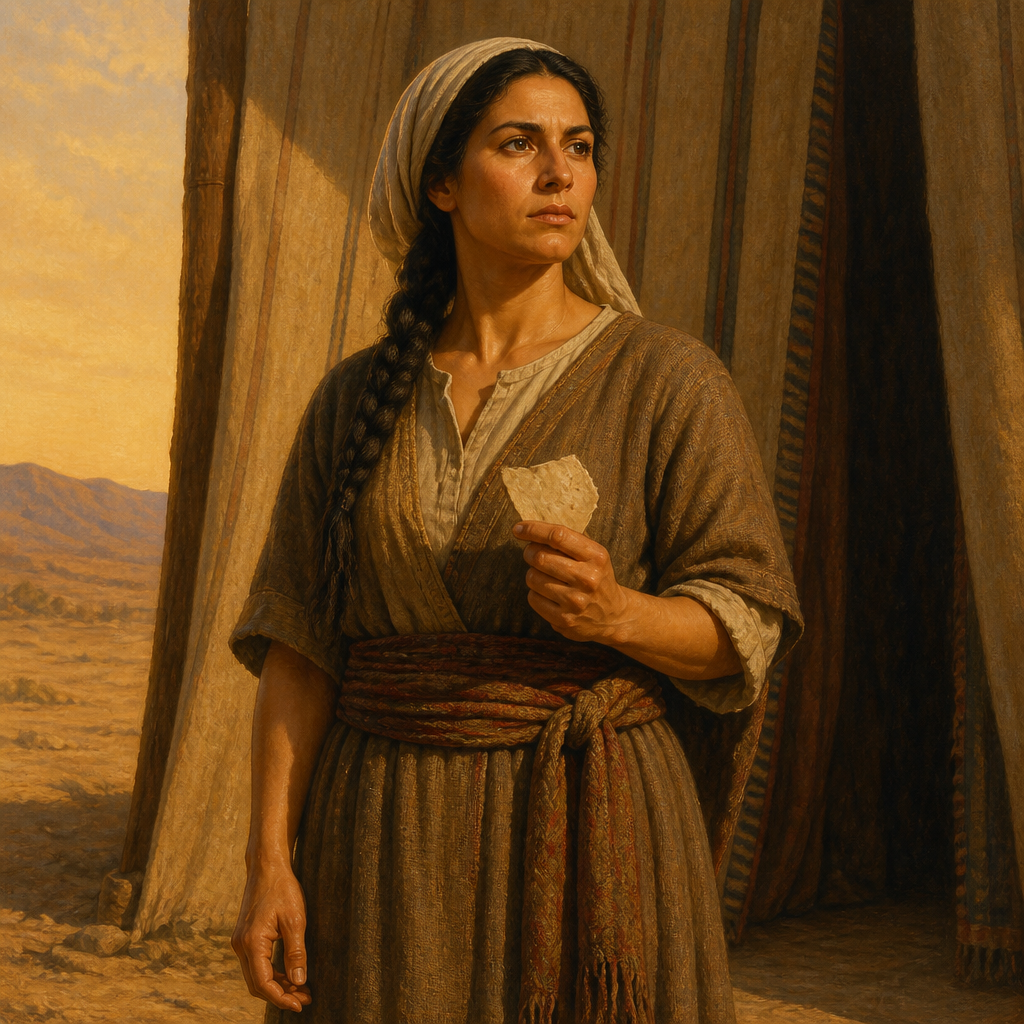
Hoglah was a member of the Tribe of Manasseh during the Israelites' wilderness journey from Egypt to the Promised Land. She is specifically identified as one of the five daughters of Zelophehad, the son of Hepher. Her inclusion in the biblical record is inextricably linked to a landmark legal challenge regarding inheritance rights in the absence of male heirs.
Living in a patriarchal society where land was traditionally passed from father to son, Hoglah and her sisters faced the prospect of their father's name and property being lost to their clan because he died without a male successor. Their collective appeal to Moses, Eleazar the priest, and the leaders of the assembly represents a pivotal moment in the development of Mosaic Law, demonstrating the inclusion of women in the socio-economic structure of the covenant community.
Background and Family
Hoglah was a descendant of Joseph through the lineage of Manasseh. The biblical genealogy specifically traces her ancestry through Machir, Gilead, and Hepher (Numbers 27:1). Her father, Zelophehad, was part of the generation that left Egypt but died in the wilderness. Notably, the text clarifies that he was not part of Korah’s rebellion against the Lord but died for his own sin—a standard phrasing indicating a natural death during the forty-year wandering.
Hoglah is consistently listed alongside her sisters: Mahlah, Noah, Milcah, and Tirzah. This group of women is unique in the Pentateuch for their collective agency and the preservation of their individual names across multiple census and legal records. The consistency of their names in the lists found in Numbers 26, Numbers 27, Numbers 36, and Joshua 17 underscores their historical importance to the tribal allotments of Manasseh.
Major Life Events
The defining event of Hoglah’s life occurred as the Israelites prepared to enter Canaan. In Numbers 27, Hoglah and her sisters stood before the entrance of the Tent of Meeting to address Moses and the national leadership. They argued that it was unjust for their father’s name to be removed from his clan simply because he had no son. They requested a possession of land among their father’s brothers.
Upon hearing their case, Moses consulted the Lord, who ruled in favor of the sisters, stating, "The daughters of Zelophehad speak right" (Numbers 27:7). This divine directive established a new statute in Israel: if a man died without a son, his inheritance would pass to his daughter. Later, in Numbers 36, a supplementary ruling was established to ensure that the land remained within the original tribe. To comply with this, Hoglah and her sisters married their cousins within the clans of Manasseh, ensuring their father's allotment remained under the Manassite banner.
Relationship to Other Biblical Figures
Hoglah is primarily defined by her relationship to her four sisters and her father, Zelophehad. The sisters acted as a single legal unit, yet each is named individually, suggesting a high level of respect for their identity. Their interaction with Moses and Eleazar the priest highlights their standing within the congregation. By the time of the conquest of Canaan under Joshua, the record in Joshua 17:3-4 confirms that the promise made in the wilderness was honored. Hoglah and her sisters approached Joshua and the high priest to claim their specific portion of land, which was granted according to the commandment given to Moses.
Spiritual Significance
Though the biblical record for Hoglah is concise, her legacy is significant in the history of biblical justice. Her story illustrates that the Law was not a static, indifferent code, but one that could be clarified and expanded through faithful petition. Hoglah’s presence in the text serves as a witness to the value of every individual within the tribal structure of Israel and the importance of preserving one's heritage within the promised land. Her life concludes with the successful settlement in the Transjordan or Manassite territory, fulfilling the promise of the Exodus for her father's house.
Hoglah’s significance lies in her role as a catalyst for the expansion of Israelite inheritance law. By participating in the petition to Moses, she helped establish the principle that women could inherit and manage property, a radical departure from the standard customs of the Ancient Near East. Her story demonstrates that God’s justice is attentive to those who might otherwise be marginalized by traditional social structures.
Furthermore, Hoglah serves as an example of faith in the divine promise. Even while still in the wilderness, she and her sisters were concerned with their future inheritance in a land they had not yet seen. Their proactive stance showed a firm belief that God would indeed deliver the Promised Land to Israel, and they wanted to ensure they had a permanent stake in that future.
Frequently Asked Questions
What does the name Hoglah mean?
The Hebrew name Hoglah (חׇגְלָה) is generally understood to mean 'partridge'.
Which tribe did Hoglah belong to?
Hoglah belonged to the Tribe of Manasseh, one of the two tribes descended from the sons of Joseph.
Did Hoglah ever get married?
Yes. Numbers 36:11-12 records that Hoglah and her sisters married their cousins on their father’s side to keep their inheritance within the tribe of Manasseh.
Why is Hoglah important in the Bible?
She is important because she and her sisters were the first women in the Bible to be granted the right to inherit their father’s land, setting a legal precedent for all of Israel.
In which books of the Bible is Hoglah mentioned?
Hoglah is mentioned in the books of Numbers (chapters 26, 27, and 36) and Joshua (chapter 17).
Family & Relationships
Parents
 ZelophehadFatherNumbers 27:1Stated
 HoglahThis page
 Mahlah, Daughter of ZelophehadSisterNumbers 26:33Stated
 Milcah, Daughter of ZelophehadSisterNumbers 26:33Stated
 Noah, Daughter of ZelophehadSisterNumbers 26:33Stated
 TirzahSisterNumbers 26:33Stated
Connected Figures
Family
Father · Numbers 27:1
A descendant of Manasseh who died in the wilderness, leaving no sons and prompting a landmark divine ruling on inheritance laws for women.
Sister · Numbers 26:33
Mahlah was the eldest of five sisters who successfully petitioned Moses for the right to inherit their father's land, establishing a legal precedent in Israelite law.
Egypt and WildernessFirst: Numbers 26:335 versestribal petitionerManasseh
Sister · Numbers 26:33
One of the five daughters of Zelophehad who successfully petitioned Moses for an inheritance within the tribe of Manasseh, establishing a legal precedent for women's land rights.
Sister · Numbers 26:33
One of the five daughters of Zelophehad whose landmark petition to Moses secured inheritance rights for women within the Tribe of Manasseh.
Sister · Numbers 26:33
Tirzah was one of the five daughters of Zelophehad who successfully petitioned for the right of women to inherit land in the absence of male heirs.
Categories
Mentions by Book
- Numbers9
- Joshua1
Scripture References
All 10 indexed verses, in canonical order, from the Berean Standard Bible.
Numbers · 9
- Numbers 26:33
Now Zelophehad son of Hepher had no sons but only daughters. The names of his daughters were Mahlah, Noah, Hoglah, Milcah, and Tirzah.
- Numbers 27:1
Now the daughters of Zelophehad son of Hepher, the son of Gilead, the son of Machir, the son of Manasseh, belonged to the clans of Manasseh son of Joseph. These were the names of his daughters: Mahlah, Noah, Hoglah, Milcah, and Tirzah. They approached
- Numbers 27:2Partial
the entrance to the Tent of Meeting, stood before Moses, Eleazar the priest, the leaders, and the whole congregation, and said,
Cited as a key verse; added so References, Key Verses and Mentions by Book share one index.
- Numbers 27:3Partial
“Our father died in the wilderness, but he was not among the followers of Korah who gathered together against the LORD. Instead, he died because of his own sin, and he had no sons.
Cited as a key verse; added so References, Key Verses and Mentions by Book share one index.
- Numbers 27:4Partial
Why should the name of our father disappear from his clan because he had no sons? Give us property among our father’s brothers.”
Cited as a key verse; added so References, Key Verses and Mentions by Book share one index.
- Numbers 27:5Partial
So Moses brought their case before the LORD,
Cited as a key verse; added so References, Key Verses and Mentions by Book share one index.
- Numbers 27:6Partial
and the LORD answered him,
Cited as a key verse; added so References, Key Verses and Mentions by Book share one index.
- Numbers 27:7Partial
“The daughters of Zelophehad speak correctly. You certainly must give them property as an inheritance among their father’s brothers and transfer their father’s inheritance to them.
Cited as a key verse; added so References, Key Verses and Mentions by Book share one index.
- Numbers 36:11
Mahlah, Tirzah, Hoglah, Milcah, and Noah, the daughters of Zelophehad, were married to cousins on their father’s side.
Joshua · 1
- Joshua 17:3
But Zelophehad son of Hepher (the son of Gilead, the son of Machir, the son of Manasseh) had no sons but only daughters. These are the names of his daughters: Mahlah, Noah, Hoglah, Milcah, and Tirzah.