Milcah, Daughter of Zelophehad
Who was Milcah, Daughter of Zelophehad, in the Bible?
One of the five daughters of Zelophehad who successfully petitioned Moses for an inheritance within the tribe of Manasseh, establishing a legal precedent for women's land rights.
This is one of 2 people named Milcah in the Bible. See all 2 →
Milcah was a woman of the tribe of Manasseh who lived during the late years of the Israelite wilderness journey. She is uniquely prominent in the biblical record as one of the five daughters of Zelophehad who challenged the prevailing inheritance laws of the time. Because her father died without male heirs during the trek through the desert, Milcah and her sisters faced the prospect of their family name and land allotment being lost to history.
Her story is recorded primarily in the books of Numbers and Joshua, highlighting her role in a pivotal legal decision that altered the social and economic fabric of Israelite society. Along with her sisters, Milcah demonstrated remarkable courage and legal foresight by appearing before Moses and the high priest to argue for justice on behalf of their deceased father.
Background and Family
Milcah was a descendant of Manasseh, the firstborn son of Joseph. Her lineage is precisely documented in Numbers 27:1: she was the daughter of Zelophehad, who was the son of Hepher, the son of Gilead, the son of Machir, the son of Manasseh. She was one of five sisters, which included Mahlah, Noah, Hoglah, and Tirzah. The biblical text emphasizes that Zelophehad had no sons, a detail that serves as the catalyst for Milcah's historical significance.
Growing up in the context of the Exodus and the subsequent forty-year wilderness wandering, Milcah would have been part of the generation preparing to enter the Promised Land. Her family belonged to the clans of Manasseh, positioning them as heirs to the territorial promises made to the patriarchs.
Major Life Events
The defining moment of Milcah’s life occurred as the Israelites were encamped on the plains of Moab near the Jordan River. With the second census completed (Numbers 26), the division of the land of Canaan was imminent. Under the existing patriarchal customs, land was passed through the male line; since Zelophehad had died in the wilderness due to his own sin (though he was not part of Korah’s rebellion), his family faced total dispossession.
Milcah and her sisters took the initiative to approach Moses, Eleazar the priest, the leaders, and the whole assembly at the entrance to the Tent of Meeting. They presented a formal legal petition, asking, "Why should our father’s name be taken away from his clan because he had no son? Give us a possession among our father’s brothers" (Numbers 27:4). Moses brought their case before the Lord, and the resulting divine decree favored Milcah and her sisters, establishing a permanent statute in Israel that if a man died without a son, his inheritance would pass to his daughter.
Later, in Numbers 36, a second legal issue arose regarding the possibility of Milcah or her sisters marrying outside their tribe, which would cause the land to transfer to another tribe. To resolve this, Milcah and her sisters were instructed to marry within their father's clan. The text records that Milcah and her sisters complied, marrying their cousins on their father’s side, thereby preserving the tribal integrity of the land.
Relationship to Other Biblical Figures
Milcah is consistently mentioned alongside her four sisters—Mahlah, Noah, Hoglah, and Tirzah. The unity of these women is a recurring theme in the narrative; they act, speak, and are rewarded as a collective unit. She operated under the leadership of Moses and Eleazar the priest during the wilderness years and later dealt with Joshua and Eleazar during the actual distribution of the land in Canaan (Joshua 17:3-4).
Spiritual Significance
Milcah represents the intersection of faith and social justice. Her petition was not merely about personal wealth, but about the preservation of her father's name and legacy within the covenant community. Her actions reflect a profound belief that the promised land was a reality worth fighting for, even before it had been conquered. The theological significance of her story lies in the demonstration that God’s law is responsive to the needs of the marginalized and that women held a recognized legal standing within the assembly of Israel.
Milcah is significant for her role in the establishment of Israelite inheritance laws. Through her and her sisters, God instituted a new legal precedent (Numbers 27:8-11) that protected the rights of daughters in the absence of male heirs. This narrative highlights the importance of individual initiative and the value placed on every family's portion within the Promised Land.
Furthermore, Milcah’s story illustrates the balance between individual rights and community responsibility. By agreeing to marry within her clan, she ensured that her personal inheritance did not disrupt the tribal order established by God, demonstrating a commitment to the greater good of the nation of Israel.
Frequently Asked Questions
Who was Milcah's father?
Her father was Zelophehad, a descendant of Manasseh who died in the wilderness.
What did Milcah and her sisters ask of Moses?
They requested that they be given their father's portion of land in the Promised Land since he had no sons to inherit it.
Whom did Milcah marry?
According to Numbers 36:11, Milcah married one of her cousins on her father’s side to keep the inheritance within the tribe of Manasseh.
What was the result of Milcah's petition?
God told Moses that the daughters' request was just, and a new law was established allowing daughters to inherit if there were no sons.
In which books of the Bible does Milcah appear?
Milcah is mentioned in the books of Numbers and Joshua.
Family & Relationships
Parents
 ZelophehadFatherNumbers 27:1Stated
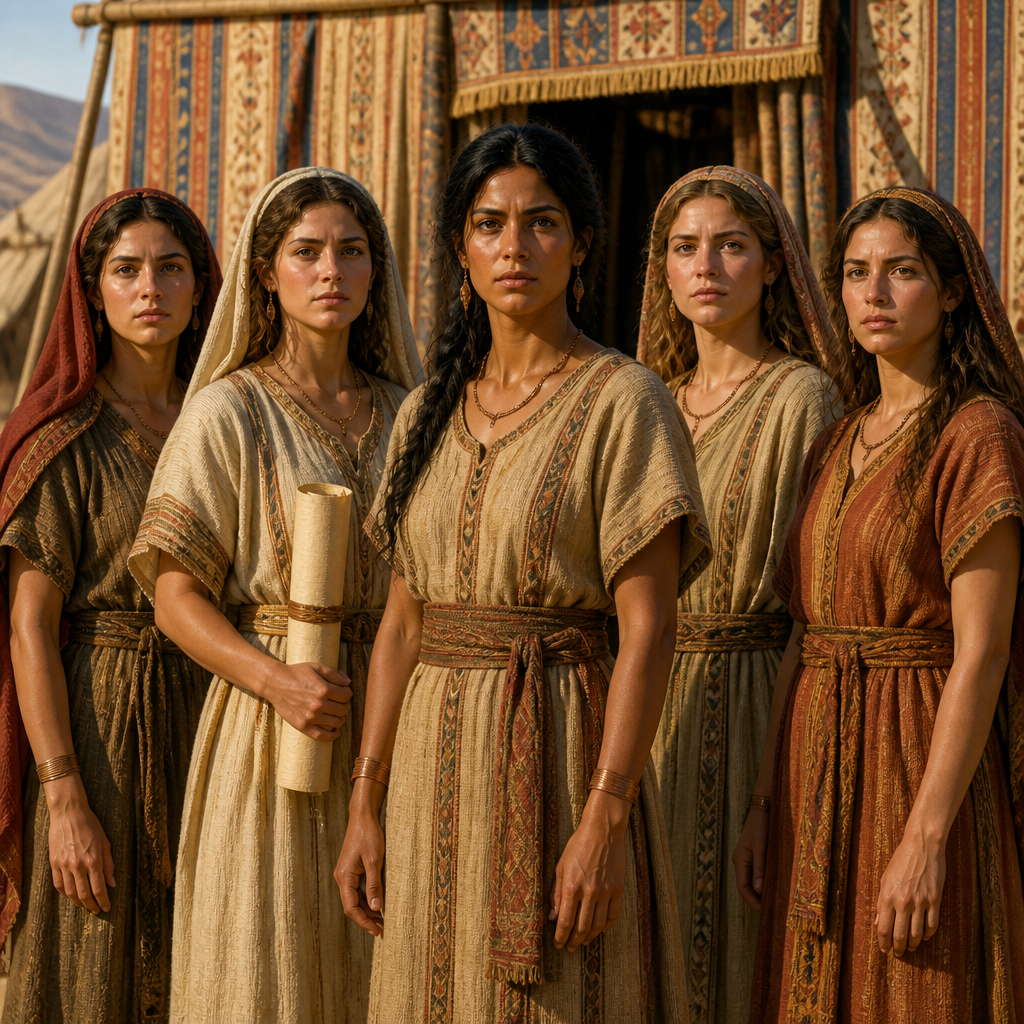 Milcah, Daughter of ZelophehadThis page
 HoglahSisterNumbers 26:33Stated
 Mahlah, Daughter of ZelophehadSisterNumbers 26:33Stated
 Noah, Daughter of ZelophehadSisterNumbers 26:33Stated
 TirzahSisterNumbers 26:33Stated
Connected Figures
Family
Father · Numbers 27:1
A descendant of Manasseh who died in the wilderness, leaving no sons and prompting a landmark divine ruling on inheritance laws for women.
Sister · Numbers 26:33
One of the five daughters of Zelophehad who successfully petitioned Moses for the right to inherit their deceased father’s land, setting a legal precedent in Israel.
Sister · Numbers 26:33
Mahlah was the eldest of five sisters who successfully petitioned Moses for the right to inherit their father's land, establishing a legal precedent in Israelite law.
Egypt and WildernessFirst: Numbers 26:335 versestribal petitionerManasseh
Sister · Numbers 26:33
One of the five daughters of Zelophehad whose landmark petition to Moses secured inheritance rights for women within the Tribe of Manasseh.
Sister · Numbers 26:33
Tirzah was one of the five daughters of Zelophehad who successfully petitioned for the right of women to inherit land in the absence of male heirs.
Categories
Mentions by Book
- Numbers3
- Joshua1
Scripture References
All 4 indexed verses, in canonical order, from the Berean Standard Bible.
Numbers · 3
- Numbers 26:33
Now Zelophehad son of Hepher had no sons but only daughters. The names of his daughters were Mahlah, Noah, Hoglah, Milcah, and Tirzah.
- Numbers 27:1
Now the daughters of Zelophehad son of Hepher, the son of Gilead, the son of Machir, the son of Manasseh, belonged to the clans of Manasseh son of Joseph. These were the names of his daughters: Mahlah, Noah, Hoglah, Milcah, and Tirzah. They approached
- Numbers 36:11
Mahlah, Tirzah, Hoglah, Milcah, and Noah, the daughters of Zelophehad, were married to cousins on their father’s side.
Joshua · 1
- Joshua 17:3
But Zelophehad son of Hepher (the son of Gilead, the son of Machir, the son of Manasseh) had no sons but only daughters. These are the names of his daughters: Mahlah, Noah, Hoglah, Milcah, and Tirzah.
Others Named Milcah
Compare all 2 bearers →Milcah, Matriarch of Nahor's LineGenesis 11:29
Milcah was a prominent matriarch in the line of Terah, the wife of Nahor, and the grandmother of Rebekah.