Manasseh's Aramean Concubine
Who was Manasseh's Aramean Concubine in the Bible?
An Aramean woman who served as a concubine to Manasseh, son of Joseph, and became the mother of Machir and Asriel.
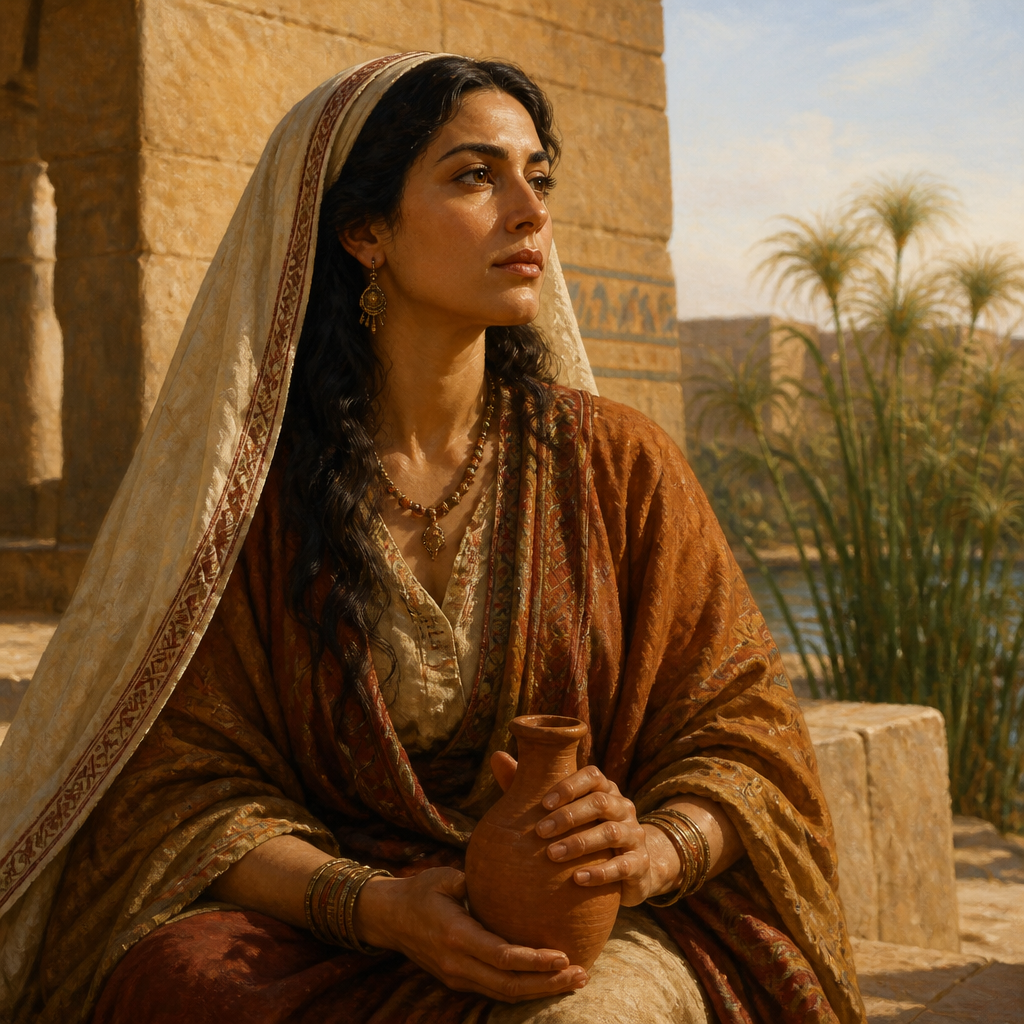
The Aramitess is a female figure mentioned in the genealogical records of the tribe of Manasseh. Though her personal name is not recorded in the Masoretic Text, she is identified by her ethnicity as an Aramean (Syrian) woman. Her presence in the lineage of Joseph’s eldest son marks a significant intersection between the patriarchal family of Israel and the surrounding nations during the period of the Egyptian sojourn and the transition toward the wilderness era.
She held the status of a concubine to Manasseh. In the cultural context of the ancient Near East, a concubine was a legal wife of secondary status, whose children were recognized as legitimate heirs. Through her union with Manasseh, she became a foundational maternal figure for some of the most prominent clans within the tribe of Manasseh, specifically the Machirites and Asrielites.
Background and Family
The Aramitess enters the biblical record exclusively within the genealogical lists found in the book of Chronicles. According to 1 Chronicles 7:14, she was an Aramean woman who lived during the period when the descendants of Jacob were multiplying in Egypt and preparing for the eventual transition into the wilderness. She is identified as the concubine of Manasseh, the firstborn son of Joseph and his Egyptian wife, Asenath.
Her background as an Aramean is significant, as it indicates that even during the early stages of Israel's development as a nation, there was genetic and cultural mixing with the peoples of Syria (Aram). This connection would later have geographical implications when the tribe of Manasseh received land allotments both east and west of the Jordan River, with the eastern portion bordering Aramean territory.
Major Life Events
The biblical text does not record specific narrative events from the life of the Aramitess, focusing instead on her role as a progenitor. Her primary contribution to the history of Israel is the birth of two sons: Asriel and Machir. The text in 1 Chronicles 7:14 states: "The descendants of Manasseh: Through his Aramean concubine, Asriel, as well as Machir the father of Gilead."
As the mother of Machir, she is the direct ancestress of the Machirites, a powerful clan known for its military prowess. Machir is noted as the "father of Gilead," referring to the ancestor of the region's inhabitants. This lineage underscores her importance in the tribal structure, as the Machirites were instrumental in the conquest of the Transjordan region under Moses and Joshua.
Relationship to Other Biblical Figures
The Aramitess was the partner of Manasseh, making her a daughter-in-law (by secondary marriage) to Joseph, the vizier of Egypt. Her sons, Asriel and Machir, became heads of their respective clans. Through Machir, she was the grandmother of Gilead, whose name became synonymous with the rugged mountainous region east of the Jordan. Her status as a concubine placed her in a domestic arrangement that was common among the patriarchs, ensuring the expansion of the family line beyond the offspring of the primary wife.
Spiritual Significance
While the Aramitess is a minor figure in terms of word count, her inclusion in the sacred genealogies serves a theological purpose. It highlights the inclusive nature of the burgeoning nation of Israel. By recording an Aramean woman as the mother of the most influential clans of Manasseh, the Chronicler acknowledges that the identity of the "people of God" included those of non-Israelite origin who were grafted into the tribal structure. Her legacy lived on through the Machirites, who were celebrated for their courage and their role in fulfilling the territorial promises made to the patriarchs.
The Aramitess is significant as a bridge between the Aramean people and the tribe of Manasseh. Her inclusion in the genealogy of 1 Chronicles ensures that the Aramean contribution to the tribe of Manasseh is preserved in the official record of Israel's history. This highlights the diverse ethnic makeup of the tribes during their formation in Egypt and the Wilderness.
Furthermore, as the mother of Machir, she is linked to the conquest of the Promised Land. The Machirites were among the first to receive an inheritance, and their strength is often attributed to the robust lineage established by Manasseh and his concubine. Her presence in the text reinforces the theme that God uses individuals from various backgrounds to build the nation of Israel.
Frequently Asked Questions
Who was the Aramitess?
She was an Aramean (Syrian) woman who was the concubine of Manasseh, the son of Joseph.
Who were the children of the Aramitess?
According to 1 Chronicles 7:14, she was the mother of Asriel and Machir.
What is the meaning of 'Aramitess'?
The term is a descriptor of her ethnicity, meaning 'a woman from Aram' or a Syrian woman.
Why is she important in the Bible?
She is the ancestress of the Machirites, one of the most powerful and prominent clans within the tribe of Manasseh.
In which book of the Bible is she mentioned?
She is mentioned only once, in the book of 1 Chronicles, chapter 7, verse 14.
Family & Relationships
 Manasseh, Son of JosephPartner1 Chronicles 7:14
Inferred
No verse names Manasseh's Aramean Concubine and Manasseh together; the partner link is carried from the surrounding genealogy and is not stated in Scripture.Evidence: 1 Chronicles 7:14
 Manasseh's Aramean ConcubineThis page
Children
 Machir, Son of ManassehSon1 Chronicles 7:14
Inferred
No verse names Machir and Manasseh's Aramean Concubine together; the mother link is carried from the surrounding genealogy and is not stated in Scripture.Evidence: 1 Chronicles 7:14
 Asriel, Son of ManassehSon1 Chronicles 7:14
Inferred
No verse names Manasseh's Aramean Concubine and Asriel together; the son link is carried from the surrounding genealogy and is not stated in Scripture.Evidence: 1 Chronicles 7:14
Connected Figures
Family
Partner · 1 Chronicles 7:14
The firstborn son of Joseph and Asenath, Manasseh became the progenitor of one of the largest and most strategically positioned tribes of Israel.
PatriarchsFirst: Genesis 41:5111 versesPatriarchManasseh
Son · 1 Chronicles 7:14
The firstborn son of Manasseh and grandson of Joseph, Machir was a formidable warrior whose descendants conquered and settled the region of Gilead.
Egypt and WildernessFirst: Genesis 50:2318 versesWarriorManasseh
Son · 1 Chronicles 7:14
Asriel was a son of the patriarch Manasseh, born to his Aramean concubine during the era of the Egyptian sojourn.
Egypt and WildernessFirst: 1 Chronicles 7:141 versesManasseh
Categories
Mentions by Book
- 1 Chronicles1
Scripture References
All 1 indexed verse, in canonical order, from the Berean Standard Bible.
1 Chronicles · 1
- 1 Chronicles 7:14
The descendants of Manasseh: Asriel through his Aramean concubine. She also gave birth to Machir the father of Gilead.