Beriah, Son of Ephraim
Who was Beriah, Son of Ephraim, in the Bible?
A son born to the patriarch Ephraim in his old age, named to commemorate a period of family tragedy following the death of his older brothers.
This is one of 4 people named Beriah in the Bible. See all 4 →
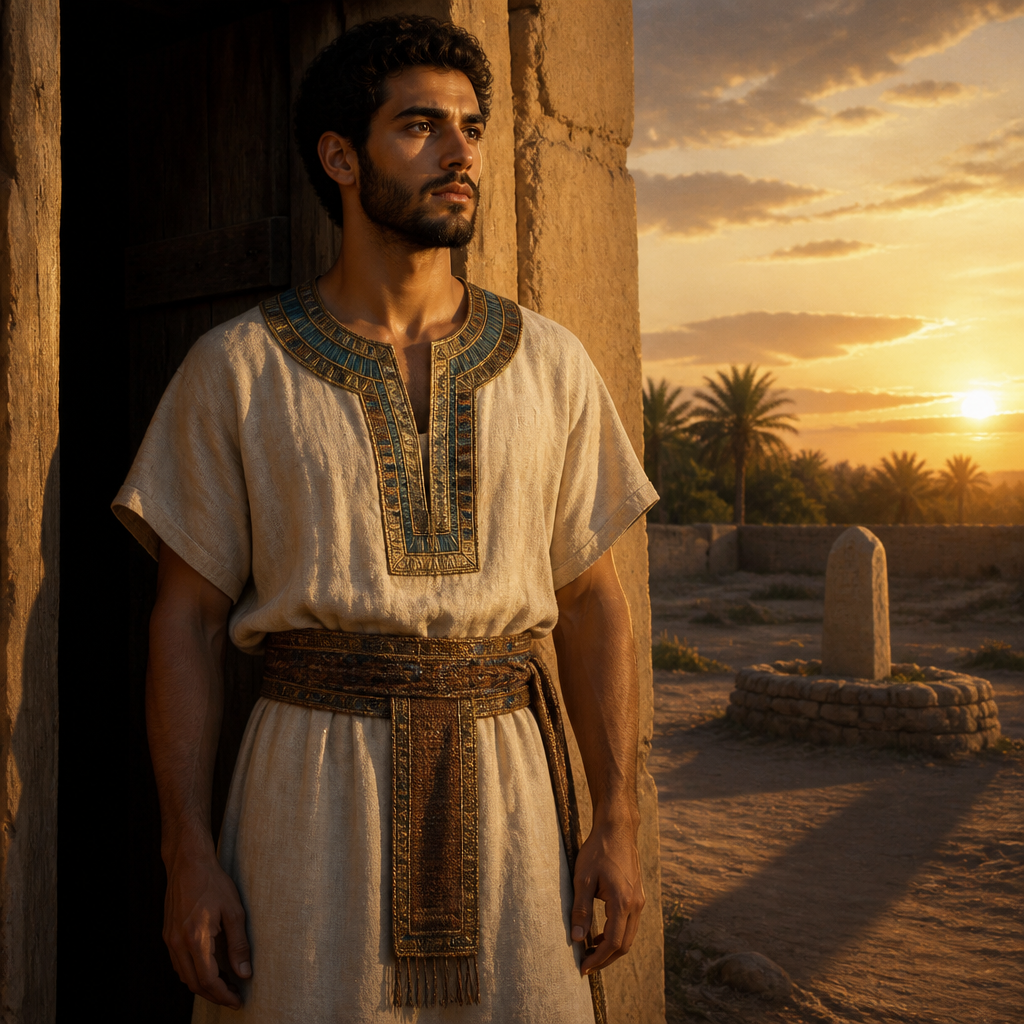
Beriah was a son of the patriarch Ephraim, born during the tribe's residence in Egypt before the Exodus. His birth is recorded within the genealogical records of 1 Chronicles, appearing in a narrative context that explains the naming of the child as a reflection of the emotional state of his father. Beriah emerged as a central figure in the restoration of Ephraim’s lineage after a devastating loss.
According to the biblical record, Ephraim’s older sons were killed by the men of Gath while attempting to seize livestock. During the ensuing period of mourning, Ephraim fathered Beriah. The name itself serves as a linguistic monument to the misfortune that had befallen the household, yet Beriah’s birth signaled the survival and eventual expansion of the tribe.
Background and Family
Beriah was born into the Tribe of Ephraim during the latter portion of the Egyptian Sojourn. He was the son of Ephraim, who was himself the son of Joseph and a grandson of Jacob. The biblical record in 1 Chronicles 7 lists his siblings as Shuthelah, Becher, Tahan, Ezer, and Elead. However, the narrative context of Beriah’s birth is unique among his brothers. Ezer and Elead were killed by the native inhabitants of Gath, an event that plunged Ephraim into prolonged mourning. Beriah was conceived and born after this tragedy, effectively serving as the son who would carry forward the family line in the wake of disaster.
Major Life Events
The primary event associated with Beriah is his birth and naming. The Chronicler notes that Ephraim named the boy Beriah (Hebrew Beri’ah) specifically because "tragedy had come upon his house" (1 Chronicles 7:23). While many biblical names reflect hope or divine attributes, Beriah’s name was a literal descriptor of the "evil" or "misfortune" (ra‘ah) that his father had endured.
Beyond his birth, the biblical record attributes several children to Beriah, including a daughter named Sheerah, who is noted for building Lower and Upper Beth-horon and Uzzen-sheerah. He also fathered sons named Rephah and Resheph, establishing a line of descent that would eventually lead to the prominent leader Joshua, son of Nun.
Relationship to Other Biblical Figures
As a son of Ephraim, Beriah was a great-grandson of Jacob, placing him in the direct patriarchal line of Israel. His siblings include the primary ancestors of the Ephraimite clans. Most significantly, Beriah is presented as an ancestor of Joshua (1 Chronicles 7:23-27). This genealogical link establishes Beriah as the bridge between the mourning patriarch Ephraim and the eventual conqueror of Canaan, illustrating the resilience of the tribe through its darkest periods.
Spiritual Significance
In the biblical narrative, Beriah represents the theme of restoration following grief. His life demonstrates how the biblical authors used genealogy to highlight God's providence in ensuring the survival of the tribes of Israel even after significant military and personal setbacks. The naming of Beriah underscores the reality of human suffering while his subsequent lineage emphasizes the continuity of the covenant promises made to Joseph and Ephraim. Though his name was rooted in tragedy, his descendants became some of the most influential figures in the history of the nation of Israel.
Beriah’s significance lies in his role as a 'replacement' son who ensured the continuity of the Ephraimite line after the violent deaths of his older brothers. His name serves as a permanent scriptural record of the hardships the Israelites faced even before the formal period of Egyptian bondage intensified.
Furthermore, his genealogy is vital because it traces the ancestry of Joshua, son of Nun. By documenting Beriah’s birth and offspring, the Chronicler provides the legal and biological framework for one of Israel’s greatest military and spiritual leaders, showing that the strength of the Tribe of Ephraim was rebuilt from the ashes of a family catastrophe.
Frequently Asked Questions
What does the name Beriah mean?
The name Beriah is associated with the Hebrew word for 'tragedy' or 'misfortune' (ra'ah). It was given to him by his father, Ephraim, because of the deaths of his older brothers.
Who were Beriah's parents?
Beriah was the son of Ephraim and an unnamed mother, mentioned in 1 Chronicles 7:23.
Which tribe did Beriah belong to?
Beriah belonged to the Tribe of Ephraim, one of the two tribes descended from Joseph.
Who was Beriah's most famous descendant?
According to the genealogy in 1 Chronicles 7, Beriah is a direct ancestor of Joshua, the son of Nun, who led Israel into the Promised Land.
What city did Beriah's daughter build?
Beriah's daughter, Sheerah, is credited with building Upper and Lower Beth-horon as well as Uzzen-sheerah.
Family & Relationships
Parents
 EphraimFather1 Chronicles 7:22–23Stated
 Beriah, Son of EphraimThis page
 Becher, Son of EphraimBrotherNumbers 26:35
Inferred
No verse names Beriah and Becher together; the brother link is carried from the surrounding genealogy and is not stated in Scripture.Evidence: Numbers 26:35; 1 Chronicles 7:22
 Shuthelah, Son of EphraimBrother1 Chronicles 7:20–23Stated
 Tahan, Son of EphraimBrotherNumbers 26:35
Inferred
No verse names Beriah and Tahan together; the brother link is carried from the surrounding genealogy and is not stated in Scripture.Evidence: Numbers 26:35; 1 Chronicles 7:22
 EleadBrother1 Chronicles 7:21–23Stated
 Ezer, Son of EphraimBrother1 Chronicles 7:21–23Stated
Children
 RephahSon1 Chronicles 7:23
Inferred
No verse names Beriah and Rephah together; the son link is carried from the surrounding genealogy and is not stated in Scripture.Evidence: 1 Chronicles 7:23
 ReshephSon1 Chronicles 7:23
Inferred
No verse names Resheph and Beriah together; the father link is carried from the surrounding genealogy and is not stated in Scripture.Evidence: 1 Chronicles 7:23
 SheerahDaughter1 Chronicles 7:23
Inferred
No verse names Sheerah and Beriah together; the father link is carried from the surrounding genealogy and is not stated in Scripture.Evidence: 1 Chronicles 7:23
Connected Figures
Family
Father · 1 Chronicles 7:22–23
The second son of Joseph and Asenath, Ephraim was adopted by his grandfather Jacob and received the primary blessing of the firstborn, becoming the progenitor of a dominant tribe in Israel.
PatriarchsFirst: Genesis 41:5216 versesPatriarchEphraim
Son · 1 Chronicles 7:23
Rephah was a descendant of Ephraim within the Egypt and Wilderness era, listed as a son of Beriah in the genealogical records of the Tribe of Ephraim.
Egypt and WildernessFirst: 1 Chronicles 7:253 versesTribal leader or figureEphraim
Son · 1 Chronicles 7:23
Resheph was a member of the tribe of Ephraim.
Daughter · 1 Chronicles 7:23
Sheerah was a prominent female descendant of Ephraim who gained historical renown for founding three significant cities in ancient Israel.
Egypt and WildernessFirst: 1 Chronicles 7:244 versesCity builderEphraim
Brother · Numbers 26:35
Becher was a son of Ephraim and the ancestral head of the Becherite clan within the tribe of Ephraim during the wilderness wanderings.
Egypt and WildernessFirst: Numbers 26:353 versesProgenitorEphraim
Brother · 1 Chronicles 7:20–23
Shuthelah was the firstborn son of Ephraim and the ancestral head of the Shuthelahite clan during the Israelite sojourn in Egypt.
Brother · Numbers 26:35
Tahan was a son of Ephraim and the ancestral head of the Tahanite clan within the tribe of Ephraim during the Egyptian sojourn.
Brother · 1 Chronicles 7:21–23
Elead was a son of the patriarch Ephraim who was killed by the inhabitants of Gath during a livestock raid while the Israelites were in Egypt.
Brother · 1 Chronicles 7:21–23
Ezer was a son of the patriarch Ephraim who was killed by the men of Gath while attempting to seize livestock in the land of Canaan.
Egypt and WildernessFirst: 1 Chronicles 7:215 versesRaider / HerdsmanEphraim
Categories
Mentions by Book
- Numbers1
- 1 Chronicles6
Scripture References
All 7 indexed verses, in canonical order, from the Berean Standard Bible.
Numbers · 1
- Numbers 26:35Partial
These were the descendants of Ephraim by their clans: The Shuthelahite clan from Shuthelah, the Becherite clan from Becher, and the Tahanite clan from Tahan.
Cited as evidence on a family card; added so References, Key Verses and Mentions by Book share one index.
1 Chronicles · 6
- 1 Chronicles 7:20Partial
The descendants of Ephraim: Shuthelah, Bered his son, Tahath his son, Eleadah his son, Tahath his son,
Cited as evidence on a family card; added so References, Key Verses and Mentions by Book share one index.
- 1 Chronicles 7:21Partial
Zabad his son, and Shuthelah his son. Ezer and Elead were killed by the natives of Gath, because they went down to steal their livestock.
Cited as evidence on a family card; added so References, Key Verses and Mentions by Book share one index.
- 1 Chronicles 7:22Partial
Their father Ephraim mourned for many days, and his relatives came to comfort him.
Cited as evidence on a family card; added so References, Key Verses and Mentions by Book share one index.
- 1 Chronicles 7:23
And again he slept with his wife, and she conceived and gave birth to a son. So he named him Beriah, because tragedy had come upon his house.
- 1 Chronicles 7:24Partial
His daughter was Sheerah, who built Lower and Upper Beth-horon, as well as Uzzen-sheerah.
Cited as evidence on a family card; added so References, Key Verses and Mentions by Book share one index.
- 1 Chronicles 7:25Partial
Additionally, Rephah was his son, Resheph his son, Telah his son, Tahan his son,
Cited as evidence on a family card; added so References, Key Verses and Mentions by Book share one index.
Others Named Beriah
Compare all 4 bearers →Beriah, Levite of the Egypt and Wilderness Era1 Chronicles 23:10
A Levite of the Gershonite line during the Egyptian Sojourn and Wilderness era, known for being combined with his brother's family for service assignments.
Beriah, Son of AsherGenesis 46:17
A son of the patriarch Asher and founder of the Beriite clan, who traveled to Egypt with Jacob and established a prominent lineage within the Tribe of Asher.
Beriah, Son of Elpaal1 Chronicles 8:13
A leader in the tribe of Benjamin known for securing the territory of Aijalon by defeating the inhabitants of Gath.