Sheerah
Who was Sheerah in the Bible?
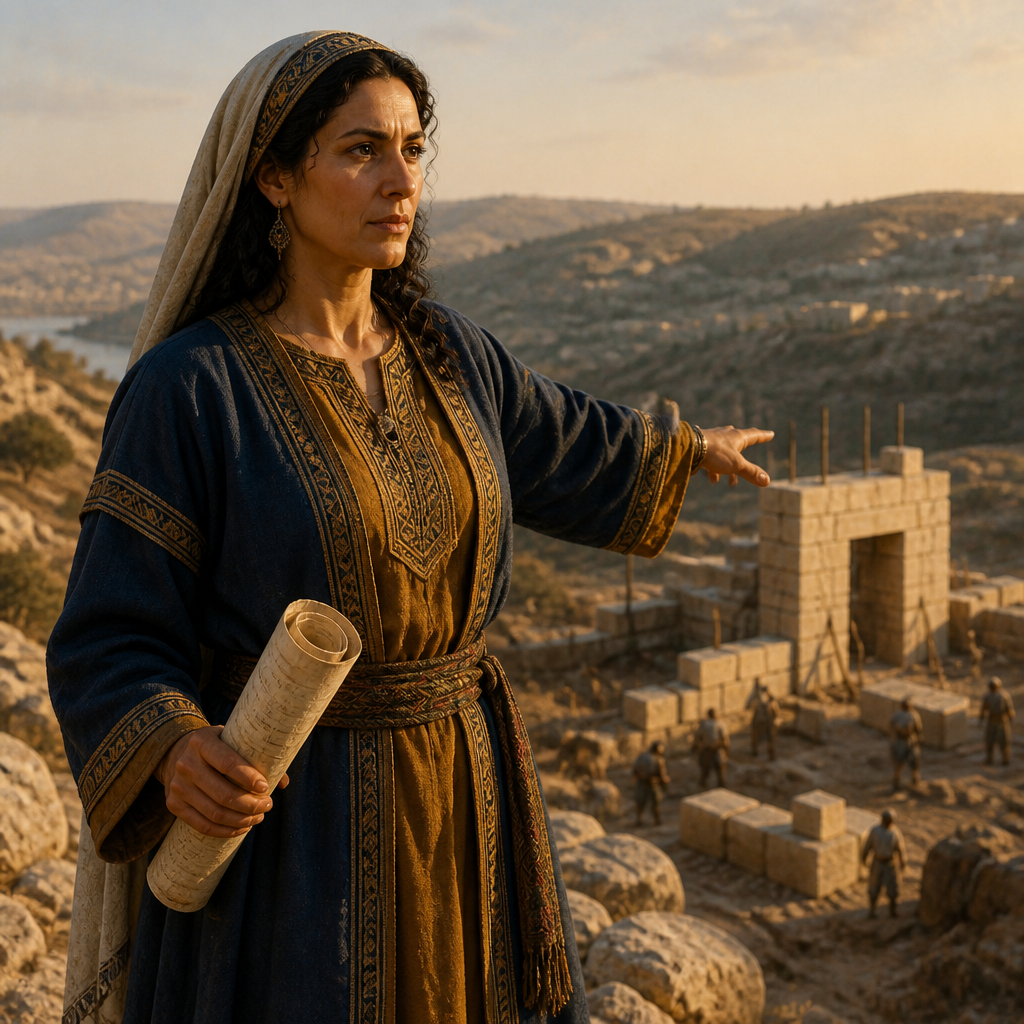
Sheerah was a prominent female descendant of Ephraim who gained historical renown for founding three significant cities in ancient Israel.
Sheerah appears in the genealogical records of the Chronicler during the era of the Egypt and Wilderness's historical retrospection. As a daughter of Beriah and a granddaughter of Ephraim, Sheerah stands as a rare example of a woman credited with urban development and architectural legacy in the Old Testament. While her biblical footprint is limited to a single verse, the significance of her accomplishments suggests she held substantial authority and resources within the Tribe of Ephraim.
Her legacy is defined by the construction of Upper and Lower Beth-horon and Uzzen-sheerah. These sites were not merely small settlements but strategic locations that played vital roles in Israel’s military and economic history. The record of her name within a male-dominated genealogical list highlights her exceptional status as a builder and a leader during the formative stages of the Israelite presence in the hill country.
Background and Family
Sheerah was a member of the Tribe of Ephraim, specifically identified as the daughter of Beriah (1 Chronicles 7:24). Her family history was marked by both tragedy and resilience; her father, Beriah, was born following a period of mourning after the men of Gath killed Ephraim’s other sons. Sheerah grew up in a lineage that was rebuilding its strength and influence in the land of Canaan. She is listed alongside her brothers, Rephah and Resheph, indicating her place within the primary line of descent.
Major Life Events
The primary record of Sheerah’s life centers on her activity as a city-builder. In an era where land development and fortification were typically recorded as the works of kings or tribal patriarchs, Sheerah is credited with founding three distinct locations:
- Lower Beth-horon: Situated at the foot of the ascent from the coastal plain.
- Upper Beth-horon: Located higher in the hill country, overlooking the lower pass.
- Uzzen-sheerah: A site that uniquely bore her name, likely serving as her personal estate or a monument to her influence.
These cities, particularly the Beth-horons, were of immense strategic importance. They sat along the main pass leading from the maritime plain to the central mountain ridge, a route frequently used for trade and military campaigns.
Relationship to Other Biblical Figures
As the daughter of Beriah, Sheerah was the granddaughter of the patriarch Ephraim, the son of Joseph. This places her at the heart of one of the most powerful tribes in the northern region of Israel. Her brothers, Rephah and Resheph, continued the lineage that would eventually produce the military leader Joshua, son of Nun. While Sheerah is not mentioned as a contemporary of Joshua, her construction of the Beth-horon pass provided the very landscape where Joshua would later win one of his greatest military victories against the Amorite kings.
Spiritual Significance
The inclusion of Sheerah in 1 Chronicles 7:24 serves a specific theological and historical purpose. It emphasizes that the inheritance of the land was achieved not only through conquest but through the diligent building and establishment of communities. Her presence in the text challenges the notion that women were absent from the structural development of the nation. Sheerah represents the industrious spirit of the Ephraimites, contributing to the permanence of Israel's presence in the promised land through architecture and urban planning. Her life demonstrates that within the covenant community, individuals of both genders were recognized for their contributions to the nation's security and prosperity.
Sheerah is significant as one of the few women in the Old Testament credited with the construction of cities. Her work on the Beth-horons established a permanent strategic gateway into the heart of Israel, which would prove crucial for the nation's defense for centuries. Her inclusion in the tribal genealogies validates her role as a leader whose legacy was integral to the identity of the Tribe of Ephraim.
Theologically, she serves as a witness to the fulfillment of the blessing upon Ephraim. Despite the early losses suffered by the tribe, Sheerah’s building projects signify the restoration and expansion of the family's influence. She represents the tangible manifestation of the promise that Israel would inhabit and build in the land they were given.
Frequently Asked Questions
Which cities did Sheerah build?
Sheerah built Upper Beth-horon, Lower Beth-horon, and Uzzen-sheerah.
Who was Sheerah’s father?
She was the daughter of Beriah, a descendant of Ephraim.
What tribe did Sheerah belong to?
She belonged to the Tribe of Ephraim.
Why are the cities Sheerah built important?
The Beth-horon cities were strategically located on a major mountain pass that controlled access to the heart of Israel, making them vital for military defense.
Is Sheerah mentioned in the New Testament?
No, Sheerah is only mentioned in the Old Testament, specifically in 1 Chronicles 7:24.
Family & Relationships
Parents
 Beriah, Son of EphraimFather1 Chronicles 7:23
Inferred
No verse names Sheerah and Beriah together; the father link is carried from the surrounding genealogy and is not stated in Scripture.Evidence: 1 Chronicles 7:23
Extended family
 EphraimGrandfather1 Chronicles 7:22
Inferred
No verse names Ephraim and Sheerah together; the granddaughter link is carried from the surrounding genealogy and is not stated in Scripture.Evidence: 1 Chronicles 7:22
Connected Figures
Family
Father · 1 Chronicles 7:23
A son born to the patriarch Ephraim in his old age, named to commemorate a period of family tragedy following the death of his older brothers.

Brother · 1 Chronicles 7:24–25
Rephah was a descendant of Ephraim within the Egypt and Wilderness era, listed as a son of Beriah in the genealogical records of the Tribe of Ephraim.
Egypt and WildernessFirst: 1 Chronicles 7:253 versesTribal leader or figureEphraim

Brother · 1 Chronicles 7:24–25
Resheph was a member of the tribe of Ephraim.
Grandfather · 1 Chronicles 7:22
The second son of Joseph and Asenath, Ephraim was adopted by his grandfather Jacob and received the primary blessing of the firstborn, becoming the progenitor of a dominant tribe in Israel.
PatriarchsFirst: Genesis 41:5216 versesPatriarchEphraim
Categories
Mentions by Book
- 1 Chronicles4
Scripture References
All 4 indexed verses, in canonical order, from the Berean Standard Bible.
1 Chronicles · 4
- 1 Chronicles 7:22Partial
Their father Ephraim mourned for many days, and his relatives came to comfort him.
Cited as evidence on a family card; added so References, Key Verses and Mentions by Book share one index.
- 1 Chronicles 7:23Partial
And again he slept with his wife, and she conceived and gave birth to a son. So he named him Beriah, because tragedy had come upon his house.
Cited as evidence on a family card; added so References, Key Verses and Mentions by Book share one index.
- 1 Chronicles 7:24
His daughter was Sheerah, who built Lower and Upper Beth-horon, as well as Uzzen-sheerah.
- 1 Chronicles 7:25Partial
Additionally, Rephah was his son, Resheph his son, Telah his son, Tahan his son,
Cited as evidence on a family card; added so References, Key Verses and Mentions by Book share one index.