Pharaoh, King of the Exodus
The stubborn monarch of Egypt who resisted the divine command to release the Israelites, ultimately succumbing after ten plagues and the destruction of his army.
The Pharaoh of the Exodus stands as the primary human antagonist in the book of Exodus, representing the height of worldly power in opposition to the sovereignty of the God of Israel. As the absolute ruler of Egypt during the 15th to 13th centuries BC, he viewed himself as a divine figure, a claim challenged by the arrival of Moses and Aaron. His refusal to acknowledge the authority of Yahweh served as the catalyst for the most famous series of miracles in the Old Testament.
His reign is characterized by a cycle of stubbornness and divine judgment. Despite witnessing the devastating power of the ten plagues, he repeatedly retracted his promises to liberate the Hebrew slaves. This persistence in rebellion led to the total ruin of Egypt’s agricultural economy and culminated in the catastrophic loss of his firstborn son and the subsequent destruction of his elite chariot forces in the Red Sea.
Background and Family
The Pharaoh described in Exodus 3 through 14 is the sovereign ruler of Egypt during the period of the Israelites' liberation. While the biblical text utilizes the royal title "Pharaoh" (a term originally meaning "Great House") as his primary identifier, the scripture focuses on his official role as the oppressor of Israel rather than his personal genealogy. Within the specific biblical dataset for this individual, no specific parents, spouses, or ancestors are named, though the text mentions his "firstborn son" who dies during the final plague (Exodus 12:29), and his "officials" or "servants" who advise him throughout the conflict.
Major Life Events
The Initial Confrontation
The conflict began when Moses and Aaron, acting under divine instruction, appeared before Pharaoh demanding that he allow the Israelites to celebrate a feast in the wilderness. Pharaoh’s response was one of arrogant dismissiveness: "Who is the LORD that I should obey His voice and let Israel go? I do not know the LORD, and I will not let Israel go" (Exodus 5:2). In retaliation for this request, he increased the labor of the Israelites, requiring them to produce the same quota of bricks without being provided straw, thereby driving a wedge between the Hebrew people and their leaders.
The Ten Plagues
As Pharaoh continued to refuse the demand for release, God initiated a series of judgments designed to demonstrate His power over the gods of Egypt. Throughout these events, a recurring theme of the "hardening of the heart" emerges. At times, the text states that Pharaoh hardened his own heart (Exodus 8:15); at other times, it specifies that the LORD hardened Pharaoh's heart (Exodus 9:12) to ensure the full display of divine wonders.
Pharaoh attempted to negotiate several times, offering compromises such as allowing only the men to leave (Exodus 10:11) or leaving the livestock behind (Exodus 10:24). Moses rejected these half-measures, insisting on total departure. The standoff ended only after the tenth plague—the death of the firstborn—which struck Pharaoh’s own household, causing him to drive the Israelites out in the middle of the night.
Pursuit and Destruction at the Sea
Shortly after the Israelites departed, Pharaoh experienced a final change of heart. Realizing he had lost his labor force, he mobilized his entire army, including six hundred select chariots, to pursue the fugitives. He trapped them against the shores of the Red Sea. In the ensuing miracle, the sea parted for Israel but returned to its original depth as Pharaoh’s horses, chariots, and horsemen attempted to follow. The biblical account is definitive regarding the outcome: the entire army of Pharaoh was covered by the waters, and not one of them survived (Exodus 14:28).
Relationship to Other Biblical Figures
Pharaoh’s primary relationship is one of adversarial tension with Moses. The two engaged in a series of formal audiences where Moses acted as the mouthpiece of God and Pharaoh acted as the defiant obstacle. Moses was warned by God that he had been made "like God to Pharaoh," emphasizing the spiritual nature of their hierarchy (Exodus 7:1). Pharaoh also interacted with Aaron, who performed the initial signs, such as turning a staff into a serpent. Within his own court, Pharaoh relied on magicians and sorcerers who initially replicated the plagues but eventually conceded that the miracles were the "finger of God" (Exodus 8:19).
Spiritual Significance
In biblical theology, Pharaoh serves as the archetypal example of human pride and divine hardening. The New Testament, specifically in Romans 9:17, quotes the Exodus narrative to explain God’s sovereignty, stating that God "raised [Pharaoh] up for this very purpose" to display His power and make His name known throughout the earth. Pharaoh is not merely a historical villain but a theological monument to the futility of resisting God's redemptive plans. His "hard heart" becomes a warning to future generations of Israelites and believers regarding the dangers of stubbornness in the face of divine revelation.
Spiritual Significance
Theologically, Pharaoh represents the ultimate embodiment of the 'Anti-God' ruler who attempts to enslave those whom God has claimed as His own. His defeat is the foundational victory of the Old Testament, cited throughout the Psalms and the Prophets as the definitive proof of God's saving power. In the New Testament, Pharaoh is used by the Apostle Paul to illustrate the doctrine of election and the sovereignty of God's will over human resistance.
Furthermore, Pharaoh’s downfall serves as a paradigm for the 'Day of the Lord,' where the pride of man is humbled and the name of Yahweh is exalted. His role in the Exodus story provides the necessary tension that allows for the institution of the Passover, the covenant at Sinai, and the identity of Israel as a people redeemed from the house of slavery.
Frequently Asked Questions
Did Pharaoh survive the Red Sea?
The biblical text states in Exodus 14:28 and Psalm 136:15 that the waters returned and covered the entire army, including the chariots and horsemen, and that God 'swept Pharaoh and his army into the Red Sea,' indicating he perished with his troops.
Why did God harden Pharaoh's heart?
According to Exodus 7:3-5 and Romans 9:17, God hardened Pharaoh's heart so that His signs and wonders would be multiplied in Egypt, ensuring that both the Egyptians and the Israelites would know that He is the LORD.
What was the final plague that convinced Pharaoh to let Israel go?
The tenth plague, which was the death of every firstborn male in Egypt—from the firstborn of Pharaoh on his throne to the firstborn of the livestock—finally broke Pharaoh's resolve (Exodus 12:29-31).
What did Pharaoh's magicians say about the plagues?
Initially, the magicians could replicate some signs, but by the third plague (gnats/lice), they told Pharaoh, 'This is the finger of God,' admitting they could not compete with Yahweh's power (Exodus 8:19).
What deals did Pharaoh try to strike with Moses?
Pharaoh suggested the Israelites sacrifice within Egypt (Exodus 8:25), that only the men go into the wilderness (Exodus 10:11), and finally that they leave their livestock behind (Exodus 10:24). Moses rejected all these compromises.
Connected Figures
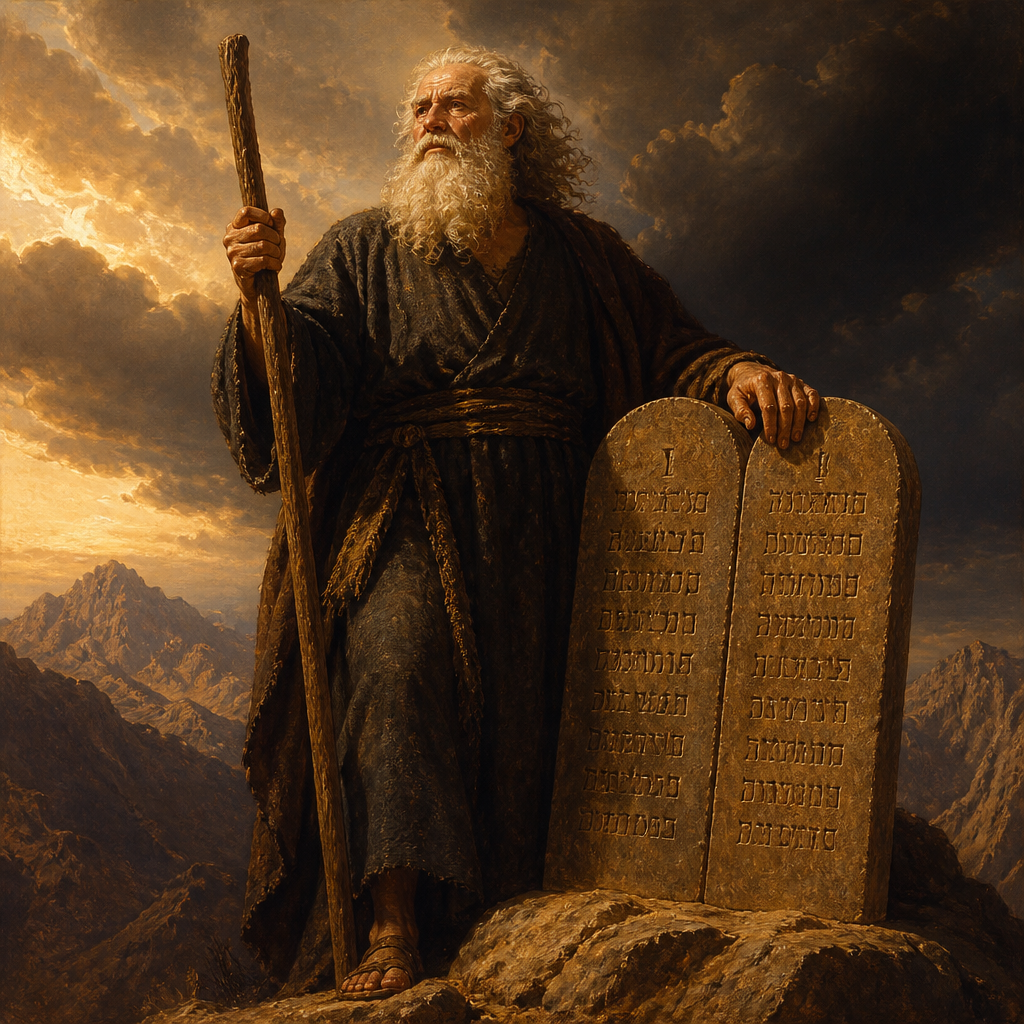
Moses
Adversary and Divine Messenger
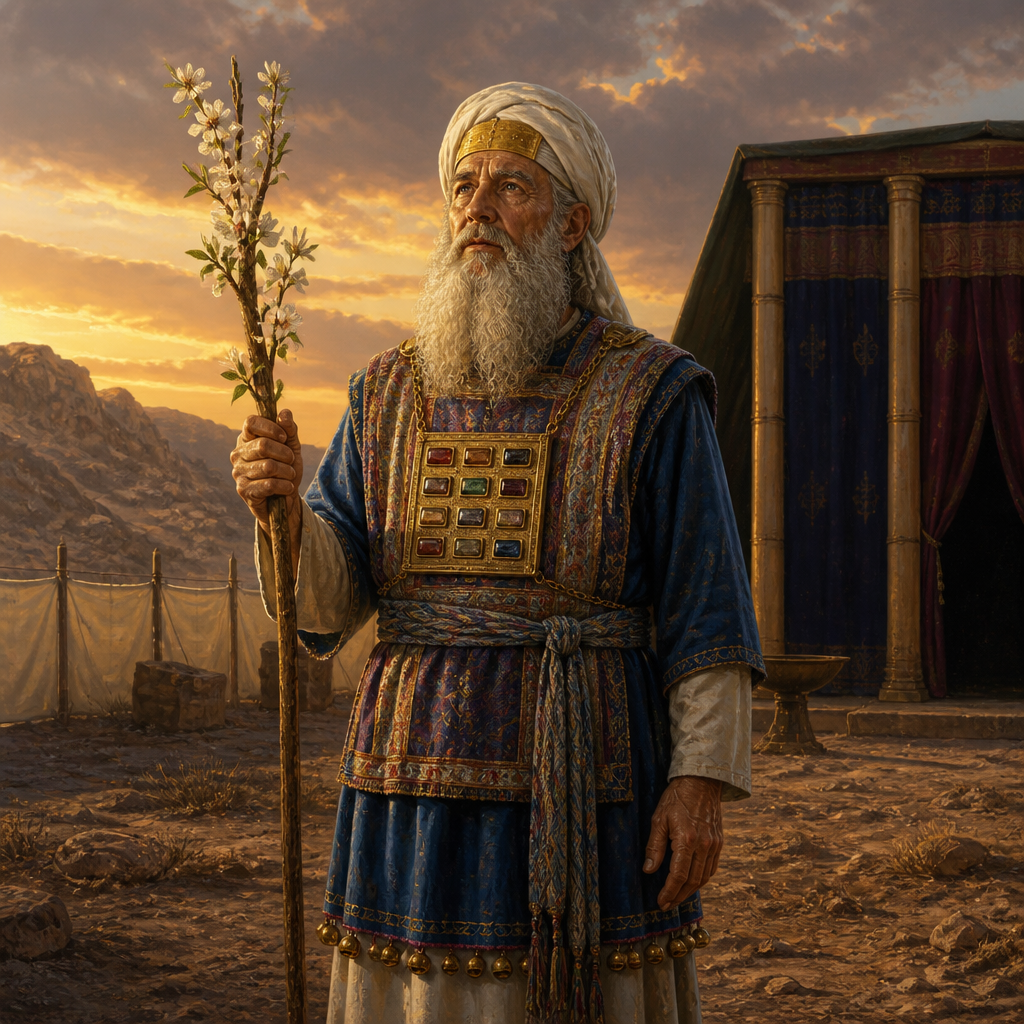
Aaron
Adversary and Prophet to Moses
Jethro
Contemporary who heard of his defeat
Categories
Mentions by Book
- Exodus97
- Deuteronomy7
- 1 Samuel2
- Psalms2
- 2 Kings1
- Nehemiah1
- Romans1
Others Named Pharaoh, King of the Exodus
Pharaoh1 Kings 3:1
Pharaoh living at the time of United Monarchy
PharaohExodus 1:11
Pharaoh living at the time of Egypt and Wilderness
PharaohGenesis 12:15
Pharaoh living at the time of the Patriarchs
Pharaoh1 Chronicles 4:18
Pharaoh living at the time of Divided Monarchy
PharaohJeremiah 25:19
Pharaoh living at the time of Divided Monarchy
Pharaoh2 Kings 18:21
Pharaoh living at the time of Divided Monarchy
PharaohGenesis 37:36
Pharaoh living at the time of the Patriarchs