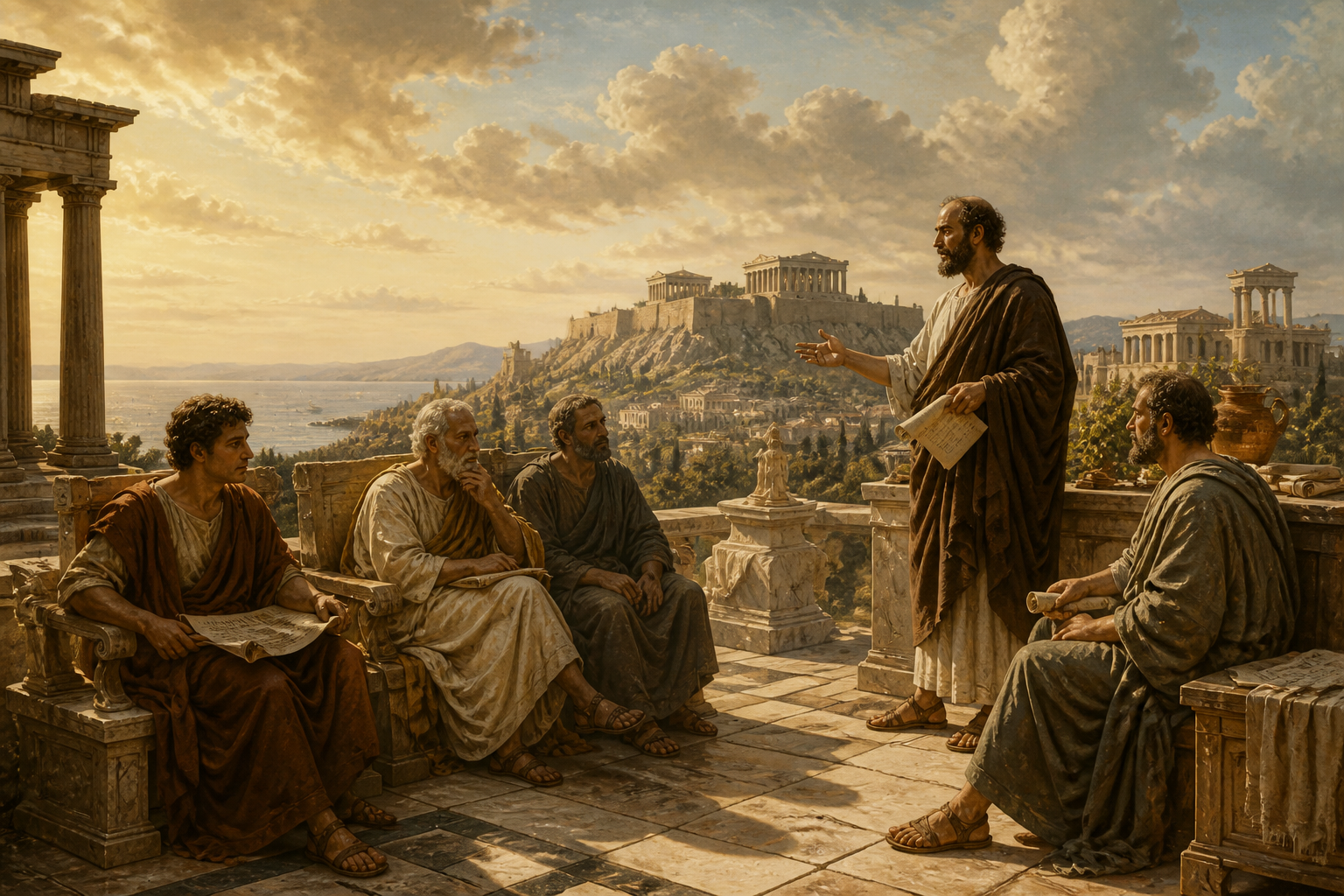
Pagans Quoted by Paul
A select group of Hellenistic poets and philosophers whose secular writings were adapted by the Apostle Paul to communicate the Gospel.
“…as even some of your own poets have said, ‘For we are indeed his offspring.’” — Acts 17:28b
The Apostle Paul’s missionary strategy frequently involved contextualizing the Christian message for a Greco-Roman audience. Unlike his addresses in Jewish synagogues, where he relied heavily on the Hebrew Scriptures, his interactions with Gentiles often featured references to common cultural and intellectual touchstones. By quoting Greek poets and philosophers, Paul demonstrated an awareness of Hellenistic thought, using their own logic and literature as a bridge to discuss monotheism, the nature of God, and Christian ethics. This practice is most famously displayed in his speech at the Areopagus in Athens, where he sought to identify the 'Unknown God' through the lens of local intellectual traditions.
Among the authors Paul utilized were Epimenides of Crete, Aratus of Cilicia, and the dramatist Menander. These figures were giants of the Greek literary canon; Epimenides was a legendary 6th-century BC seer, Aratus was a widely read 3rd-century BC astronomical poet, and Menander was the leading playwright of New Comedy in the 4th century BC. Their inclusion in the New Testament corpus indicates that Paul did not view all pagan thought as devoid of truth, but rather believed that certain 'general revelation' truths could be reclaimed for the service of the Gospel. By citing these authors, Paul validated the idea that God had not left the Gentile world without a witness to His existence and moral requirements.
These quotations are historically significant because they highlight the transition of early Christianity from a sect of Judaism into a global movement. Scholars often analyze these verses to understand the education and rhetorical skill of the historical Paul, who appears to have been equally comfortable with the Torah of Jerusalem and the philosophy of Tarsus. The presence of these secular lines in the inspired text serves as a foundation for Christian apologetics, suggesting that the Gospel can be articulated through various linguistic and cultural frameworks without compromising its core theological distinctiveness.
The group
Pagans Quoted by Paul
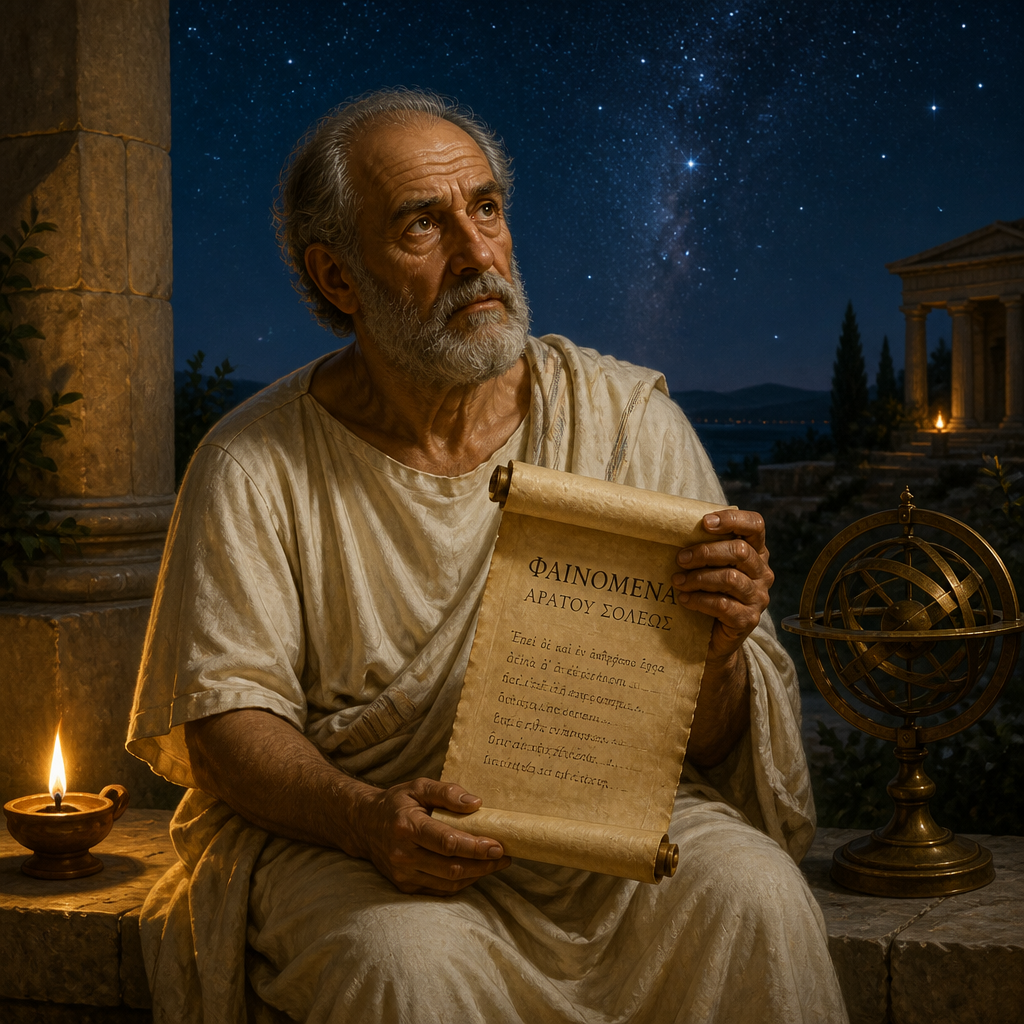
Aratus
Greek poet quoted by the Apostle Paul in the Book of Acts
Aratus of Soli was a Hellenistic Greek poet and astronomer whose work Phaenomena was quoted by the Apostle Paul during his sermon at the Areopagus in Athens.
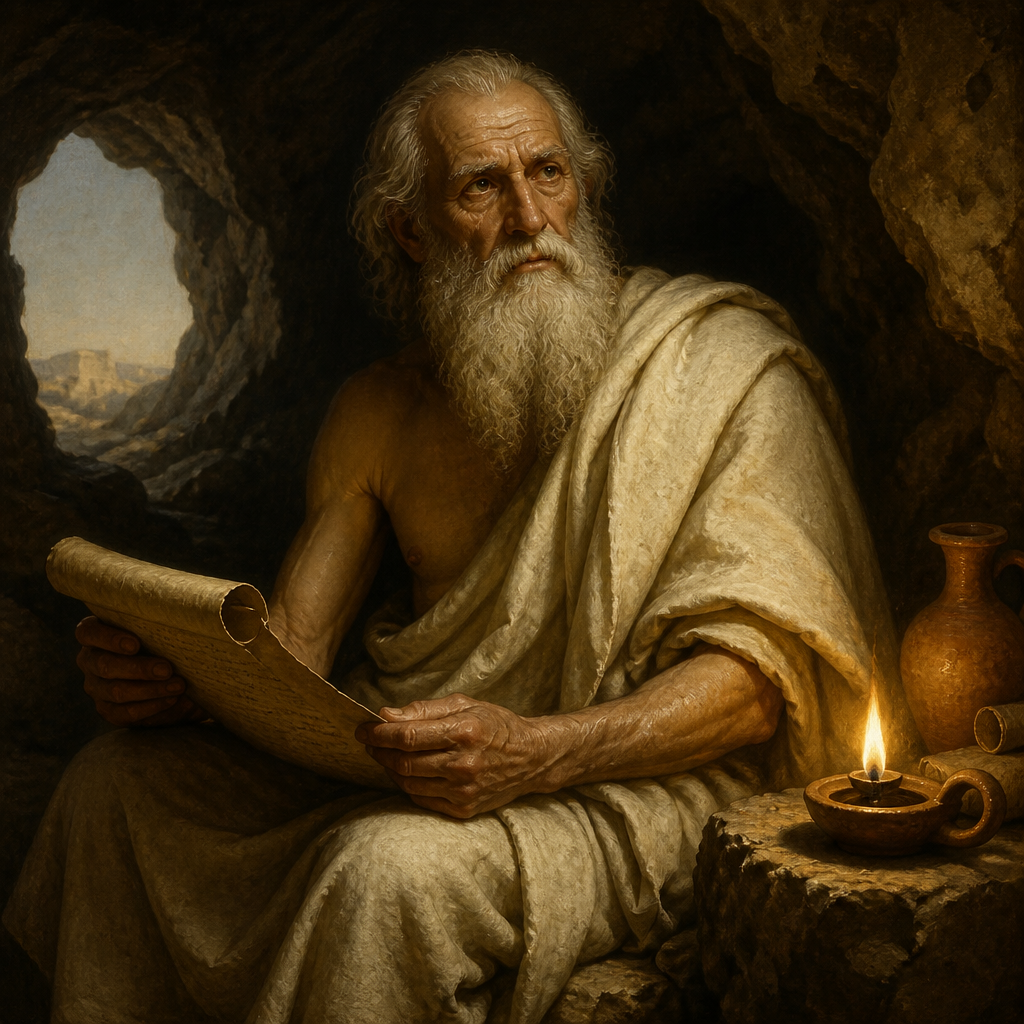
Epimenides
Greek poet and prophet quoted by the Apostle Paul in both Acts and Titus
A 6th-century BC Cretan philosopher and poet whom the Apostle Paul quotes in both Acts 17 and Titus 1.
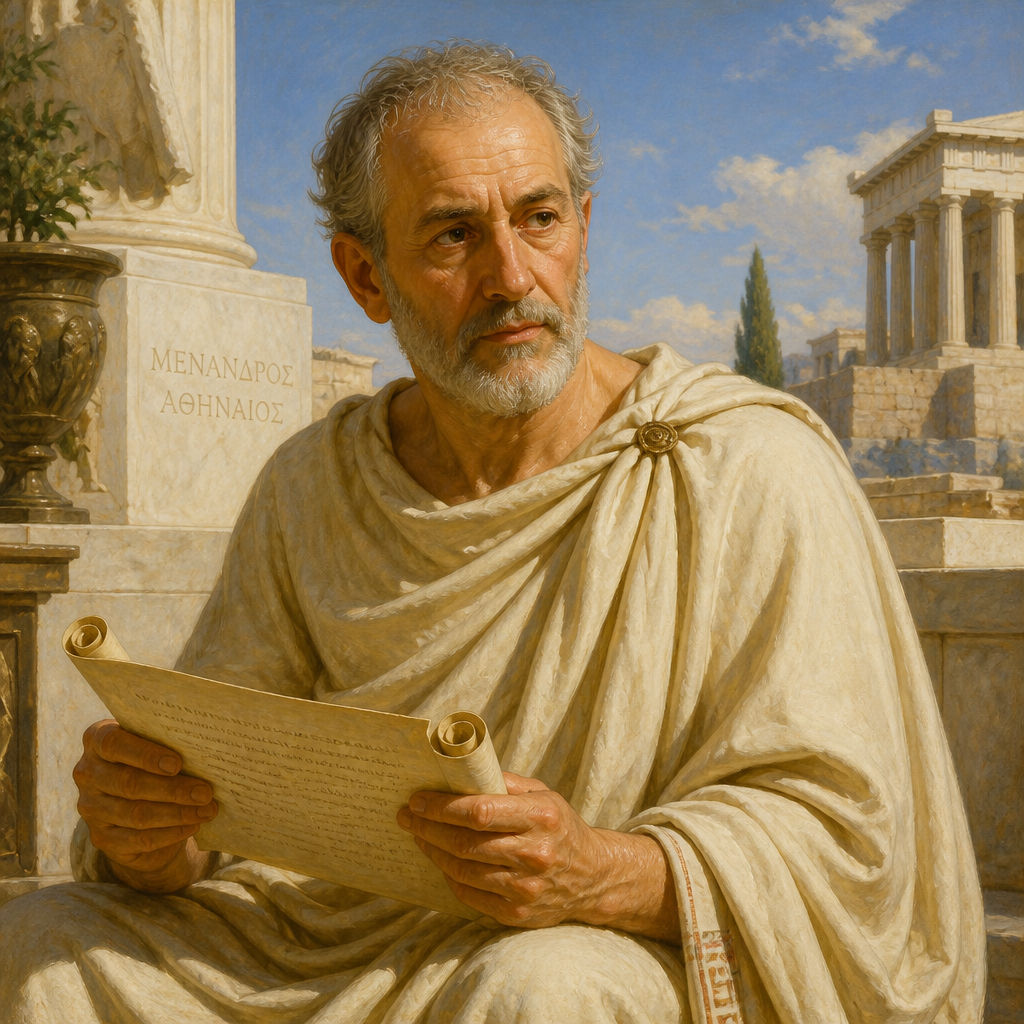
Menander
Greek playwright whose maxim on 'bad company' is quoted in 1 Corinthians
A 4th-century BC Greek playwright whose maxim regarding corrupting influences was quoted by the Apostle Paul in his first letter to the Corinthians.