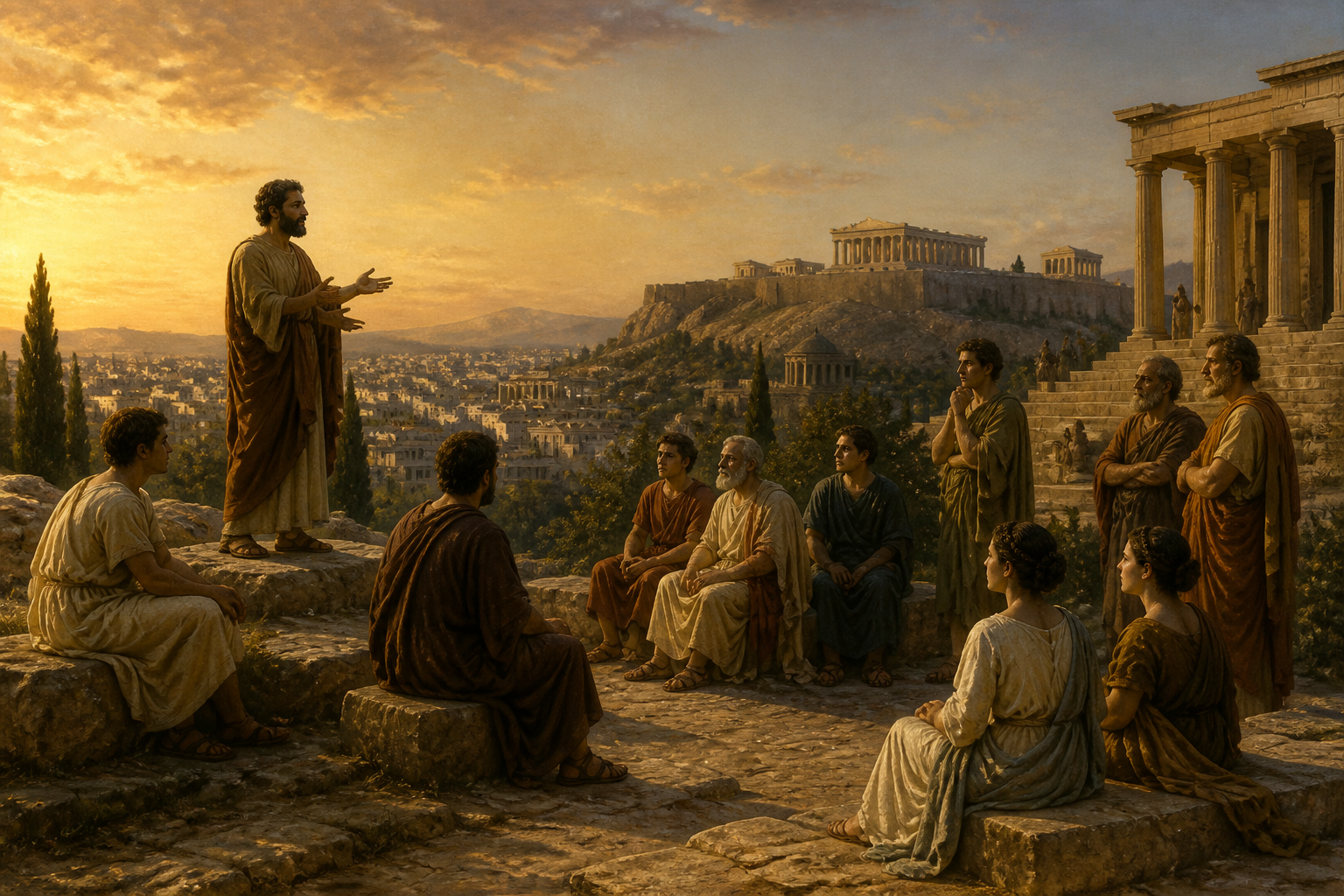
The Church at Athens
The small circle of early believers in the intellectual capital of the Greek world, founded following Paul's address at the Areopagus.
“But some men joined him and believed, among whom also were Dionysius the Areopagite and a woman named Damaris and others with them.” — Acts 17:34
The Church at Athens represents one of the most culturally significant encounters in the expansion of early Christianity during the mid-1st century AD. Established in the wake of the Apostle Paul’s second missionary journey, this group emerged from the shadow of the Parthenon in a city that remained the philosophical and educational heart of the Roman Empire. Unlike the robust churches in Corinth or Ephesus, the Athenian community began as a small, intellectual minority within a city famously described by Luke as being 'full of idols.' This backdrop provided a unique challenge: reconciling the Hebrew-rooted Gospel with the sophisticated traditions of Epicurean and Stoic philosophy.
According to the narrative in the Book of Acts, Paul’s arrival in Athens led to a pivotal discourse at the Areopagus, or Mars Hill. This site served as the meeting place for the city’s high council, which oversaw religious and judicial matters. The resulting group of believers was notable not for its size, but for its composition, including figures of high social standing and intellectual influence. The formation of this group serves as the primary biblical example of Christian apologetics, demonstrating how the early church adapted its message to engage with a pagan, Hellenistic culture that valued reason and debate over traditional Jewish messianic expectations.
While the biblical record of the Athenian church is brief, its historical ripple was substantial. The conversion of a council member like Dionysius suggests that the message gained a foothold even within the city's elite administrative structures. Although Athens never became a primary ecclesiastical hub on the scale of Rome or Antioch during the apostolic era, its existence verified that the Gospel was not merely a provincial sect but a worldview capable of challenging the greatest thinkers of the Classical world. This community marks the transition of the faith from its Semitic origins into the broader Greco-Roman intellectual landscape.
The group
The Church at Athens
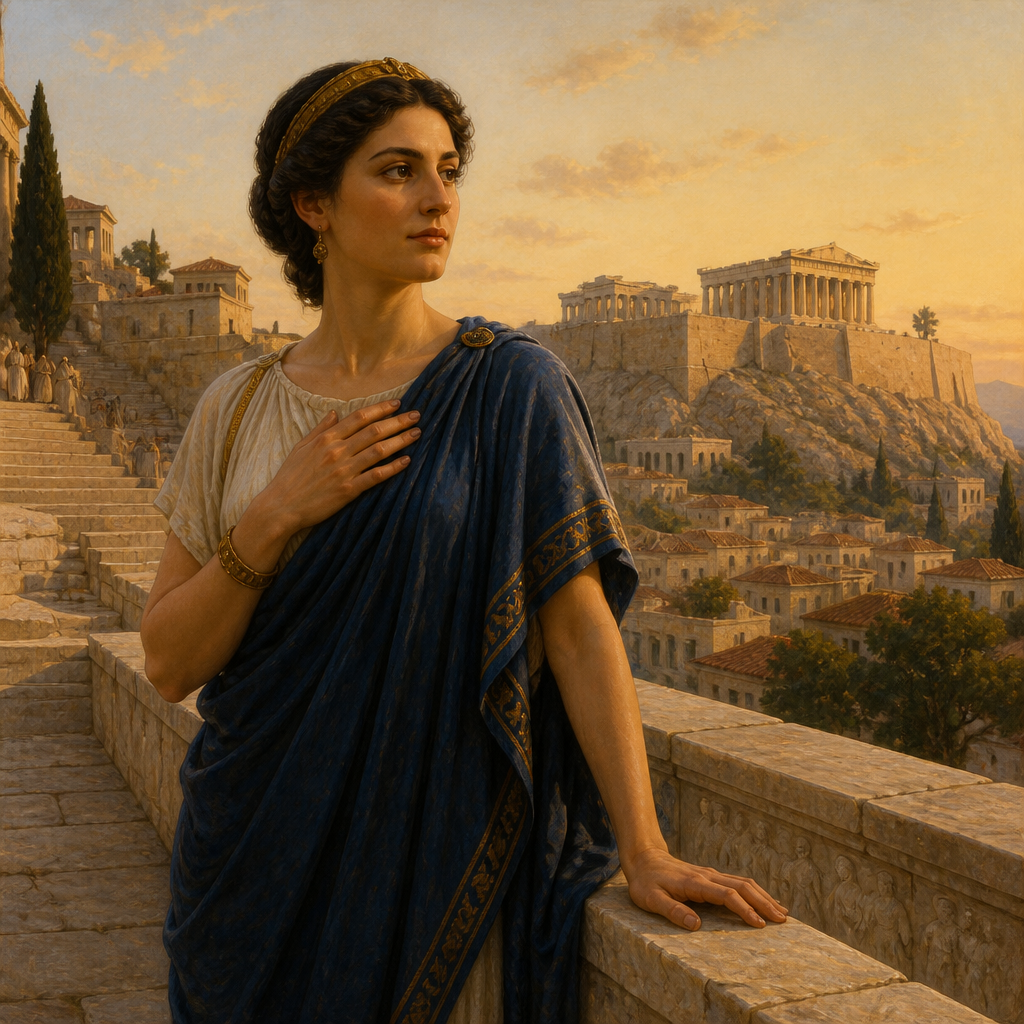
Damaris
Female convert who believed in Jesus after Paul's speech at the Areopagus in Athens
Damaris was an Athenian woman who converted to Christianity following the Apostle Paul’s famous sermon at the Areopagus in Athens.
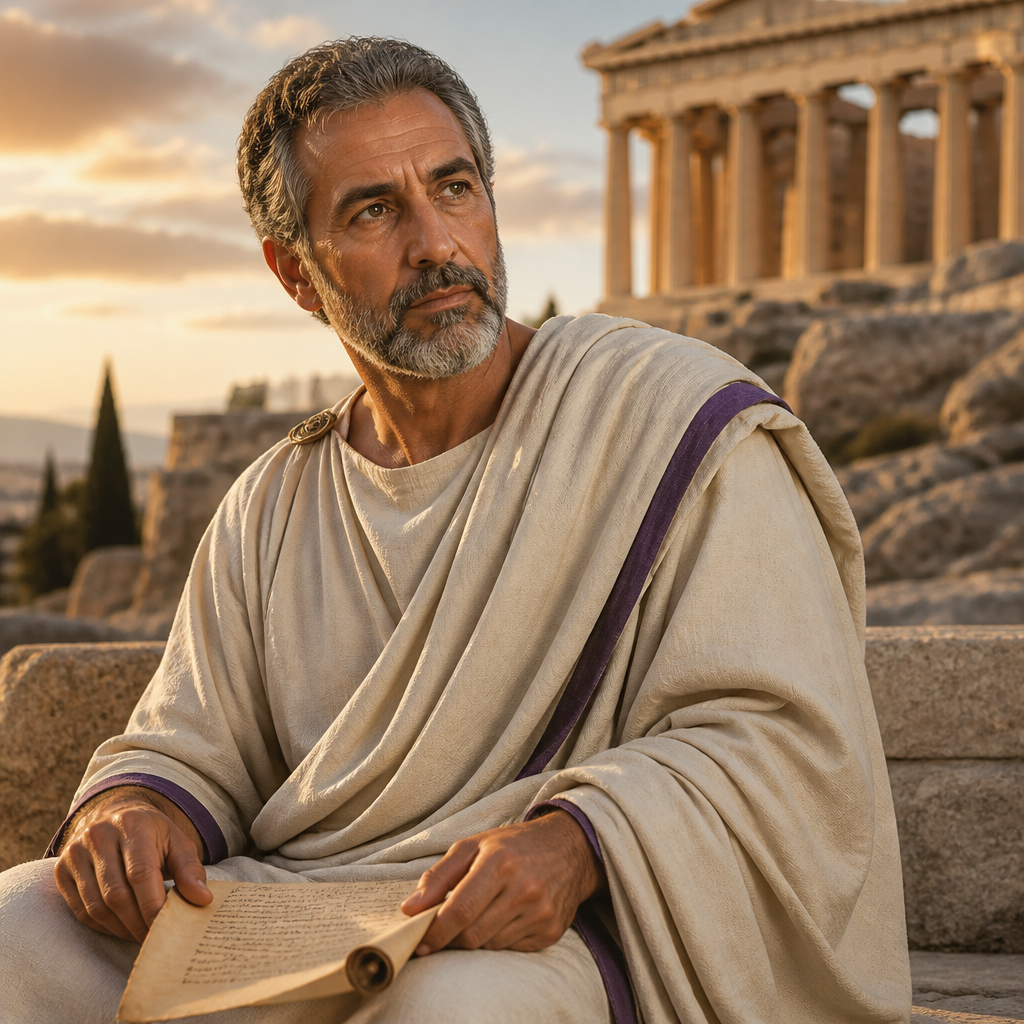
Dionysius the Areopagite
Member of the Athenian supreme court who converted to Christianity after hearing Paul's Mars Hill sermon
A high-ranking member of the Athenian judicial council who converted to Christianity following the Apostle Paul's sermon on Mars Hill.