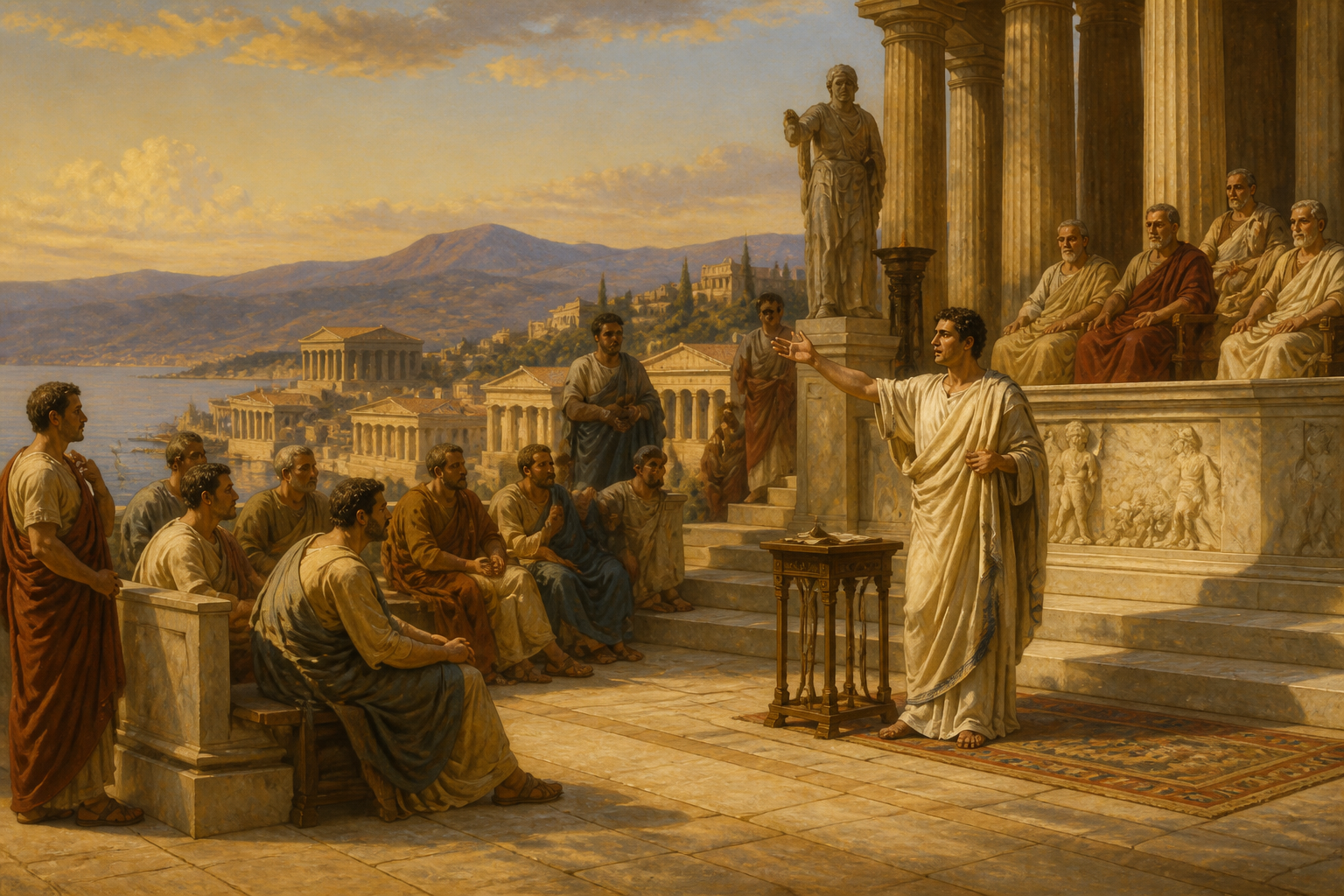
Spokesmen
Professional orators and representatives tasked with presenting legal arguments or public defenses within the Greco-Roman judicial system.
“And they came, and after five days the high priest Ananias came down with some elders and a spokesman, one Tertullus. They laid before the governor their case against Paul.” — Acts 24:1
The role of the spokesperson in the New Testament represents a intersection of Judeo-Christian history and the sophisticated legal traditions of the Roman Empire. These individuals were often skilled rhetoricians or legal experts hired to present a specific case before a ruling authority, such as a governor or a public assembly. In an era where legal outcomes often depended as much on the quality of the delivery as the facts of the case, a proficient orator was a crucial asset for any party seeking to influence political or judicial leaders.
Historically, the speakers recorded in the biblical text operate within the framework of Greek 'rhetorica.' This discipline was essential for navigating the complex bureaucracy of Roman courts, particularly when religious disputes collided with imperial law. Whether they were 'rhetors' like Tertullus, who possessed formal legal training, or individuals like Alexander, who were pushed forward by a crowd to offer a defense, these figures illustrate the significant social pressure placed on the early Christian movement and its Jewish progenitors to conform to Hellenistic standards of public discourse.
These spokesmen serve as a narrative foil to the apostles, who often claimed that their own speech was empowered by the Holy Spirit rather than human eloquence. By examining these figures, scholars gain insight into the administrative tensions of the first century AD. They highlight the various methods—from sophisticated flattery to frantic public appeal—that different factions used to maintain order, secure favors, or suppress perceived civil unrest. Their presence in the Book of Acts underscores the transition of the Christian message from private synagogues to the public stage of the Roman world.
The group
Spokesmen
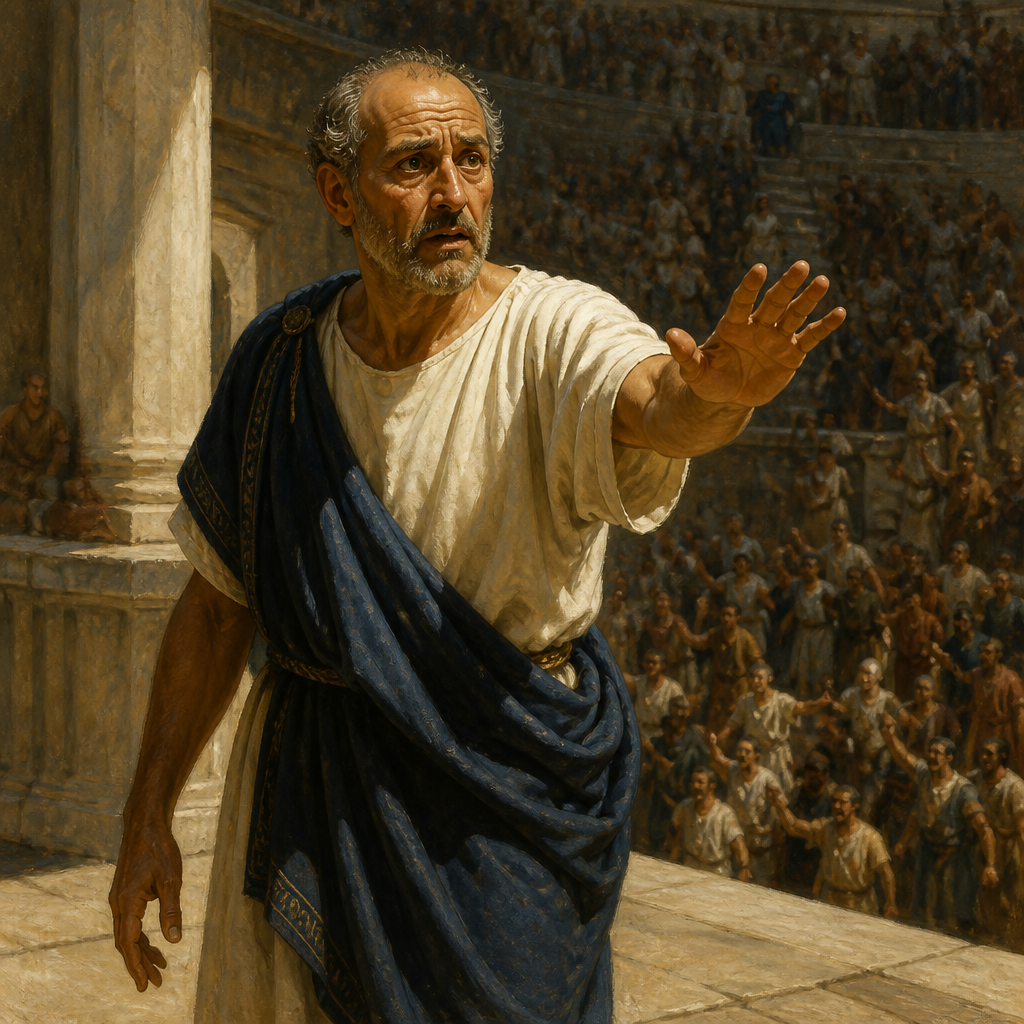
Alexander
Jewish spokesman who was shouted down by a riotous mob in the Ephesian theater
A Jewish spokesman in Ephesus who attempted to defend the Jewish community during the riotous demonstrations against the Apostle Paul and his companions.

Tertullus
Professional orator who prosecuted the Apostle Paul before Governor Felix
Tertullus was a professional advocate and orator hired by the Jewish high priest Ananias to prosecute the Apostle Paul before the Roman governor Felix.