Alexander
A Jewish spokesman in Ephesus who attempted to defend the Jewish community during the riotous demonstrations against the Apostle Paul and his companions.
Alexander was a Jewish man residing in the major Roman provincial center of Ephesus during the mid-1st century AD. He is specifically identified in the Book of Acts as a figure put forward by the Jewish community to act as a spokesman or advocate during a period of intense civil unrest. His appearance occurs at the height of the riot led by Demetrius the silversmith, who feared that the Christian message was undermining the economic and religious significance of the Temple of Artemis.
While Alexander’s intended speech was never delivered due to the hostility of the pagan mob, his presence illustrates the volatile social and religious climate of the early Church era. He serves as a representative of the Hellenistic Jewish community attempting to distance itself from the controversial activities of the Christian movement in order to avoid Roman persecution or local reprisal. His role was primarily that of a communal defender, tasked with navigating the delicate political waters of a city deeply devoted to its patron goddess.
Background and Family
Alexander’s background is rooted in the cosmopolitan environment of Ephesus, one of the most significant cities in the Roman Empire. As a member of the Jewish Diaspora, Alexander likely belonged to a community that had lived in the city for generations, enjoying certain legal protections under Roman law. While his specific lineage is not recorded in the New Testament, his name—Greek in origin—reflects the common practice among Jews of the period to adopt Hellenized names while maintaining their religious identity.
His role as a spokesman suggests he was a man of high standing, likely possessing rhetorical skill and legal knowledge. In the social hierarchy of the Ephesian Jewish community, individuals selected to address a public assembly (the ekklesia) were typically elders or those with significant social capital. His family would have been part of the urban middle or upper class, navigating the cultural intersections of Jewish law, Greek philosophy, and Roman civic duty.
Major Life Events
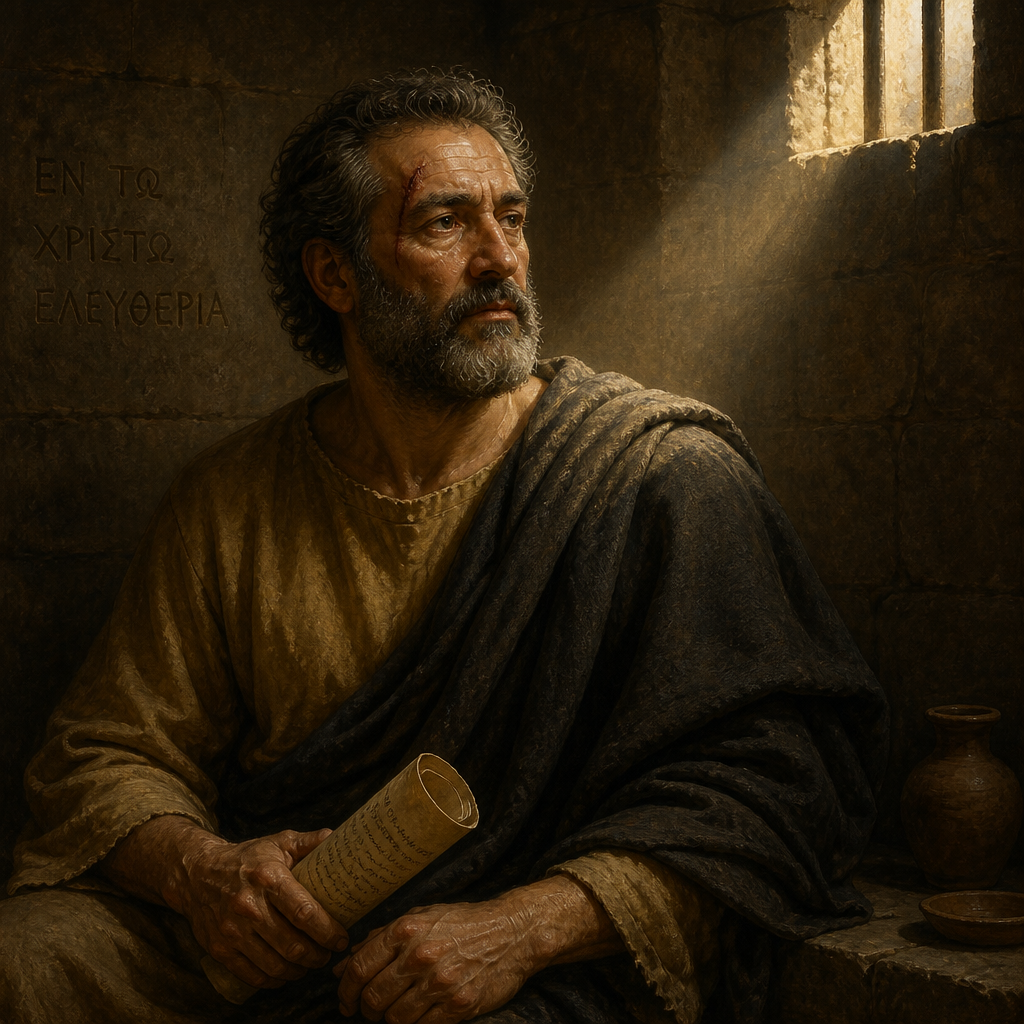
The defining moment of Alexander's biblical record is found in Acts 19:33-34. During the Apostle Paul's third missionary journey, his preaching led to a significant decline in the sale of silver shrines of Artemis. This prompted a craftsman named Demetrius to incite a riot. As the city became engulfed in confusion, the mob seized Paul’s companions, Gaius and Aristarchus, and rushed into the great theater of Ephesus.
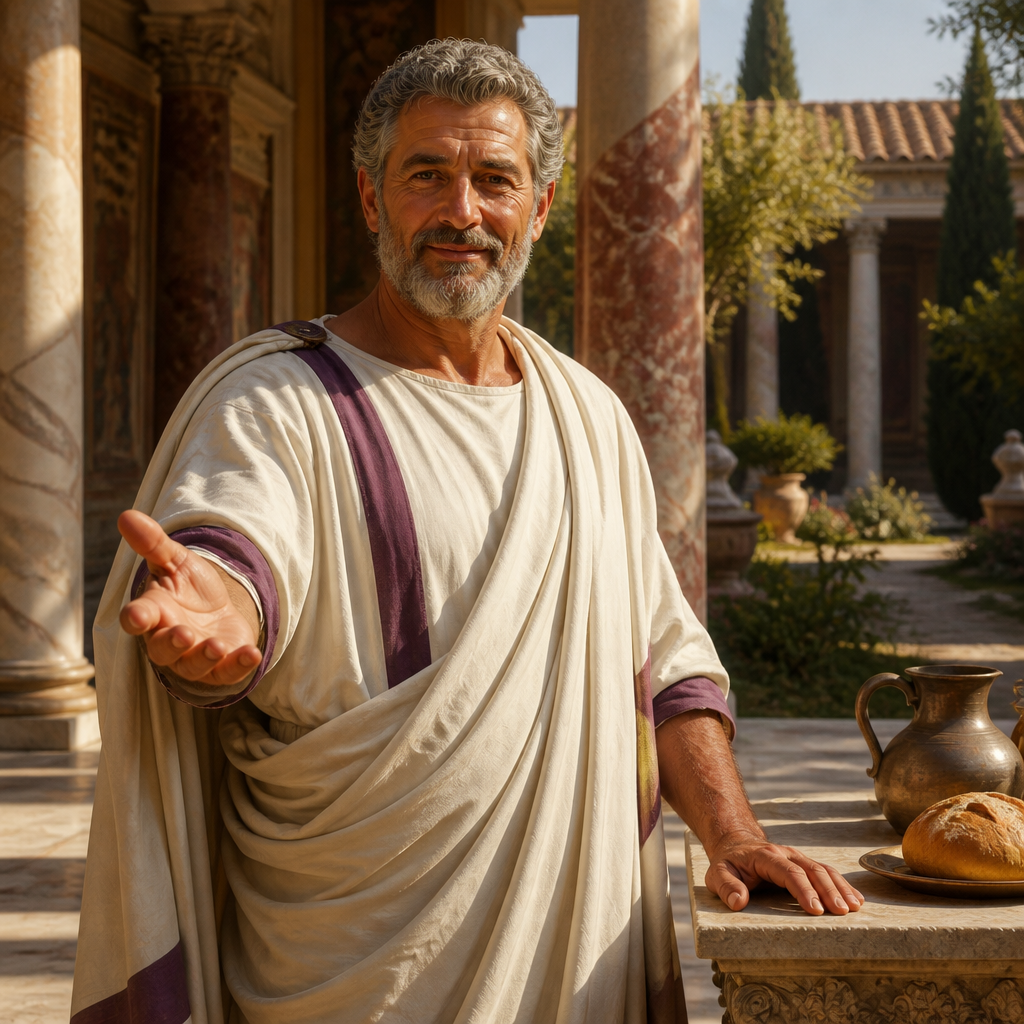
In the midst of this chaos, the Jewish population—fearing that the pagan mob would turn their anger toward all Jews rather than just the Christians—put Alexander forward. The text notes that the Jews "pushed" or "prompted" him from the crowd to make a defense (apologeistai). Alexander beckoned with his hand, a standard oratorical gesture for silence, intending to clarify that the Jewish community did not endorse Paul's disruption of the Artemis cult. However, the plan failed:
But when they recognized that he was a Jew, for about two hours they all with one voice cried out, “Great is Artemis of the Ephesians!” (Acts 19:34, ESV)
Alexander was silenced not by logic or law, but by the sheer volume of a crowd that refused to distinguish between different monotheistic groups.
Relationship to Other Biblical Figures
Alexander’s primary relationship in the biblical narrative is with the Jewish community of Ephesus. He acted as their chosen representative, implying a relationship of trust and institutional responsibility. While he does not interact directly with the Apostle Paul in the text, his actions were a direct consequence of Paul's three-year ministry in Ephesus.
His role contrasts sharply with the Christian leaders of the time. While Paul wished to enter the theater to address the crowd, his disciples and the Asiarchs (provincial officials) prevented him for his own safety. Alexander, conversely, was thrust into the fray by his peers, highlighting the desperate need for the Jewish leadership to maintain a clear distinction between their ancient, legal religion (religio licita) and the emerging 'Way' of Christianity, which was seen by many as a disruptive and illegal superstition.
Spiritual Significance
Theologically and historically, Alexander represents the struggle for identity during the transitional period of the early Church. His presence in the biblical record underscores the "stumbling block" that Christianity represented even to those who shared a common Abrahamic heritage. For Alexander and the Jews of Ephesus, Paul’s message was a source of physical and political danger.
Alexander’s failure to be heard serves as a literary and spiritual motif in Acts, illustrating that the gospel often created an environment where worldly diplomacy and traditional rhetoric were insufficient to quell the spiritual conflict between the kingdom of God and the idolatry of the world. His life serves as a reminder of the immense pressure placed on Jewish believers and non-believers alike to navigate the shifts in the Roman world caused by the rapid expansion of Christianity.
Spiritual Significance
Alexander’s significance lies in his role as a witness to the profound social disruption caused by the early Christian mission. He represents the first-century Jewish effort to maintain civic peace in the face of pagan hostility. His failed defense in the Ephesian theater demonstrates the breakdown of rational discourse when a culture feels its religious and economic foundations are threatened.
For students of the Bible, Alexander provides essential context for the 'Ephesian Riot.' He highlights the precarious position of Jewish communities in the Diaspora and illustrates the historical reality that early Christians were often viewed by the public as a sect of Judaism, a misconception that Alexander was specifically tasked—unsuccessfully—to correct.
Frequently Asked Questions
Who was Alexander in the Book of Acts?
Alexander was a Jewish man in Ephesus who was chosen by his community to act as a spokesman during a riot sparked by the preaching of the Apostle Paul.
What was Alexander trying to say to the mob?
He intended to make a defense for the Jewish community, likely to distance them from Paul and the Christians to ensure they were not blamed for the disruption of the Artemis cult.
Why did the crowd stop Alexander from speaking?
The crowd recognized he was Jewish, and because they were in a state of religious fervor for Artemis, they shouted him down for two hours to prevent any monotheistic defense.
Is this Alexander the same as Alexander the Coppersmith?
While the name was common, scholars generally treat this Alexander as a distinct figure from the 'Alexander the Coppersmith' mentioned in 2 Timothy, as the latter was an enemy of the faith.
In what city did Alexander's story take place?
The events occurred in Ephesus, specifically within the city's massive outdoor theater which could hold approximately 25,000 people.
Connected Figures
Paul the Apostle
Indirect catalyst for his speech

Demetrius
Instigator of the riot Alexander faced
Gaius
Christian captive held during the riot
Aristarchus
Christian captive held during the riot