Gaius of Corinth
A prominent early Christian in Corinth known for his hospitality to the Apostle Paul and the entire local church congregation.
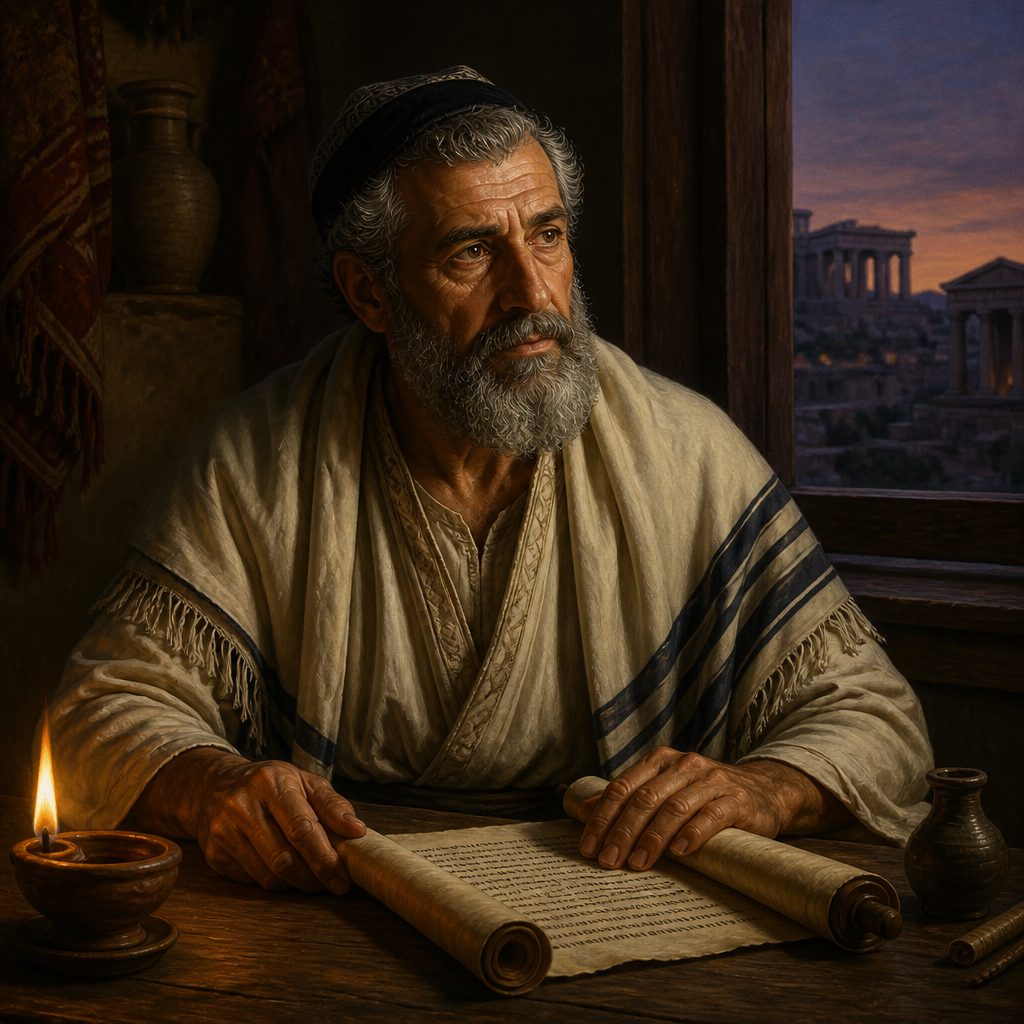
Gaius of Corinth was a first-century Christian convert who played a foundational role in the establishment and sustainability of the early church in the Roman province of Achaia. Residing in the cosmopolitan and commercially vibrant city of Corinth, he was among a select few individuals personally baptized by the Apostle Paul, a distinction that suggests he was one of the earliest believers in that city. His conversion likely occurred during Paul's second missionary journey, around AD 50–52.
Gaius is most frequently identified by his extraordinary hospitality. In the closing greetings of Paul’s Epistle to the Romans—written from Corinth—Paul refers to him as 'my host, and the host of the whole church.' This description implies that Gaius possessed the financial means and a residence large enough to accommodate the frequent gatherings of the Corinthian believers, positioning him as a vital patron of the early Christian movement in a city known for its social and religious diversity.
Background and Family
While the New Testament does not provide an explicit genealogy for Gaius, his name is of Latin origin, which was common in Roman colonies like Corinth. As a resident of Corinth, Gaius lived in a strategic Mediterranean hub characterized by a mixture of Roman law, Greek culture, and a significant Jewish minority. Given that he hosted the 'whole church' (Romans 16:23), scholars generally conclude that Gaius was a man of significant social standing and material wealth. In the Roman world, the domus (house) of a wealthy patron served as the primary meeting place for many voluntary associations, and Gaius adapted this cultural framework for the service of the Gospel.
His social status is further highlighted by his association with Erastus, the city treasurer (or oikonomos), mentioned alongside him in Paul’s greetings. This suggests that Gaius moved within the influential circles of Corinthian society, providing the fledgling church with a degree of social protection and a physical location for communal worship and the Lord's Supper.
Major Life Events
The most definitive event in Gaius's spiritual life was his baptism at the hands of the Apostle Paul. In 1 Corinthians 1:14, Paul expresses a sense of divine providence that he had baptized only a few individuals in Corinth—specifically Crispus and Gaius—to avoid claims that he was building a personal following or baptizing in his own name. This event marks Gaius as a first-generation fruit of the Pauline mission in Greece.
During Paul’s third missionary journey, specifically his three-month stay in Greece (Acts 20:2-3), Gaius served as the apostle’s personal host. It was during this period that Paul composed the Epistle to the Romans. Gaius’s home became the apostolic headquarters where one of the most significant theological treatises in Christian history was penned. By opening his doors to Paul and the broader community, Gaius facilitated the administrative and literary output of the early church.
Relationship to Other Biblical Figures
Gaius maintained a close and supportive relationship with the Apostle Paul. Paul’s description of him as 'my host' indicates a deep level of personal trust and shared ministry. Beyond Paul, Gaius was inextricably linked to the diverse members of the Corinthian church. He was a contemporary of Crispus, the former synagogue leader, and Stephanas, whose household was also among the first converts in Achaia.
His relationship with the global church is seen in Romans 16:23, where he sends greetings to the believers in Rome. This indicates that despite his local responsibilities in Corinth, Gaius had a developed sense of the 'ecumenical' or universal nature of the Body of Christ, recognizing his fellowship with believers he had never personally met.
Spiritual Significance
The spiritual significance of Gaius lies in his embodiment of the Christian virtue of hospitality (philoxenia). In the first century, the survival of the church depended heavily on the willingness of householders to risk their social reputation and property to host 'illegal' or counter-cultural religious gatherings. Gaius did not merely tolerate the church; he embraced it, providing the physical space necessary for the sacraments, teaching, and fellowship.
Furthermore, Gaius serves as a model for how material wealth and social status can be sanctified for the kingdom of God. In a Corinthian church often plagued by factions and status-seeking (as seen in 1 Corinthians 11), Gaius’s role as the 'host of the whole church' suggests a unifying influence. He used his home as a common ground where the wealthy and the poor, the Jew and the Gentile, could meet as equals under the lordship of Christ. His life illustrates that the 'ministry of the table' and the management of a household are as vital to the apostolic mission as preaching and traveling.
Spiritual Significance
Gaius of Corinth is theologically significant as a primary example of the 'paterfamilias' following Christ. His conversion and subsequent baptism by Paul illustrate the importance of early key influencers in the spread of Christianity within Roman urban centers. He represents the practical infrastructure of the early church, showing that the Gospel's success was tied to domestic hospitality and the consecration of private resources for public ministry.
His mention in both 1 Corinthians and Romans provides a rare biographical link between Paul's personal ministry and the logistical realities of the first-century church. He stands as a testament to the fact that the early Christian movement was not merely a collection of itinerant preachers, but a settled community supported by dedicated laypeople who provided stability and sanctuary for the apostles.
Frequently Asked Questions
Who baptized Gaius of Corinth?
Gaius was personally baptized by the Apostle Paul, an honor shared by very few in the Corinthian church according to 1 Corinthians 1:14.
What was Gaius's main contribution to the early church?
He is primarily known for his hospitality, serving as the host for the Apostle Paul and for the entire congregation of the church at Corinth.
Where did Gaius live?
Gaius lived in Corinth, a major Roman colonial city in Greece (the province of Achaia).
Did Gaius know the Roman Christians?
While he may not have met them personally, he included his greetings to the Roman church at the end of Paul’s letter to the Romans, which was written from his home.
Was Gaius a wealthy man?
While the Bible does not state his net worth, the fact that he could host the 'whole church' suggests he owned a large residence and possessed the means to support many people, implying a high social and economic status.
Connected Figures
Paul the Apostle
Mentor and guest
Crispus
Fellow early convert in Corinth

Erastus
Associate and fellow Corinthian believer
Tertius
Scribe who wrote Romans in Gaius's house