Crispus
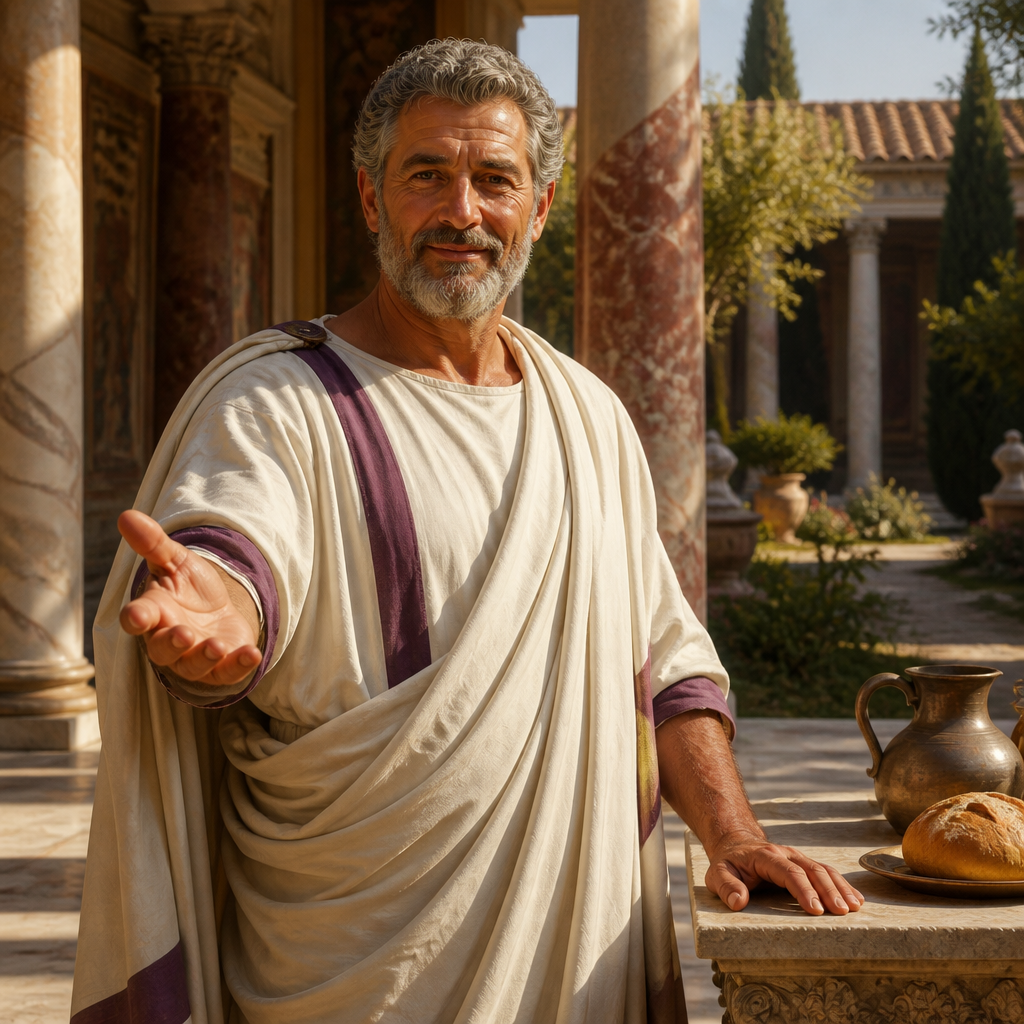
Crispus was a prominent Jewish leader in Corinth who, as the ruler of the synagogue, converted to Christianity under the ministry of the Apostle Paul.
Crispus was a significant figure in the early Christian church at Corinth during the mid-1st century AD. As the 'archisynagogos' or ruler of the synagogue, he held one of the most prestigious positions within the Jewish community of that Roman colony. His conversion represented a major turning point in the Pauline mission to Corinth, signaling a shift in the local reception of the Gospel and potentially sparking the intense opposition Paul eventually faced from other Jewish leaders in the city.
Following his conversion, Crispus became one of the few individuals whom the Apostle Paul personally baptized, a distinction highlighted in Paul’s first letter to the Corinthians. This act of personal baptism by the Apostle underscores Crispus's status and the personal bond shared between the two men. His transition from a leader of traditional Judaism to a member of the burgeoning Christian sect provided a powerful testimony to the residents of Corinth.
Background and Family
Crispus lived in Corinth, a bustling, cosmopolitan port city and the capital of the Roman province of Achaia. As the 'ruler of the synagogue' (Greek: archisynagogos), Crispus was responsible for the administrative and liturgical functions of the Jewish community. This role involved selecting who would read the scriptures and preach during services, maintaining the building, and ensuring the decorum of the assembly. Such a position required a man of high standing, significant knowledge of the Law, and financial stability. While the Bible does not explicitly name his ancestors or his wife, Acts 18:8 records that his 'entire household' believed in the Lord alongside him, indicating he was a family man of considerable influence.
Major Life Events
The arrival of the Apostle Paul in Corinth around 50–51 AD marked the pivotal moment in Crispus's life. Paul had come from Athens and began his ministry in Corinth by reasoning in the synagogue every Sabbath, attempting to persuade both Jews and Greeks. When Silas and Timothy arrived from Macedonia, Paul devoted himself exclusively to preaching, testifying that Jesus was the Christ.
According to the Book of Acts:
'Crispus, the ruler of the synagogue, believed in the Lord, together with his entire household. And many of the Corinthians hearing Paul believed and were baptized.' (Acts 18:8)
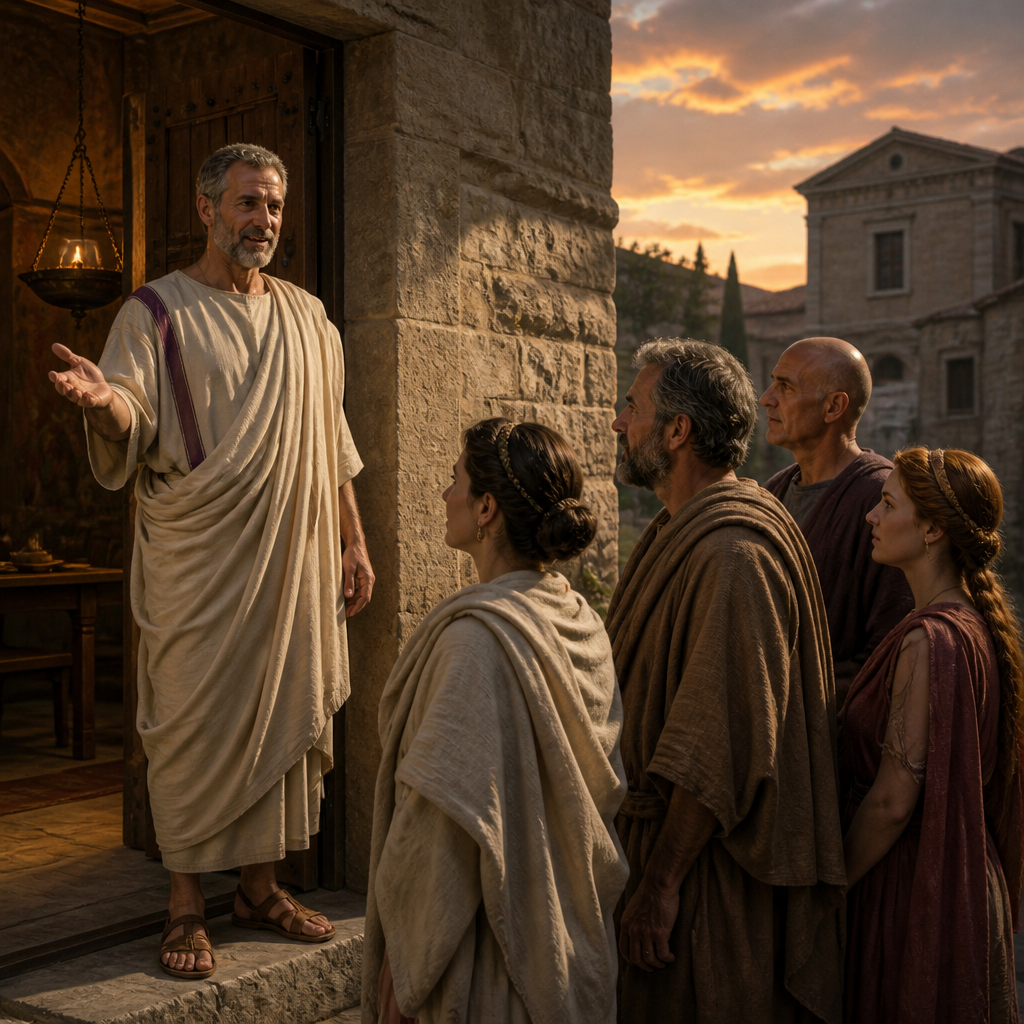
This event was likely a scandal within the Jewish community. The defection of the synagogue’s highest official to the new Way championed by Paul would have been a public and theological shock. It often served as a catalyst for the subsequent transition of Paul's ministry from the synagogue to the house of Titius Justus, which was located directly next door.
Crispus’s commitment was profound enough that Paul departed from his usual practice of allowing his assistants to perform baptisms. In 1 Corinthians 1:14, Paul writes, 'I thank God that I baptized none of you except Crispus and Gaius.' This suggests that Crispus was among the very first converts in the city, forming the foundation of what would become one of the most complex and significant churches of the Apostolic Age.
Relationship to Other Biblical Figures
Crispus’s primary relationship was with the Apostle Paul. Their bond was characterized by a deep mutual respect; Paul’s decision to personally baptize Crispus indicates he saw him as a key leader for the Corinthian church. He also worked alongside Sosthenes, who likely succeeded Crispus as the ruler of the synagogue after Crispus’s conversion (and who later also became a believer). Within his own home, Crispus acted as a spiritual head, leading his entire family and domestic staff to faith. His conversion likely influenced other prominent Corinthians, such as Gaius and the household of Stephanas, who are mentioned in the same context of early baptisms.
Spiritual Significance
Theologically, Crispus serves as a primary example of the 'remnant' of Israel—those Jews who accepted Jesus as the Messiah despite the general rejection of the Gospel by the institutional Jewish leadership of the time. His story illustrates the power of the Gospel to penetrate the highest levels of religious tradition.
In the context of the Corinthian letters, Crispus's name is invoked by Paul to address the problem of factionalism. The believers in Corinth were dividing themselves based on which teacher they followed (Paul, Apollos, or Cephas). By mentioning that he only baptized a few people, including Crispus, Paul argues that the identity of the baptizer is irrelevant compared to the person of Christ. Crispus thus stands as a historical witness to the unity of the church over personal loyalty to human leaders. Church tradition, though not verified by scripture, sometimes identifies Crispus as the eventual Bishop of Aegina.
Spiritual Significance
Crispus is significant as a high-ranking Jewish official whose conversion validated the Messianic claims of Paul within a hostile Roman-Jewish environment. His conversion of his entire household serves as a New Testament model for 'household' salvation and the communal nature of early Christian growth. Furthermore, his mention in 1 Corinthians provides historical grounding for the early date of the Corinthian church's establishment.
Frequently Asked Questions
What was Crispus’s job before becoming a Christian?
He was the ruler of the synagogue (archisynagogos) in Corinth, a position of high religious and social authority.
Why did Paul personally baptize Crispus?
While Paul usually left baptizing to his associates to avoid creating personality cults, he baptized Crispus likely because he was one of the first and most prominent converts in Corinth.
Did Crispus's family also convert?
Yes, Acts 18:8 explicitly states that he believed in the Lord 'together with his entire household.'
Where is Crispus mentioned in the Bible?
He is mentioned in Acts 18:8, which describes his conversion, and in 1 Corinthians 1:14, where Paul mentions baptizing him.
Who replaced Crispus as the ruler of the synagogue?
The Bible suggests Sosthenes took over the role, as he is described as the ruler of the synagogue who was later beaten by a mob in Acts 18:17.
Connected Figures
Paul the Apostle
Mentor and baptizer

Sosthenes
Successor as Synagogue Ruler / Fellow believer
Gaius
Fellow early convert in Corinth
Titius Justus
Neighbor and fellow believer