Sosthenes
Sosthenes was a leader of the synagogue in Corinth who experienced a public beating and later became a trusted colleague and co-author of the Apostle Paul.
Sosthenes was a prominent figure within the first-century religious and ethnic landscape of Corinth, a major commercial hub in the Roman Empire. Initially serving as the ‘archisynagogos’ (ruler of the synagogue), he found himself at the center of a volatile legal confrontation between the local Jewish community and the Apostle Paul. His story is one of dramatic personal transition, moving from a position of traditional Jewish authority to a role as a key leader in the burgeoning Christian church.
He is mentioned twice in the New Testament: once in the Book of Acts and once in Paul’s first letter to the Corinthians. These references suggest a man who endured significant physical and social hardship for his eventual faith, transitioning from an antagonist or observer of the gospel to a fellow laborer with Paul. His life illustrates the complex social pressures and the transformative power of the early Christian movement within the diverse, often chaotic environment of Corinth.
Background and Family
While the specific lineage and family history of Sosthenes are not detailed in the biblical text, his title as the 'ruler of the synagogue' (archisynagogos) in Corinth provides significant insight into his social standing. In the first-century Jewish diaspora, this office was not merely religious but also administrative and social. The ruler was responsible for the physical maintenance of the synagogue, the arrangement of services, and the selection of speakers. To hold this position, Sosthenes would have been a man of relative wealth, high repute, and deep commitment to Jewish law and tradition. He likely succeeded Crispus, the previous synagogue leader who had converted to Christianity under Paul’s ministry.
Major Life Events
The most dramatic recorded event in Sosthenes’ life occurred during the proconsulship of Gallio in Achaia (roughly 51–52 AD). Following the conversion of many Corinthians, the local Jewish leadership brought Paul before the Roman tribunal (bema), accusing him of persuading people to worship God in ways contrary to the law. Gallio, however, dismissed the case as a matter of internal Jewish religious dispute rather than a violation of Roman law.
In the chaotic aftermath of Gallio’s refusal to hear the case, the biblical narrative records a striking turn of events:
"Then they all seized Sosthenes, the ruler of the synagogue, and beat him in front of the tribunal. But Gallio paid no attention to any of these things." (Acts 18:17, ESV)
The identity of "they" in this passage is historically debated; some scholars suggest the Greek bystanders engaged in an act of anti-Semitism, while others believe the Jewish crowd turned on their own leader because he had failed to secure a conviction against Paul or was perhaps already showing sympathies toward the Christian message. Regardless of the perpetrators, Sosthenes suffered public humiliation and physical violence at the very site where he sought legal recourse.
Relationship to Other Biblical Figures
Sosthenes’ relationship with the Apostle Paul is perhaps the most significant aspect of his biography. By the time Paul wrote 1 Corinthians from Ephesus (c. 53–55 AD), Sosthenes is no longer an official of the synagogue but is greeted as "our brother Sosthenes" (Sosthenes ho adelphos). He is listed alongside Paul as a co-sender of the epistle, a designation reserved for highly trusted associates like Timothy or Silvanus.
This implies that following the events in Acts 18, Sosthenes converted to Christianity, left his prestigious position in Corinth, and joined Paul’s missionary team. His presence with Paul in Ephesus suggests he became a traveling companion and likely served as Paul's amanuensis (secretary) or a key liaison between Paul and the Corinthian church. His name would have carried weight with the Corinthians, as they would have remembered his former status and the suffering he endured.
Spiritual Significance
Theologically, Sosthenes serves as a testament to the resilience and transformation found in the early church. His life mirrors the theme of the "scandal of the cross" that Paul discusses extensively in 1 Corinthians. Sosthenes moved from a position of worldly honor and religious authority to a position of suffering and service.
His inclusion in the opening of 1 Corinthians is also significant for the concept of ecclesiastical unity. By associating with a former synagogue leader, Paul reinforced the bridge between the Jewish roots of the faith and the Gentile mission. Sosthenes’ transition from being beaten in front of a Roman judgment seat to being an author of a foundational Christian document highlights the New Testament theme that God uses the "weak things of the world to shame the strong."
Spiritual Significance
Sosthenes is significant as a primary example of a high-ranking Jewish official who embraced the Christian faith despite personal and professional cost. His transformation from a leader of the traditional synagogue to a 'brother' and co-worker of the Apostle Paul demonstrates the early reach of the Gospel into the upper echelons of urban society. Moreover, the beating he sustained in Acts 18 serves as a historical marker of the volatility of religious life in Corinth and the indifference of Roman officials like Gallio toward provincial religious disputes.
In the greeting of 1 Corinthians, his name provides a sense of shared authority and continuity. By including Sosthenes, Paul was not writing as a solitary voice but as part of a ministry team that included a man the Corinthians knew and respected. Sosthenes represents the 'living proof' of the Gospel's power to change hearts—even the hearts of those who initially stood in opposition or led the very institutions that resisted the message.
Frequently Asked Questions
What does the name Sosthenes mean?
The name Sosthenes is of Greek origin and translates roughly to 'safe in strength' or 'preserver of strength.'
Why was Sosthenes beaten in Acts 18?
He was beaten after the Roman proconsul Gallio dismissed the charges against Paul. The crowd (either Greeks or Jews) took out their frustration on Sosthenes, who was the synagogue leader at the time.
Is the Sosthenes in Acts the same person as in 1 Corinthians?
Most biblical scholars believe they are the same person. The shift from a synagogue leader in Corinth to Paul’s companion in Ephesus fits the patterns of conversion seen in the early church.
What was the role of a 'ruler of the synagogue'?
An archisynagogos was responsible for the administrative leadership of the synagogue, including presiding over worship services and maintaining the building.
Did Sosthenes write 1 Corinthians?
While Paul is the primary author, Sosthenes is listed as a co-sender. He may have served as the scribe who physically wrote the letter as Paul dictated it.
Connected Figures
Apostle Paul
Ministry partner and co-author
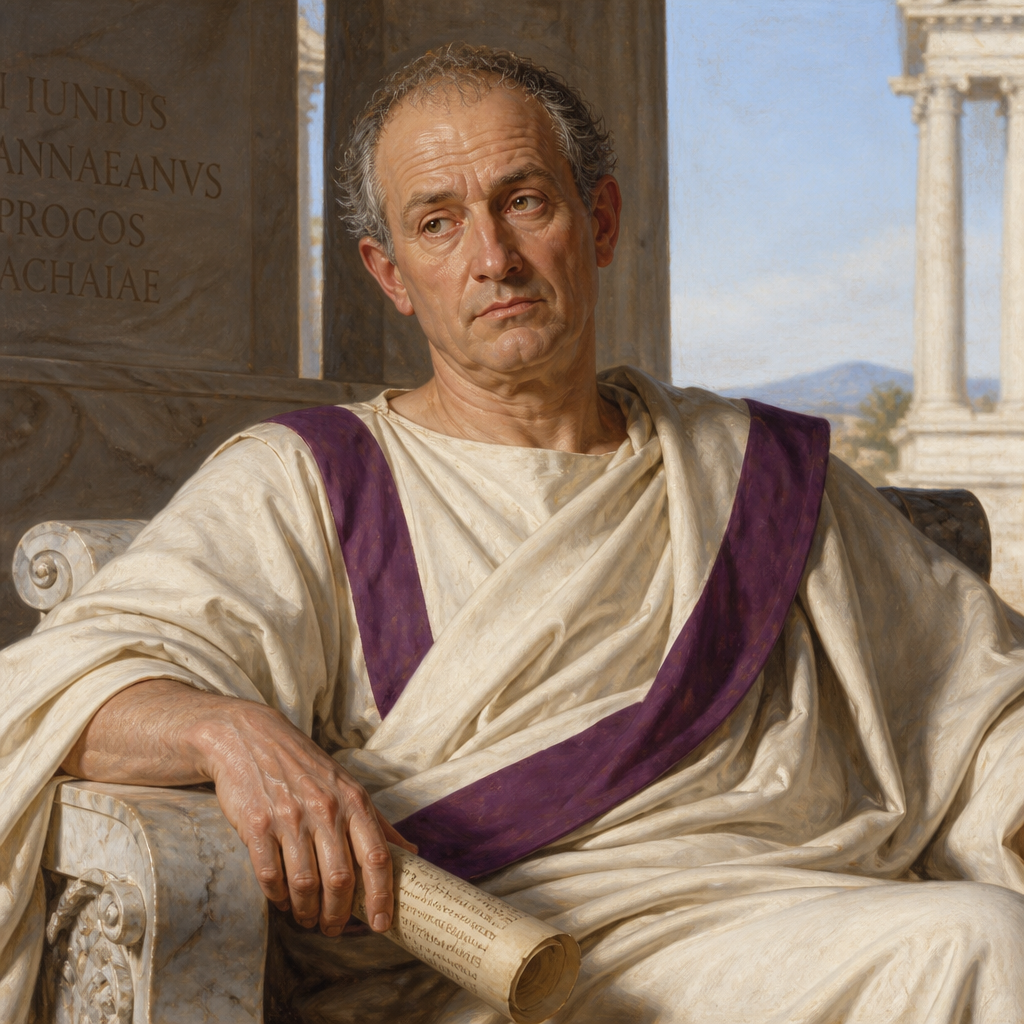
Gallio
Roman Proconsul who dismissed the case involving Sosthenes

Crispus
Predecessor as ruler of the Corinthian synagogue