Gallio
A Roman proconsul of Achaia who dismissed the legal charges brought against the Apostle Paul in Corinth, establishing a significant precedent for the early Christian church.
Gallio was a prominent Roman statesman during the middle of the first century AD, serving as the proconsul of the province of Achaia. In the biblical narrative, he is recorded in the Book of Acts as the magistrate who presided over a legal hearing involving the Apostle Paul. His refusal to adjudicate a religious dispute between Paul and the Jewish leaders of Corinth provided a crucial degree of legal breathing room for the nascent Christian movement within the Roman Empire.
Historically, Gallio is one of the most significant figures in the New Testament for secular historians. His presence in the biblical text allows for a precise dating of Paul's ministry. Known in secular history as the brother of the famous philosopher Seneca the Younger, Gallio was celebrated for his affability and wit, characteristics that contrast sharply with the brief but decisive legal persona seen in the biblical account.
Background and Family
Lucius Junius Gallio Annaeanus was born into a distinguished Spanish-Roman family in Corduba (modern-day Spain) around the beginning of the 1st century AD. He was the son of Marcus Annaeus Seneca (Seneca the Elder) and the brother of Lucius Annaeus Seneca (Seneca the Younger), the famed Stoic philosopher and tutor to Emperor Nero. Originally named Lucius Annaeus Novatus, he was later adopted by the rhetorician Lucius Junius Gallio, whose name he assumed.
Gallio's family was deeply embedded in the intellectual and political life of the Roman Empire. His brother Seneca described him as a man of exceptional charm, noting that "no man is so pleasant to any one person as Gallio is to everybody." This reputation for 'dulcedo' (sweetness or pleasantness) suggests a man who was well-liked in the Roman court. He rose through the cursus honorum, the sequential order of public offices, eventually attaining the proconsulship of Achaia, a senatorial province comprising southern Greece with its capital at Corinth.
Major Life Events
Gallio’s primary appearance in the biblical record occurs in Acts 18:12–17. During his tenure as proconsul in Corinth (c. 51–52 AD), a group of Jewish leaders brought the Apostle Paul before his judgment seat (bema). They accused Paul of "persuading people to worship God in ways contrary to the law." This was a strategic legal move; they were likely attempting to have Paul’s teachings declared religio illicita (an illegal religion) rather than a sect of the protected Jewish faith.
Gallio’s response was swift and dismissive. Before Paul could even begin a defense, Gallio addressed the accusers:
"If you Jews were complaining about some misdemeanor or serious crime, it would be reasonable for me to listen to you. But since it involves questions about words and names and your own law—settle the matter yourselves. I will not be a judge of such things."
He then ordered them from the court. When the crowd subsequently turned on Sosthenes, the synagogue leader, and beat him in front of the tribunal, the text notes that "Gallio showed no concern about any of these things." While sometimes interpreted as apathy, historians often view this as a calculated political refusal to involve the Roman state in internal sectarian theological disputes.
Relationship to Other Biblical Figures
Gallio’s interactions were primarily with three groups: the Apostle Paul, the Jewish leadership of Corinth (specifically Sosthenes and Crispus), and the Corinthian mob. Though his interaction with Paul was brief, it was arguably one of the most protective moments in Paul’s missionary journeys. By refusing to condemn Paul, Gallio implicitly signaled that the Roman state did not view Christianity as a criminal enterprise or a threat to public order at that time.
His relationship with Sosthenes is also notable. Sosthenes, having failed to secure a conviction against Paul, became a victim of the very violence the trial had stirred up. Gallio’s refusal to intervene in the beating of Sosthenes likely stemmed from a desire to remain strictly neutral regarding the local community's inner turmoil, so long as it did not escalate into a full-scale riot against Roman authority.
Spiritual Significance
From a theological and historical perspective, Gallio represents the 'neutrality' of the world toward the Gospel. Unlike the active persecution seen under later emperors, Gallio's administration exemplifies a period where Roman law acted as a temporary shield for the church. This window allowed the Gospel to spread through the Mediterranean world under the guise of being a Jewish sect, which enjoyed certain legal protections under Roman law.
Furthermore, Gallio serves as a vital chronological anchor. In 1905, an inscription was discovered at Delphi containing a letter from Emperor Claudius that mentions Gallio as proconsul. Because the dates of Gallio’s term are known (early summer 51 AD to early summer 52 AD), scholars can date Paul’s eighteen-month stay in Corinth with remarkable accuracy. This makes Gallio one of the few figures who bridges the gap between the internal narrative of the New Testament and the external, verifiable timeline of the Roman Empire.
Spiritual Significance
Gallio is significant because his refusal to try Paul's case established a legal precedent that protected the early church from being characterized as a criminal organization. By classifying the dispute as an internal Jewish matter rather than a Roman criminal offense, he inadvertently provided the early Christians with a 'shield of legality' that lasted for several crucial years of expansion. Additionally, the 'Gallio Inscription' found at Delphi remains the gold standard for establishing the chronology of the life of Paul.
Frequently Asked Questions
Was Gallio a Christian?
No, there is no evidence that Gallio converted to Christianity. He viewed the dispute between Paul and the Jewish leaders as a trivial matter regarding 'words and names' rather than a spiritual truth.
What is the Gallio Inscription?
It is a set of stone fragments found at Delphi, Greece, containing a letter from Emperor Claudius that mentions Gallio as the proconsul of Achaia, allowing historians to date his time in office to roughly 51–52 AD.
Why didn't Gallio stop the beating of Sosthenes?
Historically, he likely wanted to maintain a stance of total non-interference in local religious squabbles. His lack of concern indicated that the matter was beneath the dignity of Roman law.
How did Gallio die?
According to secular history, Gallio was caught up in the paranoia of Emperor Nero's later reign. Following the failed Pisonian conspiracy, he was forced to commit suicide around 65 AD, shortly after his brother Seneca.
Connected Figures
Paul the Apostle
Defendant in Gallio's court
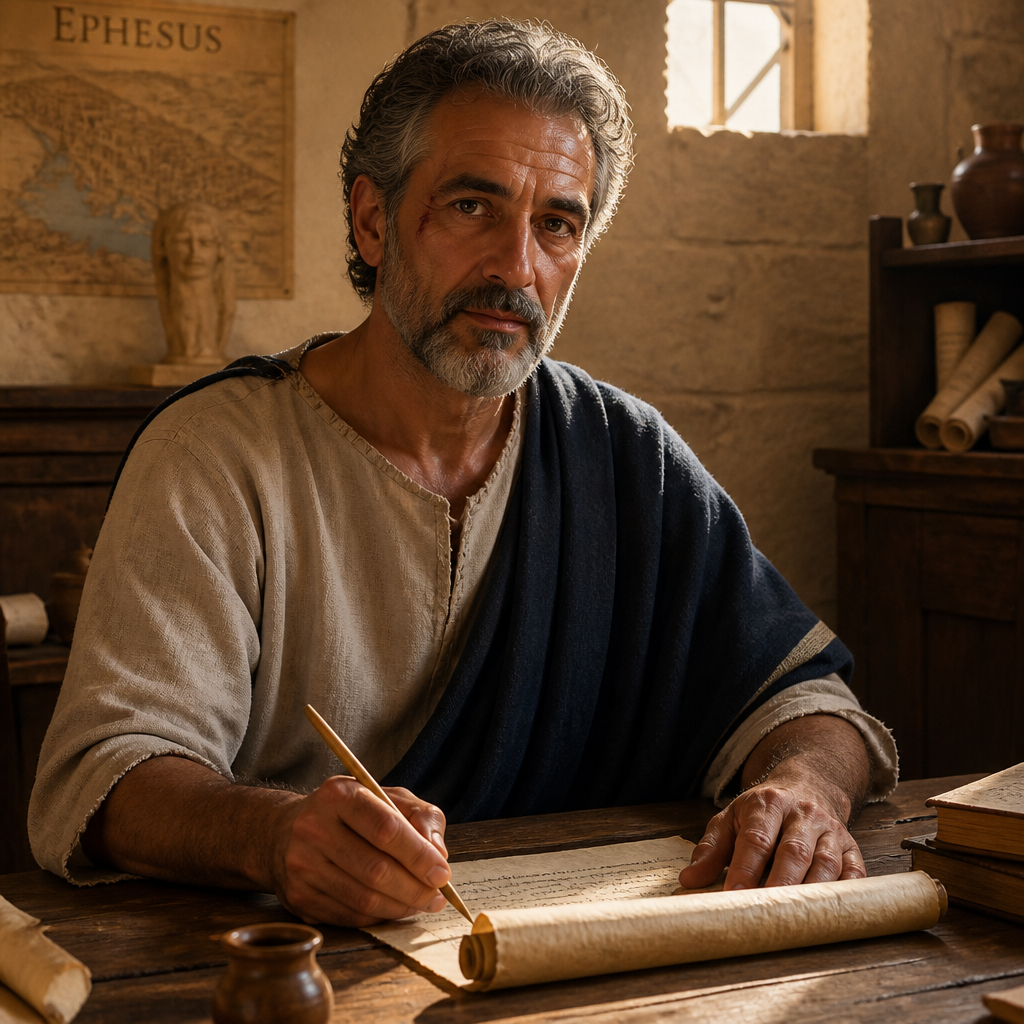
Sosthenes
Accuser beaten in his presence
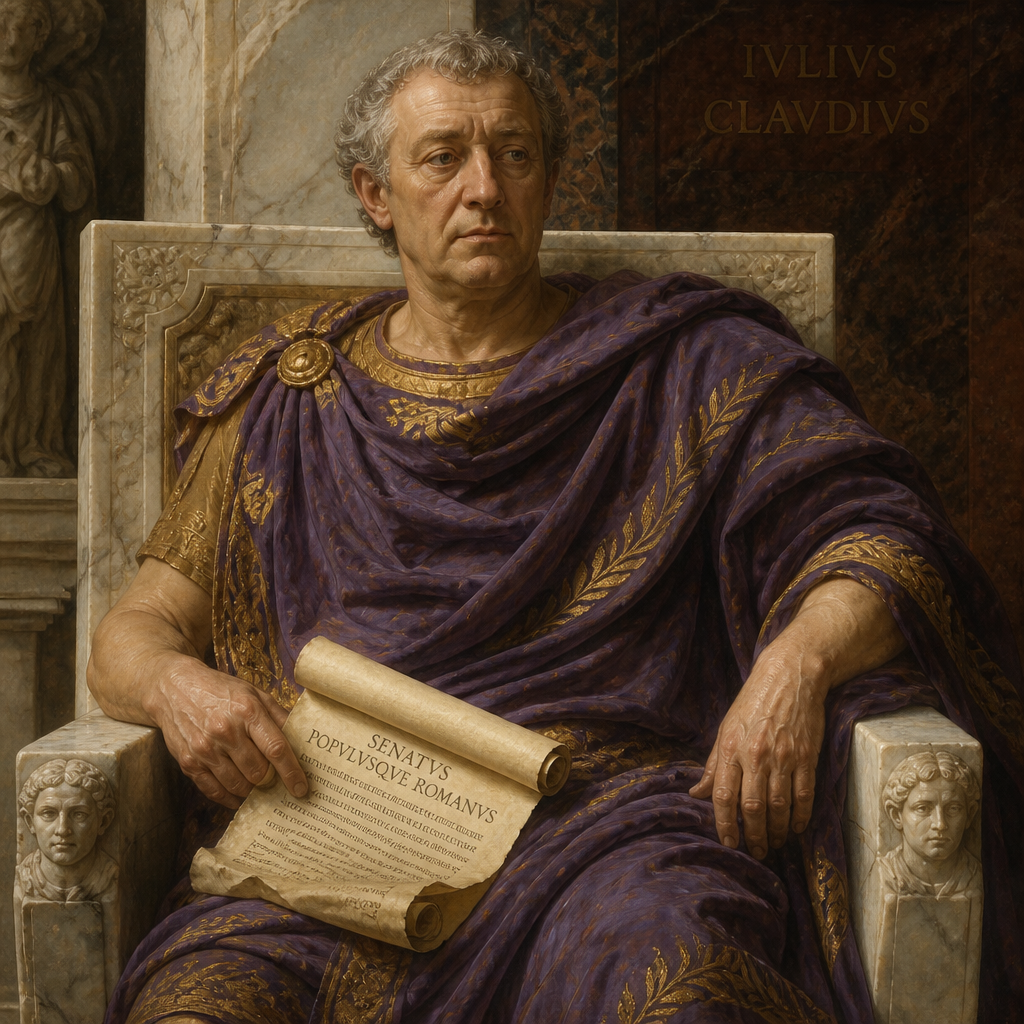
Claudius
Emperor who appointed him