Claudius
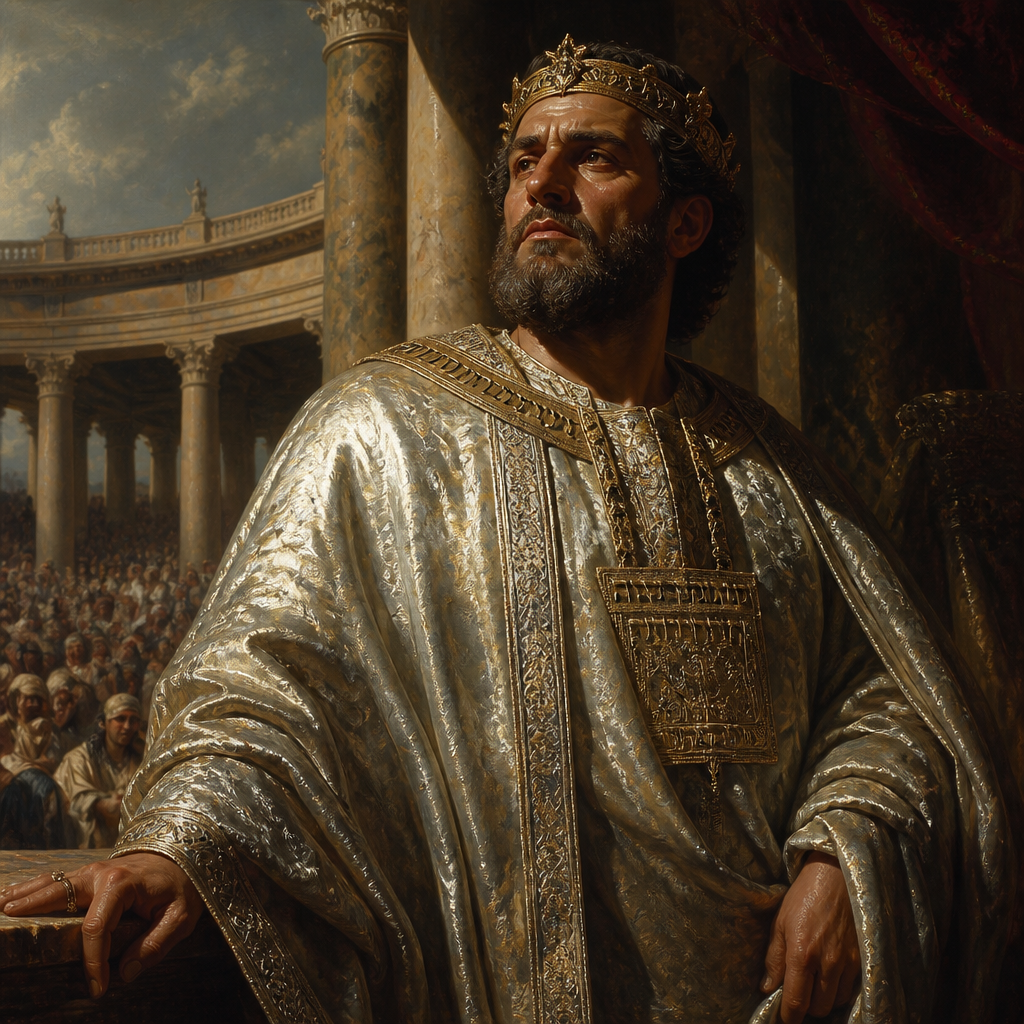
Claudius was the fourth Roman Emperor, reigning from 41 to 54 AD, whose administrative decrees significantly impacted the early Christian missions and the Jewish diaspora.
Claudius, born Tiberius Claudius Caesar Augustus Germanicus, served as the Roman Emperor during a critical period of expansion for the early Christian church. Unlike his predecessor Caligula, who sought to destabilize Jewish-Roman relations by demanding divine worship, Claudius is generally characterized by a pragmatic, albeit firm, approach to the various religious groups within the empire. His reign provides a chronological anchor for the New Testament, particularly regarding the missionary journeys of the Apostle Paul.
In the biblical narrative, Claudius is referenced primarily in the Book of Acts. His administrative decisions, specifically his expulsion of Jews from Rome, served as a catalyst for the meeting of key New Testament figures, including Paul, Aquila, and Priscilla. His inclusion in the biblical text situates the Gospel within the broader context of Roman imperial history, highlighting the intersection of secular political power and the providential spread of the early church.
Background and Family
Claudius was born in 10 BC in Lugdunum (modern-day Lyon, France), the son of Nero Claudius Drusus and Antonia Minor. He was the nephew of Tiberius and the uncle of Caligula. For much of his early life, Claudius was largely marginalized from public affairs due to physical infirmities, including a limp and slight deafness, which led his family to believe he was intellectually deficient. However, this exclusion allowed him to become a distinguished scholar and historian, studying under Livy.
Following the assassination of Caligula in 41 AD, the Praetorian Guard discovered Claudius hiding behind a curtain and proclaimed him Emperor. Despite his lack of military experience and the initial skepticism of the Roman Senate, Claudius proved to be an efficient administrator. He expanded the Roman Empire, most notably beginning the conquest of Britain in 43 AD, and undertook massive public works, including the construction of new aqueducts and the harbor at Ostia.
Major Life Events
One of the most significant events of Claudius's reign recorded in the Bible is the famine that occurred across the Roman world. According to Acts 11:28, a prophet named Agabus predicted a great famine, which the text notes "took place in the days of Claudius." Secular history corroborates that his reign was plagued by a series of crop failures and subsequent food shortages, which forced the Emperor to implement strict grain distribution policies.
Perhaps the most impactful event for the early church was the Edict of Claudius in approximately 49 AD. The Roman historian Suetonius records that Claudius expelled the Jews from Rome because they were "constantly making disturbances at the instigation of Chrestus." Most biblical scholars and historians believe "Chrestus" is a misspelling of "Christus" (Christ), suggesting that the expulsion was triggered by riots within the Jewish community over the preaching of the Gospel. This decree is directly cited in Acts 18:2, explaining why Aquila and Priscilla had recently arrived in Corinth when Paul met them.
Relationship to Other Biblical Figures
While the Bible does not record a direct face-to-face meeting between Claudius and any of the apostles, his political decisions profoundly influenced their lives. The expulsion of Aquila and Priscilla from Rome is the most prominent example. This forced migration led to their providential partnership with the Apostle Paul in Corinth, which became a foundational element of the Corinthian church's development. Through Aquila and Priscilla, the impact of Claudius's policy facilitated the cross-pollination of Christian leadership across the Mediterranean.
Furthermore, Claudius maintained a complex relationship with Herod Agrippa I. Having been friends in their youth, Claudius confirmed Agrippa’s appointment as King of the Jews and expanded his territory. This political alignment provided Agrippa with the authority he used to persecute the church in Jerusalem, leading to the martyrdom of James the son of Zebedee and the imprisonment of Peter (Acts 12).
Spiritual Significance
The presence of Claudius in the New Testament serves several theological and historical purposes. First, it affirms the historicity of the Christian faith. By linking the famine and the Jewish expulsion to the specific reign of a Roman Emperor, the biblical authors ground the spiritual narrative in verifiable historical time. This underscores that the Gospel is not a mythic tale occurring in a vacuum but an event unfolding within the "fullness of time."
Second, the reign of Claudius demonstrates the concept of divine providence. The Edict of Claudius, intended to quell unrest or perhaps suppress a religious minority, actually served to spread the message of Christ. When Aquila and Priscilla were forced to leave Rome, they carried their faith to Corinth and later to Ephesus. This illustrates a recurring biblical theme: that God often uses the decrees of secular rulers—even those indifferent or hostile to His message—to accomplish His redemptive purposes in the world. Claudius, though arguably seeking only the stability of the Pax Romana, became an unwitting instrument in the geographic expansion of the Great Commission.
Spiritual Significance
Claudius is significant in biblical studies as a chronological marker that validates the historical reliability of the New Testament. His reign is explicitly mentioned to date the famine predicted by Agabus and the arrival of Aquila and Priscilla in Corinth. This external validation links the growth of the early church to the specific political climate of the 1st-century Roman Empire.
Theologically, the interactions between the church and Claudius's administration illustrate the sovereignty of God over secular authorities. The Edict of Claudius demonstrates how seemingly negative political circumstances can be used by God to facilitate the meeting of his servants (Paul, Aquila, and Priscilla) and the spread of the Gospel to new regions. Claudius represents the 'higher powers' of Romans 13, whose actions, though politically motivated, were integrated into the divine plan for the church's expansion.
Frequently Asked Questions
Why did Claudius expel the Jews from Rome?
According to the historian Suetonius, Claudius expelled the Jews because of frequent riots 'at the instigation of Chrestus.' This is widely interpreted by scholars as unrest within the Jewish community caused by the arrival and preaching of Christianity.
What famine occurred during the reign of Claudius?
Acts 11:28 mentions a severe famine that occurred during Claudius's reign, which was prophesied by Agabus. Historical records confirm that multiple grain shortages and famines occurred in various parts of the Empire during the 40s and early 50s AD.
How did Claudius's decree affect the Apostle Paul?
The decree forced Aquila and Priscilla to leave Rome and move to Corinth. When Paul arrived in Corinth, he met them, lived with them, and worked with them as tentmakers, creating one of the most important partnerships in the New Testament.
Is Claudius mentioned in the Gospels?
No, Claudius is mentioned only in the Book of Acts. The Emperors during the Gospels were Augustus (at Jesus' birth) and Tiberius (during Jesus' ministry).
How did Claudius die?
Claudius died in 54 AD. It was widely believed in antiquity that he was poisoned by his wife, Agrippina the Younger, to ensure the succession of her son, Nero.
Connected Figures
Aquila
Subject expelled from Rome by the Emperor's edict
Priscilla
Subject expelled from Rome by the Emperor's edict
Herod Agrippa I
Political ally and client king under Claudius
Paul the Apostle
Missionary whose travels were influenced by Claudius's policies