Nero
Nero was the fifth Roman Emperor, whose reign is marked by the first state-sponsored persecution of Christians and the backdrop for the final ministries of Paul and Peter.
Nero Claudius Caesar Augustus Germanicus, who reigned from 54 to 68 AD, stands as one of the most infamous figures in Roman history and a pivotally dark shadow over the New Testament era. While the Bible does not explicitly use the name 'Nero,' he is the specific 'Caesar' to whom the Apostle Paul appealed during his legal trials, and he is the sovereign reigning during the composition of much of the later New Testament epistles. As the last emperor of the Julio-Claudian dynasty, his governance transitioned from a period of relative stability into one of erratic tyranny and systemic violence.
In the context of biblical history, Nero is primarily recognized as the architect of the first Roman imperial persecution of the church. Following the Great Fire of Rome in 64 AD, Nero scapegoated the fledgling Christian community, leading to horrific executions. Tradition holds that both the Apostles Peter and Paul were martyred in Rome under his direct or indirect authority, an event that fundamentally shaped the trajectory and internal fortitude of the early Christian movement.
Background and Family
Nero was born Lucius Domitius Ahenobarbus in 37 AD in Antium. He was the son of Gnaeus Domitius Ahenobarbus and Agrippina the Younger, a great-granddaughter of Emperor Augustus. His path to the throne was paved by the political machinations of his mother, who married her uncle, Emperor Claudius, and persuaded him to adopt Nero as his heir, displacing Claudius's own son, Britannicus. Nero ascended to the throne in 54 AD at the tender age of sixteen.
His early reign was guided by the philosopher Seneca and the Praetorian prefect Burrus, a period often described as the 'quinquennium Neronis,' characterized by moderate and effective administration. However, as Nero matured, he grew increasingly resentful of his mother’s control. This tension culminated in his order for Agrippina's assassination in 59 AD, an act that signaled the beginning of his descent into perceived megalomania and paranoia. His familial life was marred by scandals, including the suspicious death of his wife Claudia Octavia and his subsequent marriage to Poppaea Sabina.
Major Life Events
The defining event of Nero’s reign regarding the biblical world was the Great Fire of Rome in July 64 AD. The fire ravaged the city for six days, destroying ten of Rome's fourteen districts. Rumors circulated that Nero himself had ordered the city burned to clear land for his lavish 'Golden House' (Domus Aurea). To deflect blame, Nero targeted a small, misunderstood sect known as Christians.
According to the Roman historian Tacitus, Nero inflicted 'exquisite tortures' upon them. Christians were covered with the skins of wild beasts and torn to pieces by dogs, or fastened to crosses and set on fire to serve as lamps by night. This localized but intense persecution was the first time the Roman state distinguished Christians from Jews and treated the former as a criminal entity. Beyond Rome, Nero's reign also saw the beginning of the First Jewish-Roman War in 66 AD, a conflict he tasked Vespasian with suppressing. This war would eventually lead to the destruction of the Jerusalem Temple in 70 AD under Titus, shortly after Nero's death.
Relationship to Other Biblical Figures
Nero’s intersection with the New Testament occurs primarily through the legal proceedings of the Apostle Paul. In the Book of Acts, when Paul is on trial before the governor Festus in Caesarea, he exercises his right as a Roman citizen to appeal to the emperor: 'I appeal to Caesar!' (Acts 25:11). The 'Caesar' in question was Nero. This appeal resulted in Paul’s journey to Rome, where he lived under house arrest for two years, likely awaiting an appearance before Nero’s court.
While the Book of Acts ends before Paul’s trial, early church tradition and internal evidence from the Pastoral Epistles suggest that Paul was initially released but later rearrested during the Neronian persecutions. Similarly, the Apostle Peter is traditionally believed to have been crucified upside down in Rome during this same period. Philippians 4:22 mentions 'those who belong to Caesar’s household,' indicating that despite Nero’s hostility, the Christian message had penetrated even the emperor's own staff and palace.
Spiritual Significance
In Christian eschatology and biblical interpretation, Nero occupies a unique place. Many scholars and historians identify Nero as the most likely historical figure represented by the 'Number of the Beast' (666) in the Book of Revelation. When the name 'Nero Caesar' is transliterated into Hebrew (Nron Qsr) and the numerical values of the letters are summed according to gematria, they total 666. The apocalyptic imagery of a 'beast' rising from the sea to wage war against the saints (Revelation 13) mirrors the contemporary experience of the church under Nero's reign.
Furthermore, the 'Nero Redivivus' legend—a popular belief after his suicide that he would return from the dead or was secretly alive in the East—is thought by some theologians to inform the descriptions of the beast that 'was, and is not, and is about to rise' (Revelation 17:8). Whether or not Nero is the final Antichrist, he remains the prototypical biblical archetype of the godless state using its power to crush the people of God, illustrating the themes of suffering and endurance found throughout New Testament literature.
Spiritual Significance
Theological reflection on Nero focuses on the relationship between the Church and the State. Nero represents the shifting status of Christianity from a protected Jewish sect to an illegal and persecuted 'superstition.' His reign forced the early Christians to grapple with the command to 'honor the king' (1 Peter 2:17) even when that king was a tyrant, and to find hope in Christ's ultimate victory over earthly powers.
Nero's role as a catalyst for the Diaspora of the Jerusalem church and the eventual destruction of the Temple also underscores the transition from a localized, Temple-centered faith to a global movement. His presence in the New Testament background serves as the ultimate test of faith, confirming that the Kingdom of God exists independently of, and often in opposition to, the Roman Empire.
Frequently Asked Questions
Is Nero's name mentioned in the Bible?
No, the name 'Nero' never appears in the text of the Bible. He is referred to by his title 'Caesar' or alluded to through contemporary political context, particularly in the Book of Acts and the Book of Revelation.
Did Paul actually meet Nero?
While the Bible records Paul's appeal to Caesar and his arrival in Rome, it does not explicitly describe a face-to-face meeting. However, as an appellant, Paul would have likely appeared before Nero or his designated imperial representatives.
Why did Nero persecute Christians?
Following the Great Fire of Rome in 64 AD, Nero needed a scapegoat to dispel rumors that he had started the fire. Christians were an easy target because they were a secretive minority group that refused to participate in Roman pagan rituals.
Is Nero considered the 'Beast' in the Book of Revelation?
Many biblical scholars (Preterists) believe Nero was the primary historical referent for the Beast, as the numerical value of his name in Hebrew equals 666 and his character aligns with the description of a persecutor of the saints.
Which apostles died under Nero?
Consistent church tradition from the first and second centuries states that both the Apostle Peter and the Apostle Paul were martyred in Rome during Nero's reign, around 64–67 AD.
Connected Figures
Paul the Apostle
Appealed to Nero's court for trial
Peter the Apostle
Martyred during Nero's persecution
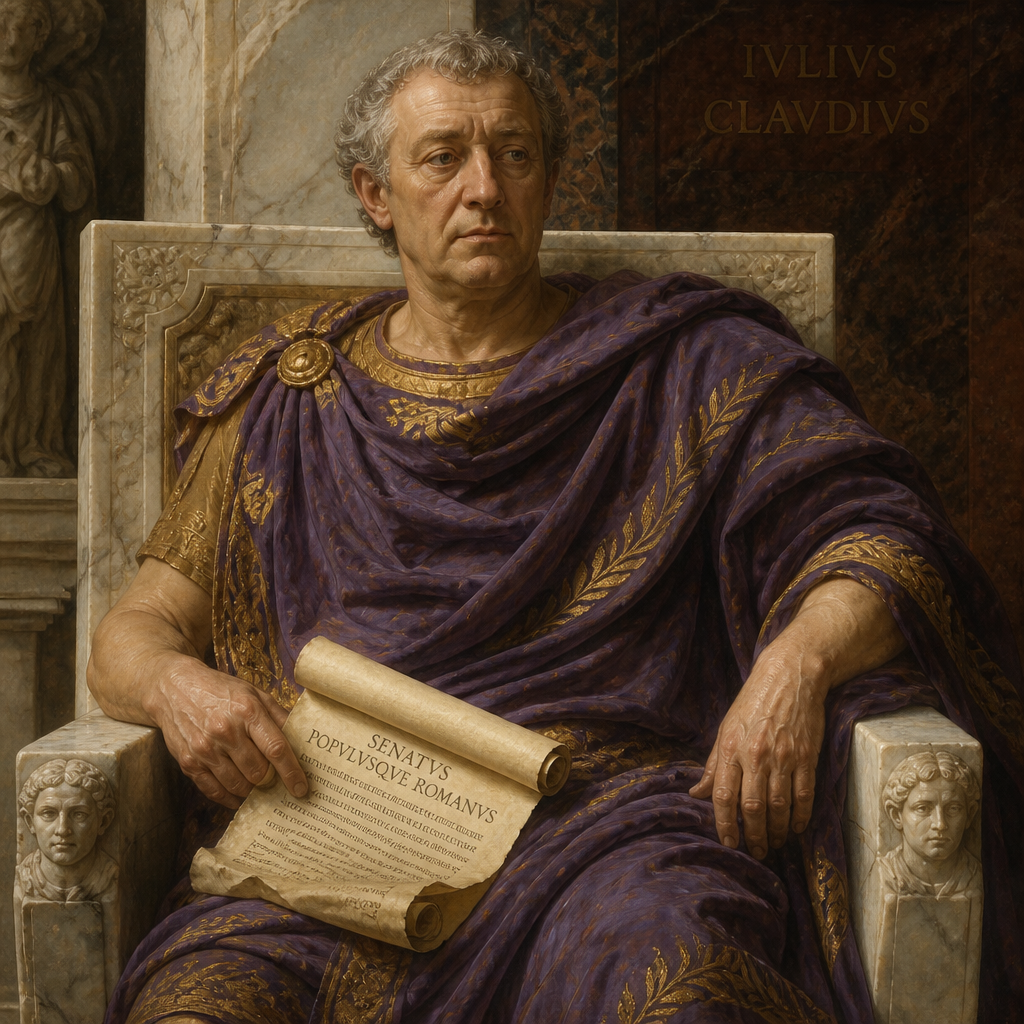
Claudius
Adoptive father and predecessor
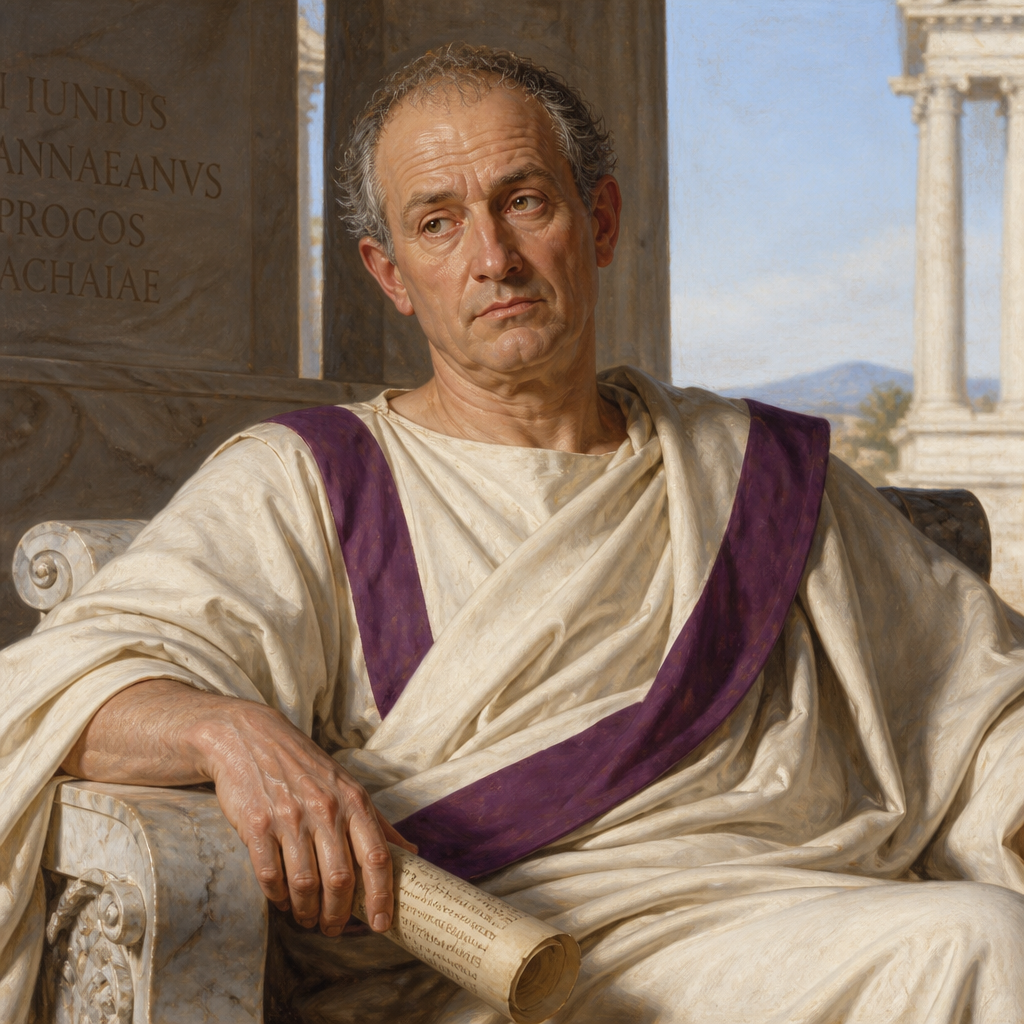
Gallio
Proconsul of Achaia during Nero's reign
Festus
Governor who sent Paul to Nero