Erastus
High-ranking civic official in Corinth and a Christian convert who served as a prominent supporter of the Apostle Paul's ministry.
Erastus was a significant figure in the early Christian church at Corinth and an associate of the Apostle Paul. He is uniquely identified in the New Testament by his prominent civic status as the 'director of public works' or 'treasurer' (oikonomos) of the city of Corinth. This social standing makes him one of the few high-status individuals explicitly named as a member of the early Christian community, providing a rare glimpse into the social diversity of the first-century church.
His presence in the biblical narrative serves as a bridge between the burgeoning Christian movement and the Roman administrative hierarchy. As a believer who maintained his secular responsibilities while supporting the apostolic mission, Erastus represents the integration of faith and public service during the mid-1st century AD. His loyalty to Paul is evidenced by his inclusion in the greetings sent to the Roman church and his active role in the burgeoning missionary network.
Background and Family
Erastus was a resident of Corinth, a major commercial and political hub of the Roman Empire. While his family lineage is not recorded in the New Testament, his Greek name, which means 'beloved' or 'lovely,' suggests a Hellenistic background. Most critically, his social standing was exceptional among early converts. In Romans 16:23, Paul refers to him as the oikonomos of the city. Depending on the translation, this title is rendered as 'city treasurer,' 'director of public works,' or 'steward.'
In the Roman world, such a position was one of significant responsibility and influence. If, as many scholars believe, this biblical Erastus is the same man mentioned in the archeological 'Erastus Inscription' found near the theater in Corinth, he held the office of aedile. This was an elected position responsible for the management of public buildings, markets, and the regulation of festivals. Such a role required considerable personal wealth, as holders of the office were expected to fund public improvements out of their own pockets.
Major Life Events
Erastus's involvement with the Christian faith likely began during Paul’s extended eighteen-month stay in Corinth during his second missionary journey (c. 50–52 AD). As a man of means and influence, his conversion would have provided the fledgling Corinthian church with a degree of social protection and perhaps a meeting place, as it was common for wealthy patrons to host congregations.
His primary contribution to the documented biblical narrative involves his service to Paul during the third missionary journey. While Paul was stationed in Ephesus, he sent a mission into Macedonia. Erastus is mentioned in Acts 19:22 as one of Paul's 'helpers' who was dispatched along with Timothy to prepare the way for Paul's future arrival. This indicates that Erastus was not merely a financial supporter or a distant dignitary, but an active participant in the arduous work of itinerant ministry.
By the time Paul wrote his Epistle to the Romans (c. 57 AD), Erastus was back in Corinth. Paul concludes the letter by relaying greetings from his companions in Corinth to the believers in Rome. In Romans 16:23, he writes:
"Gaius, whose hospitality I and the whole church here enjoy, sends you his greetings. Erastus, who is the city’s director of public works, and our brother Quartus send you their greetings."
Relationship to Other Biblical Figures
Erastus is closely linked with the inner circle of the Apostle Paul. His partnership with Timothy suggests a relationship of mutual trust and shared responsibility. Since Timothy was Paul's protege and frequent representative, Erastus's pairing with him underscores his reliability and spiritual maturity.
He is also associated with Gaius of Corinth and Quartus, moving within a circle of influential believers who supported the growth of the Gentile mission. His interaction with Paul appears to be one of both friendship and functional service; Paul relied on Erastus’s logistical skills and administrative acumen to further the gospel in the Roman provinces.
Spiritual Significance
To early Christians and modern scholars alike, Erastus represents the 'upward reach' of the gospel. While the majority of the early church consisted of the poor, the enslaved, or those of modest means (as Paul himself notes in 1 Corinthians 1:26), Erastus proves that the message of Christ penetrated the upper echelons of Roman society.
His life demonstrates that secular professional excellence and Christian service are not mutually exclusive. He maintained a high-stakes government position—one that likely involved navigating pagan civic rituals and high-level bureaucracy—while remaining a devoted 'helper' to the apostles. Theologically, Erastus stands as a model of the 'Christian patron' who uses his earthly resources, status, and administrative talents for the advancement of the Kingdom of God. His mention in the closing of Romans highlights the importance of unity across social classes within the early church.
Spiritual Significance
Erastus is historically and theologically significant because he provides a concrete link between the New Testament text and Roman archaeology. The discovery of the 'Erastus Inscription' in Corinth—reading 'Erastus in return for his aedileship laid [this pavement] at his own expense'—leads many scholars to conclude that this high-ranking official was the same man mentioned by Paul. This offers substantial historical weight to the biblical portrayal of the socio-economic diversity within the Corinthian church.
Theologicaly, Erastus serves as an archetype for the integration of faith and public life. His ability to work as a city official in a pagan Roman colony while being a laborer for the gospel illustrates the early Christian concept of being 'in the world but not of it.' His presence in the biblical record reminds readers that the early church was a cross-section of society involving both the lowly and the influential.
Frequently Asked Questions
What was the 'Erastus Inscription'?
Discovered in 1929 near the theater in Corinth, it is a Latin inscription on a paved plaza stating that an official named Erastus paid for the paving in thanks for his election to the office of aedile.
Was Erastus a Roman citizen?
Almost certainly. Given his Greek name and his high civic office as a city treasurer or aedile, he was likely a wealthy Greek who had attained Roman citizenship, allowing him to participate in local government.
Did Erastus travel with the Apostle Paul?
Yes, Acts 19:22 records that Erastus was one of Paul's 'helpers' whom Paul sent from Ephesus into Macedonia, alongside Timothy.
What does the title 'oikonomos' mean regarding Erastus?
In Romans 16:23, it translates to 'manager,' 'steward,' or 'treasurer.' In the context of a city like Corinth, it denotes a high-level official responsible for the city’s financial and administrative affairs.
Is the Erastus in Acts the same as the one in Romans?
While the Bible does not explicitly state they are the same person, most scholars agree they are, as they both appear in Paul’s close circle and are associated with the Corinthian/Macedonian region during the same timeframe.
Connected Figures
Apostle Paul
Mentor and ministry partner
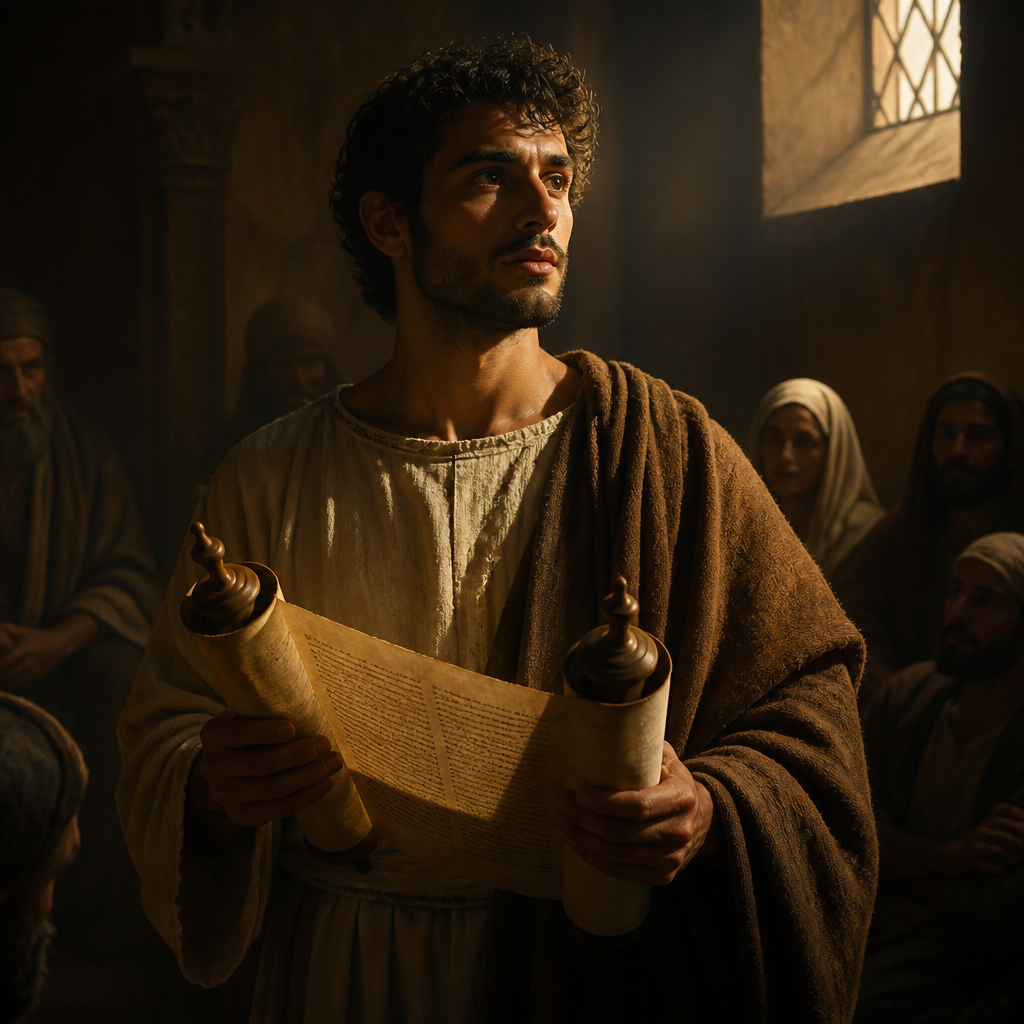
Timothy
Missionary companion
Gaius of Corinth
Fellow believer and host in Corinth
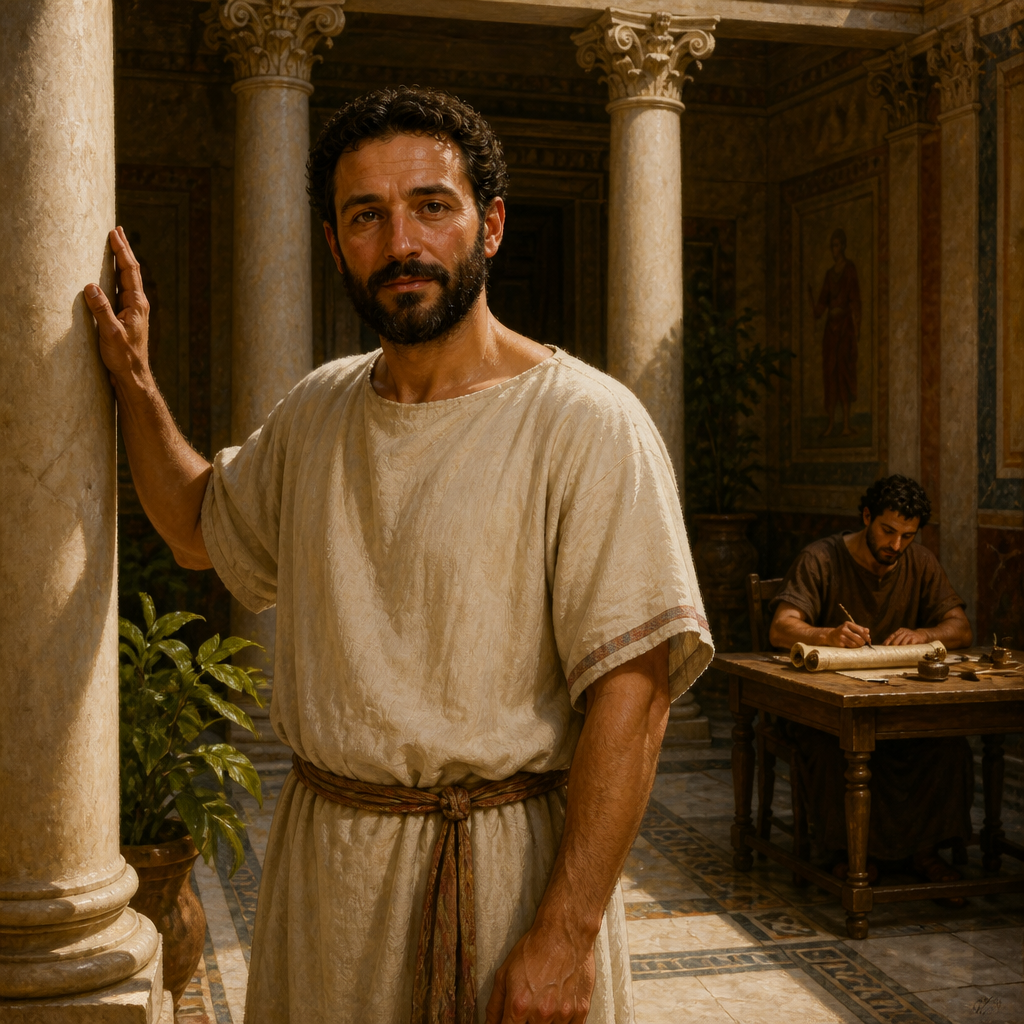
Quartus
Fellow believer and associate in Corinth