Metalworkers
Craftsmen and merchants in the biblical world whose work supported both religious life and significant economic opposition to the gospel.
“For a man named Demetrius, a silversmith, who made silver shrines of Artemis, brought no little business to the craftsmen.” — Acts 19:24
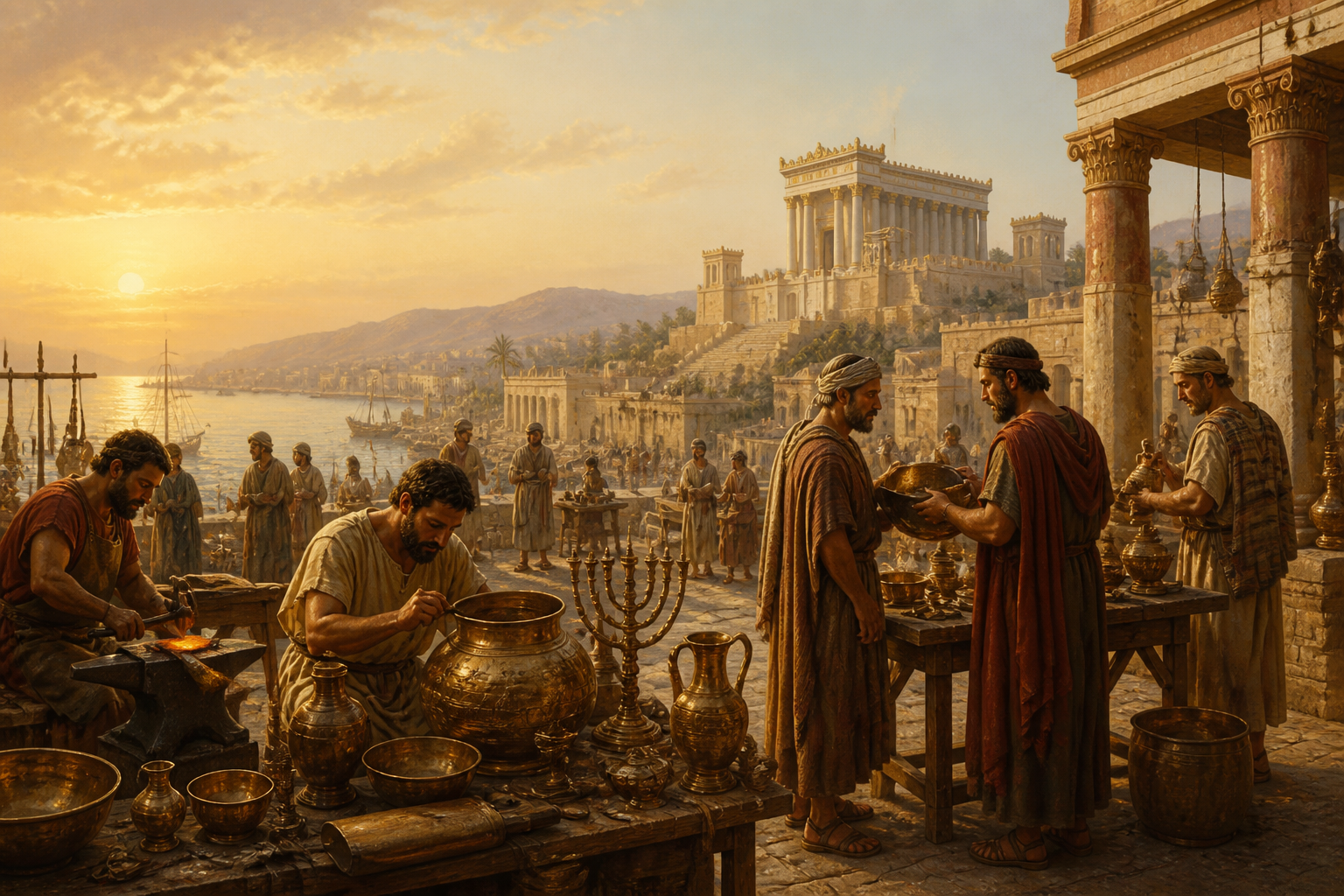
Metalworking in the biblical period was an essential industry that bridged the gap between utilitarian necessity and religious expression. In the Old Testament, skilled artisans were credited with the construction of the Tabernacle and the Temple, working with gold, silver, bronze, and iron to create sacred vessels and architectural elements. These craftsmen were often viewed through a lens of divine endowment, as seen with figures like Bezalel who were filled with the Spirit of God for such tasks. However, the trade also occupied a complex socioeconomic position, particularly as it related to the manufacture of idols and cultic items for local deities.
By the New Testament era, metalworkers were often organized into influential trade guilds within Greco-Roman cities. These guilds held significant political and economic power, as they were often the primary suppliers of votive offerings and souvenirs for pilgrims visiting pagan temples. The shift from polytheistic worship to Christianity posed a direct existential threat to their livelihood. Consequently, metalworkers frequently appear in the apostolic narrative not merely as laborers, but as organized agitators who viewed the spread of the gospel as a disruption to the established market for bronze and silver religious artifacts.
Two notable individuals, Alexander the Coppersmith and Demetrius the Silversmith, exemplify this friction. Their stories illustrate the tension between early Christian expansion and the entrenched commercial interests of the Mediterranean world. While metalworking provided the physical infrastructure for ancient society—from coinage to weaponry—the biblical record highlights their role in the intersection of faith, finance, and civil unrest. Their resistance provides historians with a window into the urban dynamics of the first century and the practical challenges faced by the early church in major trade hubs like Ephesus.
The group
Metalworkers

Alexander the Coppersmith
Antagonist of the Apostle Paul who strongly opposed the Gospel message
A metalworker in the first century AD who gained notoriety for his vigorous and harmful opposition to the Apostle Paul’s ministry.
Demetrius the Silversmith
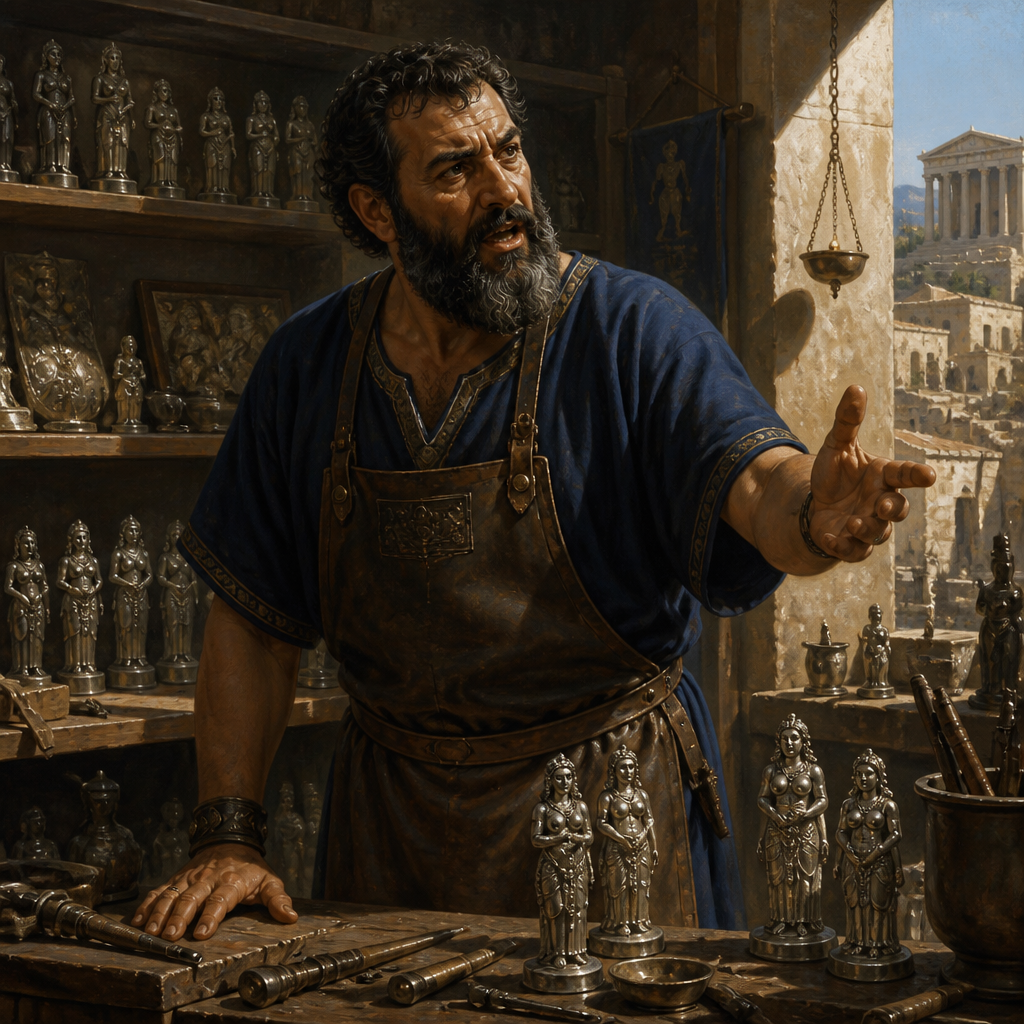
Craftsman who incited the Ephesian riot against Paul
An influential Ephesian metalworker who incited a city-wide riot against the Apostle Paul to protect the trade of Artemis shrines.