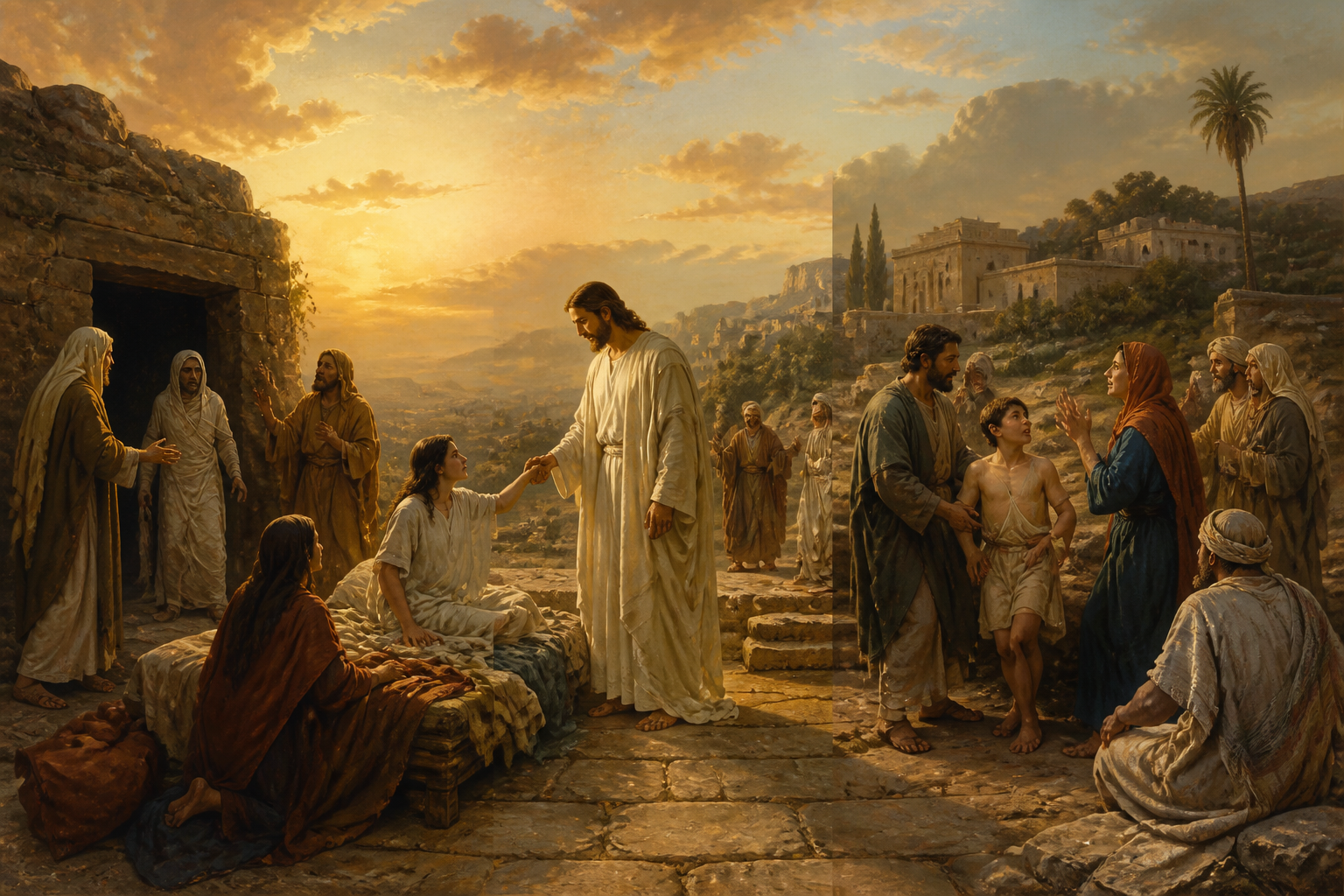
Raised by Jesus
Those Jesus called back from death to life.
“I am the resurrection and the life. Whoever believes in me, though he die, yet shall he live.” — John 11:25
The group of individuals collectively identified in biblical scholarship as those 'Raised by Jesus' refers to three specific persons documented in the Synoptic Gospels and the Gospel of John who were restored to life during Christ's public ministry. These accounts—the resurrection of the son of the widow of Nain, the daughter of Jairus, and Lazarus of Bethany—serve as pivotal narrative benchmarks in the New Testament. Beyond their immediate emotional impact, these episodes function as 'signs' (semeia) intended to validate Jesus' authority over death and to foreshadow his own resurrection, a central tenet of early Christian theology.
Contextually, these miracles occurred within the Greco-Roman and Jewish milieu of the first century, where the boundary between life and death was viewed through both apocalyptic expectation and Pharisaic belief in a future bodily resurrection. By performing these acts, Jesus did not merely provide temporary relief from bereavement but claimed a messianic prerogative associated with the 'New Age' described in prophetic literature. Scholars often distinguish these events from 'resurrection' in the strictest sense, categorizing them as 'resuscitations,' as these individuals remained mortal and eventually died a second time, unlike the glorified state attributed to Jesus after Easter.
These narratives are strategically placed within the Gospel accounts to reflect the expanding scope of Jesus' influence. They range from a small private setting (Jairus’ home) to a public funeral procession (Nain) and finally to a highly publicized event in the vicinity of Jerusalem (Bethany) that many scholars recognize as the catalyst for the Sanhedrin's decision to seek his execution. Consequently, this group represents more than isolated beneficiaries of divine power; they are structural pillars of the New Testament narrative, highlighting the escalating tension between Jesus’ life-giving claims and the religious and political authorities of his time.
The group
Raised by Jesus

Jairus' Daughter
Child raised from the dead by Jesus
An unnamed twelve-year-old girl who was dramatically restored to life by Jesus Christ after dying from a critical illness.
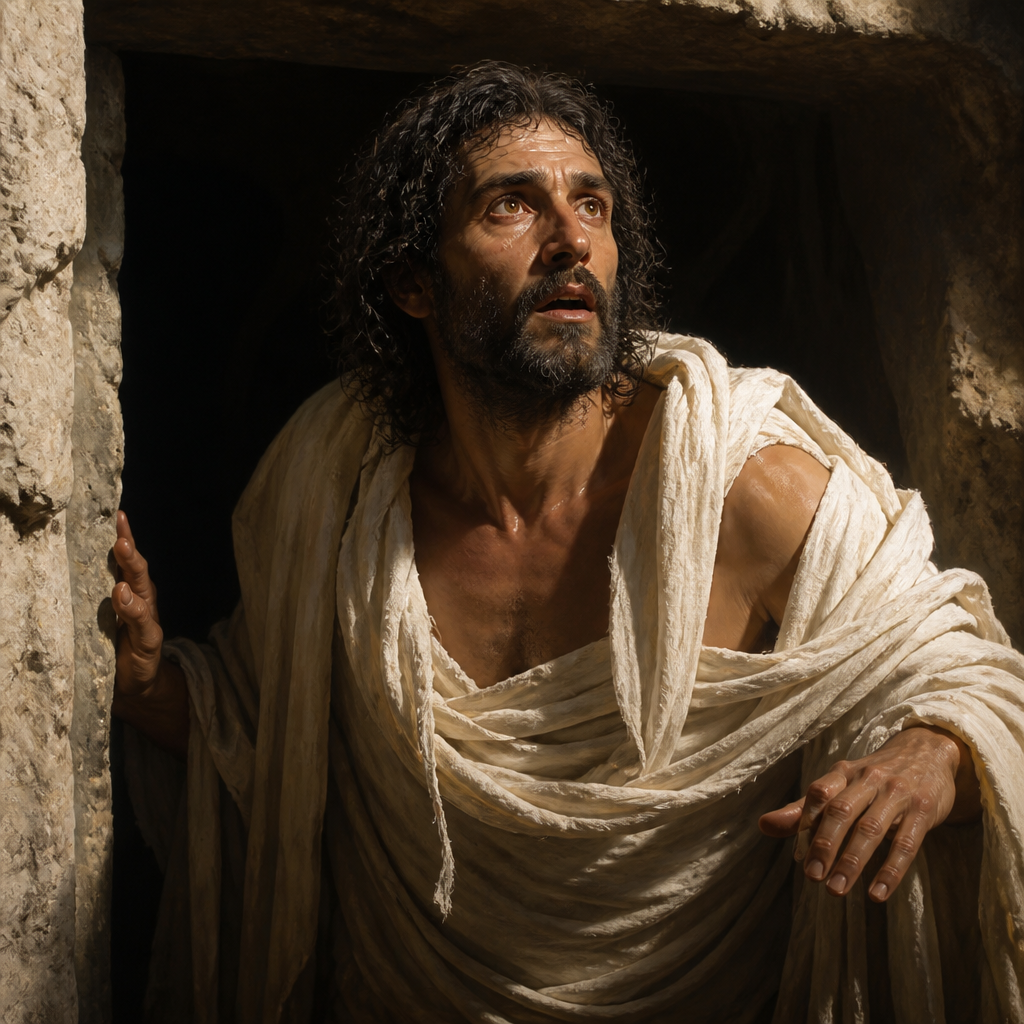
Lazarus of Bethany
The man raised from the dead by Jesus after four days
A beloved friend of Jesus Christ who was famously restored to life in Bethany four days after his death, serving as a powerful sign of Christ's divinity.
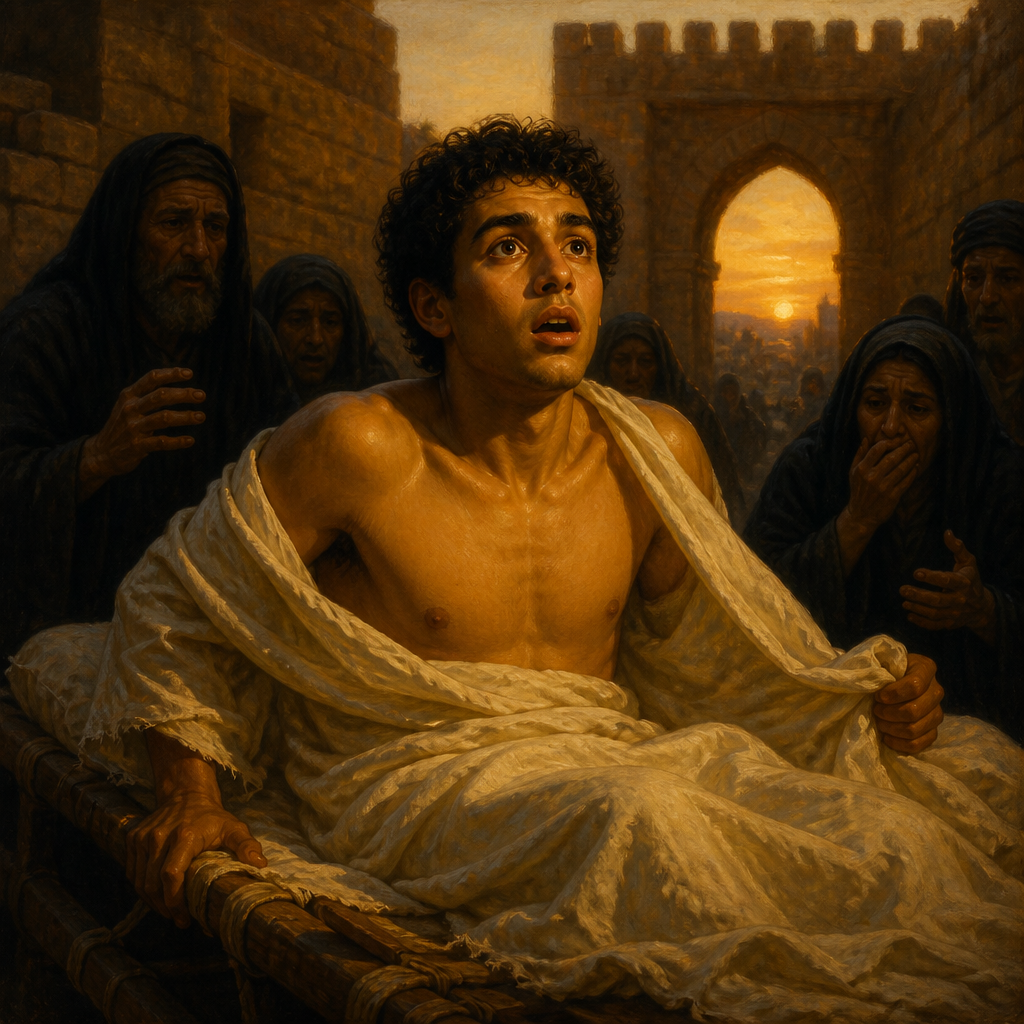
The Son of the Widow of Nain
The first person recorded in the Gospels whom Jesus raised from the dead
A young man from the village of Nain who was miraculously restored to life by Jesus Christ during a funeral procession.