The Two Thieves
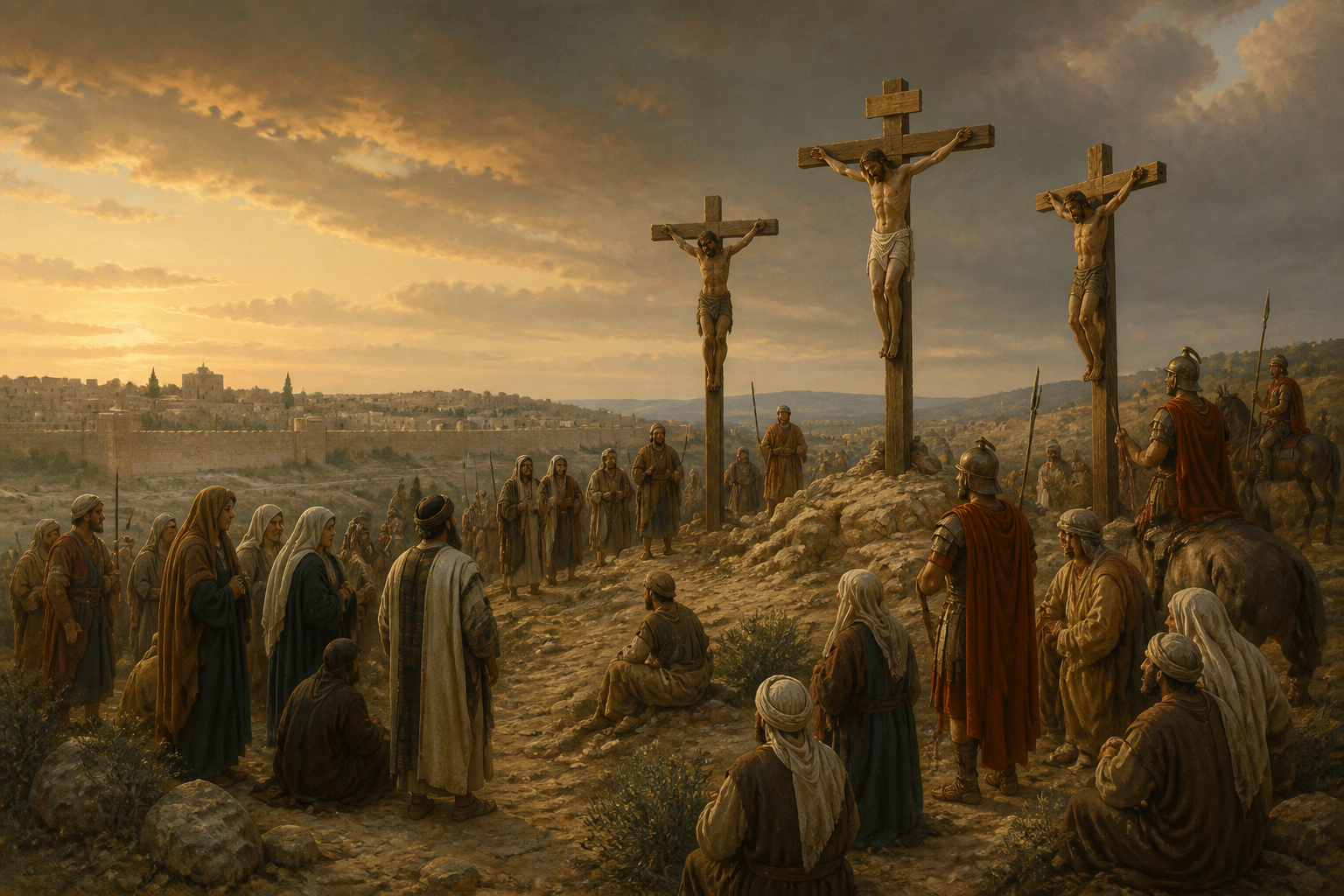
Two individuals crucified alongside Jesus of Nazareth, representing diverging responses to his messianic claims during the Passion.
“And he said to him, Truly, I say to you, today you will be with me in paradise.” — Luke 23:43
The Two Thieves, traditionally known as the Penitent Thief and the Impenitent Thief, are figures described in the New Testament accounts of the crucifixion of Jesus. While all four canonical Gospels mention that two other men were executed simultaneously with Jesus, the narrative of their interaction with him is most fully developed in the Gospel of Luke. These men are identified as 'lestai' in Greek, a term that can be translated as robbers, bandits, or even insurrectionists, suggesting they may have been involved in the violent political unrest characteristic of first-century Judea under Roman occupation.
Historical context indicates that crucifixion was a punishment reserved by the Roman Empire for the lowest classes, including slaves, pirates, and enemies of the state. The presence of these two men serves as a fulfillment of the messianic prophecy in Isaiah 53:12, which stated that the Servant would be 'numbered with the transgressors.' Within the theological framework of the Passion narrative, the thieves act as a literary and spiritual foil to one another. Their differing reactions to their own suffering and to the person of Jesus provide a microcosm of humanity’s reaction to the Christian message: one of rejection and one of acceptance.
Despite their brief appearance in the biblical text, the Two Thieves have exerted a profound influence on Christian art, liturgy, and theology. They represent the concepts of justice, mercy, and the possibility of deathbed conversion. In later Christian tradition and apocryphal literature, such as the Gospel of Nicodemus, these men were given the names Dismas and Gestas. While their historical identities remain largely unknown beyond their criminal status, their role in the crucifixion scene remains a pivotal element of the New Testament's portrayal of salvation and the inclusivity of the kingdom of God.
The group
The Two Thieves

The Impenitent Thief
Criminal who mocked Jesus during the crucifixion
One of the two criminals crucified alongside Jesus Christ who mocked him and rejected his messianic identity despite his own imminent death.

The Penitent Thief
Criminal who repented on the cross alongside Jesus
The criminal crucified alongside Jesus of Nazareth who expressed remorse, defended Christ's innocence, and received the promise of paradise.