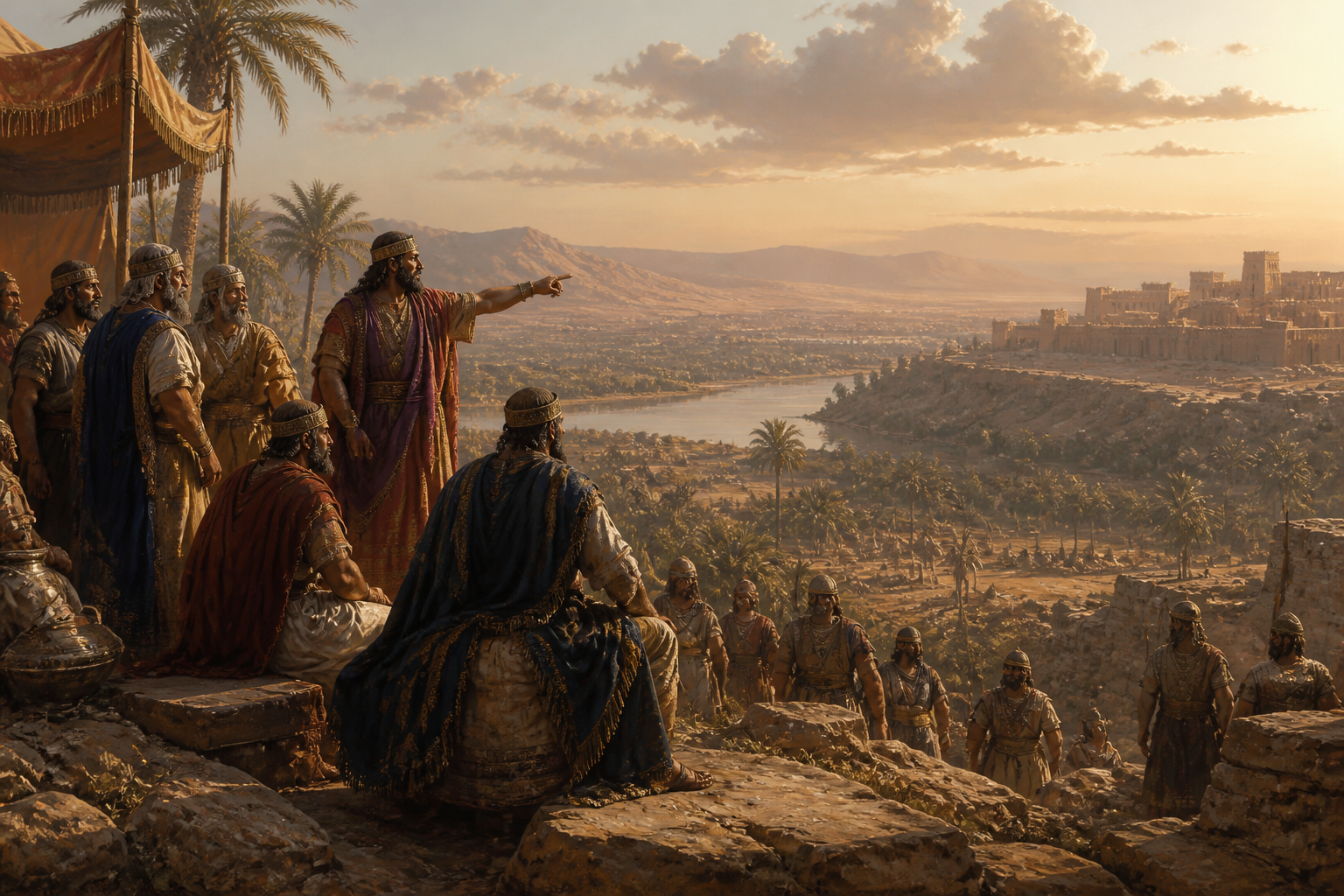
Chedorlaomer’s Rebel Vassals
Kings who joined Chedorlaomer's coalition and rebelled, sparking the war Abraham entered to rescue Lot.
“Twelve years they had served Chedorlaomer, but in the thirteenth year they rebelled.” — Genesis 14:4
The group identified as the Rebel Vassals of Chedorlaomer consisted of a confederation of five kings ruling over the city-states of the Jordan River valley, specifically in the region known as the 'cities of the plain.' This alliance was led by Bera of Sodom and Birsha of Gomorrah, and included Shinab of Admah, Shemeber of Zeboiim, and the unnamed king of Bela (later known as Zoar). Historically, these leaders represent the local Canaanite urban powers during the Middle Bronze Age, functioning as a buffer between the nomadic tribes of the Transjordan and the rising empires of the East.
According to the Genesis 14 narrative, these five kings had been under the hegemony of Chedorlaomer, the King of Elam, for twelve years. In the thirteenth year of their subjection, they chose to stop paying tribute, effectively declaring independence from the Elamite-led Mesopotamian coalition. This geopolitical defiance triggered a punitive military expedition led by Chedorlaomer and three allied monarchs—Amraphel of Shinar, Arioch of Ellasar, and Tidal, king of Goyim. The ensuing conflict, often referred to as the Battle of the Vale of Siddim, is significant in biblical studies as it provides one of the earliest accounts of regional warfare and political alliances involving Mesopotamian and Levantine powers.
The rebellion ultimately failed, leading to the sacking of Sodom and Gomorrah and the capture of Lot, the nephew of the patriarch Abraham (then Abram). This historical event serves as a pivotal bridge in the biblical narrative, moving the focus from localized tribal movements to international diplomacy and military intervention. The rebellion of these kings acts as the catalyst for Abraham’s emergence as a formidable military leader, as he pursued the Mesopotamian coalition to rescue his kinsman, thereby establishing his reputation among the local Canaanite and Amorite populations.
The group
Chedorlaomer’s Rebel Vassals

Bera
King of Sodom who led the rebellion of the five kings against Chedorlaomer
Bera was the King of Sodom during the time of Abraham, known for leading a rebellion against the Elamite King Chedorlaomer and his later interaction with the patriarch.
Birsha
A rebel king of Gomorrah who opposed Chedorlaomer
Birsha was the king of Gomorrah and one of the five Canaanite monarchs who rebelled against the eastern Mesopotamian king Chedorlaomer during the time of Abraham.
The King of Bela
A member of the five kings who rebelled against Chedorlaomer
The anonymous ruler of Bela (Zoar) who participated in a local rebellion against the Elamite empire during the time of Abraham.

Shemeber
A member of the five kings who rebelled against Chedorlaomer
Shemeber was the king of Zeboiim who participated in the rebellion of the Five Cities of the Plain against the Elamite ruler Chedorlaomer.
Shinab
A rebel against Chedorlaomer and combatant in the Battle of the Vale of Siddim
Shinab was the king of Admah and one of the five rebel kings who fought against Chedorlaomer in the Battle of the Vale of Siddim during the time of Abraham.