Birsha
Birsha was the king of Gomorrah and one of the five Canaanite monarchs who rebelled against the eastern Mesopotamian king Chedorlaomer during the time of Abraham.
Birsha was a Canaanite ruler who served as the King of Gomorrah during the patriarchal age. He is mentioned exclusively in the book of Genesis within the context of the Battle of the Vale of Siddim, an early recorded international military conflict. His name is traditionally associated with the city of Gomorrah, which, alongside Sodom, became a biblical archetype for extreme wickedness and subsequent divine judgment.
Birsha's role in the biblical narrative is primarily defined by his participation in a regional rebellion against eastern hegemony. For twelve years, Birsha and four other local kings paid tribute to Chedorlaomer, the king of Elam. In the thirteenth year, they revolted, leading to a major military confrontation that eventually entangled the patriarch Abram (Abraham) when his nephew Lot was captured during the ensuing chaos.
Background and Family
The historical background of Birsha is rooted in the early Bronze Age landscape of the Levant. As the King of Gomorrah, he ruled one of the five 'Cities of the Plain' located in the fertile Jordan Rift Valley, south of the Dead Sea. These cities—Sodom, Gomorrah, Admah, Zeboiim, and Bela (Zoar)—were strategically positioned near the Vale of Siddim, an area noted for its bitumen pits. While the biblical text does not provide a genealogy for Birsha, his position as a king indicates he was a leader of a sedentary, urbanized Canaanite population.
His name, Birsha, has been the subject of significant philological scrutiny. In Hebrew, the name is often interpreted as being derived from local roots meaning 'with wickedness' or 'son of evil.' Many scholars suggest that this may not have been his birth name but a pejorative moniker assigned by later biblical editors to reflect the moral character of the city he represented. Regardless of the name's origin, Birsha stands as a representative of the pre-Abrahamic political order in Canaan, characterized by small city-states frequently subject to the whims of larger Mesopotamian powers.
Major Life Events
The defining event of Birsha’s reign was the rebellion against the Elamite Empire. According to Genesis 14, Birsha and his allies—Bera of Sodom, Shinab of Admah, Shemeber of Zeboiim, and the king of Bela—had been vassals of Chedorlaomer for twelve years. This period of vassalage likely involved the payment of heavy taxes or commodities, potentially including the bitumen that was plentiful in their region.
In the thirteenth year of their subjection, the five kings refused to pay tribute. This act of defiance prompted a swift and brutal response. Chedorlaomer mobilized an alliance of three other eastern kings: Amraphel of Shinar, Arioch of Ellasar, and Tidal of Goiim. This coalition marched along the King's Highway, defeating various tribal groups like the Rephaim and Horites before turning toward the Vale of Siddim to face Birsha and his confederates.
In the ensuing battle, the coalition led by Birsha was decisively defeated. The terrain, filled with asphalt or bitumen pits, proved treacherous for the retreating Canaanite forces. Genesis 14:10 records that as the kings of Sodom and Gomorrah fled, some fell into these pits while the rest escaped to the mountains. While the text does not explicitly record Birsha’s death during this retreat, his city was thoroughly plundered. All the goods and food supplies of Gomorrah were seized, and the inhabitants—including Lot, the nephew of Abram—were taken as prisoners of war.
Relationship to Other Biblical Figures
Birsha’s primary relationship in the narrative is with his fellow monarchs of the Jordan Valley, specifically King Bera of Sodom. Together, they acted as a cohesive political unit. However, his most significant indirect relationship is with the patriarch Abram. Although there is no record of the two men meeting face-to-face, Birsha’s military failure served as the catalyst for Abram’s emergence as a warrior-chieftain.
After Birsha’s forces were routed and Lot was taken, a fugitive brought word to Abram. Abram subsequently mobilized 318 trained men from his household, pursued the eastern coalition, and successfully recovered the captives and the goods of Gomorrah. In the aftermath, while the King of Sodom went out to meet Abram in the Valley of Shaveh, Birsha remains notably absent from the diplomatic encounter, suggesting he either remained in hiding or had lost his political standing following the disaster.
Spiritual Significance
Theologically, Birsha serves as a symbol of the futility of human rebellion against overwhelming power when such rebellion is not sanctioned by God. Unlike Abram, who succeeded against the four kings through divine favor, Birsha and his allies relied on their own strength and the geography of their land, only to be trapped by the very pits they likely thought would protect them.
Furthermore, Birsha’s association with Gomorrah links him to the broader biblical theme of divine justice. While Genesis 14 focuses on a political and military conflict, the subsequent chapters (Genesis 18-19) detail the moral rot of the cities over which Birsha and Bera presided. The defeat of Birsha by Chedorlaomer can be seen as a 'pre-judgment'—a warning that the wealth and strategic location of the Cities of the Plain offered no security against external threats, nor against the eventual wrath of God that would consume the cities in fire and brimstone. Birsha represents the temporal power of a society that had abandoned fundamental righteousness, illustrating the precariousness of earthly kingship in the face of both geopolitical shifts and divine scrutiny.
Spiritual Significance
Birsha is significant as a historical marker of the political landscape during the time of Abraham. His reign and subsequent rebellion provide the narrative tension necessary to transition Abram from a wandering shepherd to a recognized protector and military leader.
Theologically, Birsha's defeat emphasizes the vulnerability of even established monarchs when they exist outside the covenantal protection of God. By failing to defend his people and his city, he stands in sharp contrast to Abram, who, despite having fewer resources, achieves total victory through faith and strategic action.
Frequently Asked Questions
What does the name 'Birsha' mean?
The name Birsha is widely believed to be derived from the Hebrew words 'Ben' (son) and 'Rasha' (wickedness), literally translating to 'Son of Wickedness.'
What city did Birsha rule?
Birsha was the king of Gomorrah, one of the five cities located in the Vale of Siddim.
Did Birsha die in the bitumen pits?
The Bible states that the kings of Sodom and Gomorrah fled and some fell into the pits, but it does not specifically confirm Birsha's death; others fled to the mountains.
Was Birsha an ally of Abraham?
No. While Abraham eventually rescued the people of Gomorrah from their captors, Birsha was simply a local king whose rebellion and defeat drew Abraham into the conflict.
Who was Birsha's primary enemy?
His primary antagonist was Chedorlaomer, the King of Elam, to whom Birsha had been a vassal for twelve years.
Connected Figures

Bera
Ally, King of Sodom
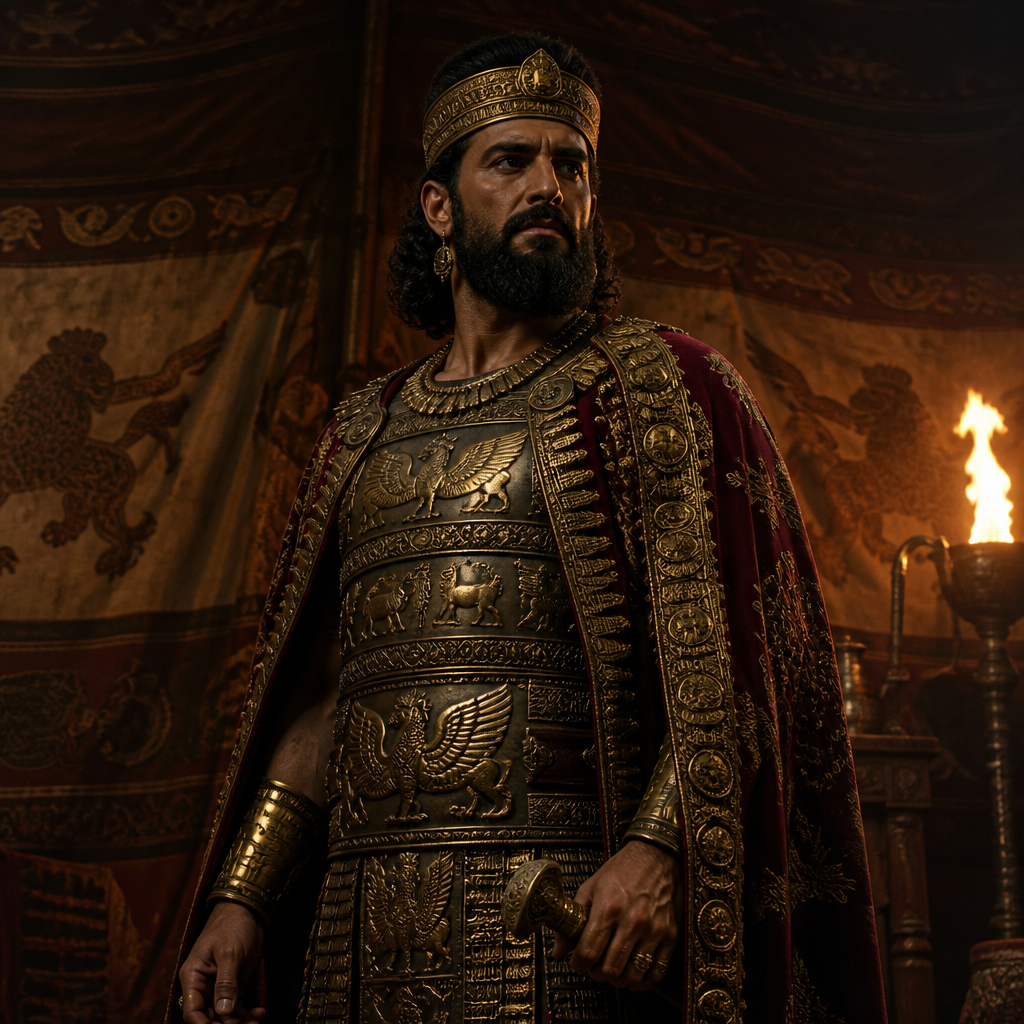
Chedorlaomer
Overlord and Adversary
Abraham
Rescuer of Birsha's subjects
Lot
Inhabitant/Sojourner in the region