Chedorlaomer
Chedorlaomer was the King of Elam who led a coalition of four eastern kings to suppress a rebellion in the Jordan Valley, leading to a military confrontation with Abraham.
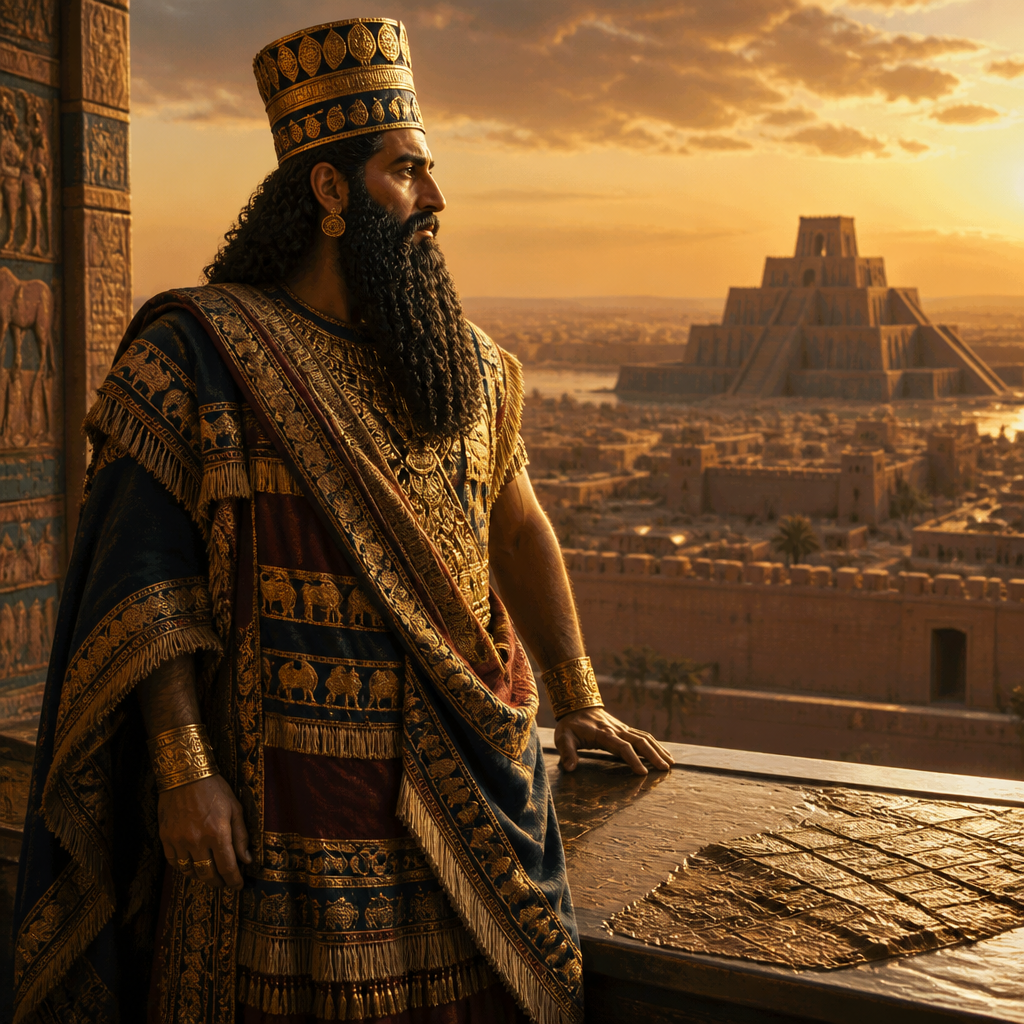
Chedorlaomer (also spelled Kedorlaomer) is a figure from the early history of the Middle East as recorded in the Book of Genesis. He is identified as the King of Elam, an ancient civilization located in what is now southwestern Iran. While his name is not found in surviving contemporary Elamite records in this exact form, it is phonetically consistent with Elamite linguistic patterns, likely combining 'Kudur' (servant) and 'Lagamar' (an Elamite deity). His primary appearance occurs during the 'Battle of the Siddim Valley.'
In the biblical narrative, Chedorlaomer appears as a dominant regional hegemon who commanded the loyalty of three other eastern monarchs. His reign is characterized by military expansion and the exaction of tribute from city-states as far west as the Transjordan and the Dead Sea region. He serves as a critical historical marker in the life of the patriarch Abraham, providing the context for one of the few instances where Abraham is depicted as a military commander rather than a nomadic shepherd.
Background and Family
Chedorlaomer is introduced in Genesis 14 as the King of Elam. During the early second millennium BC (the Middle Bronze Age), Elam was a rising power that occasionally exerted influence over Mesopotamia and the Levant. The biblical text presents him as the lead figure in a four-king coalition that included Amraphel of Shinar, Arioch of Ellasar, and Tidal of Goiim. While scholars have long debated the exact identities of these other monarchs—with some attempting to link Amraphel to Hammurabi of Babylon—Chedorlaomer remains the clear architect of the military campaign described.
His family lineage is not provided in the biblical record, which focuses instead on his political status as an overlord. His authority was sufficient to maintain control over the 'Cities of the Plain' (Sodom, Gomorrah, Admah, Zeboiim, and Bela) for twelve years. This suggests an era of Elamite dominance that predates the later rise of the Assyrian and Babylonian empires as the exclusive superpowers of the region.
Major Life Events
The Rebellion of the Five Kings
For twelve years, the five kings of the Jordan Valley paid tribute to Chedorlaomer. In the thirteenth year, however, they rebelled, refusing to continue their vassalage. This act of defiance prompted a massive retaliatory expedition by Chedorlaomer and his allies in the fourteenth year. The coalition did not take a direct route to the rebels; instead, they followed the King's Highway through the Transjordan, systematically defeating various groups along the way, including the Rephaim, the Zuzim, the Emim, and the Horites.
The Battle of Siddim Valley
After securing the surrounding territories, Chedorlaomer’s forces turned back to face the rebellious pentapolis in the Valley of Siddim (the Dead Sea region). The valley was full of bitumen pits, which proved disastrous for the defending kings of Sodom and Gomorrah. Many of their soldiers fell in the pits, while the survivors fled to the mountains. Chedorlaomer sacked the cities, seizing all their goods, provisions, and, most importantly, several captives. Among these captives was Lot, the nephew of Abraham, who had been residing in Sodom.
The Pursuit by Abraham
When news reached Abraham (then called Abram) at the Oaks of Mamre that his kinsman had been captured, the patriarch mobilized 318 trained men born in his household. Joined by his allies Aner, Eshcol, and Mamre, Abraham pursued the four kings across the length of Canaan to Dan. Utilizing a night attack and superior strategy, Abraham’s small force routed the coalition, chasing them as far as Hobah, north of Damascus. Abraham recovered all the property and the people, including Lot, while Chedorlaomer’s forces were decisively repelled from the region.
Relationship to Other Biblical Figures
Chedorlaomer’s primary relationship in the text is adversarial to Abraham. He serves as the 'outside' threat that forces Abraham to act on behalf of his family. By defeating the Elamite king, Abraham demonstrated that the protection of God surpassed the might of the world's most powerful empires.
He is also inextricably linked to Lot. Lot’s capture by Chedorlaomer serves as a narrative warning about the dangers of assimilating into the wicked culture of Sodom. Additionally, the aftermath of Chedorlaomer’s defeat leads to the meeting between Abraham and Melchizedek, the King of Salem. Melchizedek blesses Abraham for victory over these kings, attributing the triumph to 'God Most High.'
Spiritual Significance
The story of Chedorlaomer is often viewed by theologians as a testament to God’s sovereignty over world history. Despite the overwhelming military strength of the eastern coalition, they were unable to stand against a small band led by a man of faith. It illustrates the 'Exodus' theme before the actual Exodus: God delivering His people from the hand of a powerful, oppressive foreign king.
Furthermore, the defeat of Chedorlaomer functions as a validation of the Abrahamic Covenant. God had promised Abraham that He would bless those who blessed him and curse those who cursed him. By acting as an enemy to Abraham’s family, Chedorlaomer brought upon himself a swift and humiliating defeat. In a broader sense, Chedorlaomer represents the 'kingdoms of this world'—built on tribute, conquest, and fear—contrasted with the peaceful, priest-led kingdom modeled by Melchizedek and the faith-based life of Abraham.
Spiritual Significance
Chedorlaomer is historically significant because his campaign provides one of the few chronological anchors for the patriarchal period, linking the life of Abraham to broader Mesopotamian geopolitics. Theologically, his defeat serves to establish Abraham’s prowess and divine favor before the local Canaanite rulers, ensuring peace for the patriarch's household in the promised land. His presence in Genesis 14 underscores that no worldly power, regardless of its reach or coalition strength, can thwart the purposes of God’s covenant with His chosen people.
Frequently Asked Questions
Was Chedorlaomer a real person?
While he has not been definitively identified in a specific archaeological inscription, his name follows Elamite linguistic patterns and his actions align with the Middle Bronze Age geopolitical climate where Elamite kings exerted influence over the Levant.
What does the name Chedorlaomer mean?
It is likely derived from the Elamite words 'Kudur' (servant) and 'Lagamar' (the name of an Elamite goddess), meaning 'Servant of Lagamar.'
Who were the four kings in the coalition?
Chedorlaomer of Elam, Amraphel of Shinar, Arioch of Ellasar, and Tidal of Goiim.
Why did Chedorlaomer capture Lot?
Lot was living in Sodom, one of the cities that rebelled against Chedorlaomer. When the city was sacked, Lot was taken as part of the spoils of war and human plunder.
How did Abraham defeat such a large army?
The Bible attributes the victory to a surprise night attack and a multi-pronged strategy, though theologically it is presented as a victory granted by 'God Most High' (El Elyon).
Connected Figures
Abraham
Adversary who defeated him
Lot
Captive taken during his raid
Melchizedek
Priest-King who blessed his victor
Amraphel
Ally and fellow king of Shinar