Amraphel
Amraphel was the King of Shinar who spearheaded a coalition of four eastern kings in a military campaign against five cities in the Dead Sea region during the age of Abraham.
Amraphel is a figure mentioned in the Book of Genesis, specifically within the narrative of the 'Battle of the Nine Kings' in Genesis 14. Identified as the 'King of Shinar,' he was one of the four Mesopotamian monarchs who invaded the Jordan River valley to suppress a rebellion by local city-states. His name is historically significant due to its association with early Mesopotamian geopolitics and the era of the patriarchs.
While his individual role in the text is largely defined by his participation in this military coalition, Amraphel remains a subject of intense scholarly debate. For much of the 19th and early 20th centuries, many historians sought to identify him with the famous Babylonian lawgiver Hammurabi. Although this identification has largely fallen out of favor among modern scholars due to chronological and linguistic discrepancies, Amraphel remains a vital figure for understanding the contact between the Mesopotamian empires and the early Levant described in the Hebrew Bible.
Background and Family
Amraphel is introduced as the King of Shinar, a region traditionally associated with Mesopotamia and particularly the land of Babylonia (Genesis 10:10; 11:2). In the biblical genealogical and geographical framework, Shinar is located in the fertile plains of the Tigris and Euphrates rivers. While the text does not provide a specific genealogy for Amraphel, his title suggests he was a ruler of considerable influence within the Mesopotamian sphere of power.
He served as a member of a four-king confederacy alongside Chedorlaomer (King of Elam), Arioch (King of Ellasar), and Tidal (King of Goyim). Interestingly, the text implies that Chedorlaomer was the hegemon or dominant leader of this coalition, as the other kings—including Amraphel—served him for twelve years before the rebellion of the Canaanite kings prompted their military intervention.
Major Life Events
The Rebellion of the Plain
According to Genesis 14, the kings of five city-states in the Dead Sea region—Sodom, Gomorrah, Admah, Zeboiim, and Bela—had been subject to Chedorlaomer for twelve years. In the thirteenth year, they rebelled. In response, Amraphel and his allies marched from the east to re-establish control. They systematically defeated several groups along the King’s Highway, including the Rephaim, the Zuzim, and the Emim, before meeting the rebellious five kings in the Valley of Siddim.
The Capture of Lot
During the Battle of the Valley of Siddim, the coalition of Amraphel and Chedorlaomer emerged victorious. The kings of Sodom and Gomorrah fled, and their cities were plundered. Significantly for the biblical narrative, the Mesopotamian forces captured Lot, the nephew of the patriarch Abram (Abraham), who was residing in Sodom at the time. They seized his goods and took him away as a prisoner of war.
Defeat by Abram
When news of Lot’s capture reached Abram, he mustered 318 trained men from his own household and pursued the four eastern kings. Abram caught up with them at Dan and launched a night raid. The coalition, including Amraphel, was defeated and pursued as far as Hobah, north of Damascus. Abram successfully recovered all the goods and brought back Lot and the other captives. Following this defeat, Amraphel disappears from the biblical record.
Relationship to Other Biblical Figures
Amraphel’s primary relationship in the text is adversarial to Abram. He represents the first instance in the Bible of a major worldly power coming into direct conflict with the people associated with God’s covenant. His alliance with Chedorlaomer shows that he was part of a sophisticated political landscape involving international treaties and military cooperation.
In later Jewish tradition and midrash (holy commentary), Amraphel is often identified with Nimrod, the 'mighty hunter' from Genesis 10. The rabbis suggested that 'Amraphel' was a name given to Nimrod because he 'ordered' (amar) our father Abraham to be 'cast' (phal) into a furnace. While this identification is homiletical rather than strictly historical or linguistic, it emphasizes Amraphel’s reputation as a representative of pagan tyranny and opposition to the faith of the patriarchs.
Spiritual Significance
The account of Amraphel’s campaign and subsequent defeat serves several theological purposes in the Book of Genesis. First, it demonstrates that Abram’s God is superior to the mightiest kings of the age. Despite the military power of the Mesopotamian coalition, a small force commanded by a wandering shepherd was able to overcome them because of divine favor. This is underscored later in the chapter when the priest-king Melchizedek blesses Abram for his victory, attributing it to 'God Most High, Possessor of heaven and earth.'
Secondly, the narrative involving Amraphel places the patriarchal story within the context of world history. It shows that the history of Israel is not an isolated affair but is deeply intertwined with the rise and fall of empires. Amraphel serves as a prototype for the many kings who would challenge the descendants of Abraham throughout the Old Testament, illustrating the theme that worldly power is fleeting and ultimately subject to the purposes of God.
Spiritual Significance
Amraphel is noteworthy as one of the first named kings in the Bible to engage in an international military conflict that involved the family of Abraham. His inclusion in Genesis 14 provides a 'geopolitical' backdrop for the patriarchal narrative, signifying that the promises made to Abraham were situated within the real-world tensions of the Ancient Near East.
Theologically, the defeat of Amraphel's coalition by Abraham highlights the protective providence of God over the covenant family. It acts as a transitional moment where Abraham is recognized by his neighbors not just as a nomad, but as a 'prince among them' who can challenge and defeat the dominant world powers of his time.
Frequently Asked Questions
Was Amraphel the same person as Hammurabi?
Historically, many scholars once identified Amraphel with Hammurabi of Babylon. However, modern linguistic analysis and carbon dating make this unlikely, as Hammurabi lived much later (c. 1792–1750 BC) than the traditional date for Abraham.
What does the name 'Amraphel' mean?
The etymology is uncertain. Some suggest it means 'the mouth of God speaks' or 'one who speaks of dark things.' In Jewish midrashic tradition, it is interpreted as 'he whose command brought fall,' linking him to Nimrod.
Where was Shinar?
Shinar is the biblical term for the southern Mesopotamian plain, corresponding to ancient Sumer and Akkad (modern-day Iraq).
Who defeated Amraphel?
Amraphel and his allies were defeated by Abraham (then called Abram) and his 318 trained servants, along with his Amorite allies Aner, Eshcol, and Mamre.
Why did Amraphel attack Sodom and Gomorrah?
The kings of Sodom and Gomorrah had rebelled against their overlord, Chedorlaomer, after twelve years of paying tribute. Amraphel joined Chedorlaomer’s coalition to suppress this rebellion.
Connected Figures
Abraham
Enemy and conqueror
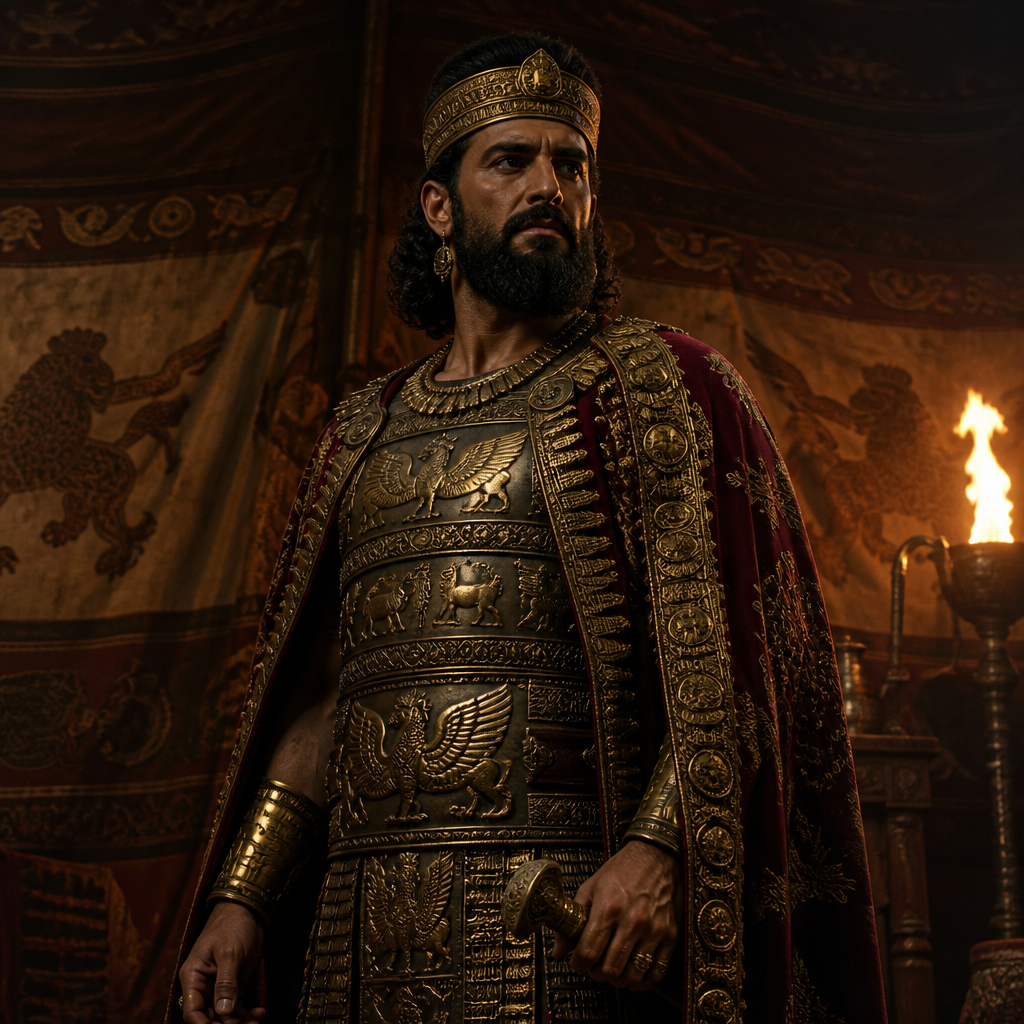
Chedorlaomer
Military ally and coalition leader
Lot
Captive taken during his raid
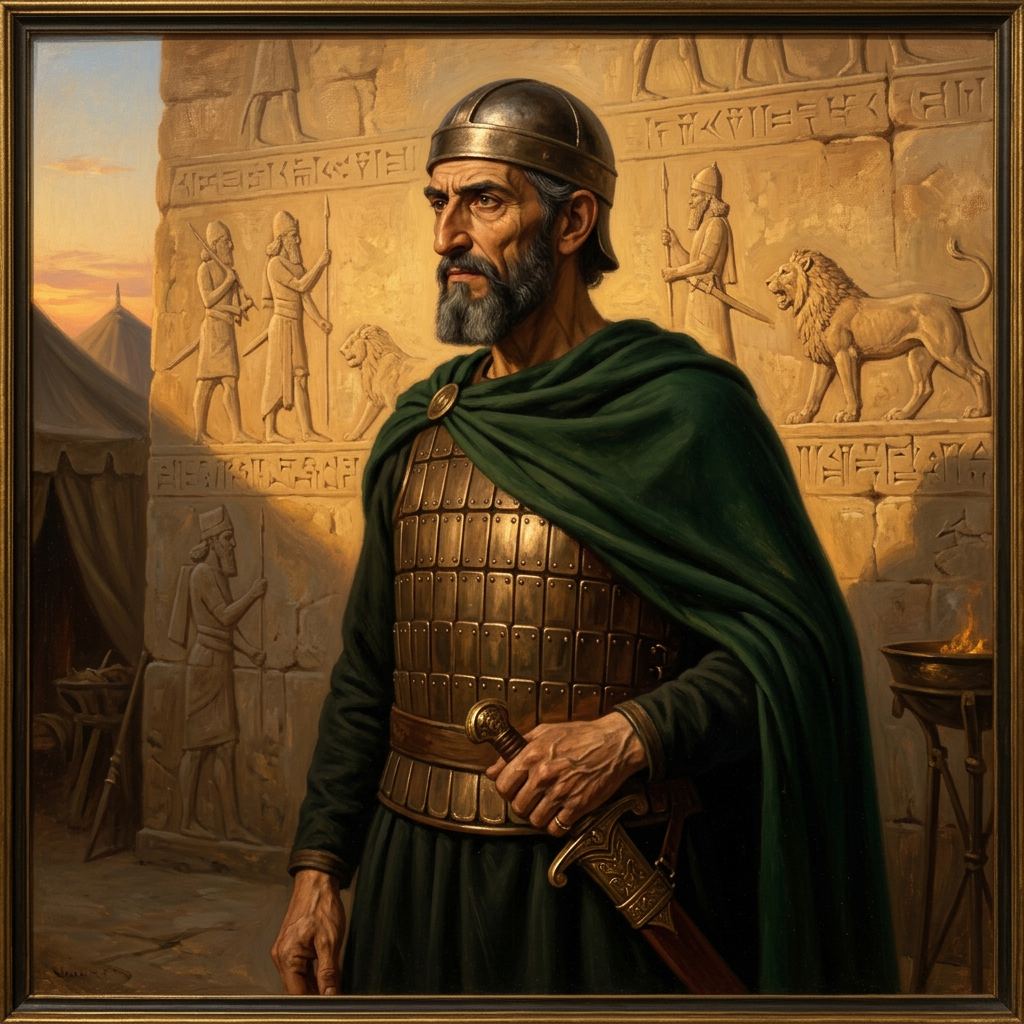
Arioch
Military ally