Arioch
Arioch, King of Ellasar, was one of the four eastern kings in Chedorlaomer's coalition that invaded Canaan and was defeated by Abraham in Genesis 14.
Arioch, King of Ellasar, is one of the four Mesopotamian rulers named in Genesis 14 as part of the coalition led by Chedorlaomer, king of Elam. Alongside Amraphel of Shinar and Tidal of Goyim, he marched west to crush a rebellion by five city-states in the Jordan Valley, sacking Sodom and Gomorrah and carrying off Lot in the process.
His kingdom, Ellasar, is generally located in southern Mesopotamia; older scholarship linked him to Eri-Aku of Larsa, while more recent proposals connect the name to the Hurrian 'Arriwuk' attested at Mari. In every biblical reference, Arioch appears strictly as a member of Chedorlaomer's alliance — an ancient Near Eastern king whose defeat by Abraham's 318 trained servants dramatizes God's protection of the patriarch and his household.
Background and Kingdom
Arioch is introduced in Genesis 14:1 as "king of Ellasar," one of four eastern monarchs allied under Chedorlaomer, king of Elam. Ellasar is most often identified with a city-state in southern Mesopotamia; a longstanding scholarly proposal equates it with Larsa and Arioch with the historical Eri-Aku, though this identification is disputed. Other scholars connect the name Arioch to the Hurrian personal name 'Arriwuk' found in the Mari archives. The name likely carries the sense of "lion-like" or "servant of the moon-god," fitting a warrior-king of the period.
The biblical text places him firmly in the patriarchal era, contemporary with Abraham. Nothing is said of his family, dynasty, or successors — his role in Scripture is confined to the campaign of the four kings against the five.
The War of the Nine Kings
For twelve years the five kings of the Jordan Valley — Bera of Sodom, Birsha of Gomorrah, Shinab of Admah, Shemeber of Zeboiim, and the king of Bela (Zoar) — served Chedorlaomer. In the thirteenth year they rebelled, and in the fourteenth Chedorlaomer, Arioch, Amraphel, and Tidal marched west to reassert control (Genesis 14:1–4).
The coalition first swept through Transjordan, defeating the Rephaim, Zuzim, Emim, and Horites, then turned north to strike the Amalekites and Amorites before engaging the rebel kings in the Valley of Siddim (Genesis 14:5–8). The five kings were routed; some fell into the tar pits of the valley while others fled to the hills. The victors plundered Sodom and Gomorrah and carried off their goods and people, including Lot, Abraham's nephew, who was living in Sodom (Genesis 14:11–12).
Defeat by Abraham
When a fugitive brought word to Abraham, the patriarch mustered 318 trained men born in his household, along with his Amorite allies Aner, Eshcol, and Mamre, and pursued the coalition as far as Dan. In a night attack he divided his forces, routed the kings, and chased them beyond Damascus, recovering Lot, the captives, and all the plunder (Genesis 14:13–16).
Arioch's defeat is the last thing Scripture records of him. He disappears from the biblical narrative along with the rest of Chedorlaomer's coalition, remembered only as one of the great eastern kings whom God overthrew through a single patriarch and a small household militia.
Relationship to Other Biblical Figures
Arioch is inseparable from Chedorlaomer, the Elamite overlord who led the coalition and to whom Arioch was a vassal or junior ally. He stands beside Amraphel of Shinar and Tidal of Goyim as the eastern powers of Genesis 14. His principal biblical antagonist is Abraham, whose faith-driven rescue of Lot exposes the coalition's military might as fragile before the God of the patriarch. He is also indirectly linked to Lot, whose captivity triggered Abraham's pursuit, and to Melchizedek, king of Salem, who blessed Abraham after the victory.
Spiritual Significance
Though a pagan king, Arioch plays a role in one of the Bible's earliest theological set pieces: the vindication of Abraham's covenant standing. His crushing defeat, together with that of the entire coalition, shows that the promises made to Abraham in Genesis 12 extend to real-world protection against the great imperial powers of the age. Arioch is a reminder that the geopolitical giants of the ancient Near East — kings, coalitions, and empires — are, in the biblical vision, subject to the purposes of the God who called Abraham out of Ur.
Spiritual Significance
Arioch's significance is inseparable from the theological argument of Genesis 14. As part of the first named international coalition in Scripture, his defeat by Abraham demonstrates that the God of the patriarch stands above the great powers of Mesopotamia. The episode establishes Abraham as a figure of consequence on the ancient Near Eastern stage and prepares the ground for the covenant ratification of Genesis 15.
For later readers, Arioch also serves as a historical anchor: the specificity of his name and kingdom situates the patriarchal narratives within a recognizable geopolitical world, reinforcing the Bible's claim to speak of real kings, real coalitions, and real deliverances.
Frequently Asked Questions
Who was Arioch in the Bible?
Arioch was the king of Ellasar, one of the four Mesopotamian kings in Chedorlaomer's coalition that invaded Canaan and was defeated by Abraham in Genesis 14.
Where was Arioch's kingdom of Ellasar?
Ellasar is generally located in southern Mesopotamia. Some scholars have identified it with Larsa, while others connect Arioch's name to the Hurrian name Arriwuk attested in the Mari tablets.
What did Arioch do in Genesis 14?
He joined Chedorlaomer, Amraphel, and Tidal in a campaign against the five rebel kings of the Jordan Valley, plundered Sodom and Gomorrah, and carried off Lot before being defeated by Abraham near Damascus.
Was Arioch defeated by Abraham?
Yes. Abraham mustered 318 trained men from his household and pursued the coalition in a night raid, routing them and rescuing Lot, the captives, and the plunder.
What does the name Arioch mean?
The name is likely of Hurrian or Semitic origin, often understood to mean 'lion-like' or 'servant of the moon-god,' fitting a warrior-king of the ancient Near East.
Connected Figures
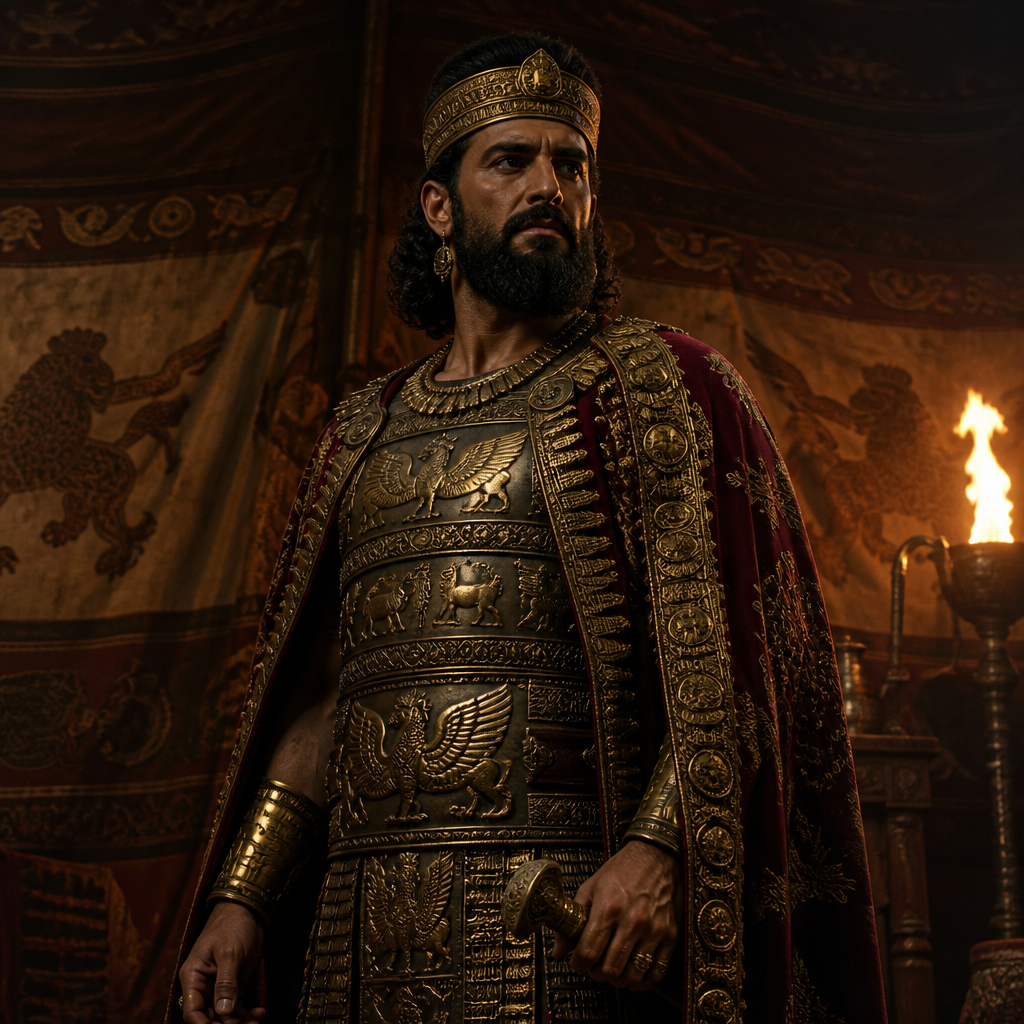
Chedorlaomer
Overlord of the coalition Arioch served
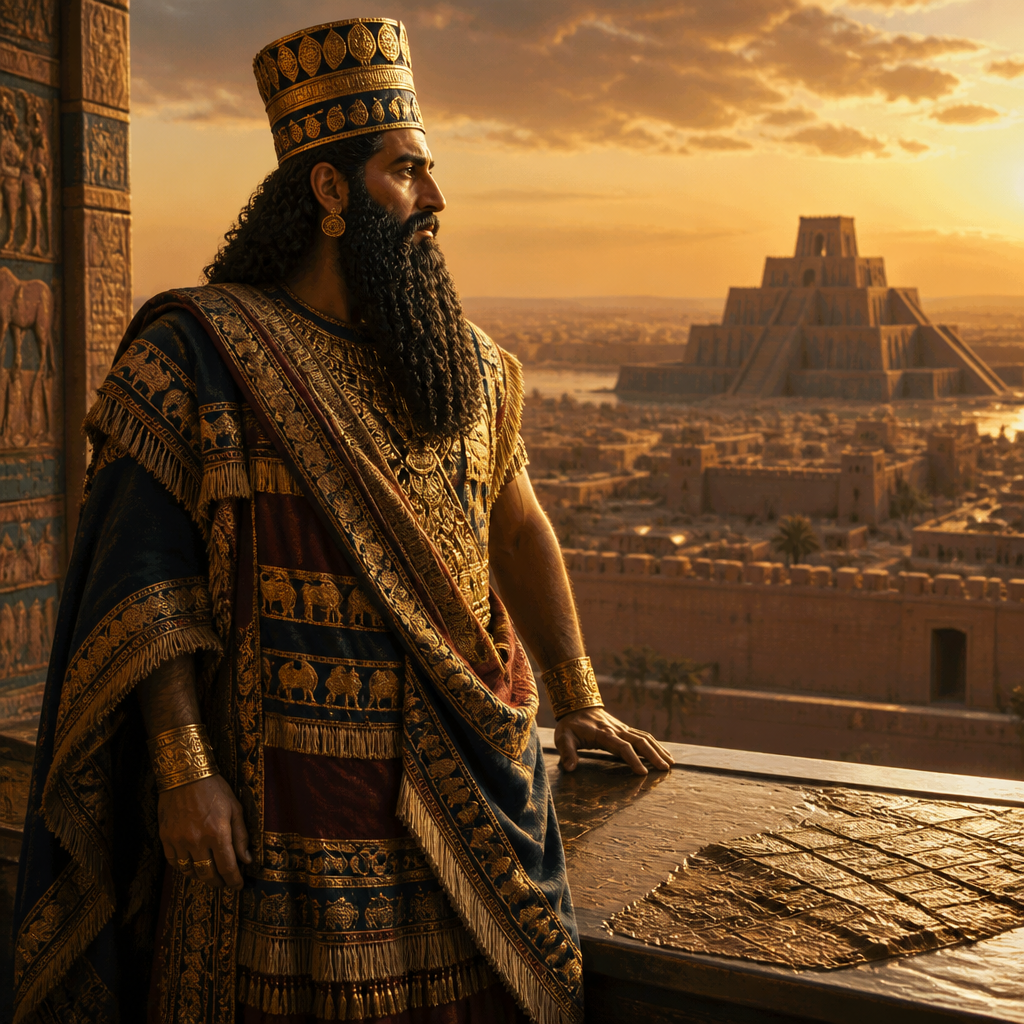
Amraphel
Fellow king in Chedorlaomer's coalition
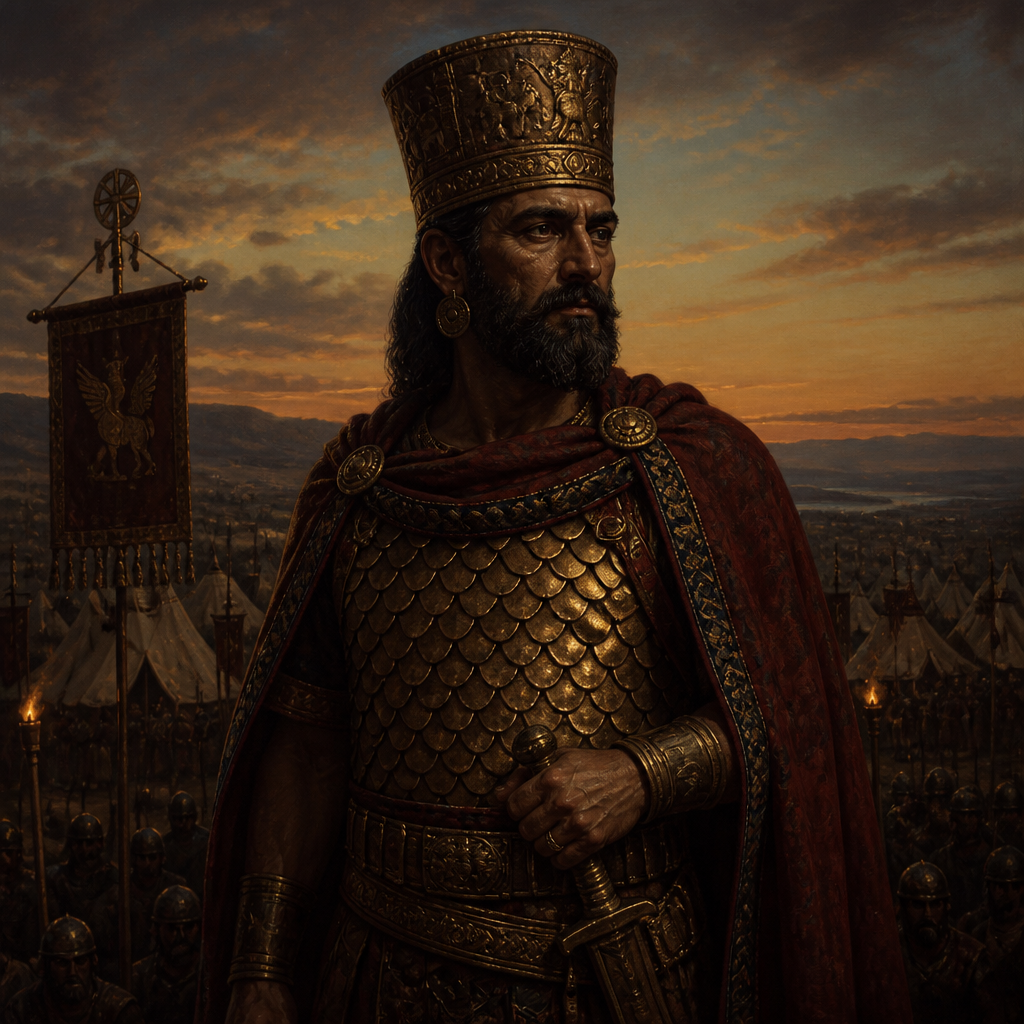
Tidal
Fellow king in Chedorlaomer's coalition
Abraham
The patriarch who defeated Arioch and the coalition
Lot
Captive taken from Sodom whose rescue triggered Abraham's pursuit