Tidal
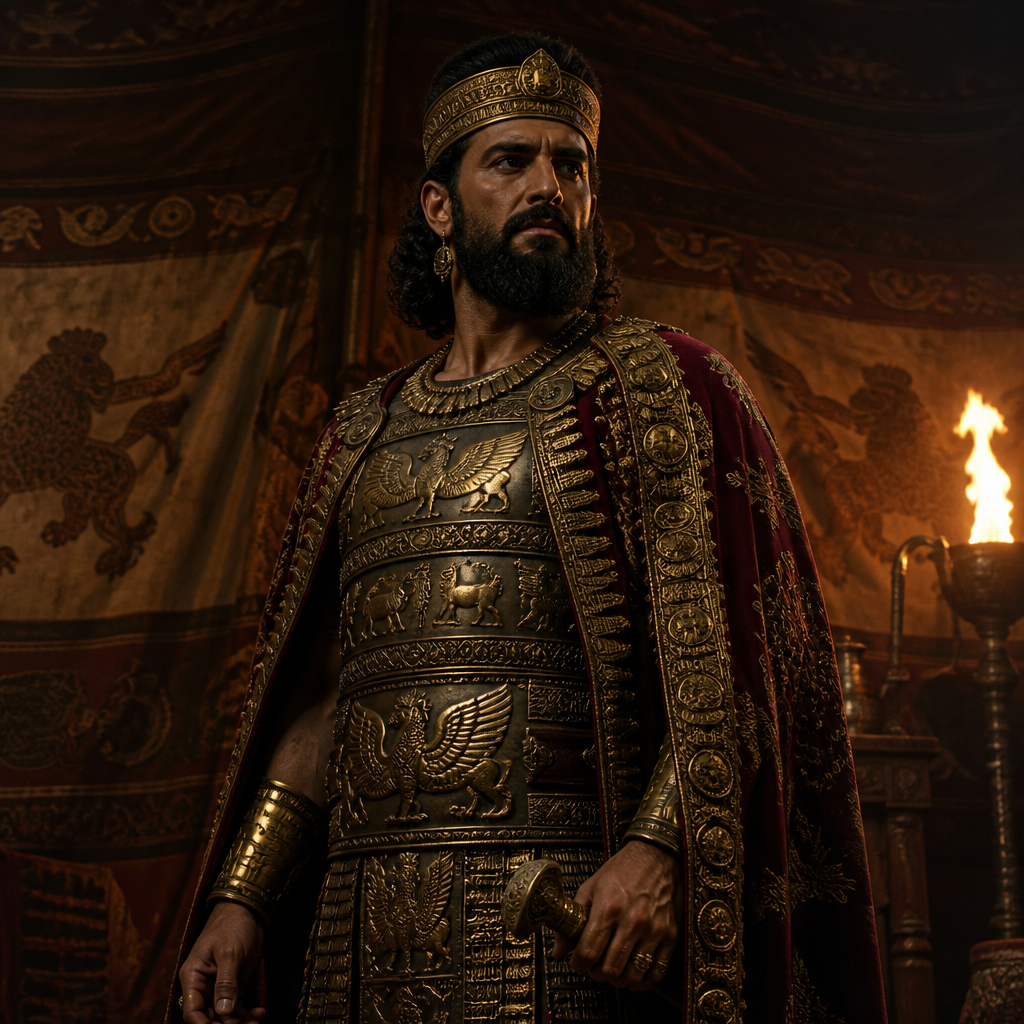
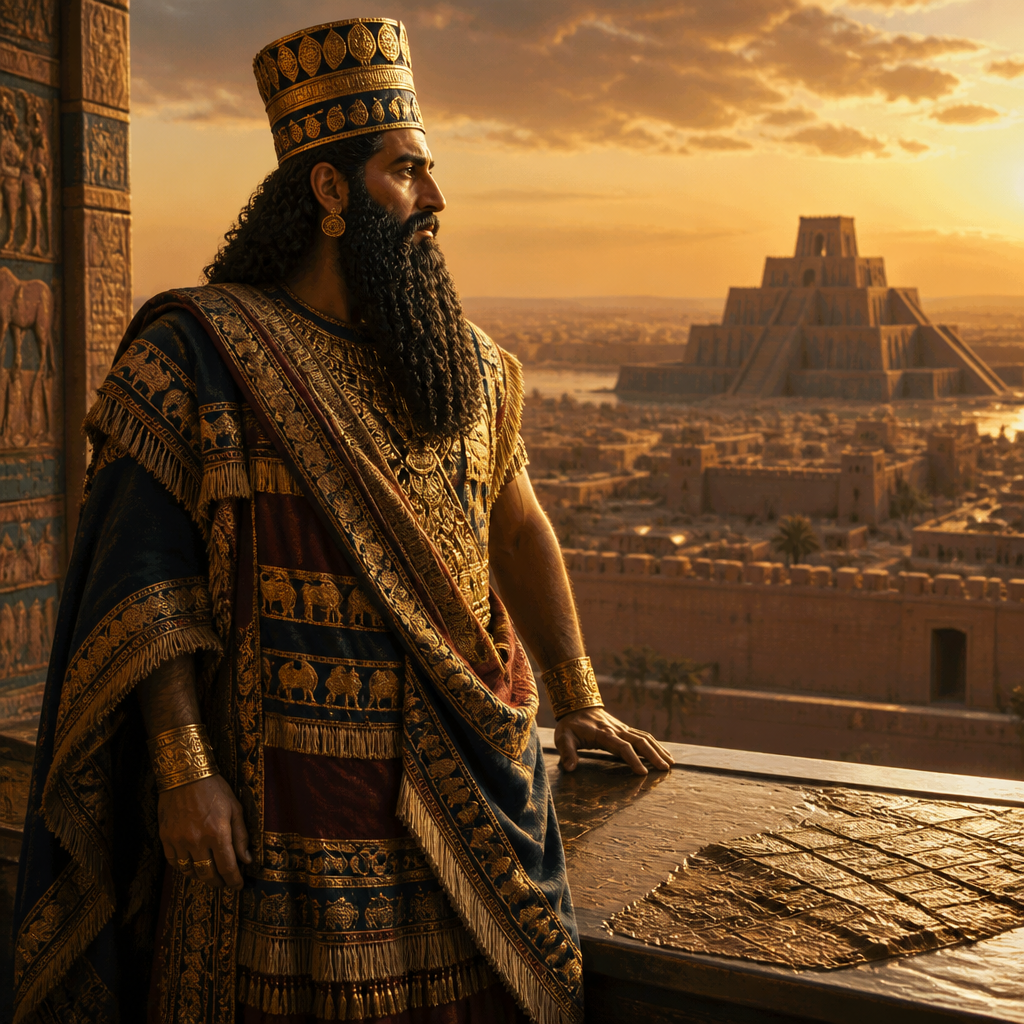
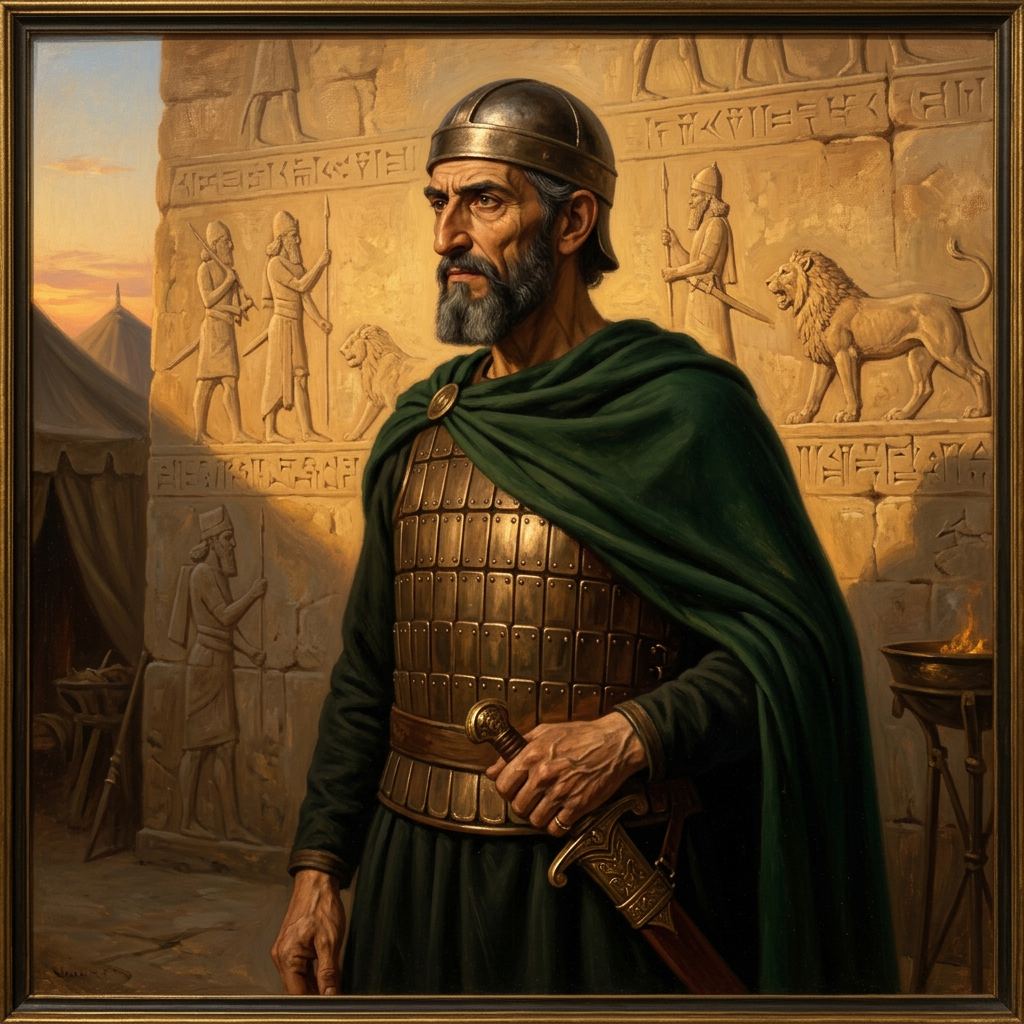
Tidal, known as the 'King of Goyim,' was a powerful Bronze Age monarch who joined a coalition led by Chedorlaomer to suppress a rebellion in the Valley of Siddim.
Tidal appears in the Hebrew Bible as one of the four eastern kings who launched a military campaign against five city-states in the region of the Dead Sea. His title, 'King of Goyim' (often translated as 'King of Nations'), has long intrigued biblical scholars and archaeologists. He is mentioned exclusively in Genesis 14, a chapter characterized by its unique historical and political detail compared to the surrounding patriarchal narratives.
While Tidal is not a primary protagonist of the biblical narrative, his involvement in the Battle of the Vale of Siddim serves as the catalyst for one of the most significant episodes in the life of Abram (later Abraham). The capture of Abram's nephew, Lot, by Tidal and his allies forced the patriarch to mobilize his own household forces, leading to a dramatic rescue and Abram's subsequent encounter with the priest-king Melchizedek. Tidal thus represents the broader geopolitical world of the Ancient Near East that intersected with the early history of the covenant family.
Background and Family
The identity and lineage of Tidal are rooted in the complex geopolitics of the early second millennium BC. Unlike many biblical figures, no genealogy is provided for Tidal; he is introduced solely by his title and his military alliance. The name 'Tidal' is widely regarded by historical linguists as a Hebrew rendering of the Hittite name Tudhaliya. This name was borne by several prominent Hittite kings, suggesting that Tidal may have been a proto-Hittite ruler or a leader of a confederation of diverse ethnic groups or tribes.
His title, Melek Goyim (King of Nations), supports the theory that he ruled over a heterogeneous population rather than a single established city-state. In the context of the Middle Bronze Age, this could refer to the Umman Manda, a term used in ancient Mesopotamian texts to describe nomadic or migratory warrior groups. Alternatively, 'Goyim' may be a corruption of Gutium, referring to the Gutian people of the Zagros Mountains. Regardless of the specific geography, Tidal is presented as a formidable sovereign whose influence was sufficient to warrant an alliance with the Elamites and the Babylonians.
Major Life Events
Tidal’s primary historical footprint in the Bible is his participation in the punitive expedition led by Chedorlaomer, King of Elam. For twelve years, five kings in the Jordan Valley—including the kings of Sodom and Gomorrah—had served Chedorlaomer. In the thirteenth year they rebelled, prompting a massive military response in the fourteenth year.
Tidal and his allies (Amraphel of Shinar and Arioch of Ellasar) marched along the King's Highway, defeating various groups including the Rephaim, the Zuzim, and the Emim. The climax of this campaign was the Battle of the Vale of Siddim. The coalition of the four eastern kings proved superior to the five local kings. The local forces were routed, with some falling into the bitumen (tar) pits that characterized the region, while the survivors fled to the mountains.
Following the victory, Tidal’s coalition plundered Sodom and Gomorrah. Among the captives taken was Lot, the nephew of Abram, who was residing in Sodom at the time. This act transformed a regional conflict into a personal crisis for Abram. When word reached Abram, he pursued the victorious coalition with 318 trained men. In a daring night raid near Dan, Abram defeated the forces of the four kings, including Tidal, and recovered all the goods and people, including Lot.
Relationship to Other Biblical Figures
Tidal’s relationship to other biblical figures is defined entirely by conflict and alliance. He was a loyal vassal or senior ally to Chedorlaomer, the primary antagonist of the Genesis 14 account. To Abram, Tidal represented the invasive power of the world empires. While there is no record of a direct personal interaction between Tidal and Abram, Tidal’s defeat at the hands of Abram’s smaller force serves to highlight the divine protection afforded to the patriarch.
Within the broader scope of the narrative, Tidal stands in contrast to Melchizedek, the King of Salem. While Tidal is a 'King of Nations' associated with war, plunder, and imperial dominance, Melchizedek is introduced immediately after the battle as a 'King of Peace' and 'Priest of God Most High,' representing a different kind of sovereignty and spiritual authority.
Spiritual Significance
Theologically, Tidal and the coalition of the four kings represent the 'powers of this world' in their most organized and threatening form. The narrative of Genesis 14 demonstrates that even the most powerful geopolitical alliances are subject to the will of God when they interfere with His covenant purposes. Tidal’s defeat by Abram—a nomadic herdsman—is a recurring biblical theme where the few, empowered by faith, overcome the many who rely on military might.
Furthermore, the historical specificity of Tidal’s role serves to ground the history of Israel in the actual landscape of the ancient world. He is not a mythological figure but a representation of the real dangers encountered by the patriarchs. His presence in the text reinforces the idea that the promises made to Abraham were not fulfilled in a vacuum, but in a world of warring empires and shifting political loyalties. The victory over Tidal confirmed to Abram that God was indeed his 'shield' and his 'exceeding great reward' (Genesis 15:1).
Spiritual Significance
Tidal's significance lies in his role as a representative of imperial power challenged by the burgeoning faith of the patriarchs. As 'King of Goyim,' he personifies the diverse and powerful nations of the earth that were eventually to be blessed through Abraham, yet in Genesis 14, he stands as an adversary. His defeat signals that human political structures cannot thwart God's plan for His chosen people.
In a historical-critical sense, Tidal provides a crucial link between the biblical text and the wider history of the Ancient Near East. His name aligns with Hittite nomenclature, and his title reflects the nomadic movements of the 2nd millennium BC. This lends an air of historical authenticity to the patriarchal narratives, framing Abram's life not just as a spiritual journey but as a tangible historical reality.
Frequently Asked Questions
What does the name 'Tidal' mean?
The name is often associated with the Hittite name 'Tudhaliya,' which means 'Great' or 'Magnificent.' It was a common name for Hittite royalty.
Where was Tidal's kingdom located?
The location of 'Goyim' is uncertain. It may refer to the Hittite lands in Anatolia, or it might be a general term for a confederation of 'nations' or nomadic tribes in Mesopotamia.
Why did Tidal attack the kings of Sodom and Gomorrah?
He was part of a coalition led by Chedorlaomer to suppress a rebellion after the local kings refused to pay tribute for twelve years.
Did Tidal survive the battle against Abraham?
The Bible states that Abram defeated the four kings and pursued them as far as Hobah, but it does not explicitly state whether Tidal was killed or simply forced to retreat.
Is Tidal mentioned anywhere else in the Bible?
No, Tidal is only mentioned in Genesis chapter 14.