The King of Bela
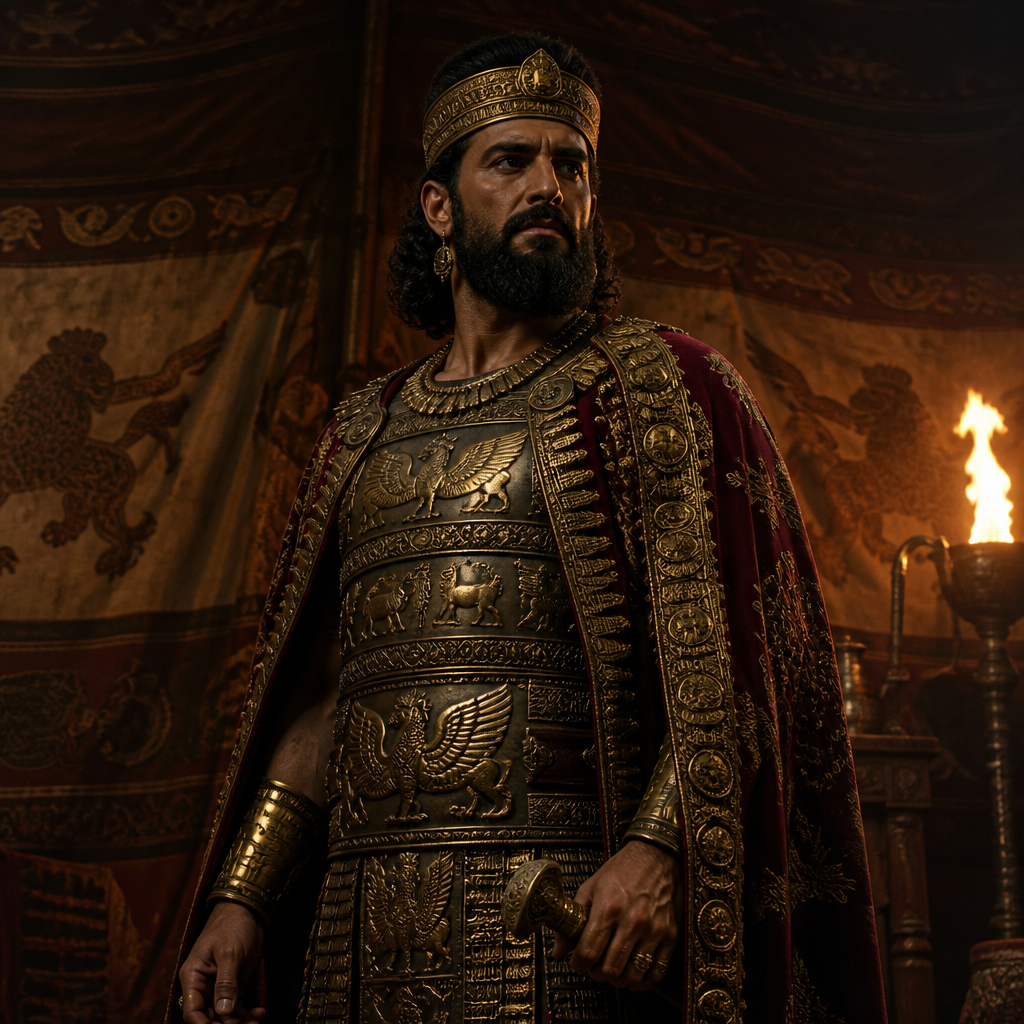
The anonymous ruler of Bela (Zoar) who participated in a local rebellion against the Elamite empire during the time of Abraham.
The King of Bela, who ruled the smallest of the five cities situated in the fertile Siddim Valley, is a figure mentioned in the Book of Genesis within the context of the first recorded international conflict in the Bible. Though his personal name is not recorded in the Masoretic Text, his role as a local monarch in the region of the Dead Sea is significant for understanding the political landscape of the patriarchal era. He was a contemporary of the patriarch Abram (later Abraham) and was part of a coalition of five city-state kings who sought to overthrow the yoke of Mesopotamian dominance.
Historically, the King of Bela is grouped with the rulers of Sodom, Gomorrah, Adman, and Zeboyim. His city, Bela, is unique in the biblical narrative because it was later renamed Zoar ('small') following the intervention of Lot during the destruction of the cities of the plain. In the context of the struggle against Chedorlaomer, the King of Bela represents the vulnerable but defiant Canaanite fringe that stood against the expansive imperial powers of the East.
Background and Family
The King of Bela ruled over a small city-state located at the southern tip of the Salt Sea (Dead Sea). While the genealogy of the King of Bela is not provided in the Genesis account, he is positioned as a peer to more prominent coastal and valley kings like Bera of Sodom and Birsha of Gomorrah. The city of Bela itself appears to have been the smallest of the Pentapolis (the five cities of the plain), a fact underscored by its later name, Zoar, which literally means 'smallness.'
Culturally, this king would have presided over a Canaanite population during the Middle Bronze Age. The region was remarkably fertile at the time, described in Genesis as being 'well watered everywhere like the garden of the Lord.' This prosperity likely attracted the attention of distant empires, leading to the tributary status the King of Bela and his neighbors found themselves in. His family line is obscured by history, but his political lineage was firmly rooted in the local resistance movement against Elamite hegemony.
Major Life Events
The primary event defining the King of Bela’s life in the biblical record is the rebellion against Chedorlaomer, the King of Elam. According to Genesis 14, the King of Bela and his four allies had served Chedorlaomer for twelve years. In the thirteenth year, they refused to pay further tribute, effectively declaring independence. This act of defiance prompted a massive military expedition from the East, as Chedorlaomer allied with three other regional powers—Amraphel of Shinar, Arioch of Ellasar, and Tidal of Goiim—to suppress the revolt.
In the fourteenth year, the two coalitions met in the Valley of Siddim. This location was precarious, filled with bitumen pits (tar pits). The King of Bela led his forces alongside his allies, but the conflict ended in a disastrous defeat for the local kings. While the kings of Sodom and Gomorrah are described as fleeing and falling into the pits, the specific fate of the King of Bela during the tactical retreat is not detailed, though his city was subsequently sacked. The invaders seized all the goods and provisions of the five cities, including the people, leading to the capture of Lot, which ultimately drew Abram into the conflict.
Relationship to Other Biblical Figures
The King of Bela’s most critical relationship was with his fellow rebel monarchs. He stood in solidarity with Bera of Sodom, Birsha of Gomorrah, Shinab of Admah, and Shemeber of Zeboyim. This quintet formed a defensive pact that represents one of the earliest alliances recorded in scripture. Despite their collective effort, they were unable to withstand the superior military might of the Elamite coalition.
Indirectly, the King of Bela’s actions affected the patriarch Abram. By participating in a war that led to the capture of Lot (Abram's nephew), the King of Bela set the stage for Abram’s military intervention. When Abram heard of the capture, he mobilized 318 trained men to rescue the captives. While there is no record of a direct meeting between Abram and the King of Bela, the King of Bela benefited from Abram's victory, as the patriarch recovered the goods and people that had been taken from the five cities, presumably including the subjects and wealth of Bela.
Spiritual Significance
From a theological perspective, the King of Bela and the Battle of Siddim serve as a foil to the life of faith led by Abram. The King of Bela relied on political alliances and earthly strength to secure his kingdom, yet he was easily overcome by the powers of this world. In contrast, Abram, acting not for territorial gain but for the redemption of his kinsman, achieved victory through the blessing of 'God Most High' (El Elyon).
Furthermore, the King of Bela’s city serves as a symbol of mercy. In the later narrative of Genesis 19, Bela (Zoar) is the place where Lot seeks refuge when the other four cities of the plain are destroyed by fire and brimstone. The fact that the King of Bela’s small city was spared highlights the biblical theme that God is willing to preserve the 'small' and the 'insignificant' in response to intercession. The King of Bela thus presides over a territory that would eventually become a monument to divine sparing and the limits of judgment.
Spiritual Significance
The King of Bela represents the localized political structures of the ancient Near East that were caught in the crossfire of imperial expansion. His significance lies in his inclusion in the first detailed military history of the Bible, which establishes the geopolitical context for Abraham's residence in Canaan. The failure of his coalition demonstrates the instability of human alliances and sets the stage for the introduction of Melchizedek, the King of Salem, who offers a different model of kingship based on righteousness and peace rather than military rebellion.
Frequently Asked Questions
What does the name 'Bela' mean?
The name Bela (בֶּלַע) means 'destruction' or 'swallowing.' It is also the original name of the city that would later be known as Zoar.
Was the King of Bela a contemporary of Abraham?
Yes, he ruled his city during the time Abram lived in the oaks of Mamre and was involved in the war described in Genesis 14.
Was the King of Bela killed in the Battle of Siddim?
The Bible does not specify his fate. It mentions the kings of Sodom and Gomorrah fell into tar pits, but it does not explicitly state that the King of Bela died in battle.
Why is the King of Bela never given a personal name?
Biblical scholars suggest that the omission of his name may reflect the city's minor status among the coalition, or perhaps the original historical records used by the author of Genesis prioritized the location over the individual ruler.
Is Bela the same city as Zoar?
Yes, Genesis 14:2 and 14:8 explicitly state that 'Bela (that is, Zoar)' is the same location, making the King of Bela the ruler of the future city of refuge for Lot.
Connected Figures
Chedorlaomer
Overlord and eventual enemy

Bera
Ally, King of Sodom
Abram
Regional neighbor and rescuer of his subjects
Lot
Inhabitant/Refugee in his territory (later)