Shemeber
Shemeber was the king of Zeboiim who participated in the rebellion of the Five Cities of the Plain against the Elamite ruler Chedorlaomer.
Shemeber was a Canaanite monarch during the patriarchal era, specifically identified in the Book of Genesis as the King of Zeboiim. He was a contemporary of the patriarch Abraham and one of the five regional leaders who governed the lucrative but morally declining cities within the Vale of Siddim. This fertile area, located near the Dead Sea, was home to the infamous cities of Sodom and Gomorrah.
His historical presence is defined by a significant military and geopolitical shift in the ancient Near East. For twelve years, Shemeber and his neighboring kings served as vassals to Chedorlaomer, the powerful King of Elam. In the thirteenth year, Shemeber joined a regional coalition to revolt against this foreign hegemony, leading to a catastrophic military conflict that would eventually draw the patriarch Abraham into the theatre of war.
Background and Family
Shemeber ruled over Zeboiim, one of the five cities situated in the circular plain of the Jordan River, often referred to as the 'Cities of the Plain' or the Pentapolis. These cities—Sodom, Gomorrah, Admah, Zeboiim, and Bela (later known as Zoar)—represented a distinct cultural and political entity in the southern Levant. While the biblical text provides the specific name of his kingdom, it offers no genealogical data regarding his ancestors or his descendants. The name 'Shemeber' is linguistically complex; scholars have debated its meaning, with some suggesting interpretations such as 'Name of Wing' or 'The Name is Mighty,' though many modern etymologists view it as a Canaanite royal designation.
The city of Zeboiim itself is frequently paired with Admah in biblical literature. Geographically, it sat in a region that Genesis 13:10 describes as being 'well watered everywhere... like the garden of the Lord.' This environmental prosperity likely contributed to the wealth and subsequent military ambitions of Shemeber and his peers.
Major Life Events
The primary documentation of Shemeber’s life occurs in Genesis 14, a chapter characterized by its unique diplomatic and military tone, often referred to by scholars as the 'War of the Nine Kings.' For twelve years, Shemeber paid tribute to Chedorlaomer, a king from the far eastern region of Elam (modern-day Iran). This tributary relationship suggests that Zeboiim was part of a sprawling trade network or empire that extended across the Fertile Crescent.
In the thirteenth year of their subjugation, Shemeber joined Bera of Sodom, Birsha of Gomorrah, Shinab of Admah, and the unnamed king of Bela in a formal rebellion. They refused to pay further tribute, seeking total independence for the Cities of the Plain. In the fourteenth year, Chedorlaomer and his three eastern allies—Amraphel of Shinar, Arioch of Ellasar, and Tidal of Goiim—marched westward to suppress the insurrection.
Shemeber and his coalition engaged the eastern forces in the Valley of Siddim. The valley was notably filled with 'bitumen pits' or tar pits, which proved disastrous for the local coalition. Despite their knowledge of the terrain, the armies of the Five Kings were routed. While the biblical narrative focuses on the flight of the kings of Sodom and Gomorrah into the pits or the mountains, Shemeber’s forces were part of the general collapse that led to the city of Zeboiim being plundered.
Relationship to Other Biblical Figures
Shemeber’s actions serve as the catalyst for one of the most significant military demonstrations in the life of Abraham. When the eastern coalition defeated Shemeber and the other kings, they looted the cities and took captives. Among those taken from the neighboring city of Sodom was Lot, Abraham’s nephew. Upon hearing of the capture, Abraham (then Abram) mobilized 318 trained men from his household to pursue the victors.
Although there is no record of a direct conversation between Shemeber and Abraham, Shemeber’s failure on the battlefield necessitated Abraham’s intervention. The subsequent rescue of the captives and the recovery of the goods stashed by Chedorlaomer effectively restored the sovereignty of the region that Shemeber had lost. Following the battle, it is implied that the survivors of the Five Kings, including Shemeber, were part of the group that witnessed the meeting between Abraham and Melchizedek, the King of Salem.
Spiritual Significance
In the broader biblical canon, Shemeber and his city of Zeboiim serve as a cautionary archetype. Although Genesis 14 focuses on his military struggles, later biblical books use Zeboiim as a symbol of divine judgment. Because Shemeber’s city was destroyed alongside Sodom and Gomorrah (as referenced in Deuteronomy 29:23 and Hosea 11:8), he represents a leader whose material wealth and political maneuvering could not save his people from the consequences of their moral trajectory.
From a theological perspective, Shemeber’s reign highlights the contrast between the shifting, violent alliances of earthly kings and the covenantal stability of Abraham. While Shemeber relied on a coalition of four other monarchs to secure his freedom—and failed—Abraham relied on the 'Most High God' and succeeded with a fraction of the manpower. Shemeber thus stands as a figure of the 'old world' order that would eventually be superseded by the promised land of the Israelites.
Spiritual Significance
Shemeber is significant as a historical marker of the geopolitical climate during the time of Abraham. His rebellion against Chedorlaomer provides the context for the first recorded war in the Bible, establishing the vulnerability of the Cities of the Plain. This vulnerability eventually leads to the capture of Lot, which brings Abraham into a position of international prominence as a warrior and man of faith.
Furthermore, the fate of Shemeber’s kingdom, Zeboiim, is used by later prophets like Hosea to demonstrate God's reticence to completely destroy His own people. By citing the total destruction of Shemeber’s realm, the text emphasizes the gravity of divine judgment compared to divine mercy. Shemeber remains a permanent example of the fragility of pagan kingship when confronted with both foreign imperialism and eventual divine decree.
Frequently Asked Questions
Who was Shemeber in the Bible?
Shemeber was the King of Zeboiim, one of the five kings who ruled the Cities of the Plain and rebelled against the Elamite King Chedorlaomer.
In which battle did Shemeber participate?
He fought in the Battle of the Vale of Siddim, where his coalition was defeated by a group of four eastern kings led by Chedorlaomer.
What happened to Shemeber's city, Zeboiim?
Zeboiim was initially looted by the eastern kings and was later completely destroyed by fire and brimstone alongside Sodom and Gomorrah because of its wickedness.
How did Shemeber's actions affect Abraham?
Shemeber’s unsuccessful rebellion and defeat led to the capture of Abraham's nephew, Lot, which forced Abraham to enter the conflict to rescue him.
What does the name Shemeber mean?
The meaning is debated, but it is often interpreted from Hebrew roots to mean 'The name is mighty' or 'Illustrious name.'
Connected Figures
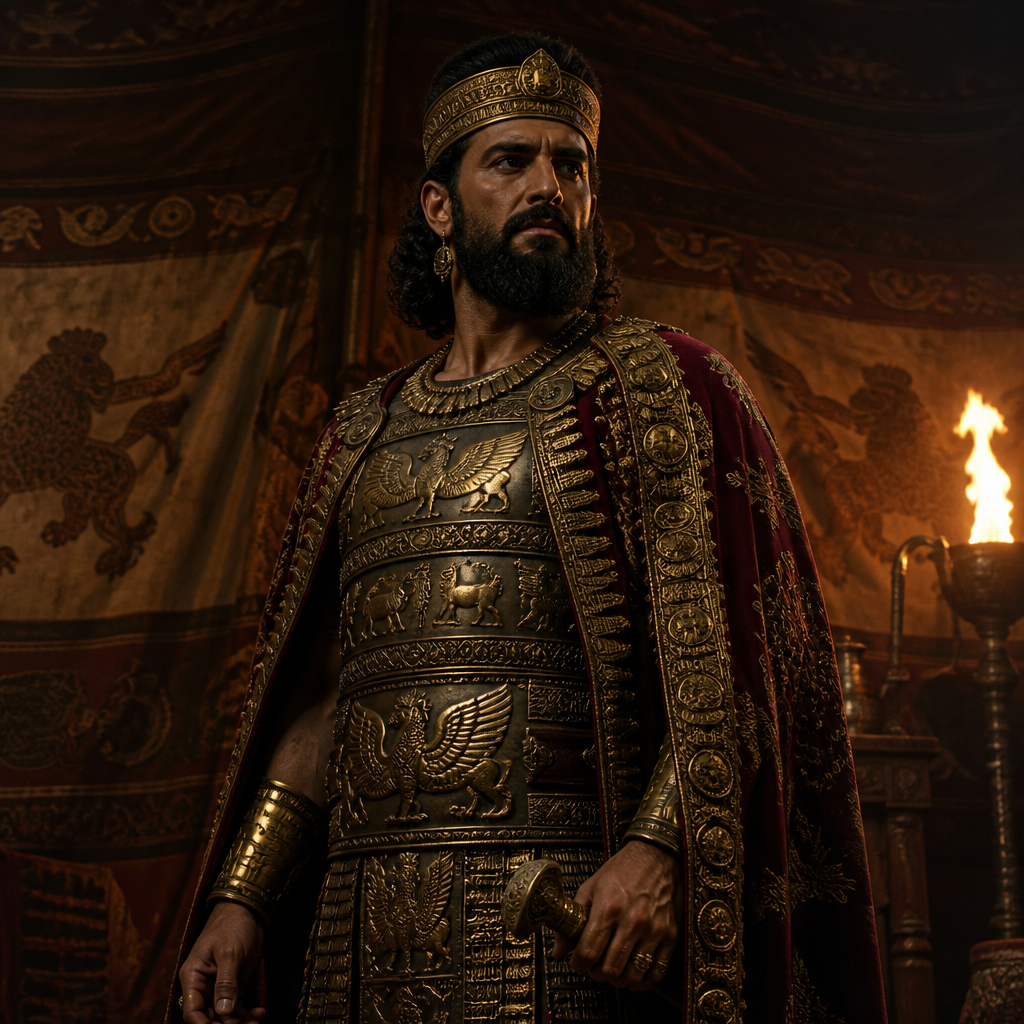
Chedorlaomer
Overlord and enemy

Bera
Ally, King of Sodom
Abraham
Rescued the captives of the conflict
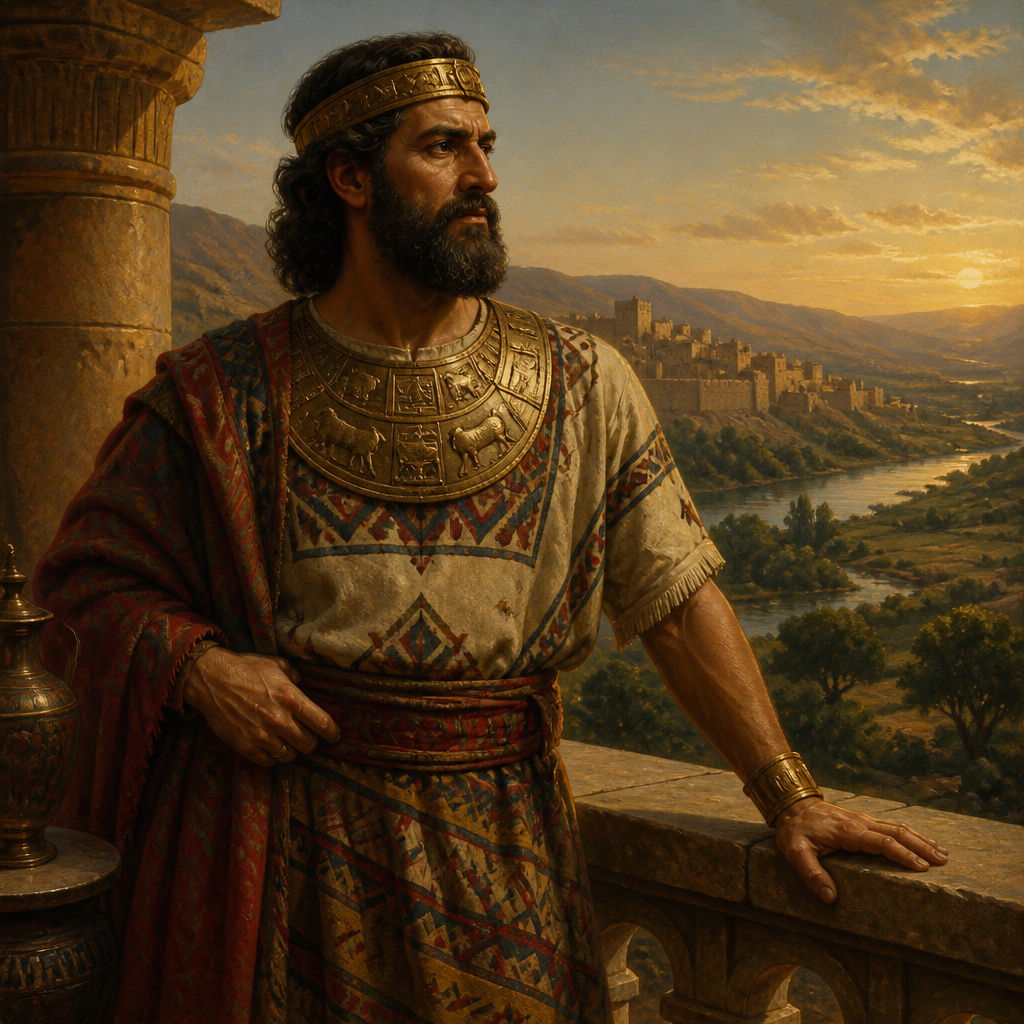
Shinab
Ally, King of Admah