Shinab
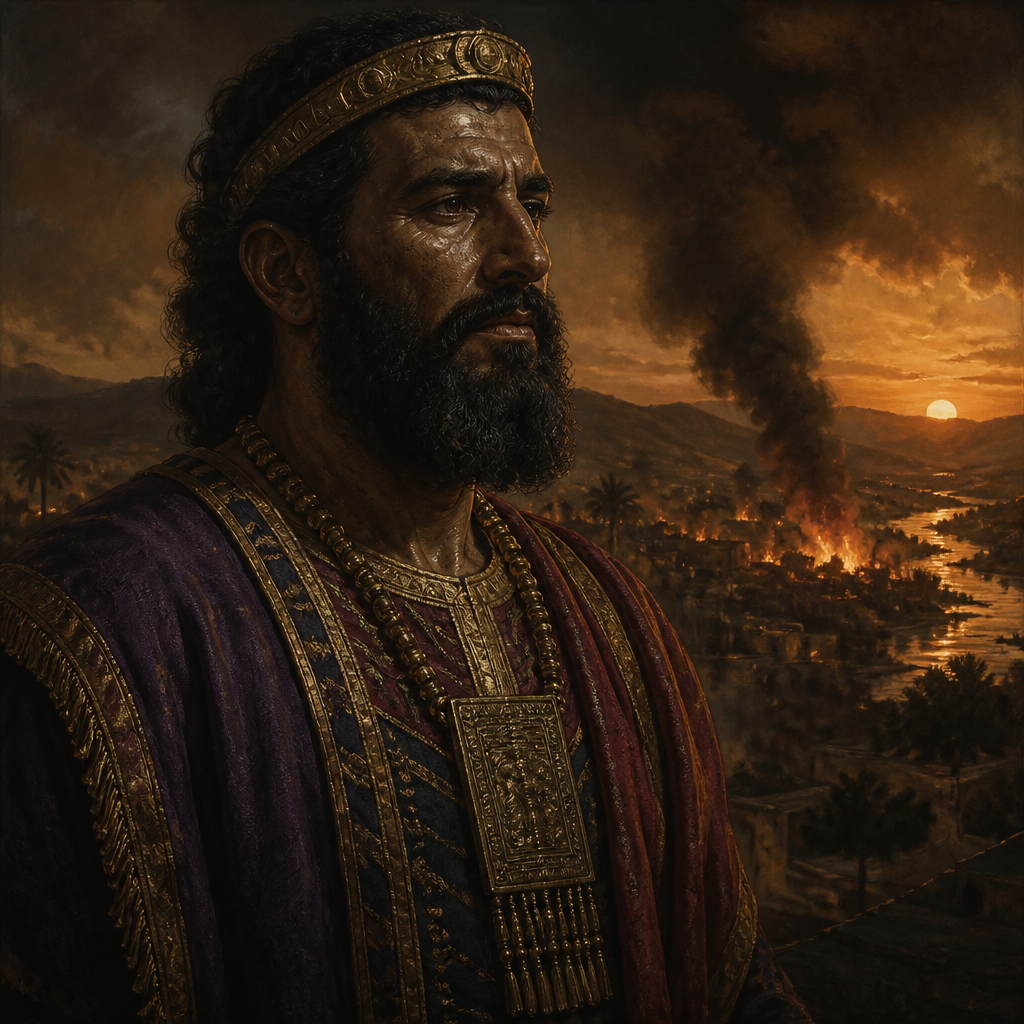
Shinab was the king of Admah and one of the five rebel kings who fought against Chedorlaomer in the Battle of the Vale of Siddim during the time of Abraham.
Shinab was a monarch in the Early Bronze Age, ruling over the city-state of Admah. He is primarily known to history and biblical scholarship through the narrative found in Genesis 14, where he is listed as a member of a pentapolis of kings situated in the fertile Jordan River valley. These kings, including Shinab, were tributaries to a coalition of Mesopotamian powers led by Chedorlaomer, the king of Elam.
His role in the biblical text is centered on a geopolitical crisis: an organized rebellion against eastern dominance. Along with his contemporaries, Shinab sought to cast off the yoke of foreign servitude, leading to a significant military confrontation known as the Battle of Siddim. This event serves as the backdrop for the broader narrative involving the patriarch Abram (Abraham) and the rescue of his nephew, Lot.
Background and Family
Shinab reigned as the king of Admah, a city traditionally associated with the ‘cities of the plain.’ These cities—Sodom, Gomorrah, Admah, Zeboiim, and Bela (also known as Zoar)—formed a prosperous group of urban centers situated in the circular plain of the Jordan River. Geographically, Admah is believed to have been located south of the Dead Sea, though its specific archaeological site remains a matter of scholarly debate among Near Eastern researchers.
While the text of Genesis 14 does not provide a genealogy for Shinab, his status as a king implies a position of dynastic or established political authority within his city-state. The name 'Shinab' itself has been the subject of linguistic analysis; some scholars suggest it may mean 'The Father has turned' or is related to West Semitic roots, though other etymological theories link it to the Akkadian deity Sin, suggesting a culture deeply integrated into the broader Mesopotamian and Canaanite religious landscape of the second millennium BC.
Major Life Events
The defining moment of Shinab’s life recorded in Scripture is the rebellion against the Elamite King Chedorlaomer. For twelve years, Shinab and his fellow monarchs—Bera of Sodom, Birsha of Gomorrah, Shemeber of Zeboiim, and the king of Bela—paid tribute to the East. This tribute likely consisted of agricultural surplus, precious metals, or military support. In the thirteenth year, the five kings rebelled, refusing to continue their subjection.
In the fourteenth year, Chedorlaomer responded by marching a coalition of four Mesopotamian kings across the Levant to punish the rebels. The resulting conflict, the Battle of the Vale of Siddim, saw Shinab and his allies facing a battle-hardened eastern army. The biblical account describes the Vale of Siddim as being filled with 'tar pits' or 'bitumen pits.' This terrain proved disastrous for the local coalition. As the kings of Sodom and Gomorrah fled, they fell into these pits, while the remaining forces, including those of Shinab, were scattered to the hill country. Following the defeat, the cities of the plain, including Admah, were looted, and their populations were taken captive.
Relationship to Other Biblical Figures
Shinab’s primary relationships in the biblical narrative are with his fellow 'rebel' kings. As the king of Admah, he functioned as a junior partner to the more prominent Bera of Sodom. This alliance represents one of the earliest recorded examples of regional military confederation in the Bible.
Furthermore, Shinab’s actions directly impacted the life of the patriarch Abram. While Shinab was unable to protect his own territory from the eastern kings, the capture of Lot (who resided in Sodom) during the looting of the cities compelled Abram to intervene. Abram, with 318 trained men, pursued Chedorlaomer’s coalition, defeated them, and recovered the spoils and captives. Although Shinab was the sovereign ruler of Admah, his failure in governance and defense necessitated the intervention of the nomadic patriarch to restore the region’s stability.
Spiritual Significance
In theological terms, Shinab and the city of Admah serve as a cautionary tale regarding the fragility of human power and the consequences of moral and spiritual decay. Admah, the city Shinab ruled, is frequently mentioned alongside Sodom and Gomorrah in later scriptures as a symbol of divine judgment for wickedness and rebellion against the natural order.
Technically, Shinab represents the 'wisdom of the world'—a king who relies on political alliances and earthly strength but ultimately fails in the face of superior forces. His narrative highlights the contrast between the territorial kings of the earth and the spiritual authority of Abram, who operated under the covenant of God. In the prophets, such as Hosea 11:8, Admah and Zeboiim are cited as examples of total destruction, illustrating that the peace and prosperity Shinab sought through rebellion were ultimately hollow because they lacked a foundation in righteousness.
Spiritual Significance
Shinab’s significance lies in his role as a representative of the Canaanite city-states during the time of Abraham. His rebellion against Chedorlaomer provides the catalyst for the first recorded war in the Bible, establishing the historical and political context of the Patriarchal age. Through the lens of salvation history, Shinab's defeat underscores the vulnerability of even established monarchs and sets the stage for God to demonstrate His power through Abram's rescue mission. Furthermore, the eventual destruction of his city, Admah, is used by later prophets like Hosea to illustrate the severity of God's judgment and the depth of His compassion, as God expresses reluctance to treat Israel like Admah.
Frequently Asked Questions
What does the name Shinab mean?
The exact etymology is debated, but it is often translated as 'The Father has turned' or 'Father's Tooth.' Some scholars believe it may contain an element referring to the moon god Sin.
Was Shinab a good or bad king?
The Bible does not explicitly comment on his character, but as the ruler of Admah—a city often grouped with Sodom for its wickedness—and a participant in the rebellion at the Vale of Siddim, he is generally viewed as a worldly figure whose reign ended in judgment.
Did Shinab survive the Battle of Siddim?
The Bible reports that some of the kings fled to the mountains after the defeat, but it does not specify whether Shinab personally survived the battle or the subsequent years of the city's destruction.
Where was Shinab's kingdom located?
He ruled Admah, one of the five 'cities of the plain' located in the vicinity of the Dead Sea, likely in the southern Jordan Valley.
What is the connection between Shinab and Abraham?
Shinab was one of the kings whose defeat led to the capture of Abraham's nephew, Lot, which prompted Abraham to launch a military rescue mission.
Connected Figures

Bera
Ally and King of Sodom

Chedorlaomer
Oppressor and King of Elam
Birsha
Ally and King of Gomorrah
Abraham
Contemporary who rescued the captives of Admah