Isaac
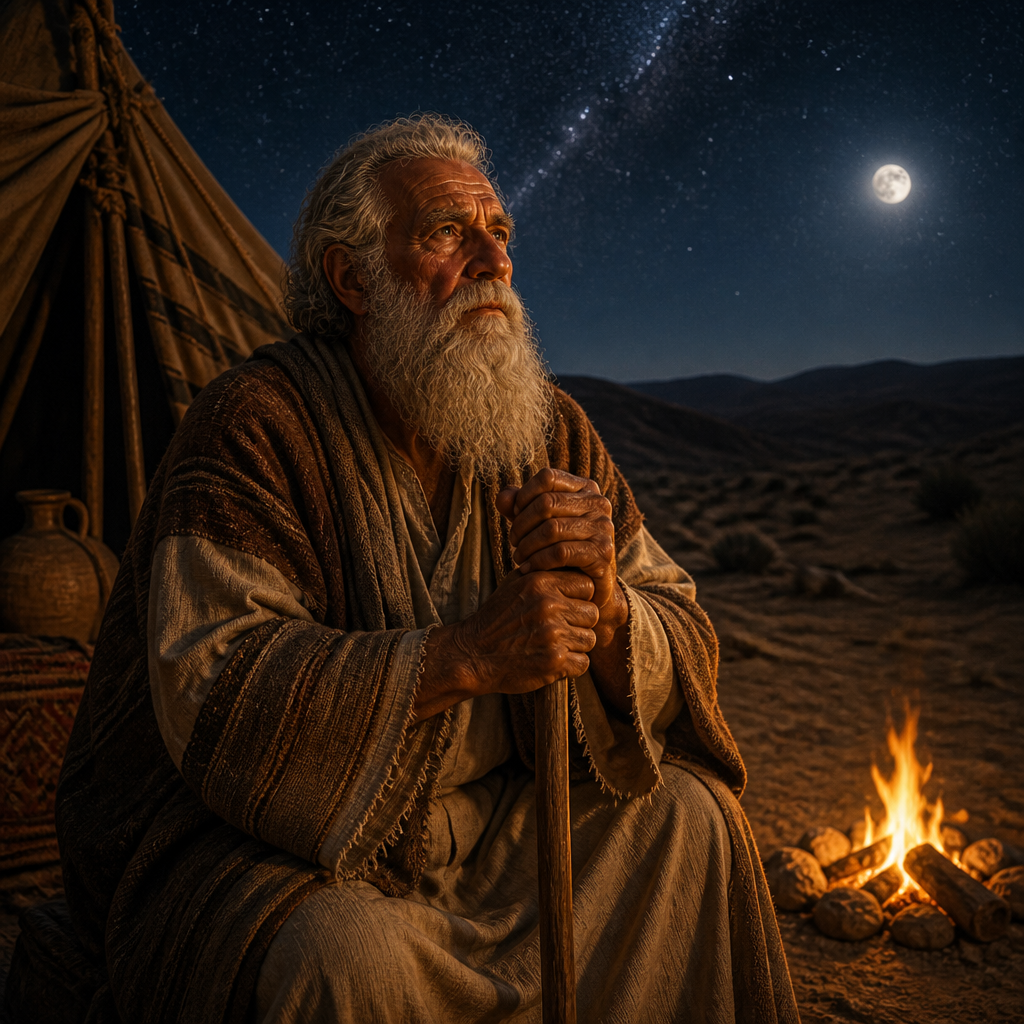
The miracle son of Abraham and Sarah, Isaac was the second Hebrew patriarch and the child of promise through whom the covenant of God was established.
Isaac stands as a central figure in the patriarchal history of Israel, serving as the bridge between the pioneering faith of his father Abraham and the expansive growth of his son Jacob (Israel). His name, which means 'he laughs,' originates from the reaction of his aged parents when God promised his birth. Unlike his father, who traveled extensively, or his son, who lived much of his life in exile, Isaac spent his 180 years primarily within the southern regions of Canaan, specifically near Beersheba and Beer-lahai-roi.
Isaac is unique among the patriarchs for being the only one whose name was decreed by God before his conception and for remaining monogamous throughout his life. His narrative in the Book of Genesis is characterized by themes of submission, quiet endurance, and the miraculous preservation of the divine line. He is famously known for his role as the intended sacrifice on Mount Moriah, an event that defined his early life and served as a profound test of his father's devotion to God.
As the heir to the Abrahamic covenant, Isaac’s life was marked by God’s repetitive confirmation of the promises of land, offspring, and universal blessing. Though his later years were marred by family strife and failing eyesight, his legacy was secured through the blessing of his sons, an act the New Testament highlights as a supreme gesture of faith in God's sovereign control over the future.
Background and Family
Isaac was born in Gerar around 2066 BC to Abraham, then 100 years old, and Sarah, who was 90. His birth was the fulfillment of a long-standing divine promise that had seemed biologically impossible. As recorded in Genesis 21, Sarah’s joy at his birth prompted her to declare, “God has brought me laughter, and everyone who hears about this will laugh with me.” On the eighth day of his life, Isaac was circumcised, marking his formal entry into the covenant God had established with Abraham.
Isaac grew up in a household with several half-siblings. His eldest half-brother, Ishmael, was born to Hagar, Sarah’s Egyptian maidservant. Following Isaac’s weaning, Sarah insisted on the expulsion of Hagar and Ishmael to ensure Isaac remained the sole heir. After Sarah’s death, Abraham married Keturah, who bore him six more sons: Zimran, Jokshan, Medan, Midian, Ishbak, and Shuah. Despite this large family, the biblical record is clear that Abraham bequeathed everything he owned to Isaac, while giving only gifts to the sons of his concubines before sending them eastward.
Major Life Events
The Binding of Isaac
The most defining event of Isaac’s youth was the Akedah, or the Binding. God commanded Abraham to offer Isaac as a burnt offering on a mountain in the land of Moriah. Isaac’s role in this event is one of striking submission. Carrying the wood for his own sacrifice, he questioned his father about the missing lamb, to which Abraham famously replied, “God himself will provide the lamb.” At the moment of sacrifice, an angel intervened, and a ram caught in a thicket was offered in Isaac's stead. This event solidified Isaac as the 'child of promise' who was, in a sense, given back to his father from the dead.
Marriage to Rebekah
Following Sarah’s death, Abraham sent his senior servant to Mesopotamia to find a wife for Isaac among his kindred, rather than the local Canaanites. The servant returned with Rebekah, the daughter of Bethuel. Isaac, who was forty at the time, was found meditating in a field in the Negev when Rebekah arrived. The text notes that Isaac loved her and found comfort after his mother’s death. For twenty years, the couple remained childless until Isaac prayed to the LORD on Rebekah's behalf. In response, she conceived twins, Esau and Jacob.
Life in Gerar and Beersheba
During a period of famine, Isaac moved his household to Gerar. Like his father before him, Isaac claimed his wife was his sister out of fear for his life, a deception discovered by the Philistine king Abimelech. Despite this, Isaac prospered significantly in Gerar, reaping a hundredfold in a single year. His success led to conflict with local herdsmen over water rights. Isaac demonstrated a peaceful character by repeatedly moving and digging new wells—Esek, Sitnah, and finally Rehoboth—rather than engaging in violent conflict. Eventually, he settled in Beersheba, where God appeared to him to reaffirm the covenant.
Relationship to Other Biblical Figures
Isaac’s primary relationships were defined by a contrast in temperaments. He favored his elder son, Esau, due to a shared love for wild game, while Rebekah favored Jacob. This domestic division culminated in a famous scene of deception: as Isaac lay blind and elderly, Jacob, disguised as Esau, tricked his father into bestowing the primary patriarchal blessing upon him. Despite his violent trembling upon realizing the ruse, Isaac recognized the hand of God in the event and later formally sent Jacob to Paddan-aram to find a wife, confirming his status as the covenant heir.
Spiritual Significance
Isaac is frequently grouped with Abraham and Jacob in the triadic formula “the God of Abraham, Isaac, and Jacob,” a title God uses to identify Himself to Moses at the burning bush and throughout the Exodus. This underscores Isaac's role as an essential link in the chain of salvation history. In the New Testament, Isaac is cited as a model of faith. The author of Hebrews notes that Isaac blessed his sons “concerning the future” by faith (Hebrews 11:20), and Paul uses Isaac in Galatians 4 to illustrate the “children of promise” who are born through the Spirit rather than mere human effort. Furthermore, his near-sacrifice is often viewed by scholars as a type or foreshadowing of the sacrifice of Christ, representing the beloved son who carries the wood of his own offering.
Spiritual Significance
Isaac serves as the physical proof of God's ability to fulfill promises against all odds. His life demonstrates that the covenant was not earned through works or conquest, but inherited through divine election. By submitting to the binding on Moriah and accepting the redirected blessing of Jacob, Isaac represents the quiet faithfulness required to sustain a legacy he did not initiate.
Theologically, the 'Fear of Isaac' (a title Jacob uses for God in Genesis 31:42) suggests a deep, reverent awe that characterized Isaac’s walk with the Almighty. His inclusion in the genealogy of Jesus Christ (Matthew 1) and his presence in the 'Great Cloud of Witnesses' (Hebrews 11) confirms his status as a pillar of the Judeo-Christian tradition, symbolizing the endurance of the promise across generations.
Frequently Asked Questions
What does the name Isaac mean?
The name Isaac (Yitzhak) means 'he laughs' or 'laughter,' referring to the laughter of both Abraham and Sarah when told they would have a child in their old age.
How old was Isaac when he died?
According to Genesis 35:28, Isaac lived to be 180 years old, making him the longest-lived of the three patriarchs.
Why did Isaac prefer Esau over Jacob?
Genesis 25:28 states that Isaac loved Esau because he had a taste for wild game, which Esau, a skillful hunter, provided for him.
Where is Isaac buried?
Isaac was buried by his sons Esau and Jacob in the cave of Machpelah near Mamre (Hebron), the same location where Abraham, Sarah, and eventually Rebekah, Leah, and Jacob were buried.
How old was Isaac when his sons were born?
Isaac was 60 years old when Rebekah gave birth to the twins, Esau and Jacob, following twenty years of barrenness.
Connected Figures

Categories
Mentions by Book
- Genesis74
- Exodus9
- Deuteronomy7
- 1 Chronicles4
- Hebrews4
- Acts3
- Luke3
- Matthew3
- Amos2
- Joshua2
- Romans2
- 1 Kings1
- 2 Chronicles1
- 2 Kings1
- Galatians1
- James1
- Jeremiah1
- Leviticus1
- Mark1
- Numbers1
- Psalms1
Family & Relationships
Child
Genesis 17:19
Child
Genesis 17:19
Sibling
Genesis 17:19
Sibling
Genesis 17:19
Sibling
Genesis 17:19
Sibling
Genesis 17:19
Sibling
Genesis 17:19
Sibling
Genesis 17:19
Sibling
Genesis 17:19
Spouse / partner
Genesis 17:19
Parent
Genesis 11:26
Parent
Genesis 11:29
Sibling
Genesis 25:2
Sibling
Genesis 16:11
Sibling
Genesis 25:2
Sibling
Genesis 25:2
Sibling
Genesis 25:2
Spouse / partner
Genesis 22:23
Sibling
Genesis 25:2
Sibling
Genesis 25:2