Abraham
The first of the three biblical patriarchs and the father of the nation of Israel, known for his unwavering faith and his covenant relationship with God.
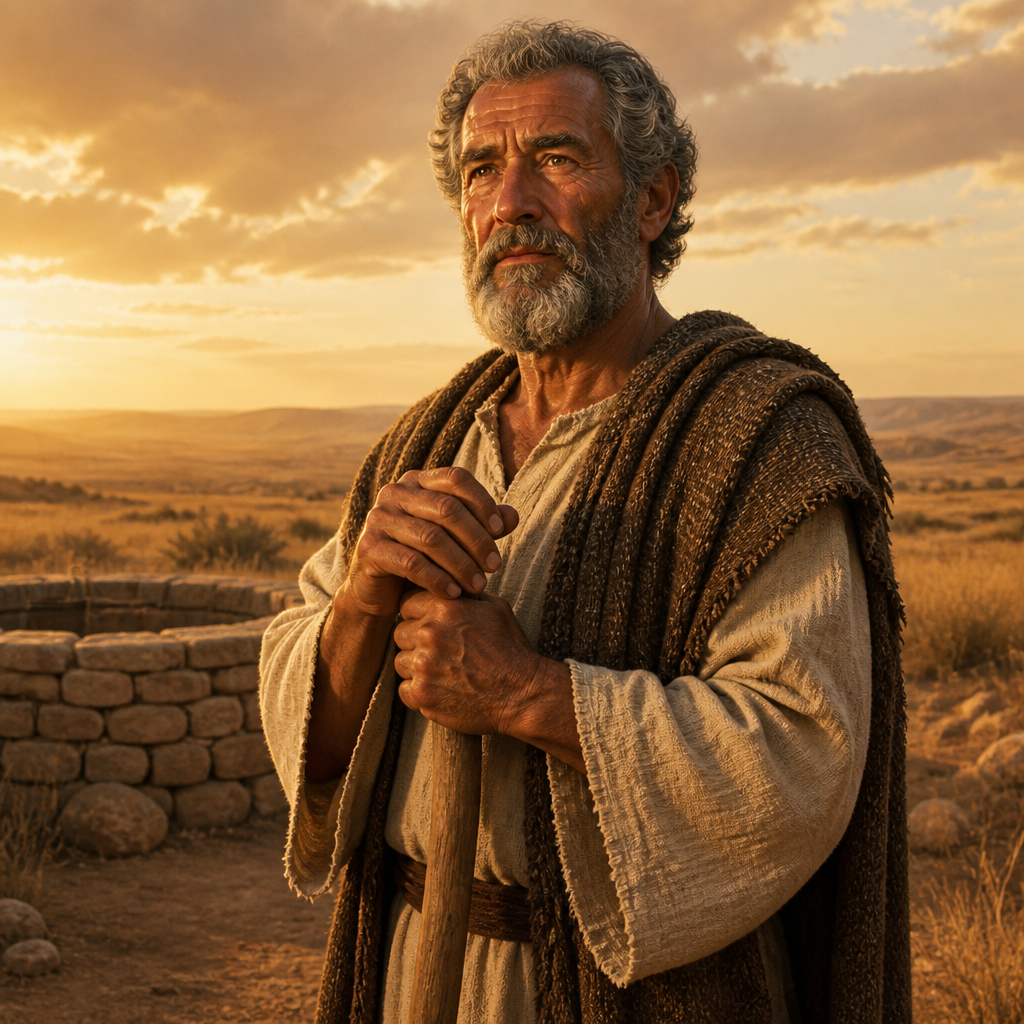
Abraham is the central figure of the patriarchal period and a primary focus of the book of Genesis. Born as Abram in Ur of the Chaldeans, he was called by God to leave his kindred and father's house to travel to a land that God would show him. This call initiated a series of divine promises including the gift of land, numerous descendants, and a blessing that would extend to all the families of the earth. Abraham is distinguished in the biblical narrative by his willingness to obey God's commands, even when they seemed impossible or required immense personal sacrifice.
His life is characterized by the transition from a wandering nomad to a powerful, wealthy patriarch who interacted with kings and established altars to the LORD throughout the land of Canaan. As the father of Isaac and Ishmael, and the progenitor of multiple nations through his third wife Keturah, Abraham's legacy is foundational to the identity of the people of Israel. In the New Testament, he is frequently cited as the supreme example of faith, with his belief in God being credited to him as righteousness long before the establishment of the Mosaic Law.
Background and Family
Abraham was the son of Terah, a descendant of Shem. He was born in Ur of the Chaldeans and was originally named Abram. He had two brothers, Nahor and Haran; Haran died early, leaving a son named Lot, whom Abraham eventually mentored. Abraham married his half-sister Sarai (later Sarah), who was initially barren. The family migrated from Ur to Haran, where Terah died. Following his father’s death, God commanded the seventy-five-year-old Abram to depart for Canaan (Genesis 12:1-4).
Abraham’s family expanded significantly throughout his life. Because Sarah remained childless for many years, she gave her Egyptian servant Hagar to Abraham, resulting in the birth of Ishmael. Later, in his old age, Abraham and Sarah miraculously conceived Isaac, the son of the promise. After Sarah's death, Abraham married Keturah, who bore him six more sons: Zimran, Jokshan, Medan, Midian, Ishbak, and Shuah. These descendants became the ancestors of various tribes and nations in the ancient Near East.
Major Life Events
The Call and the Covenant
The defining moment of Abraham's life was his departure from Haran to Canaan. Upon arrival, God appeared to him and promised the land to his offspring. A significant shift occurred in Genesis 17, when God changed his name from Abram ("exalted father") to Abraham ("father of a multitude"). It was at this time that the covenant of circumcision was established as an everlasting sign between God and Abraham’s descendants.
The Destruction of Sodom and Gomorrah
Abraham is portrayed as a hospitable host and a bold intercessor. When three divine visitors approached his tent, he provided a lavish feast. Upon learning that God intended to destroy the wicked city of Sodom, where his nephew Lot resided, Abraham negotiated with God, asking if the city would be spared for the sake of fifty righteous people, eventually bargaining down to ten. Although the city was destroyed, God remembered Abraham and rescued Lot from the catastrophe.
The Offering of Isaac
The most significant test of Abraham's faith occurred when God commanded him to offer his son Isaac as a burnt offering on Mount Moriah. Abraham obeyed, traveling three days to the site. Just as he drew his knife to slay his son, the Angel of the LORD stopped him, providing a ram caught in a thicket as a substitute. This event confirmed Abraham’s fear of God and resulted in a renewal of the divine oath to bless all nations through his offspring.
Relationship to Other Biblical Figures
Abraham's relationship with Lot is a study in grace and conflict. After their herdsmen quarreled over grazing land, Abraham generously allowed Lot first choice of the territory, eventually rescuing Lot when he was captured by a coalition of kings. Abraham also showed deep concern for his son Ishmael, pleading for his blessing even after Isaac was designated the primary heir.
His interaction with Melchizedek, the King of Salem and priest of God Most High, is another pivotal moment. After a military victory, Abraham gave Melchizedek a tenth of all his spoils, recognizing a priesthood that predated the Levites. In his later years, Abraham ensured the continuity of his lineage by sending his servant to find a wife for Isaac from his own kindred, rather than among the Canaanites.
Spiritual Significance
Abraham is the biblical archetype of faith. The author of Hebrews notes that by faith, Abraham obeyed the call to go to a place he would later receive as an inheritance, even though he did not know where he was going (Hebrews 11:8). His life demonstrates a move from self-reliance—seen in his twice-repeated deception regarding Sarah being his sister to protect himself—to total reliance on God’s provision.
His spiritual significance extends into the New Testament, where the Apostle Paul uses Abraham to illustrate the doctrine of justification by faith. Paul argues that Abraham’s righteousness was not earned through works or the law, but was a gift from God received through belief. Consequently, all who share the faith of Abraham are considered his spiritual children. He is uniquely titled the "Friend of God" (Isaiah 41:8; James 2:23), reflecting the intimate, conversational relationship he maintained with the Creator.
Spiritual Significance
Abraham’s theological importance cannot be overstated; he serves as the root of the olive tree of Israel and the primary recipient of the unconditional promises that shape the entire biblical narrative. The 'Abrahamic Covenant' establishes the framework for the land of Israel, the Davidic kingship, and ultimately the arrival of Jesus Christ. In the New Testament, Abraham is the proof-text for the gospel being extended to the Gentiles, as God promised that 'all nations' would be blessed through him.
Furthermore, Abraham represents the transition from polytheistic backgrounds to a monotheistic relationship with the LORD. His life illustrates the concepts of election, testing, and substitutionary sacrifice. By offering Isaac, he provided a prophetic shadow of God the Father offering His only Son, making his life a central pillar in both Old and New Testament theology.
Frequently Asked Questions
What does the name Abraham mean?
The name Abraham means 'father of a multitude' or 'father of many nations.' It was changed by God from his birth name, Abram, which meant 'exalted father.'
How old was Abraham when Isaac was born?
Abraham was 100 years old when Isaac was born, a birth considered miraculous because of both his and Sarah's advanced age.
Who were Abraham's wives and partners?
Abraham's wife was Sarah. He also had children with Hagar (Sarah's servant) and later married Keturah after Sarah's death.
Why did Abraham lie about Sarah being his sister?
Abraham feared that because Sarah was beautiful, foreign kings (such as Pharaoh and Abimelech) would kill him to take her. Sarah was actually his half-sister, the daughter of his father but not his mother.
What is the sign of the covenant God made with Abraham?
The physical sign of the covenant was circumcision, which Abraham and all males in his household performed as a mark of their set-apart status for God.
Connected Figures
Sarah
Wife and half-sister
Isaac
Son and heir of the promise
Ishmael
First-born son by Hagar
Lot
Nephew
Terah
Father
Melchizedek
Priest-King to whom he paid tithes
Categories
Mentions by Book
- Genesis164
- Luke14
- Hebrews10
- Exodus9
- Galatians9
- John9
- Romans9
- Acts7
- Deuteronomy7
- 1 Chronicles6
- Matthew6
- Isaiah4
- Psalms4
- 2 Chronicles2
- James2
- Joshua2
- 1 Kings1
- 1 Peter1
- 2 Corinthians1
- 2 Kings1
- Ezekiel1
- Jeremiah1
- Leviticus1
- Mark1
- Micah1
- Nehemiah1
- Numbers1
Family & Relationships
Child
Genesis 11:26
Child
Genesis 11:26
Child
Genesis 11:26
Child
Genesis 11:26
Child
Genesis 11:26
Child
Genesis 11:26
Child
Genesis 11:26
Child
Genesis 11:26
Sibling
Genesis 11:26
Sibling
Genesis 11:26
Sibling
Genesis 11:26
Spouse / partner
Genesis 11:26
Spouse / partner
Genesis 11:26
Spouse / partner
Genesis 11:26
Parent
Genesis 11:24
Spouse / partner
Genesis 16:1
Sibling
Genesis 11:26
Spouse / partner
Genesis 25:1
Sibling
Genesis 11:26
Sibling
Genesis 11:29
Spouse / partner
Genesis 11:29