Esau
The firstborn son of Isaac and Rebekah, a skillful hunter and the progenitor of the Edomites, known for selling his birthright for a bowl of stew.
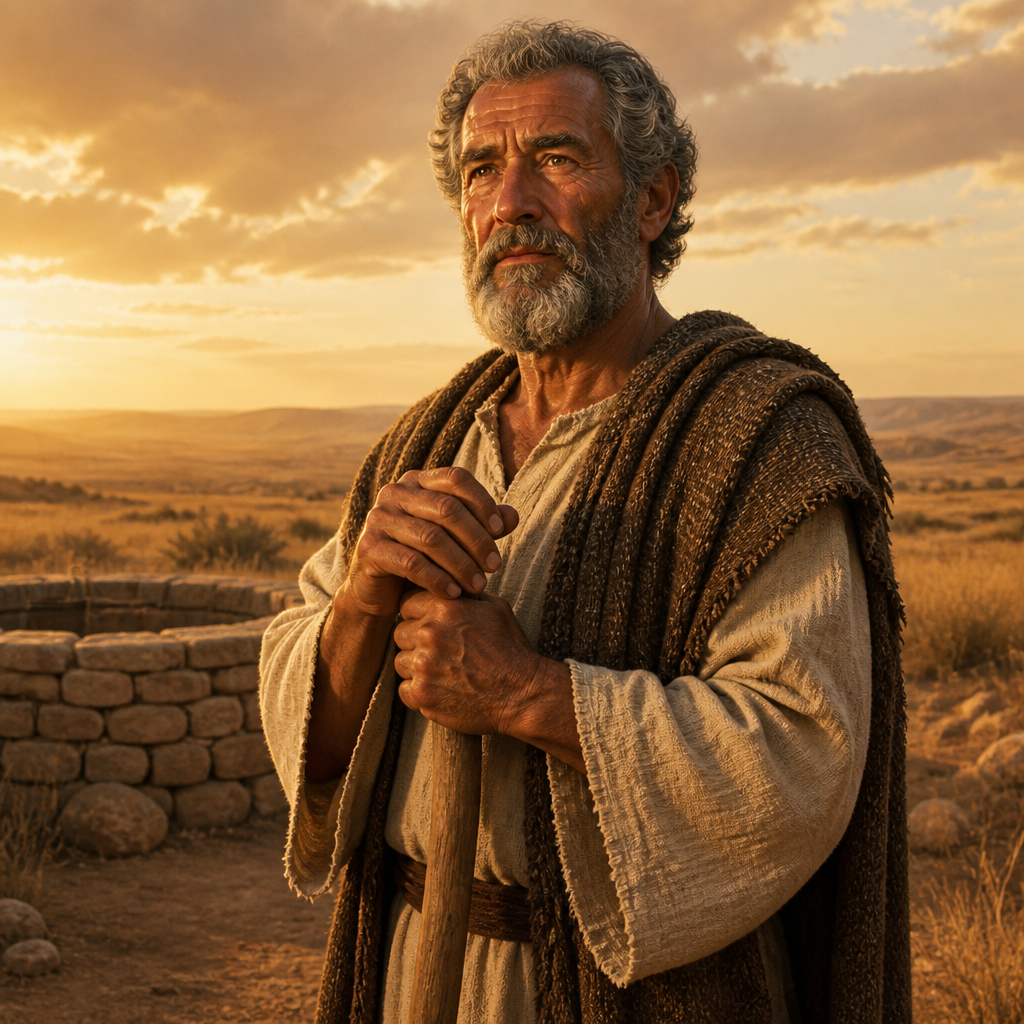
Esau was a significant biblical patriarch of the second generation of Abraham’s descendants. As the elder twin brother of Jacob, he was the natural heir to the covenantal promises given to his grandfather, Abraham. Born to Isaac and Rebekah in the land of Canaan, Esau is described as a man of the outdoors, possessing a rugged constitution and a temperament that contrasted sharply with his brother’s quiet, domestic nature. His life is defined largely by his relationship with Jacob, characterized by intense rivalry, betrayal, and eventual reconciliation.
Esau’s legacy extends beyond his personal narrative into the geopolitical landscape of the ancient Near East. He is identified in the biblical record as Edom, the father of the Edomite nation. While he was excluded from the primary line of the Messianic promise—a selection the New Testament attributes to divine sovereignty—he was nevertheless granted a vast inheritance in the region of Mount Seir. The biblical account portrays him as a complex figure: a man of impulsive passion who could harbor lethal grudges, yet also a man capable of profound forgiveness and familial affection.
Background and Family
Esau was born in the land of Canaan during the Patriarchal Period, specifically when his father, Isaac, was sixty years old (Genesis 25:26). His birth was marked by a struggle in the womb with his twin brother, Jacob, a physical conflict that served as a divine portent of the future nations that would descend from them. At birth, Esau was noted for being strikingly red and covered in hair "like a fur coat," a physical characteristic that influenced his name (interpreted as 'hairy') and his secondary name, Edom ('red').
Growing up, Esau became a skillful hunter and a "man of the field," earning the particular favor of his father, Isaac, who enjoyed the wild game Esau provided. However, the domestic dynamic was fractured, as Rebekah favored Jacob. Esau’s familial life became further complicated by his marriages. At age forty, he married two Hittite women, Judith and Basemath (also identified as Adah and Oholibamah in later genealogies). These unions were a source of great grief to Isaac and Rebekah due to the women’s Canaanite origins. In an attempt to appease his parents later in life, Esau also married Mahalath, the daughter of his uncle Ishmael.
Major Life Events
The Sale of the Birthright
The first pivotal event in Esau's life occurred when he returned from the field famished. Finding Jacob cooking a red lentil stew, Esau demanded some of the food. Jacob seized the opportunity to bargain for Esau’s birthright—the double portion of the inheritance and the spiritual leadership of the family. Esau, prioritizing his immediate physical hunger over his long-term inheritance, famously remarked, "I am about to die, so what good is a birthright to me?" (Genesis 25:32). By swearing an oath and eating the meal, the text records that Esau "despised his birthright."
The Stolen Blessing
Years later, when Isaac was old and blind, he intended to bestow the patriarchal blessing upon Esau. He sent Esau to hunt and prepare a meal before the ceremony. During Esau's absence, Jacob, prompted by Rebekah, disguised himself as Esau and deceived his father into giving him the blessing intended for the firstborn. When Esau returned and discovered the deception, he let out a "loud and bitter cry." Isaac, though devastated, could not revoke the blessing given to Jacob. Esau received a secondary blessing: he would live away from the richness of the earth and serve his brother, but would eventually break his brother's yoke. Consumed by rage, Esau plotted to kill Jacob after their father's death, forcing Jacob to flee to Haran.
Reconciliation and Later Years
After twenty years of separation, Jacob returned to Canaan, fearing Esau’s retaliation. However, when the two met, Esau displayed unexpected grace. Instead of attacking with his four hundred men, he ran to meet Jacob, embraced him, and wept (Genesis 33:4). He initially declined Jacob’s lavish gifts, stating he already had plenty. Following the burial of their father Isaac, Esau realized that the land of Canaan could not support both his and Jacob’s vast livestock. Consequently, he migrated to the hill country of Seir, where he displaced the Horites and established the nation of Edom.
Relationship to Other Biblical Figures
Esau’s primary relationship was with his brother, Jacob (Israel). Their lives are presented as a study in contrasts: the hunter versus the shepherd, the impulsive versus the calculating, and the rejected versus the chosen. While they reconciled personally, the nations descending from them—Edom and Israel—remained frequent adversaries throughout biblical history. Esau also maintained a close bond with his father, Isaac, who saw in Esau a reflection of a rugged, traditional masculinity. In the New Testament, Esau is used by the Apostle Paul in Romans 9 as a primary example of God's elective purposes, illustrating that divine promise is not based on human effort or birth order.
Spiritual Significance
The spiritual legacy of Esau is predominantly cautionary. The book of Hebrews (12:16) labels him as "godless" or "profane," specifically because he traded a permanent spiritual inheritance for a momentary physical satisfaction. He represents the "man of the flesh" who lacks appreciation for the sacred. The prophetic books, particularly Obadiah and Malachi, use Esau (Edom) as a symbol of human pride and opposition to God’s kingdom. However, the Genesis account also offers a nuanced portrait of a man who, despite losing his primary inheritance, achieved great material success and demonstrated a capacity for mercy that exceeded the expectations of his contemporaries.
Spiritual Significance
Esau serves as a pivotal figure in the biblical narrative of election and the origin of nations. Theologically, he is the archetype of the 'profane' person who fails to value spiritual promises, selling his birthright for temporary gratification. His exclusion from the covenant line, despite being the firstborn, underscores the theme that God's sovereign choice often subverts human tradition and merit.
Furthermore, Esau is the progenitor of the Edomites, a nation that occupies a significant role in the prophetic warnings of the Old Testament. The phrase 'Jacob I loved, but Esau I hated' (Malachi 1:2-3; Romans 9:13) remains one of the most discussed theological statements in scripture, representing the distinction between the line of promise and the line of natural descent, as well as God's judgment upon the pride and violence associated with the house of Esau.
Frequently Asked Questions
Why did Esau sell his birthright for a bowl of stew?
Esau sold his birthright because he was famished and prioritized his immediate physical needs over his long-term spiritual and legal inheritance. The Bible notes that in doing so, he 'despised' his birthright, viewing it as worthless compared to his current hunger.
What does the name 'Edom' mean?
'Edom' means 'Red.' It refers both to Esau's appearance at birth (being red and hairy) and the 'red stew' for which he traded his birthright. It became the name of the nation he founded.
Did Esau ever forgive Jacob?
Yes. When Jacob returned from Paddan-aram after twenty years, Esau met him with a peaceful heart. Instead of seeking revenge for the stolen blessing, Esau embraced Jacob and wept, demonstrating a spirit of reconciliation.
Who were Esau's wives?
Esau married Judith (daughter of Beeri the Hittite), Basemath (daughter of Elon the Hittite), and later Mahalath (daughter of Ishmael and sister of Nebaioth) to try and please his parents.
Where is the land of Seir?
The land of Seir, also known as the country of Edom, is a mountainous region south of the Dead Sea where Esau settled and his descendants drove out the original Horite inhabitants.
Connected Figures
Categories
Mentions by Book
- Genesis64
- Deuteronomy6
- 1 Chronicles4
- Hebrews2
- Jeremiah2
- Malachi2
- Obadiah2
- Joshua1
- Romans1
Family & Relationships
Child
Genesis 25:25
Child
Genesis 25:25
Child
Genesis 25:25
Child
Genesis 25:25
Child
Genesis 25:25
Sibling
Genesis 25:25
Spouse / partner
Genesis 25:25
Spouse / partner
Genesis 25:25
Spouse / partner
Genesis 25:25
Spouse / partner
Genesis 25:25
Spouse / partner
Genesis 26:34
Parent
Genesis 17:19
Parent
Genesis 22:23
Sibling
Genesis 25:26
Spouse / partner
Genesis 26:34
Spouse / partner
Genesis 28:9
Spouse / partner
Genesis 36:2