Joshua, Son of Nun
The successor to Moses and commander of the Israelites who led the conquest of Canaan and divided the Promised Land among the twelve tribes.
Joshua, the son of Nun from the tribe of Ephraim, stands as one of the most significant military and spiritual leaders in the Old Testament. Originally named Hoshea, he was renamed by Moses and served as his personal attendant and commander throughout the wilderness journey. Joshua is uniquely characterized by his unwavering faithfulness to God and his military prowess, serving as the bridge between the nomadic existence of the Exodus and the settled life of the tribes in the Promised Land.
His life is defined by two distinct phases: his long apprenticeship under Moses during the Egyptian sojourn and wilderness years, and his subsequent leadership of the Israelite nation following Moses' death. As the central figure of the book bearing his name, Joshua oversaw the miraculous crossing of the Jordan River, the fall of Jericho, and the systematic defeat of various Canaanite coalitions. He died at the age of 110, having successfully established Israel in their inherited territory and facilitated a national covenant renewal at Shechem.
Background and Family
Joshua was the son of Nun, a member of the tribe of Ephraim (1 Chronicles 7:27). Born in Egypt during the period of Israelite bondage, he experienced the hardships of slavery and the subsequent deliverance of the Exodus. While his early life in Egypt is not detailed in scripture, he emerges early in the wilderness narrative as a young man of significant capability and devotion.
Originally named Hoshea, meaning 'salvation,' he was renamed Joshua (Yehoshua), meaning 'The LORD is salvation,' by Moses (Numbers 13:16). This change of name signaled his redirected identity as a vessel for God’s deliverance. Unlike many of his peers, Joshua remained exceptionally close to the center of Israel’s spiritual life; Exodus 33:11 notes that while Moses would return to the camp after speaking with the Lord, the 'young assistant Joshua son of Nun would not leave the tent.'
Major Life Events
Military Commander and Attendant
Joshua first appears in the biblical record in Exodus 17:9, where Moses appoints him to lead the defense against the Amalekites at Rephidim. While Moses held up the staff of God on the hilltop, Joshua directed the battle in the valley, securing his first victory. He later accompanied Moses partway up Mount Sinai when the Law was given, standing as a faithful witness to the divine encounter (Exodus 24:13).
The Twelve Spies
A pivotal moment in Joshua’s life occurred at Kadesh-barnea. He was selected as the representative of the tribe of Ephraim to join the twelve spies sent to scout the land of Canaan. Upon their return, ten spies brought a report of fear, citing the strength of the inhabitants and the size of their cities. Joshua and Caleb son of Jephunneh were the only two who advocated for an immediate invasion, trusting in God's promise. Because of this faithfulness, they were the only two men of their generation permitted to enter the Promised Land (Numbers 14:30).
The Conquest of Canaan
Following the death of Moses, God commissioned Joshua to lead the people across the Jordan River. His leadership was marked by a series of divine interventions, beginning with the Jordan’s waters parting (Joshua 3). Joshua’s strategy involved a central campaign (Jericho and Ai), followed by a southern campaign against a coalition of Amorite kings, and a northern campaign against King Jabin of Hazor. One of his most notable recorded events was the battle at Gibeon, where Joshua petitioned the Lord for the sun and moon to stand still to allow for a complete victory (Joshua 10:12).
Division of the Land and Final Years
After the major military operations concluded, Joshua collaborated with Eleazar the priest to distribute the land among the tribes by lot at Shiloh. Even in his old age, Joshua continued to provide spiritual guidance. He settled in Timnath-serah in the hill country of Ephraim. Before his death, he gathered the nation at Shechem for a final exhortation, famously challenging the people to 'choose for yourselves this day whom you will serve' (Joshua 24:15).
Relationship to Other Biblical Figures
Joshua’s most defining relationship was with Moses. He served as Moses’ 'attendant' or 'minister' (mesharet) from his youth. This was not a relationship of equals but one of mentor and protégé. Moses laid hands on Joshua to transfer authority and the spirit of wisdom (Deuteronomy 34:9). Joshua also maintained a lifelong partnership with Caleb, his fellow spy and survivor of the wilderness generation. In his later years, he worked closely with Eleazar the priest, maintaining the dual leadership structure of civil/military and religious authority.
Spiritual Significance
Joshua is presented as the ideal leader who succeeds where the previous generation failed. His significance lies in his total obedience to the 'Book of the Law' (Joshua 1:8). Theologically, he represents the fulfillment of the land promise made to Abraham. In the New Testament, the book of Hebrews mentions Joshua in the context of the 'rest' that Israel sought. While Joshua gave them physical rest in the land, the author of Hebrews argues that a greater rest remained for the people of God (Hebrews 4:8). Joshua stands as a type of faithful servant whose courage was rooted entirely in his reliance on the presence of God.
Spiritual Significance
Joshua serves as the primary example of the 'faithful soldier' and the obedient successor. His life demonstrates that the promises of God—specifically the inheritance of the land—are fulfilled through a combination of divine sovereignty and human faithfulness. He is one of the few major biblical figures about whom no moral failure or sin is explicitly recorded in the text, though he is shown to be susceptible to deception, as seen in the treaty with the Gibeonites.
Theological reflection on Joshua often centers on his name, which is the Hebrew equivalent of 'Jesus.' Just as Joshua led the people of Israel out of the wilderness and into their physical inheritance, New Testament writers see him as a foreshadowing of the Messiah who leads His people into a spiritual and eternal inheritance. His leadership established the precedent that Israel’s success in the land was directly tied to their adherence to the Mosaic Covenant.
Frequently Asked Questions
Why did Moses change Joshua’s name from Hoshea?
Moses changed his name from Hoshea ('salvation') to Joshua ('The LORD is salvation') to emphasize that the victory and deliverance of Israel would come from Yahweh, not from human effort or the leader himself.
Was Joshua allowed to enter the Promised Land?
Yes. Joshua and Caleb were the only two adults from the generation that left Egypt who were allowed to enter Canaan because they remained faithful and brought a positive report after spying out the land.
How old was Joshua when he died?
According to Joshua 24:29 and Judges 2:8, Joshua died at the age of 110.
What tribe did Joshua belong to?
Joshua was from the tribe of Ephraim, one of the sons of Joseph.
What happened to the sun during Joshua's battle with the Amorites?
During the battle at Gibeon, Joshua asked God to make the sun stand still over Gibeon and the moon over the Valley of Aijalon so that Israel would have enough daylight to completely defeat their enemies.
Connected Figures
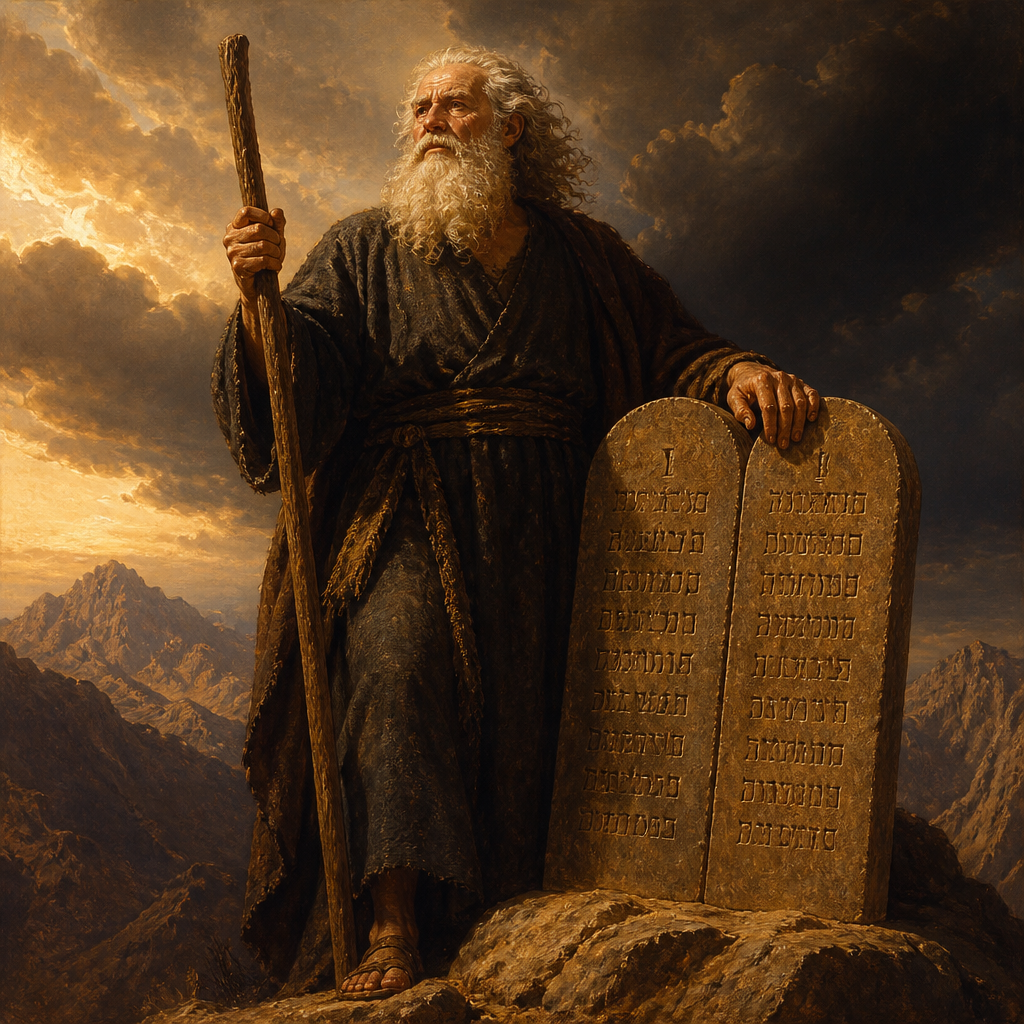
Moses
Mentor and predecessor
Nun
Father
Caleb
Fellow spy and companion
Eleazar
High Priest and contemporary leader
Categories
Mentions by Book
- Joshua151
- Numbers12
- Deuteronomy9
- Exodus7
- Judges6
- 1 Chronicles1
- 1 Kings1
- Acts1
- Hebrews1
- Nehemiah1
Family & Relationships
Parent
Exodus 33:11