Paul
An apostle and missionary who transitioned from a persecutor of the early church to its most prolific evangelist and theologian in the first century AD.
Paul, originally known as Saul of Tarsus, was a pivotal figure in the first-century AD expansion of the early Christian church. A Roman citizen with deep Jewish roots, he initially gained notoriety for his aggressive persecution of the disciples of Jesus, even standing by in approval during the stoning of Stephen. His life took a radical turn during a journey to Damascus, where he experienced a direct encounter with the risen Christ that left him temporarily blind and permanently transformed.
Following his conversion, Paul became the leading missionary to the Gentile world, traveling extensively throughout the Roman Empire, including Asia Minor, Greece, and eventually Rome. His ministry was characterized by the establishment of numerous churches and the authoring of many foundational epistles that shaped Christian doctrine. Despite facing imprisonment, shipwrecks, and frequent opposition, he remained steadfast in his mission until his final days in Rome.
Background and Family
Paul, referred to in the early chapters of Acts by his Hebrew name Saul, originated from Tarsus. While the biblical text does not explicitly name his parents or provide a detailed genealogy, it emphasizes his dual identity: he was a devout Jew who was also a Roman citizen. This citizenship granted him legal protections—such as the right to a trial and the right to appeal to Caesar—that he utilized during his later ministry. He was highly educated in the Jewish law, a background that informed his rigorous defense of the faith and his ability to reason within synagogues across the Mediterranean.
Major Life Events
Paul’s narrative begins in the context of the early church’s persecution. In Acts 7 and 8, he is depicted as a young man giving approval to the execution of Stephen and subsequently entering houses to drag off men and women to prison. His conversion, recorded in Acts 9, occurred on the road to Damascus when a light from heaven flashed around him, and he heard the voice of Jesus. This event led to his baptism by Ananias and a complete reversal of his life’s purpose.
His missionary career is typically categorized by several major journeys. In Acts 13, he was set apart by the Holy Spirit along with Barnabas for work in Cyprus and Pamphylia. It was during this time that he began to be called Paul. His work was often met with intense volatility; in Lystra, he was stoned and left for dead, only to stand up and return to the city. Later, in Philippi, Paul and his companion Silas were beaten and imprisoned, yet they spent their time praying and singing hymns until a miraculous earthquake opened the prison doors.
In Athens, Paul engaged with Epicurean and Stoic philosophers at the Areopagus, using their own cultural references to point toward the 'Unknown God.' His final years recorded in Acts involve a series of trials before Roman governors like Felix and Festus, and King Agrippa. After appealing to Caesar, Paul survived a harrowing shipwreck on the island of Malta before arriving in Rome, where he lived under house guard for two years, continuing to preach to all who visited him.
Relationship to Other Biblical Figures
Paul’s ministry was deeply collaborative. Early on, Barnabas played a crucial role in vouching for Paul when the Jerusalem disciples were afraid of him. He also worked closely with Silas, particularly during the Second Missionary Journey. Paul mentored younger leaders, most notably Timothy, whom he took as a companion and to whom he wrote personal letters of encouragement. He also shared a complex relationship with the apostle Peter (Cephas), and while they were unified in the gospel, the early church experienced tensions regarding the inclusion of Gentiles, an issue Paul addressed at the Jerusalem Council in Acts 15.
Spiritual Significance
Paul is arguably the most influential theologian of the New Testament. His writings, such as the Epistle to the Romans and the letters to the Corinthians, systematically defined the concepts of justification by faith, the nature of the church as the 'Body of Christ,' and the role of the Holy Spirit in the life of a believer. His insistence that the gospel was for both Jew and Gentile alike removed the ethnic barriers to the faith, facilitating its transition from a localized sect to a global movement. Paul’s life serves as a primary example of the transformative power of grace, moving from a position of 'murderous threats' against the church to being a 'prisoner of Christ Jesus' who viewed his own suffering as a means to further the gospel.
Spiritual Significance
Paul's theological contribution is foundational to Christian thought, particularly his focus on the grace of God and the universality of the Gospel. He articulated the transition from the Mosaic Law to the New Covenant in Christ, arguing that salvation is accessible to all through faith rather than works of the law. His role as the 'Apostle to the Gentiles' was essential in the early church's decision to admit non-Jews without requiring adherence to all Jewish ceremonial laws.
Furthermore, Paul’s personal endurance in the face of persecution provided a model for Christian suffering and perseverance. His letters form a significant portion of the New Testament canon, providing practical instructions on church order, ethics, and spiritual gifts that continue to govern Christian practice centuries later.
Frequently Asked Questions
Why did Paul have two names?
He was known by his Hebrew name, Saul, and his Roman/Greek name, Paul. Acts 13:9 notes that 'Saul, who was also called Paul,' began using the latter as his ministry shifted toward the Gentile world.
How did Paul become a Roman citizen?
The Bible does not state how his family acquired citizenship, but Paul asserts in Acts 22:28 that he was 'born a citizen,' which gave him significant legal advantages during his trials.
What happened to Paul in Damascus?
After his vision of Jesus, Paul was blind for three days. A disciple named Ananias visited him, restored his sight through prayer, and Paul was subsequently baptized.
Was Paul ever married?
The biblical text does not mention a wife. In 1 Corinthians, he speaks of his own state as one of singleness, though he does not provide specific details about his past marital status.
How did Paul's life end according to the Bible?
The Book of Acts ends with Paul under house arrest in Rome, preaching the kingdom of God. While his letters suggest he anticipated his departure, the Bible does not record the specific circumstances of his death.
Connected Figures
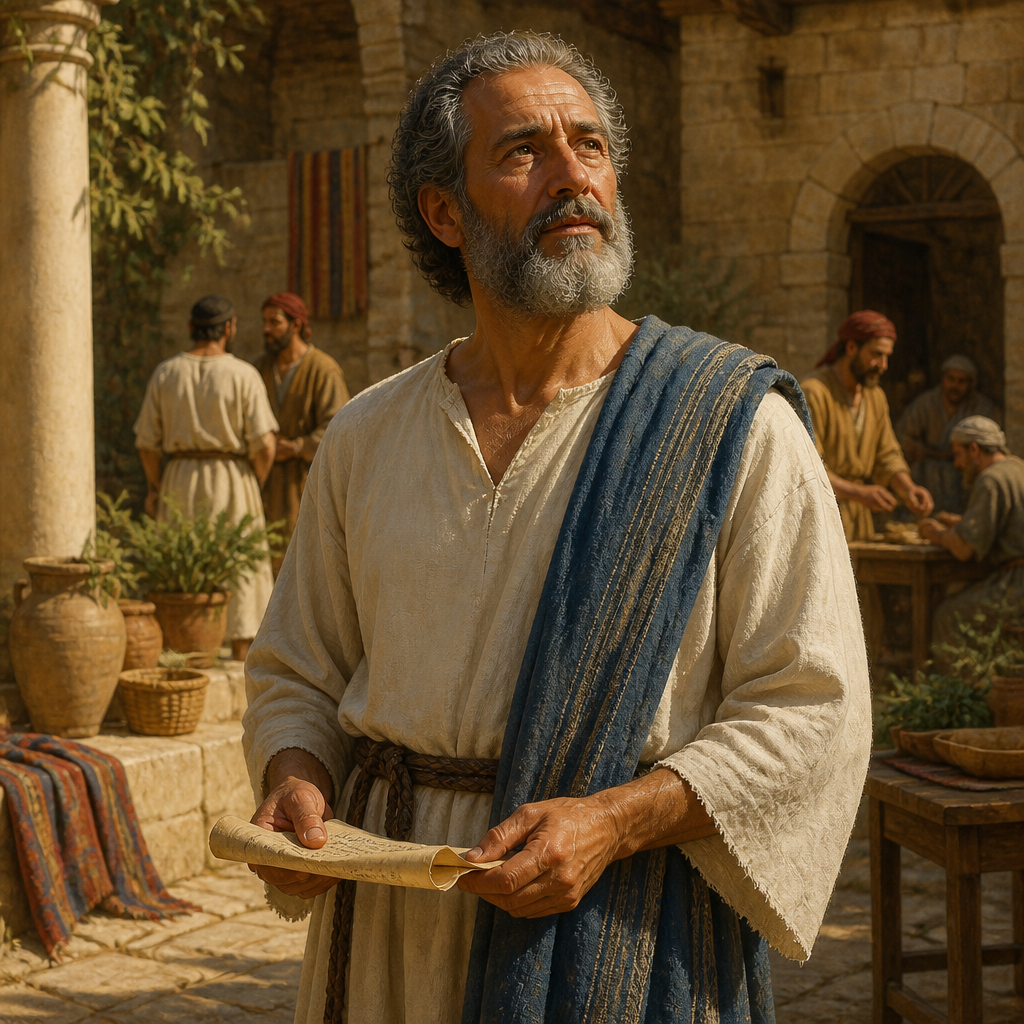
Barnabas
Missionary companion and mentor
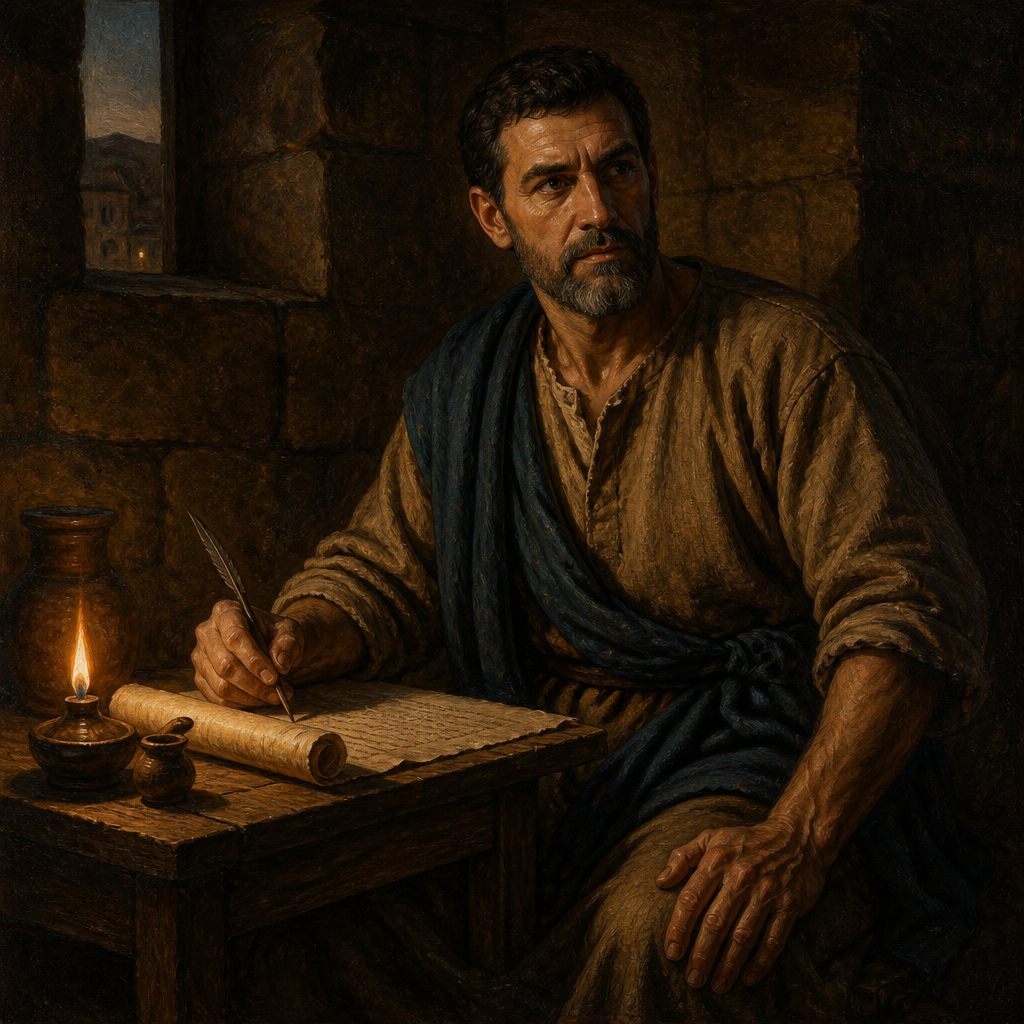
Silas
Missionary partner and fellow prisoner
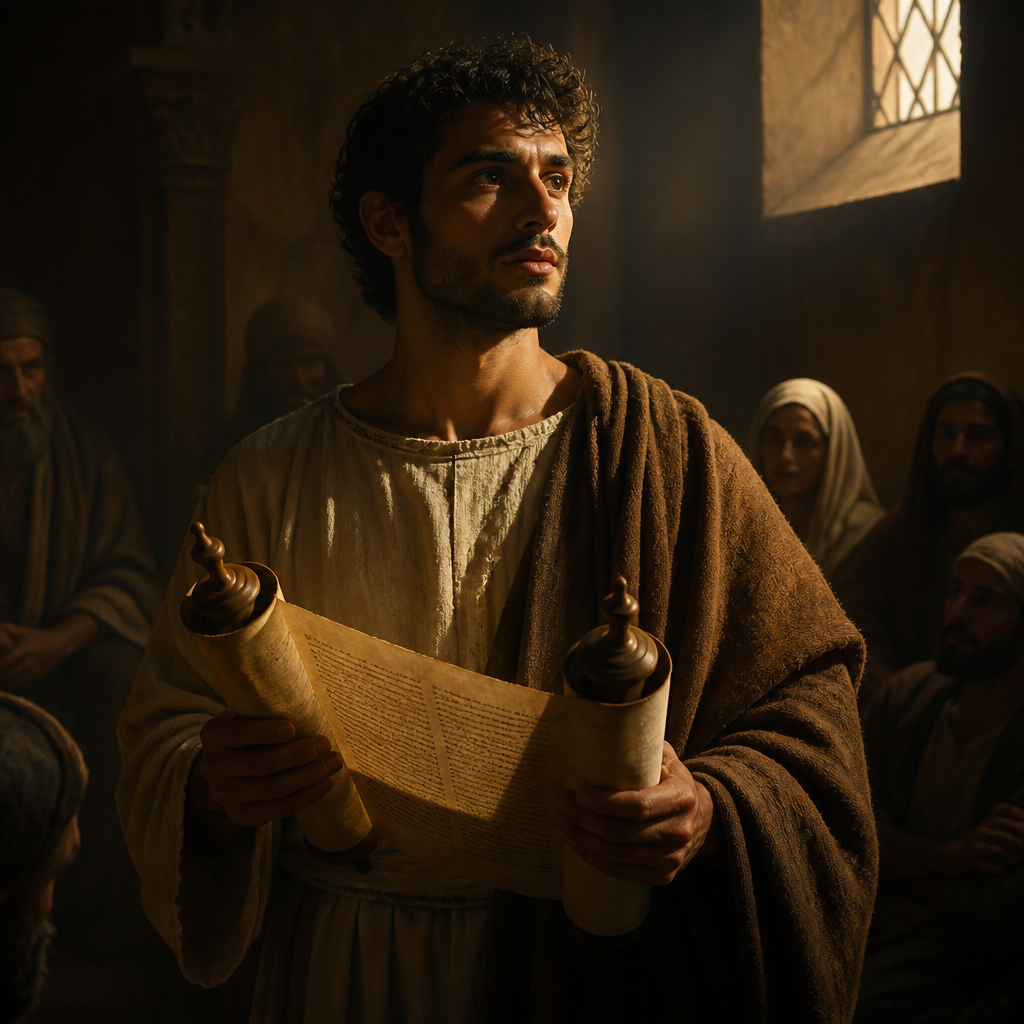
Timothy
Protege and 'son in the faith'
Ananias of Damascus
Disciple who baptized him
Categories
Mentions by Book
- Acts152
- 1 Corinthians7
- Colossians3
- Philemon3
- 1 Thessalonians2
- 2 Corinthians2
- 2 Thessalonians2
- 2 Timothy2
- Ephesians2
- Galatians2
- 1 Timothy1
- 2 Peter1
- Philippians1
- Romans1
- Titus1